A new study suggests that containers like bags, trays, and pouches may have played a crucial role in human survival for hundreds of thousands of years. By analyzing evidence from 739 Pleistocene-era objects, researchers argue that portable containers were essential tools that supported early human mobility, transport, and adaptation long before farming began.
The modern backpack might feel like a simple convenience—but according to new research, the basic idea behind it could be one of the oldest and most important technologies humans ever developed.
A study published in the Journal of Anthropological Archaeology reports that early humans likely relied on containers far earlier than archaeologists have traditionally emphasized. By compiling a large database of ancient container evidence, researchers argue that carrying technologies were central to how humans lived, moved, and survived in changing environments.
As the authors put it in the paper, “The container is perhaps humanity’s single most important and pervasive technological concept.”
A Technology Hiding in Plain Sight
Archaeologists have long studied containers from the Neolithic period, dating between 12,000 and 4,000 years ago, when farming societies expanded and storage became essential. But much older container use from the Pleistocene era has received far less attention.
The new study aimed to address that gap.
Instead of digging up new artifacts, the research team took a different approach. A small group of archaeologists and anthropologists combed through existing scientific literature, searching for overlooked or underappreciated evidence of container technology in earlier human history.
Their work suggests that researchers may have missed key signs of container use simply because they were not actively looking for them.
Building a Database of Ancient Containers
To assemble their dataset, the team searched published records for three specific kinds of evidence.
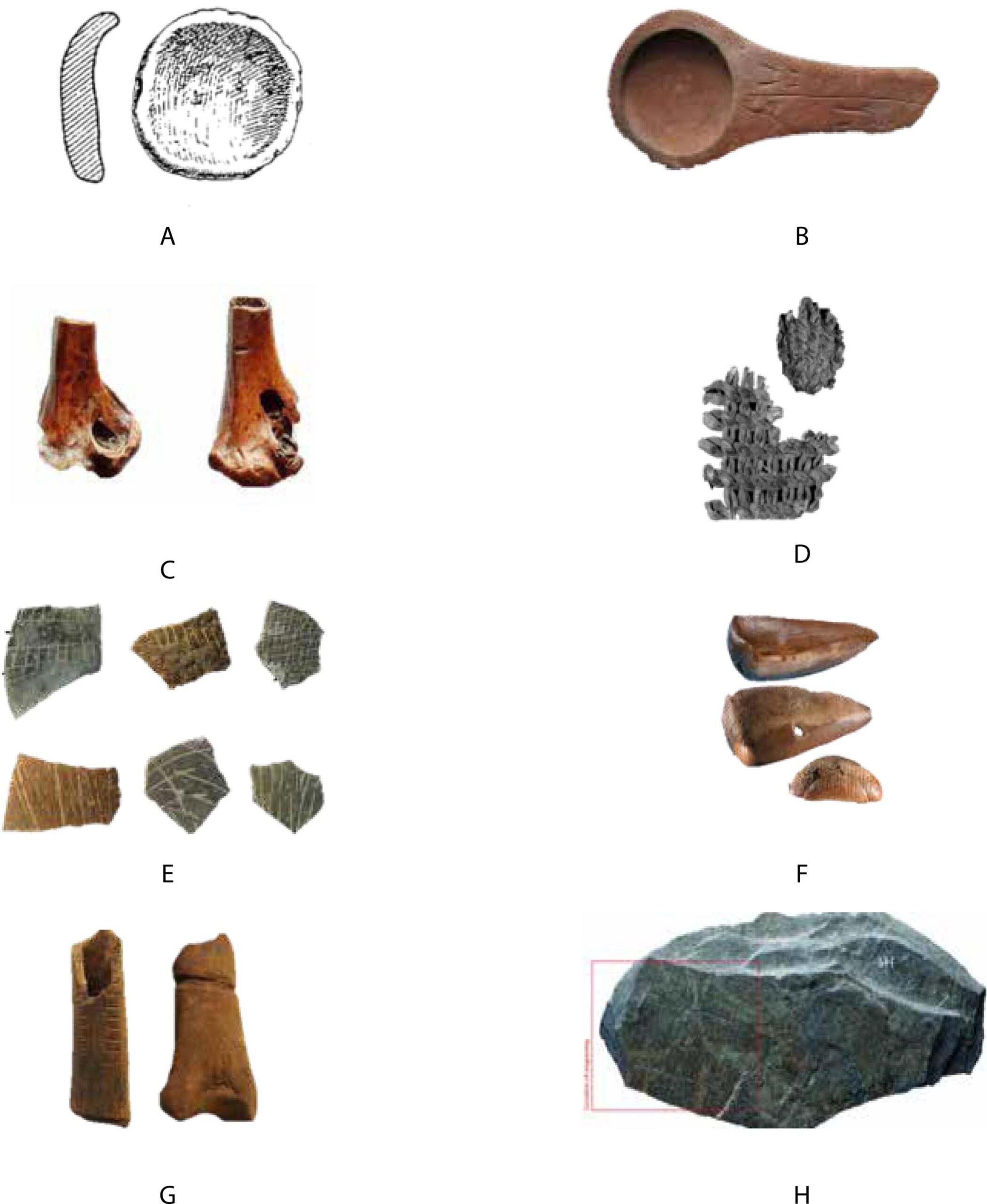
The first included physical objects that could have functioned as containers, such as stone lamps or hollowed-out shells. The second involved visual evidence from ancient art, including cave paintings and carvings that show people holding or using containers. The third came from wear patterns on stone tools, which might indicate tools had been stored in a pouch, bag, or other portable container.
This method allowed the researchers to gather a wide range of clues—not just obvious artifacts.
In total, their search produced a database containing 739 Pleistocene-era objects linked to container use. Most of the examples came from Europe, which the researchers attribute to the region’s long history of extensive archaeological study and documentation.
The Oldest Evidence Dates Back Half a Million Years
One of the most striking findings in the database was the earliest identified container: a bark tray dating back roughly 500,000 to 400,000 years.
That timeline places container technology far deeper into human history than many traditional narratives suggest.
The database also included other notable examples, such as bone tubes from Russia and hollowed-out shells from South Africa. These items demonstrate that early container use was not limited to a single region or material type.
Rather than being a rare innovation, the evidence suggests containers appeared in many forms and environments, likely shaped by local resources and needs.
A Shift Toward Heavy Container Use in the Late Pleistocene
While the database spans a broad period, the researchers noticed an important pattern.
Just over three-quarters of the identified containers date to the last 25,000 years of the Pleistocene. The team interprets this as a sign that human dependence on containers increased significantly during this later period.
That doesn’t necessarily mean containers were absent before then—but it does suggest they became more common or more visible in the archaeological record as humans increasingly relied on them.
The researchers argue that this intensification reflects how portable storage became more central to survival and daily life.
Containers Were Not Just for Storing Food
The study challenges an older assumption that complex storage and container use became important only after agriculture emerged about 12,000 years ago.
Instead, the authors argue that containers were already deeply integrated into hunter-gatherer life. Many of the items in the database appear to have been designed not only for holding materials, but for transporting them.
That difference matters. Storage implies settling down. Transport implies movement.
The researchers emphasize that containers likely served practical daily functions such as moving food, water, and other essential items across distances.
Carrying Tools as an Extension of the Human Body
One of the study’s central arguments is that containers functioned as a kind of physical extension of the human body.
By enabling people to carry more than they could hold in their hands, containers would have expanded what individuals and groups could transport while traveling. According to the authors, this ability supported long-distance mobility and made it easier for humans to adapt to new environments.
The paper suggests containers may even have helped people carry infants during movement, further strengthening their importance in survival and migration.
Rather than being optional tools, the researchers describe them as fundamental to how early humans lived.
As the authors write, containers were not an agricultural invention, but instead “an essential component of the hunter-gatherer way of life.”
A New Perspective on Human Innovation
The database compiled in this study adds weight to the idea that technological complexity existed long before farming societies emerged.
Instead of viewing early humans as limited to basic tools, the findings highlight how even simple technologies—like trays, shells, or bags—could reshape how people interacted with the world.
The ability to transport resources changes everything: what you can gather, how far you can travel, how long you can stay away from water sources, and how you respond to shifting environments.
In that sense, containers may have helped enable the flexibility that became one of humanity’s defining traits.
Why This Matters
This research challenges the long-standing belief that advanced storage and carrying technologies only became widespread after humans began farming. By identifying 739 examples of Pleistocene container evidence—some dating back as far as 500,000 years—the study suggests portable containers were a foundational technology supporting early human mobility.
Understanding this changes how archaeologists interpret early survival strategies. It also reframes a simple idea—carrying more than your hands allow—as a major technological turning point that may have helped humans spread, adapt, and thrive across diverse landscapes long before agriculture ever existed.
Study Details
Jennifer C. French et al, The origins and development of mobile containers: Biocultural perspectives on Pleistocene containment, Journal of Anthropological Archaeology (2026). DOI: 10.1016/j.jaa.2026.101769