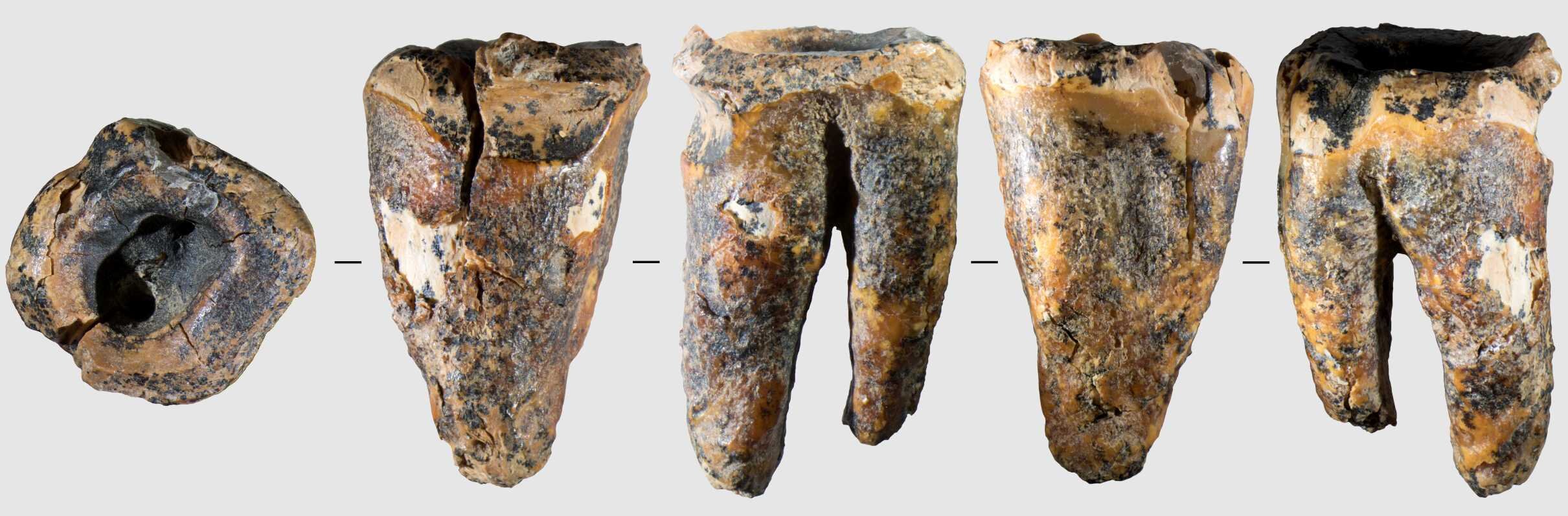
The world’s oldest known evidence of successful dental treatment has been discovered in a Neanderthal molar from Chagyrskaya Cave in Russia. A study published May 13, 2026, in PLOS One reveals that the tooth contains a deep, unnatural cavity reaching the pulp, along with microscopic grooves showing signs of intentional drilling with a stone tool—likely to treat a painful infection more than 40,000 years earlier than previous examples.
The idea of a Neanderthal undergoing dental work might sound surprising. But a single fossil tooth from Siberia is now forcing researchers to reconsider just how far Neanderthal medical knowledge may have gone—and how much pain they may have been willing to endure to solve it.
A new study reports evidence that a Neanderthal not only suffered from a serious tooth infection, but may have had the damaged tissue intentionally drilled out using a sharp stone tool, in what researchers describe as a prehistoric attempt at dental treatment.
A 59,000-Year-Old Tooth With a Strange Hole
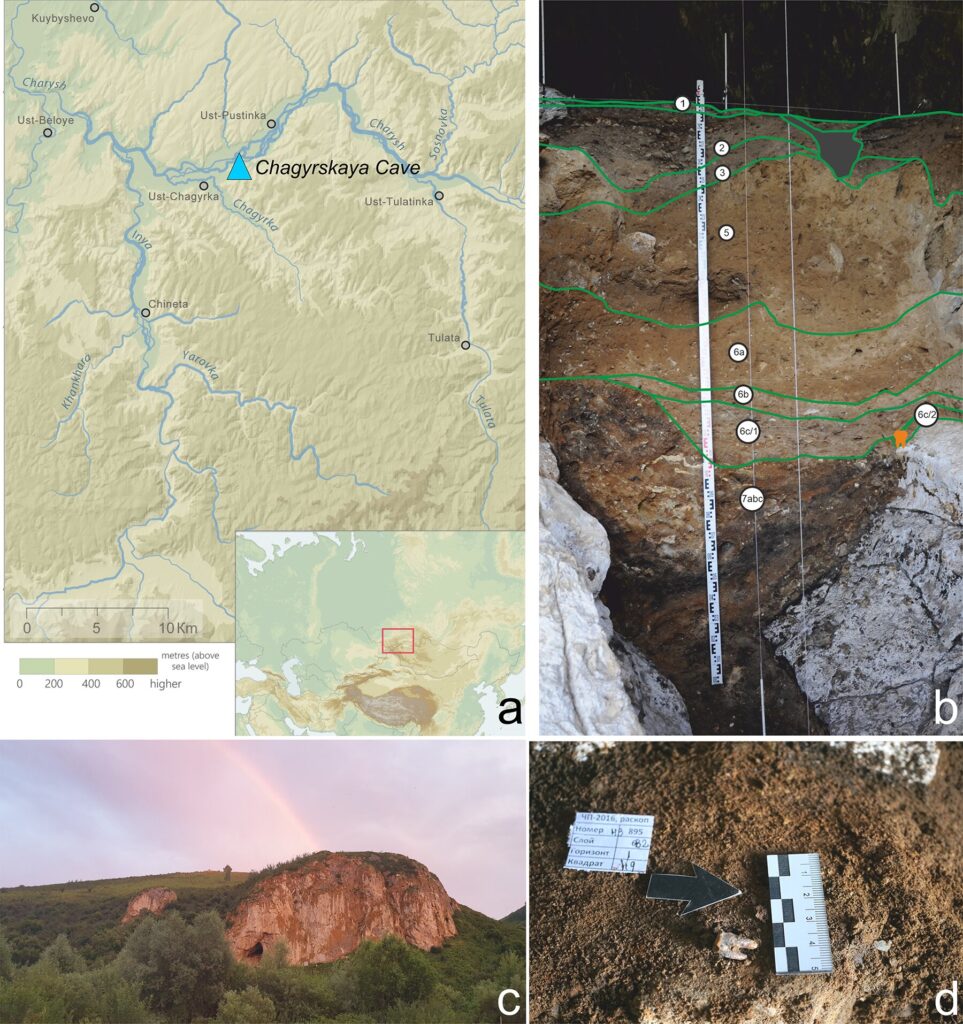
The evidence comes from a single molar discovered at Chagyrskaya Cave in Russia, dated to about 59,000 years old. The tooth contains a deep hole located in the center of the chewing surface, extending into the pulp cavity—the sensitive inner chamber where nerves and blood vessels are located.
According to the researchers, the cavity does not resemble normal tooth anatomy. It also does not match typical patterns of natural damage or ordinary decay lesions commonly seen in modern humans.
Instead, the shape of the concavity stood out as unusual, prompting closer investigation.
Scratches and Grooves Point to Deliberate Manipulation
The team, led by Alisa Zubova of the Peter the Great Museum of Anthropology and Ethnography in St. Petersburg, reports that the molar contains distinctly visible scratches.
These marks suggested that the hole may not have formed naturally. The tooth also contains grooves along the side consistent with toothpick use, supporting earlier archaeological evidence that Neanderthals used toothpicks to remove trapped food.
The researchers interpret the combination of features as evidence that this individual was dealing with a serious dental problem and may have attempted multiple forms of relief, including probing or cleaning the tooth.
Micro-CT Scans Reveal Signs of Severe Caries
To better understand what caused the damage, the researchers used computed microtomography, a high-resolution scanning method that reveals internal tooth structure.
The scans showed changes in dentin mineralization consistent with severe caries, meaning the tooth likely had a deep decay lesion. The researchers also identified areas of demineralization, where remnants of carious damage remained.
These preserved traces strengthened the idea that the cavity was associated with an infection or decay process—and that the visible hole was not simply a natural result of the disease.
Instead, the team argues the cavity likely reflects a deliberate attempt to remove infected tissue.
Testing the “Stone Tool Drill” Hypothesis
To evaluate whether a Neanderthal could realistically create such a cavity, the researchers performed manual drilling experiments on three modern human teeth.
The team used a stone point similar to tools previously found in Chagyrskaya Cave. The goal was to see whether drilling could produce the same cavity shape and the same microscopic groove patterns observed on the fossil tooth.
The result was a strong match.
The experiments showed that drilling with a sharp, thin stone tool could create a hole of similar depth and shape, along with microscopic scratches consistent with those on the Neanderthal molar.
Researcher Lydia Zotkina said the comparison revealed “a clear match,” and that the drilling method was “entirely effective” at rapidly removing damaged dental tissue.
Evidence the Tooth Was Used After the Procedure
One of the most striking claims in the study is that the tooth shows signs of continued wear after the drilling occurred.
The researchers report antemortem wear, meaning wear that formed while the individual was still alive. This is important because it suggests the person continued chewing with the tooth after the cavity was created.
That detail supports the idea that the procedure was not fatal or accidental. Instead, it implies the drilling may have been survivable and potentially successful—allowing the individual to keep using the tooth afterward.
The authors describe this as evidence of “successful dental treatment.”
A Painful Procedure With a Clear Purpose
Drilling into a tooth without modern anesthesia would have been intensely painful, especially if the procedure reached the pulp cavity.
Yet the researchers argue that the goal was likely relief from an even worse pain: the persistent and escalating discomfort caused by infection.
By removing damaged tissue, the procedure may have reduced pressure and irritation inside the tooth, potentially easing symptoms. The study suggests this reflects not only physical skill, but also the ability to recognize the source of pain and respond with a targeted solution.
In other words, this may not have been random damage—it may have been intentional medical intervention.
What This Suggests About Neanderthal Capabilities
Neanderthals are already known to have used toothpicks and may have used medicinal plants, but the authors note that the full extent of their medical abilities remains unclear.
This tooth adds a new possibility: that Neanderthals could carry out a deliberate and technically demanding procedure designed to treat disease.
The researchers argue the modifications demonstrate several advanced abilities, including identifying the source of pain, deciding on a treatment strategy, performing a precise operation requiring manual control, and enduring pain in the short term to reduce suffering later.
The authors state this is the first time such behavior has been demonstrated outside of Homo sapiens.
They also describe it as the oldest known evidence of dental treatment by more than 40,000 years.
The Neanderthals of Chagyrskaya Cave
The study also places the tooth in a broader archaeological context.
According to researcher Ksenia Kolobova, Neanderthals arrived in the Altai region around 70,000 to 60,000 years ago during a migration from Central and Eastern Europe. They lived there until at least 40,000 to 45,000 years ago.
Kolobova notes that Altai may have been a suitable home due to its biological diversity, European-like climate, abundant raw materials for stone tool production, and familiar prey such as wild bison and horses.
Stone tool analysis and paleogenetic research indicate that the Neanderthals from Chagyrskaya Cave were closely related to groups associated with the Micoquian industry, also found in regions such as the Caucasus and Crimea.
Why This Matters
If the researchers’ interpretation is correct, this single tooth could represent the oldest evidence of successful dental treatment in the world, dating back 59,000 years. That would dramatically expand what scientists consider possible in Neanderthal health care and problem-solving.
The finding suggests Neanderthals may have had not only the physical dexterity to perform delicate work with stone tools, but also the cognitive ability to link pain with disease and take deliberate steps to treat it.
More broadly, it challenges the assumption that complex medical intervention was unique to modern humans, offering rare physical evidence that Neanderthals may have practiced targeted, hands-on health care tens of thousands of years earlier than previously documented.
Study Details
Earliest evidence for invasive mitigation of dental caries by Neanderthals, PLOS One (2026). DOI: 10.1371/journal.pone.0347662