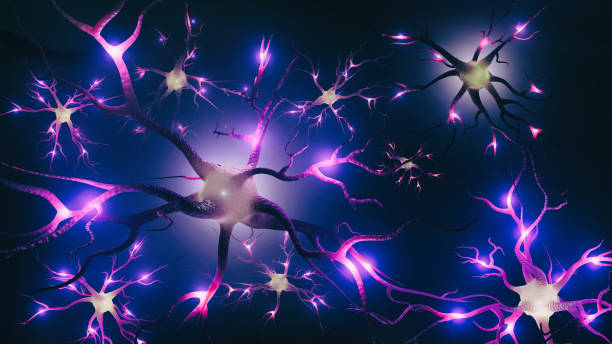
Researchers at Duke University School of Medicine have developed a technology called LinCx that creates new electrical connections between specific neurons, effectively forming a biological “bypass” around disrupted brain circuits. The system, tested in worms and mice, changed behavior and reshaped brain activity patterns while avoiding the broad effects seen with drugs, electrical stimulation, and other existing neuroscience tools.
A team of neuroscientists has taken a significant step toward rewriting the brain’s communication pathways by building what amounts to a custom biological wire between neurons.
The new technology, called LinCx, was designed by researchers at Duke University School of Medicine to create direct electrical connections between carefully selected brain cells. Instead of trying to repair damaged neural connections, the approach establishes an entirely new route for signals to travel.
The work, led by Kafui Dzirasa, could open a new direction in treating neurological disorders linked to disrupted brain circuitry. The findings were published in Nature.
A Different Strategy for Repairing Brain Communication
Many neurological disorders are associated with broken or disrupted neural circuits. Existing treatments often rely on medications or external stimulation methods that affect large groups of cells at once.
LinCx approaches the problem differently.
Rather than modifying damaged synapses directly, the system installs a new electrical pathway between specific neurons. Researchers describe it as a biological “bypass” that strengthens communication without altering the brain’s existing wiring.
According to Dzirasa, the technology offers a new level of precision in manipulating neural networks.
“By introducing a way to plug in new electrical connections with cellular-level precision, our study marks a major step forward in the ability to edit brain circuitry and understand how neural networks give rise to behavior,” he said.
The approach is intended to create selective and lasting changes within defined brain circuits, something that has remained difficult with current neuroscience tools.
Fish Proteins Became the Foundation of the System
The researchers built LinCx using proteins originally discovered in fish. These proteins naturally form electrical synapses, which allow electrical signals to pass directly between cells.
The Duke team used protein engineering to redesign the molecules so they would connect only with a specifically engineered partner. Importantly, the modified proteins were designed not to interact with native proteins already present in the brain.
To identify the most effective pairs, the researchers carried out laboratory screening using a newly developed fluorescence-based assay. That process helped them find engineered protein combinations that showed high specificity while reliably transmitting electrical signals between cells.
The result was a system capable of creating new, targeted electrical links inside living nervous systems.
Experiments Changed Behavior in Worms and Mice
The team tested LinCx in both worms and mice to determine whether the engineered connections could meaningfully alter neural function and behavior.
In worms, adding new electrical connections changed the animals’ temperature-seeking behavior. That demonstrated the technology’s ability to influence how neural circuits process sensory information.
The mouse experiments revealed broader effects.
Researchers found that targeted electrical connections strengthened communication within selected brain circuits. The engineered pathways also reshaped activity patterns across the brain and produced measurable behavioral changes.
Those changes included differences in social interaction and stress responses, suggesting that the artificial electrical links were influencing complex neural functions rather than isolated cell activity alone.
The findings showed that LinCx could operate across very different organisms while maintaining precise control over which neurons became connected.
Overcoming Long-Standing Limits in Neuroscience
For decades, scientists have struggled to control communication between highly specific cell types in the brain.
Conventional approaches such as drugs, electrical stimulation, and optogenetics typically influence broad populations of neurons. Earlier attempts to use electrical synapses as a research tool also faced a major problem: unintended connections forming between cells.
According to the researchers, LinCx was designed specifically to avoid those limitations.
Because the engineered proteins recognize only their matching partners, the system can establish selective electrical connections while minimizing unwanted interactions elsewhere in the brain.
Dzirasa said the technology may eventually improve upon current tools because it does not require ongoing external stimulation to maintain its effects.
That distinction could make the system particularly useful for studying how specific neural circuits shape behavior over time.
The Next Step: Testing Neurological Disorders
The research team is now preparing to investigate whether LinCx can compensate for deficits caused by long-term genetic disruptions in brain circuitry.
“We will next test whether LinCx is powerful enough to override synaptic deficits induced by lifelong genetic disruptions,” Dzirasa said.
Those future experiments will examine whether the artificial electrical pathways can restore communication in circuits that have been impaired for much of an organism’s life.
While the current study focused on demonstrating the technology itself, the next phase aims to determine how far the approach can go in correcting dysfunctional neural signaling.
Why This Matters
The study introduces a fundamentally different way of thinking about brain repair.
Instead of attempting to fix damaged neural connections one by one, LinCx creates entirely new communication routes between neurons with cellular-level precision. That ability could give researchers a powerful new tool for studying how brain circuits produce behavior and how disruptions in those circuits contribute to disease.
The findings also highlight the possibility of longer-lasting and more selective interventions than those offered by many current treatments. By targeting specific neurons rather than broad regions of the brain, the technology could help scientists explore new strategies for addressing disorders tied to disrupted circuitry.
For neuroscience, the work represents a step toward directly editing the brain’s communication networks — not by replacing the brain’s wiring, but by building new pathways around the damage.
Study Details
Elizabeth Ransey et al, Long-term editing of brain circuits using an engineered electrical synapse, Nature (2026). DOI: 10.1038/s41586-026-10501-y