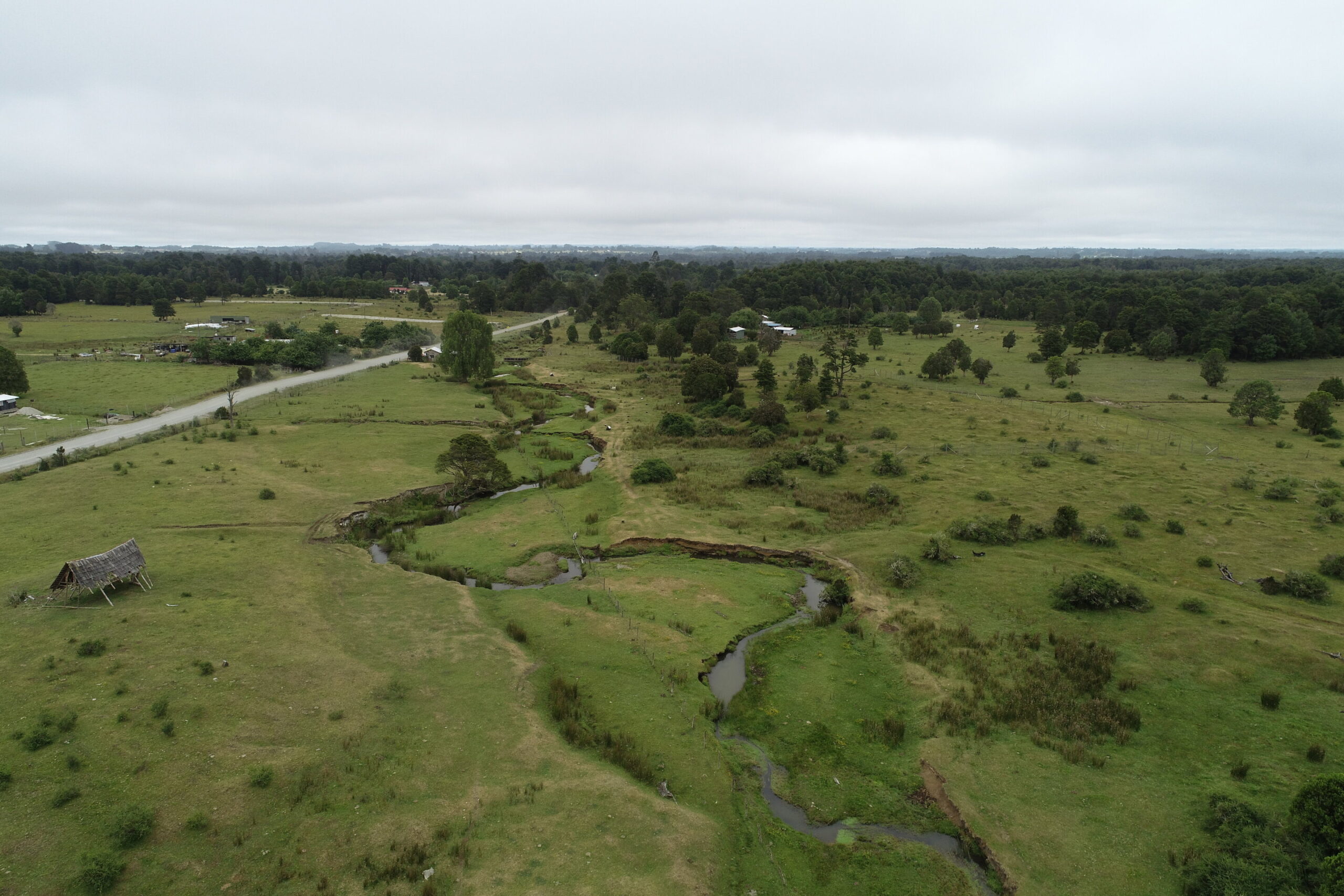
For nearly half a century, a boggy creek bed in southern Chile has served as the ultimate proof that the first Americans arrived far earlier than previously imagined. The site, known as Monte Verde, appeared to rewrite history with its collection of preserved footprints, wooden lances, and even the remains of an ancient fire pit. These artifacts suggested a human presence dating back 14,500 years, firmly establishing that people were living near the tip of South America long before the famous Clovis hunters of North America had even finished their journey. However, a provocative new study is now calling that entire timeline into question, suggesting the site might be thousands of years younger than the scientific community has believed for decades.
This latest investigation, recently published in the journal Science, does not just tweak the dates; it proposes a radical reinterpretation of the ground itself. If the study’s conclusions hold, the “oldest” site in South America might actually be a relatively recent settlement, potentially reopening the door to fierce debates about how and when humans first crossed into the New World.
Reinterpreting the Geology of Chinchihuapi Creek
The challenge to Monte Verde’s antiquity stems from a detailed analysis of the landscape surrounding the site. Researchers led by Claudio Latorre of the Pontifical Catholic University of Chile and Todd Surovell of the University of Wyoming focused their attention on the geological layers of Chinchihuapi Creek, where the artifacts were originally found. By sampling sediments from nine different areas, the team reconstructed the environmental history of the region over several millennia.
The smoking gun in their argument is a distinct layer of volcanic ash discovered during their excavations. This ash layer has been dated to approximately 11,000 years ago, a finding that creates a massive chronological problem for the existing Monte Verde timeline. In the world of archaeology, the law of superposition generally dictates that anything found above a specific geological marker must be younger than that marker. Because the Monte Verde artifacts and wooden structures were situated above this 11,000-year-old ash, the researchers argue they cannot possibly be 14,500 years old.
Latorre and his colleagues suggest that the site’s original investigators may have been misled by the complex way nature moves earth. They believe that a prehistoric stream likely wore down older rock and wood from ancient layers and mixed them with newer materials. This natural mixing could have caused scientists to inadvertently date 8,200-year-old cultural layers using wood that was actually much older and washed in from elsewhere.
A Scientific Community Divided Over Cultural Evidence
The proposal has been met with significant resistance from other experts in the field, particularly those who have spent decades documenting the site’s unique archaeological record. Critics argue that the new study relies too heavily on geological theory while ignoring the physical reality of the artifacts themselves. Tom Dillehay of Vanderbilt University, the archaeologist who led the original excavations that first proved the site’s age, maintains that the new interpretation disregards a vast body of well-dated cultural evidence.
The original findings at Monte Verde included more than just scattered wood; researchers found highly specific items that showed clear signs of human craftsmanship. Among these were a mastodon tusk that had been fashioned into a tool, a wooden lance, and a digging stick with a burned tip. These items were directly dated to the 14,500-year mark. Dillehay and other skeptics of the new study point out that the geological samples taken by Latorre’s team came from the surrounding area, not from the exact spots where the primary cultural artifacts were uncovered. They argue that the geology of the wider creek is not necessarily comparable to the specific, sealed contexts of the site itself.
Furthermore, outside experts like Michael Waters of Texas A&M University have questioned whether the volcanic ash layer cited as a “deadline” for the site actually covered the entire landscape. Without proof that the ash was an unbroken blanket across the whole area, the argument that everything above it must be younger becomes much harder to sustain. Waters described the new study as a working hypothesis that is currently not supported by the data presented.
Reopening the Search for the First Americans
The stakes of this debate extend far beyond a single creek in Chile. For years, Monte Verde was the primary evidence used to dismantle the “Clovis First” theory, which held that a single group of big-game hunters entered the Americas through an ice-free corridor in Canada roughly 13,000 years ago. When Monte Verde was confirmed as being 14,500 years old, it proved that people were already settled deep in South America before that corridor even existed.
If Monte Verde is actually only 8,200 years old, it wouldn’t necessarily mean that humans weren’t in the Americas early. Other sites in North America, such as Cooper’s Ferry in Idaho and the Debra L. Friedkin site in Texas, also suggest a human presence that predates the Clovis culture. However, losing Monte Verde as a benchmark for the earliest migration would significantly change the map. It would force scientists to look more closely at different migration routes, such as the possibility of early humans traveling by boat along the Pacific coast or navigating a shifting mix of land and water.
While the new study authors admit their findings are controversial, they argue that questioning established sites is a necessary part of the scientific process. Surovell noted that science is inherently self-corrective and that given enough time and independent analysis, the community will eventually reach the truth of how our ancestors first reached these shores.
Why This Matters
The timeline of human arrival in the Americas is one of the most fundamental questions in global archaeology. It tells us how our species adapted to new worlds, how quickly they moved across vast continents, and how they interacted with extinct megafauna like mastodons. If Monte Verde is indeed younger than we thought, it shifts our understanding of how quickly humans reached the southern reaches of the globe. This debate reminds us that the “human story” is not a static list of dates, but a living investigation where new technology and geological methods can suddenly turn the world’s most famous discoveries into the newest scientific mysteries.
Study Details
Todd A. Surovell et al, A mid-Holocene age for Monte Verde challenges the timeline of human colonization of South America, Science (2026). DOI: 10.1126/science.adw9217. www.science.org/doi/10.1126/science.adw9217