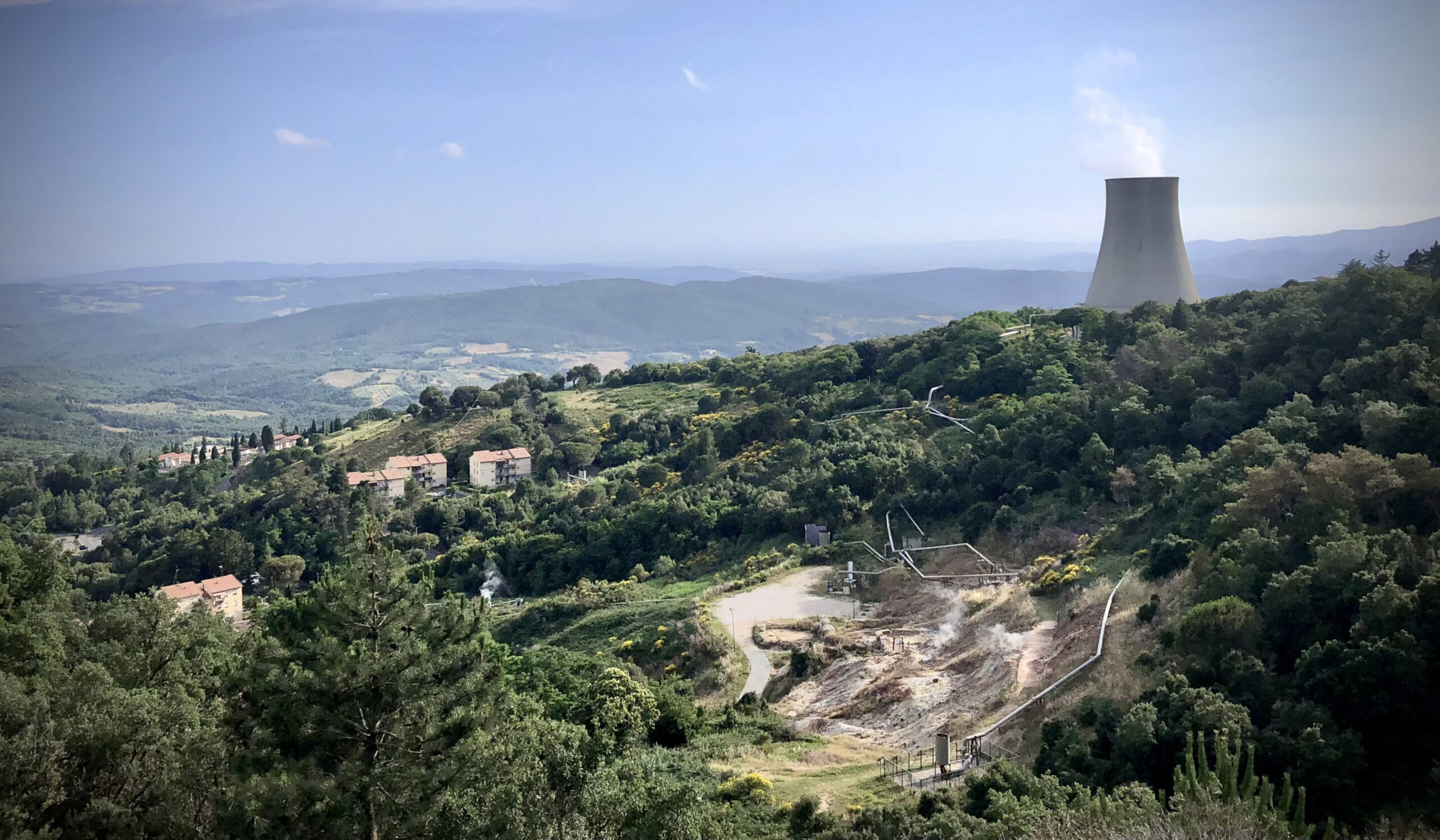
On the surface, Tuscany looks like a place of calm beauty. There are no smoking craters, no dramatic eruptions, no obvious scars in the landscape that scream danger or hidden fire. If you stood there, you might assume the Earth beneath your feet was just as peaceful.
But the ground is never truly silent.
Even in the stillest moments, Earth hums with tiny vibrations. They come from ocean waves, from wind, and even from human activity. These faint tremors ripple endlessly through rock, slipping into cracks, passing through layers, and vanishing into the deep.
For scientists, that constant background shaking is not noise. It is a message.
And in Tuscany, that message turned out to be astonishing.
A research team from the University of Geneva (UNIGE), the Institute of Geosciences and Earth Resources (CNR-IGG), and the National Institute of Geophysics and Volcanology (INGV) has discovered something massive hidden below the region: a vast reservoir containing about 6,000 km³ of magma, buried deep inside Earth’s crust.
It was there all along. Quiet. Invisible. Unannounced.
And yet, the planet had been whispering about it the entire time.
The Mystery of Magma With No Warning Signs
Some of the world’s most famous volcanic systems make their presence known. Places like Yellowstone National Park, Lake Toba, and Lake Taupo are known to sit above enormous magma reservoirs, sometimes measuring several thousand cubic kilometers.
Their underground power isn’t a secret because the surface tells the story. There are eruptive deposits, craters, ground deformation, and gas emissions—clues that betray the molten world below.
But Tuscany didn’t have those signs.
That’s what makes this discovery so unsettling and so fascinating. Without dramatic evidence above ground, huge volumes of molten material can remain buried and unsuspected, locked away deep within the crust like a secret chamber.
This was exactly the case here.
Scientists already understood that Tuscany, stretching north to south across the region, is geothermally active. That much was known. But what they didn’t know was that the geothermal activity might be fueled by something far larger than expected.
Then the data began to reveal what the landscape refused to show.
At depths of about 8–15 km, inside the continental crust, the team identified reservoirs containing roughly 6,000 km³ of volcanic fluids.
It was not a small pocket of heat. It was an underground system comparable in size to the magma bodies beneath some of the most iconic supervolcanic regions on Earth.
Listening to the Earth Like a Doctor With a Stethoscope
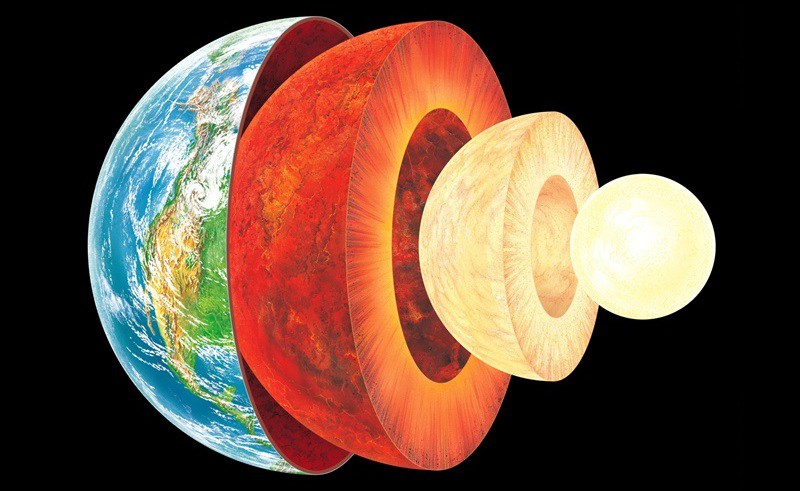
Finding magma deep underground is not like digging a hole and peering inside. At depths of 5, 10, or even 15 km, the crust is far beyond direct reach.
So how do you detect something that leaves no surface footprint?
The answer is a technique called ambient noise tomography.
This method, widely used in seismology, works almost like giving Earth a medical scan. Instead of using artificial explosions or drilling, scientists listen carefully to the vibrations already happening naturally all the time.
The ground is constantly moving with subtle tremors caused by the environment. Ocean waves crashing far away, the push of wind, the steady pulse of human activity—all of these create seismic signals that travel through the crust.
The team deployed about 60 high-resolution seismic sensors on the surface. These instruments acted like ears pressed to the Earth, recording the endless flow of vibrations passing through rock.
The brilliance of the method is that it doesn’t require an earthquake. It doesn’t require an eruption. It simply uses what the planet provides for free: the constant background shaking of a living world.
Then comes the key insight. When these seismic waves travel through different materials, they move at different speeds. Solid rock allows waves to pass faster. But molten material changes everything.
If the waves propagate at unusually low velocities, it can signal the presence of something softer, hotter, and partially melted—something like magma.
That’s the fingerprint researchers were searching for.
And Tuscany’s crust gave them a clear one.
An X-Ray Image of Fire Beneath the Hills
Once the sensors captured the vibrations, the researchers didn’t just look at them individually. They combined the recordings, comparing how signals arrived across the region.
This combined analysis allowed them to reconstruct a detailed three-dimensional image of the subsurface.
In other words, they created an underground map—an X-ray of the crust beneath Tuscany.
And inside that invisible landscape, they found the signature of molten rock.
The imaging revealed a deep reservoir of volcanic fluids spanning the region, sitting at depths of 8–15 km, with an estimated volume of around 6,000 km³.
For the scientists involved, the discovery carried the shock of realization.
Matteo Lupi, associate professor in the Department of Earth Sciences at UNIGE, who led the study, explained that the team already knew Tuscany was geothermally active. But they had not realized the region contained such a massive magma volume, comparable to supervolcanic systems such as Yellowstone.
It was like believing you were walking above a warm underground spring, only to learn there is an entire hidden ocean of molten rock beneath your feet.
A Sleeping Giant That Isn’t Waking Up
The word “magma reservoir” can instantly trigger fear. A magma body that large sounds like a disaster waiting to happen.
But the researchers are careful and clear about what this means.
Although this magma body could, in theory, contribute to the formation of a supervolcano over geological timescales, it currently poses no threat.
That distinction matters. The reservoir is immense, but there are no indications described here of immediate instability or eruption risk. It is a discovery about Earth’s hidden architecture, not a warning siren.
Still, the idea lingers in the mind: a supervolcano-sized magma system, sitting quietly under a region that does not look volcanic at all.
It’s a reminder that Earth’s most dramatic processes do not always announce themselves with spectacle. Sometimes they simply exist—deep, slow, and silent.
The Hidden Treasure Map Beneath the Discovery
This breakthrough is not only about understanding volcanoes. It also opens the door to something practical, something urgently relevant to the modern world.
The study suggests that ambient noise tomography could become a faster and more cost-effective way to locate valuable underground resources.
Deep magmatic systems are closely linked to the formation of geothermal reservoirs, as well as deposits of lithium and rare earth elements.
These materials matter because they are used in modern technologies, including electric vehicle batteries.
The research, published in Communications Earth & Environment, shows that tomography can explore the subsurface quickly and at relatively low cost, offering a tool that could support the energy transition.
Instead of relying only on surface clues, scientists may be able to “see” deeper—finding buried systems that would otherwise remain hidden.
Why This Discovery Matters
This research matters because it changes how we understand what lies beneath seemingly ordinary landscapes. Tuscany had no dramatic surface evidence of a vast magma system, yet it holds a reservoir comparable in scale to the magma bodies beneath famous volcanic regions.
It also matters because it demonstrates the power of ambient noise tomography, a method that turns Earth’s constant vibrations into a detailed underground image. With about 60 seismic instruments and careful analysis, scientists were able to reveal a massive hidden structure at depths of 8–15 km.
Beyond the scientific surprise, the discovery points toward practical possibilities. If deep magma systems are linked to geothermal energy, lithium, and rare earth elements, then mapping them accurately could help locate resources essential for the technologies driving the energy transition.
Study Details
Lupi, M., et al. High-enthalpy Larderello geothermal system, Italy, powered by thousands of cubic kilometres of mid-crustal magma, Communications Earth & Environment (2026). DOI: 10.1038/s43247-026-03334-0