The discovery did not begin in a laboratory or on the deck of an icebreaker, but in a living room. Jack Devlin was watching a documentary about plastic pollution when something inside him shifted. “Watching that film just blew my mind,” he said. “I started reading about plastic’s effects on insects and thought, ‘If plastic is turning up everywhere else, what about rare places like Antarctica?’” That question lingered long enough to become a Ph.D. project, one that would eventually lead Devlin from the University of Kentucky to the far edges of the Antarctic Peninsula, to study the only insect that calls the frozen continent home.
The Little Creature That Should Have Been Safe
Belgica antarctica is no ordinary fly. It is a speck of life about the length of a grain of rice, yet it survives where almost nothing else can. Its larvae crowd into damp moss and algae, sometimes 40,000 per square meter, quietly recycling nutrients through Antarctic soil. Devlin described them with admiration. “They’re what we call poly-extremophiles,” he said. “They cope with intense cold, drying out, high salt, big swings in temperature and UV radiation. So, the big question was: Does that toughness protect them from a new stress like microplastics or does it make them vulnerable to something they’ve never seen before?”
Antarctica is often imagined as untouched wilderness, but earlier scientific work had already shown plastic fragments drifting into the continent through snow, seawater, wind, and human activity. Levels were low, far lower than in most parts of the world. But the question was no longer whether microplastics were arriving. It was whether the resilient little midge was eating them.
When Toughness Meets a New Threat
To find out, Devlin and his collaborators subjected midges to controlled microplastic exposure. The results surprised them. “Even at the highest plastic concentrations, survival didn’t drop,” Devlin said. “Their basic metabolism didn’t change either. On the surface, they seemed to be doing fine.” But beneath that surface, something subtle was shifting. The larvae stored less fat when exposed to higher microplastic levels. Their carbohydrates and proteins stayed about the same, but their long-term energy reserves shrank.
Devlin suspects this might be linked to the slow pace of feeding in cold conditions and the complexity of natural Antarctic soil, which might limit how much plastic the insects actually swallow. The experiment lasted only ten days. In a place as challenging as Antarctica, that was already a logistical feat, but it also meant the deeper consequences of microplastic exposure remained unknown. Longer experiments would be essential for understanding what happens over the larvae’s two-year lifespan.
A Search Through the Guts of Antarctica’s Only Insect
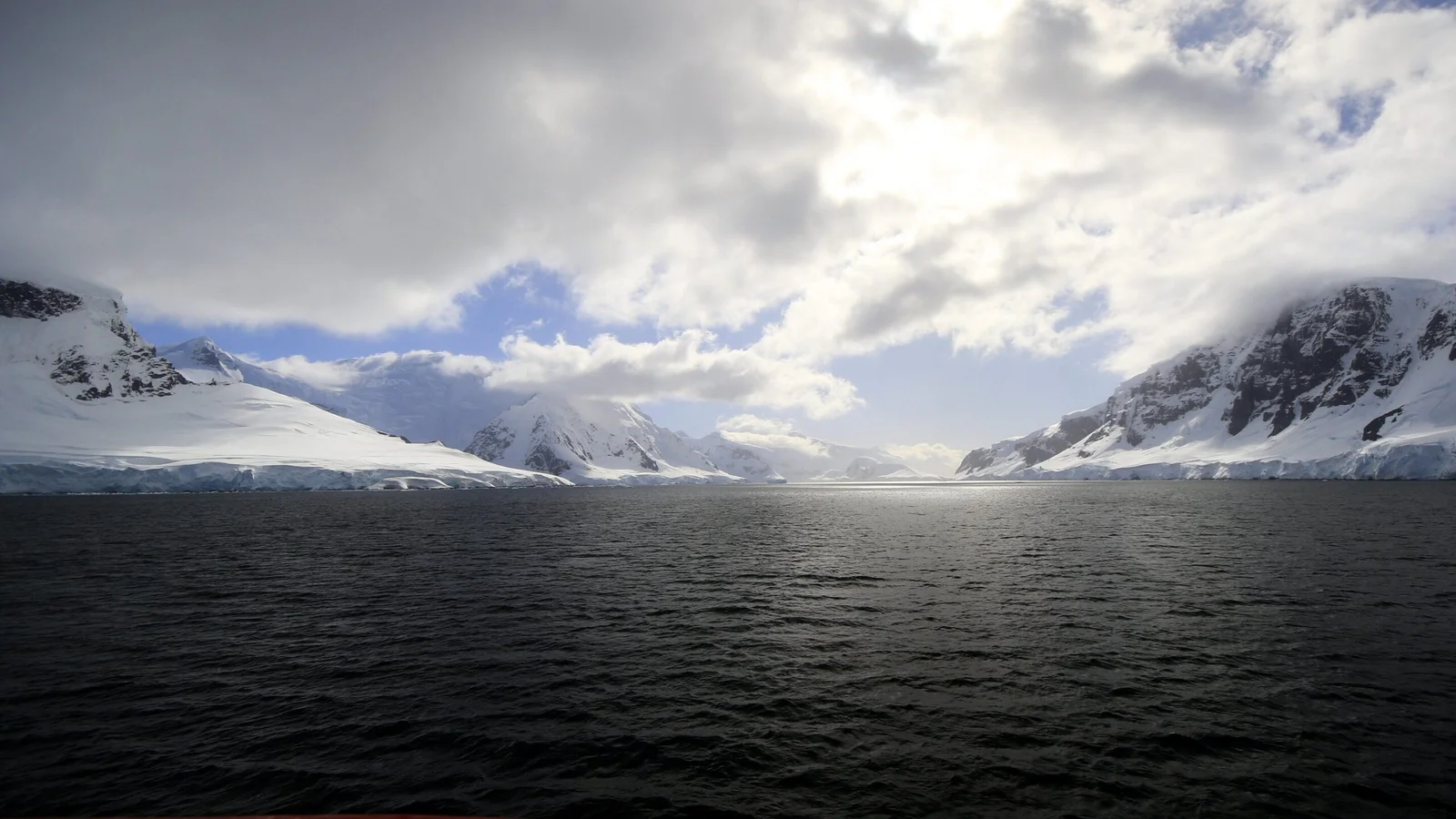
The second part of the project asked an even more basic question: Were wild insects already ingesting microplastics on their own? In 2023, Devlin joined a research cruise along the western Antarctic Peninsula. The team collected midges from 20 sites spanning 13 islands, preserving each larva to prevent any further feeding. From there, the work shifted to Italy, where Devlin collaborated with microplastics specialist Elisa Bergami and imaging expert Giovanni Birarda.
Together, they dissected the five-millimeter larvae and used high-resolution imaging systems capable of identifying the chemical signatures of particles as small as four micrometers. It was meticulous, almost surgical work, and it revealed only two microplastic fragments across 40 larvae. Just two pieces. Yet to Devlin, the meaning was unmistakable.
“Antarctica still has much lower plastic levels than most of the planet, and that’s good news,” he said. “Our study suggests that right now, microplastics are not flooding these soil communities. But we can now say they are getting into the system, and at high enough levels they start to change the insect’s energy balance.”
Belgica has no land predators. Whatever plastic it consumes is unlikely to climb upward into larger animals. But the larvae live for years, not weeks. If microplastic intake continues, the long-term impacts could be very different, especially as warming and drying add another layer of stress.
The Moment Antarctica No Longer Felt Distant
For Devlin, the emotional weight of the findings was impossible to ignore. “This started because I watched a documentary and thought, ‘Surely Antarctica is one of the last places not dealing with this,’” he said. “Then you go there, you work with this incredible little insect that lives where there are no trees, barely any plants, and you still find plastic in its gut. That really brings home how widespread the problem is.”
Antarctica is often treated as a mirror of the global environment, a place where changes arrive slowly and quietly yet reveal universal truths. For Devlin, that simplicity is what makes the region invaluable. “Antarctica gives us a simpler ecosystem to ask very focused questions,” he said. “If we pay attention now, we might learn lessons that apply far beyond the polar regions.”
Why This Research Matters
Microplastics are often discussed as a distant, ocean-wide problem, but this study shows that no place is truly beyond their reach. The midges of Antarctica are not charismatic animals. They do not migrate across continents or hunt across oceans. They stay close to the ground, clinging to life in patches of moss. If even they are eating microplastics, it means the world has crossed another threshold.
The study’s findings are not catastrophic. They are not meant to inspire panic. Instead, they offer something more valuable: early detection. The plastic pieces found inside Belgica are few, but they mark the beginning of a change, one that could reshape soil communities as the continent warms and dries.
The research matters because it reveals how far human pollution has traveled and how early we can still act. It shows that even the smallest creatures in the most remote places are part of our global story, and they feel our impact long before we notice it ourselves.
More information: Jack J. Devlin et al, Prevalence and consequences of microplastic ingestion in the world’s southernmost insect, Belgica antarctica, Science of The Total Environment (2025). DOI: 10.1016/j.scitotenv.2025.180800