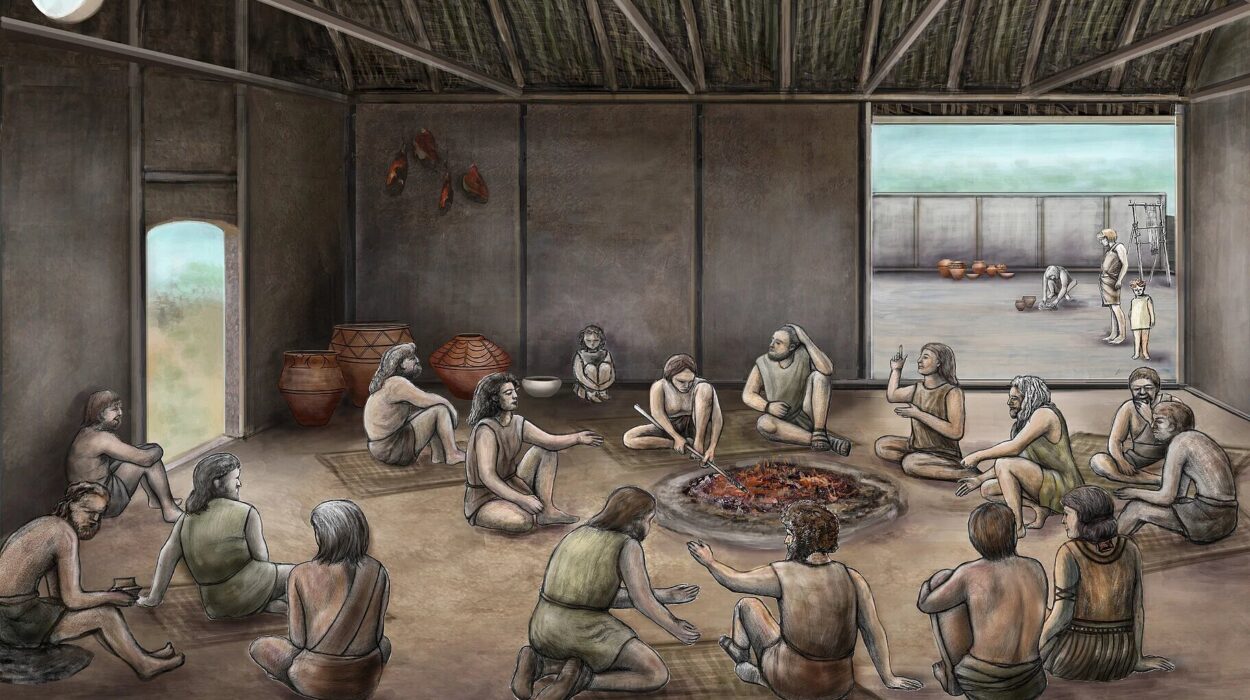
Deep in the rolling landscape of northeastern Romania, at an ancient settlement known as Stăuceni-“Holm”, a team of researchers has physically unearthed a massive architectural anomaly that challenges our understanding of early human society. While most prehistoric homes from this era are modest and uniform, this newfound structure spans an incredible 350 square meters. Dating back approximately 6,000 years, the discovery offers a rare, tangible glimpse into the Cucuteni-Trypillia culture, a civilization that flourished between 5000 and 3500 BC and built some of the most sophisticated, well-planned settlements in ancient Eastern Europe.
The Mystery of a Civilization Without Elites
The Cucuteni-Trypillia culture has long fascinated historians because it seems to defy the traditional rules of how “great” civilizations are supposed to function. In most ancient societies, large cities were typically defined by the presence of grand palaces, hoardings of precious metals, and elaborate burials that marked a clear divide between the ruling elite and the common people. However, in these early Eastern European cities, which housed thousands of inhabitants, researchers find a startling sense of equality. Most houses look nearly identical, and the rare presence of gold or silver suggests a society that may have functioned without a centralized hierarchy or a ruling class.
To peel back the layers of this social mystery, a collaborative team of archaeologists from Romania and Germany embarked on two major excavation seasons in 2023 and 2024. Their goal was to move beyond theories and physically examine the remains of a site that appeared to host something far larger than a standard family home. Their findings, recently detailed in the journal PLOS One, provide the first hard evidence of a building that was significantly different from its neighbors in both scale and purpose.
Mapping the Settlement Through the Earth’s Magnetic Field
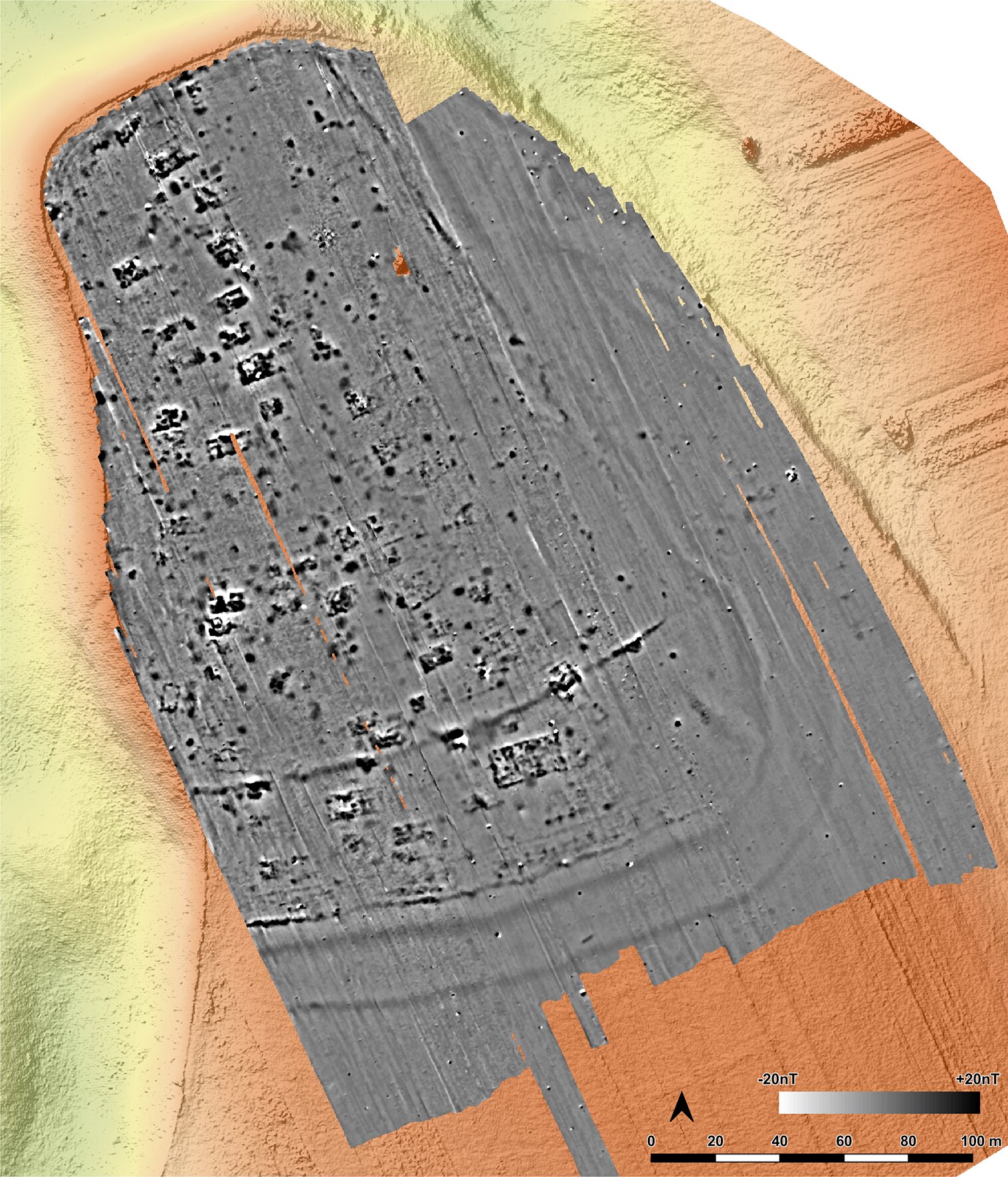
Before any physical digging began, the researchers used non-invasive technology to see beneath the surface. They conducted geomagnetic surveys, a process that detects variations in the earth’s magnetic field caused by buried features like walls, ditches, or burned clay. These surveys produced a detailed map of the entire settlement layout, revealing a high density of standard house plots. However, the map also highlighted one specific area that stood out due to its massive footprint.
This particular structure was not just large; it was also strategically placed. The data showed it was located directly behind the settlement ditch, the defensive or symbolic trench that encircled the site. Its positioning near the entrance suggested that this was a landmark building designed to be the first thing people encountered when arriving at Stăuceni-“Holm”. This visual prominence hinted at a level of communal importance that the smaller, uniform residences did not possess.
Excavating the Giant Foundation
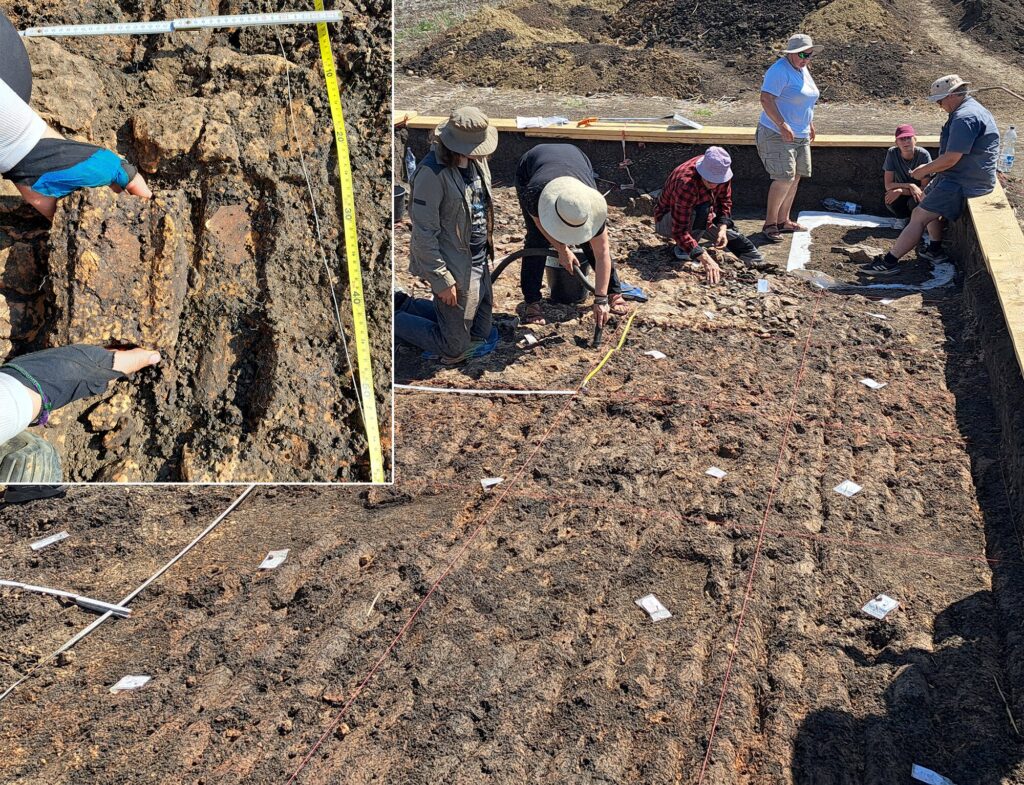
Once the mapping was complete, the team began the arduous task of physical excavation. After clearing surface artifacts to confirm the site’s age and historical context, they uncovered the building’s physical remains. The dig revealed a complex foundation ditch peppered with large post-holes. These holes once held the heavy timber supports required to keep such a massive roof from collapsing.
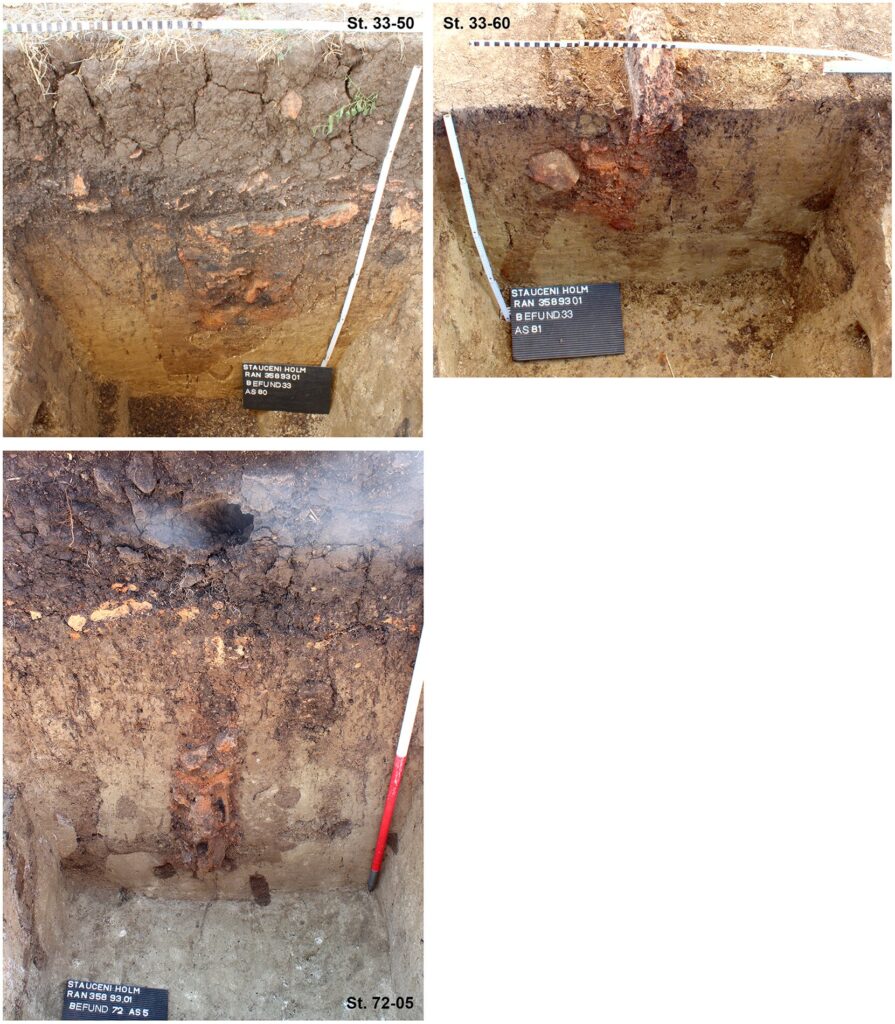
As the team reached the interior of the building, they discovered a thick clay floor, which was a hallmark of Cucuteni-Trypillia architecture. However, the most telling evidence came from what was missing. In the surrounding smaller houses, archaeologists typically find storage pits for grain, domestic ovens for cooking, and a variety of daily household tools. Inside this mega-structure, those typical signs of domestic life were almost entirely absent. The lack of private living artifacts strongly suggests that this space was never intended for a single family to live in.
A Public Center for an Ancient Community
Based on the evidence gathered so far, the research team has proposed a compelling hypothesis: this was a communal assembly hall or a public administrative center. Because these mega-structures appear with some regularity at other Cucuteni-Trypillia sites, archaeologists believe they played a functional role in how the community was governed. In a society that lacked kings or emperors, these large halls may have served as the “engine room” of the settlement—a place where residents gathered to make collective decisions, resolve disputes, or manage the logistics of their complex, high-population cities.
The researchers noted in their paper that while a structure of this size might not have been strictly “necessary” for survival, its presence across multiple sites suggests it was a standard feature of their social technology. It represents the best candidate for the physical seat of government in a culture that otherwise left behind very few clues about who was in charge or how order was maintained among thousands of people.
Why This Matters
The discovery at Stăuceni-“Holm” is a critical piece of the puzzle for understanding the evolution of human social structures. It proves that large-scale, coordinated architecture does not always require a king or a dictator to command its construction. Instead, this 350-square-meter hall suggests that early humans were capable of organizing themselves into massive, well-functioning cities through communal cooperation and public administration.
As the excavation is currently only partial, future work at the site is expected to reveal more about the building’s specific internal features. Every new layer of clay or post-hole uncovered brings us closer to understanding how a civilization could build such sophisticated urban centers without the need for social inequality. By studying the Cucuteni-Trypillia, researchers are learning that the path to civilization may have been far more collaborative than once believed.
Study Details
Doris Mischka et al, The mega-structure at Stăuceni-‘Holm’, Botoşani county, Romania and the debate about the governing of Cucuteni-Trypillia-settlements, PLOS One (2026). DOI: 10.1371/journal.pone.0343603