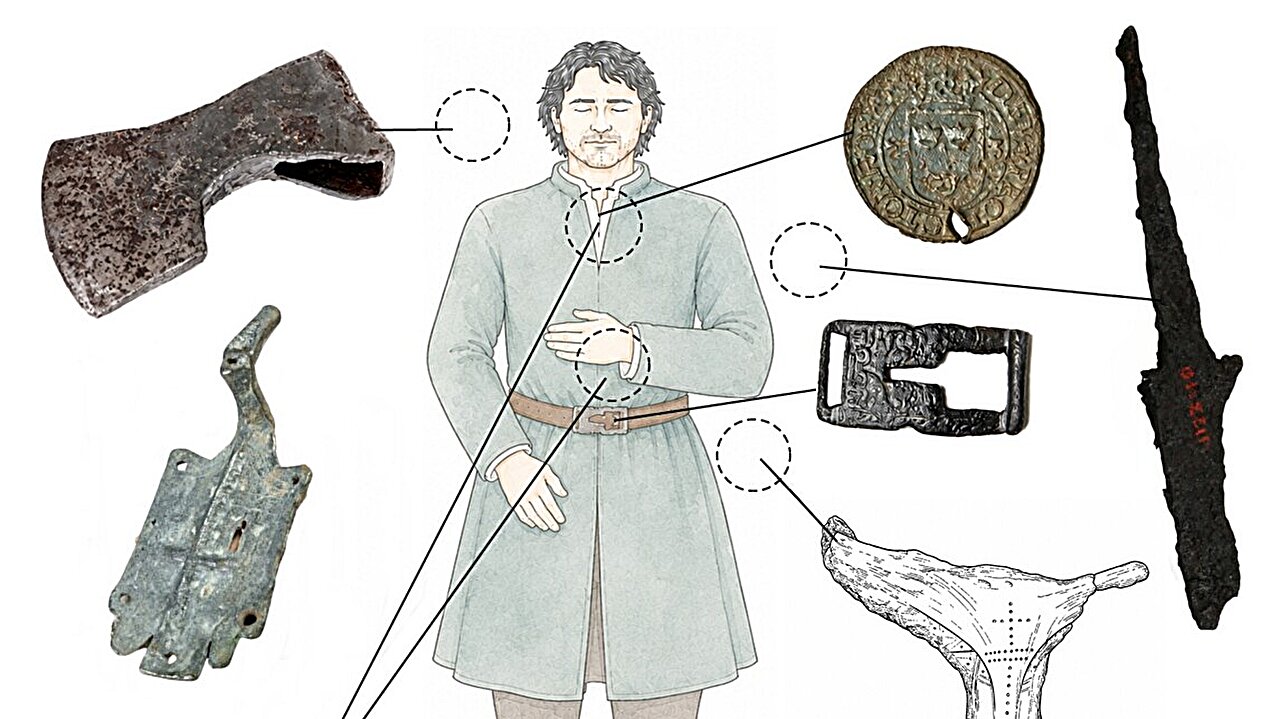
Genetic and isotope evidence has uncovered new details about a man buried near Finland’s Lake Kitka around the turn of the 17th century. The research links him closely to present-day Sámi populations and suggests he spent part of his life far from Finland, possibly in Iceland, before arriving in Kuusamo shortly before his death.
For decades, a solitary grave discovered near Lake Kitka in northern Finland has intrigued archaeologists and historians. Now, modern genetic and chemical analyses are providing an unexpected glimpse into the life of the man buried there, revealing connections that stretch across both geography and culture.
Researchers from the University of Turku and collaborating institutions examined DNA and isotopes from the remains of a man who lived around the turn of the 17th century. Their findings, published in BMC Genomics, suggest that his life was far more mobile and complex than previously understood.
DNA Points to Strong Connections With Sámi Populations
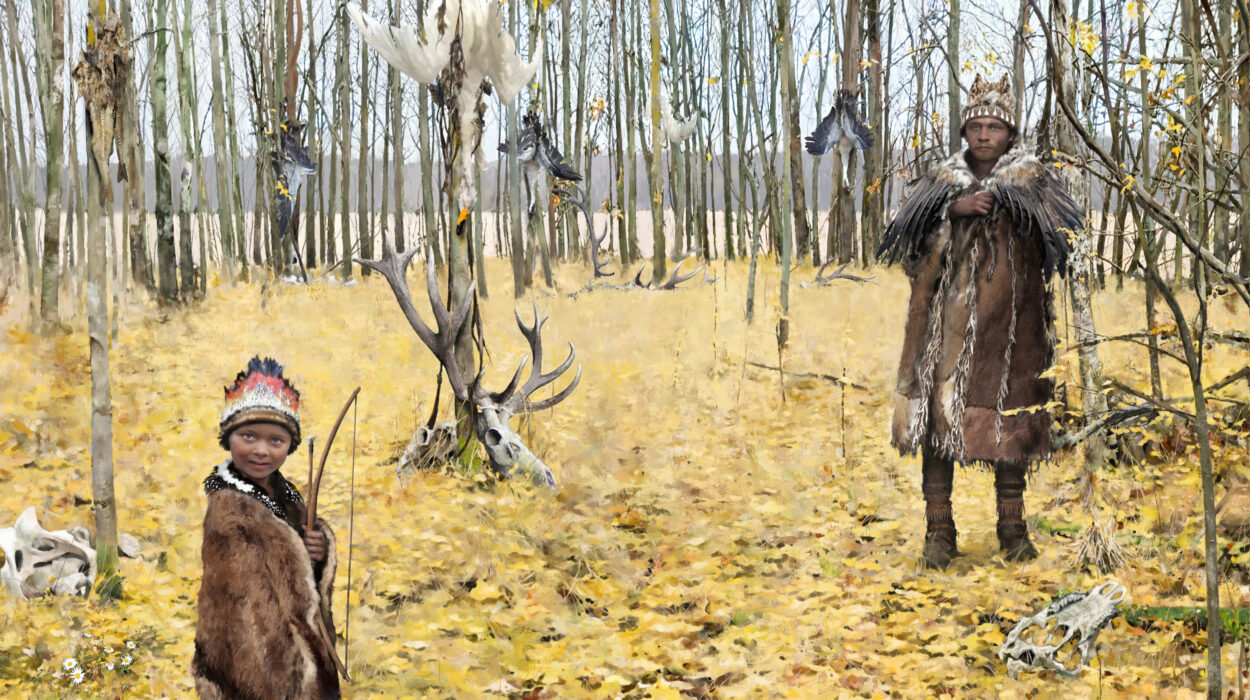
The individual, estimated to have been about 40 years old when he died, was first discovered in the 1970s. His burial site has long been associated with Sámi cultural heritage, and the new genetic evidence strengthens that connection.
Scientists extracted DNA from the man’s teeth and compared it with both ancient and modern genetic datasets. The analysis showed that his genetic profile was most closely related to both historical and present-day Sámi populations.
The study also found shared DNA segments between the Kitka individual and modern people living in Finland, particularly in North and Northeast Lapland. Those genetic links became noticeably weaker in the Kuusamo region itself and farther south.
According to researcher Sanni Peltola of the University of Turku, similar patterns emerged when modern Sámi populations were used as the basis for comparison. This consistency suggests that the results reflect broader historical interactions and mixing between Sámi and Finnish populations over time.
However, the researchers emphasize that genetic evidence should not be used to define cultural identity.
Peltola noted that Sámi identity is not determined by biology alone but is instead shaped by historical, cultural, and social factors. While ancient DNA can reveal aspects of population history, it cannot fully explain how people identified themselves or were understood by their communities.
Genetic Genealogy Has Limits
The burial has attracted significant attention from genetic genealogy enthusiasts interested in tracing family connections into the distant past.
Yet the researchers caution against drawing direct family links from the findings.
Although DNA can reveal population-level relationships and historical connections, the study concludes that it cannot reliably connect a person who lived more than four centuries ago to specific modern families or individuals.
That limitation highlights an important distinction between reconstructing ancient population history and identifying direct ancestral relationships in the present day.
Chemical Clues Reveal a Life of Movement
While DNA shed light on ancestry, isotope analysis offered insights into where the man lived and what he ate during different stages of his life.
Scientists examined chemical signatures preserved in his teeth. These signatures can provide information about diet and environmental conditions experienced during childhood and adolescence.
The results indicate that the man’s diet changed substantially over time.
During childhood, he consumed a mixture of terrestrial animals, freshwater fish, and marine resources. As he grew older, marine foods became increasingly important in his diet. At the same time, freshwater fish disappeared from the dietary record.
That shift is particularly noteworthy because freshwater fish have historically been an important food source in the Kuusamo region.
The findings suggest that he spent significant periods of his life outside the area where he was ultimately buried.
Evidence Points Toward the North Atlantic
One of the study’s most intriguing discoveries came from isotope values linked to drinking water.
These chemical markers suggest that during his teenage years, the individual lived in a region with geological characteristics very different from those found in Finland.
Researchers identified a particularly compelling possibility.
According to senior researcher Ulla Nordfors, the most likely location was a region with volcanic bedrock in the North Atlantic, with Iceland emerging as the strongest candidate.
Historical records documenting contacts between Northern Fennoscandia and North Atlantic regions during the 16th century support that interpretation, providing a possible context for such long-distance movement.
While the evidence does not allow researchers to reconstruct his exact journey, it suggests that the man experienced environments and communities far beyond those traditionally associated with the Lake Kitka area.
Rethinking Earlier Interpretations
Previous studies had proposed that the Kitka individual may have been a noaidi, a Sámi ritual specialist.
The new research does not dismiss that possibility. However, it paints a more nuanced picture of his life and background.
Rather than fitting neatly into older interpretations, the findings suggest an individual whose experiences crossed geographic and cultural boundaries. His genetic heritage, dietary changes, and possible travel to North Atlantic regions indicate a life marked by movement and interaction.
Nordfors argues that the results challenge simplified portrayals found in earlier research literature. Historical Sámi communities and their social roles, she notes, were likely more diverse and complex than past scholarship sometimes suggested.
Why This Matters
The study demonstrates how combining ancient DNA and isotope analysis can transform a centuries-old burial into a detailed human story. Beyond identifying ancestry, the research reveals movement, changing diets, and connections between distant regions during a period of history that remains only partially understood.
Most importantly, the findings offer a richer view of historical Sámi communities and the people who lived within them. By uncovering evidence of long-distance travel, cultural interaction, and complex life histories, the research challenges older assumptions and highlights how interconnected northern regions may have been centuries ago.
Study Details
Sanni Peltola et al, Bioarchaeological analysis illustrates the life of a 16th-century Sámi individual from Kitka, Kuusamo, northern Finland, BMC Genomics (2026). DOI: 10.1186/s12864-026-12962-x