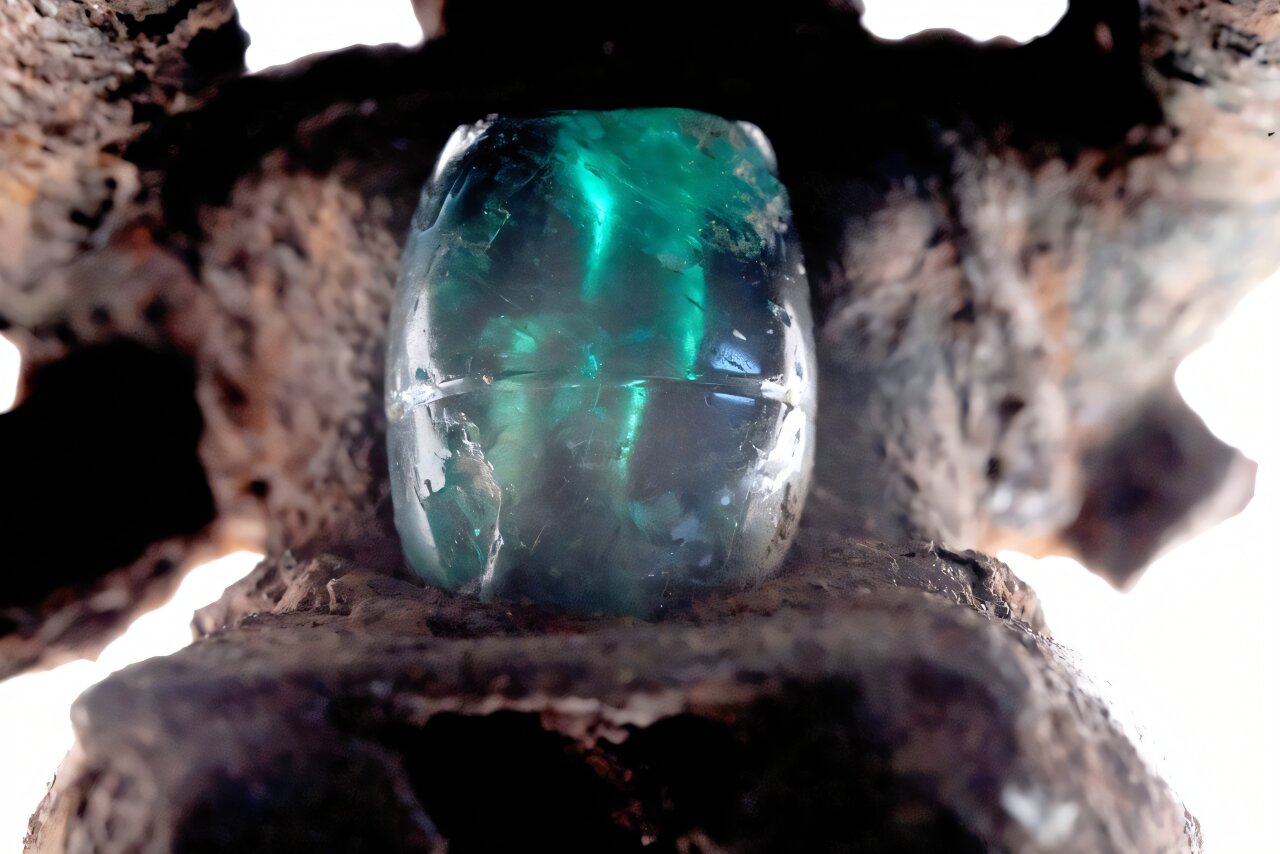
Buried alongside powerful leaders in ancient Panama, rare green gemstones have now been scientifically confirmed as emeralds for the first time. The findings reveal that these prized stones traveled more than 700 kilometers, exposing a sophisticated network of trade and cultural connections linking Central and South America over a millennium ago.
For generations, archaeologists suspected that the striking green stones found in elite Panamanian tombs were emeralds. The gems appeared in some of the region’s most lavish burials, surrounded by gold, mirrors, and other prestige objects. Yet despite decades of speculation, no scientific study had ever confirmed their identity.
Now, researchers have solved the mystery.
Using a suite of advanced, non-destructive analytical techniques, scientists have confirmed that the stones were indeed emeralds, and that they most likely originated from mining regions in present-day Colombia. The discovery provides the first scientific evidence of emeralds in pre-Columbian Panama and sheds new light on the long-distance exchange networks that connected societies across the Americas more than 1,000 years ago.
Emeralds Hidden in Elite Burials
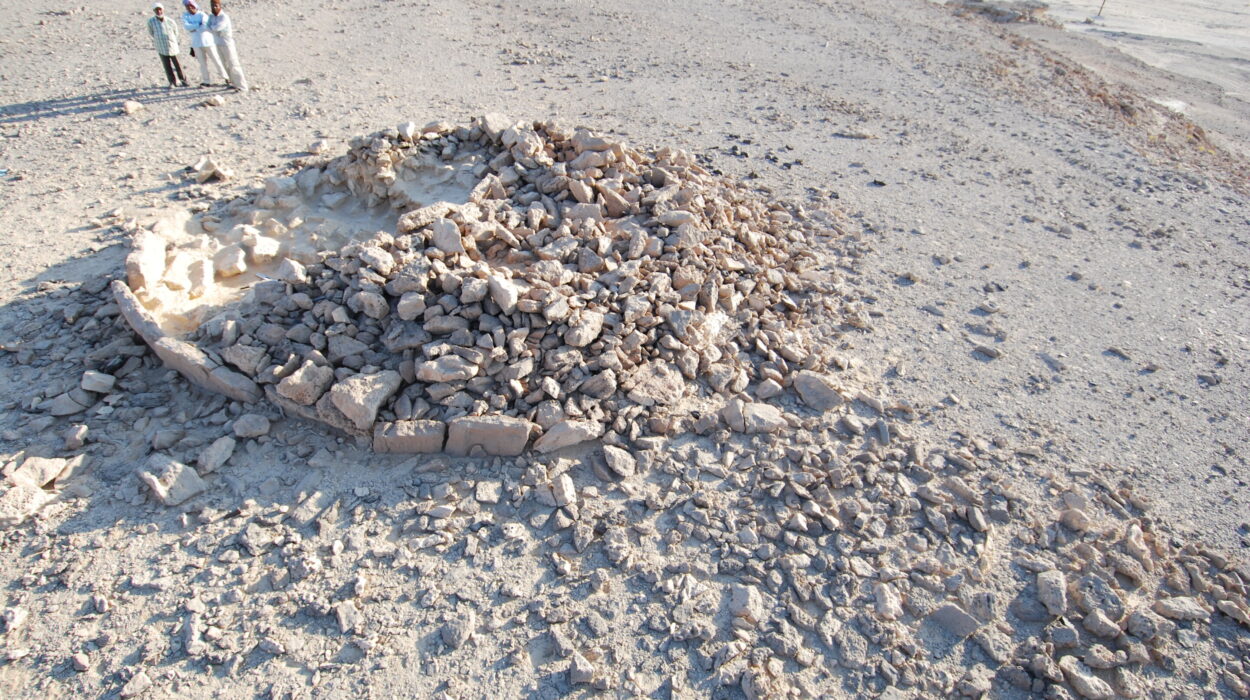
The study focused on five green stones recovered from the archaeological sites of El Caño and Sitio Conte, two important elite burial centers located on Panama’s Pacific coast.
Dating to approximately AD 800–1000, these sites formed part of the Gran Coclé cultural region. Archaeologists have uncovered remarkably rich tombs there, some containing thousands of artifacts. Among the burial offerings were fossilized megalodon teeth, pyrite mirrors, gold objects, and a small number of rare green stones.
Only eight emerald-like stones have been identified from the Coclé region to date. Some were incorporated into elaborate objects, including a copper spider pendant, a golden feline figure, and a copper pendant shaped like a woman.
Because of their rarity and importance, the stones offered a unique opportunity to investigate ancient trade and exchange systems.
Advanced Testing Revealed Their True Origin
To determine what the stones were and where they came from, researchers employed several non-destructive scientific methods, including X-ray fluorescence, infrared spectroscopy, and photoluminescence.
The team also compared the Panamanian specimens with 22 known emeralds from Ecuador and Colombia.
The results were clear. All five analyzed stones displayed chemical signatures consistent with Colombian emeralds.
According to the researchers, the gems likely originated from Colombia’s Western Emerald Belt, which includes the famous Muzo mining area, as well as the Eastern Emerald Belt near Chivor.
This finding makes the Panamanian specimens the northernmost known occurrence of emeralds in the precolonial Americas.
Trade Networks Spanning Hundreds of Kilometers
The emeralds traveled more than 700 kilometers before reaching Panama, but researchers do not believe they arrived through direct exchange between Colombian mining communities and Coclé elites.
Instead, the evidence points to a system known as down-the-line exchange.
Under this model, valuable objects moved gradually across regions through multiple communities. Goods passed from one group to another along river corridors and coastal routes, eventually reaching distant destinations.
According to lead author Dr. Carlos Mayo Torné of the Technological University of Panama, the emeralds were likely exchanged through a chain of interactions rather than transported directly by specialized merchants.
The discovery highlights the complexity of social and economic connections that existed across large portions of the Americas long before European contact.
Evidence of Local Craftsmanship
The emeralds also reveal a story of local adaptation and craftsmanship.
By examining their shapes, surfaces, and manufacturing traces, researchers concluded that some stones probably arrived in Panama as finished ornaments. Others appear to have been modified locally.
Several emeralds contain signs of unsuccessful drilling attempts that damaged the crystals. Such work would have required considerable skill, as emeralds can crack easily during drilling, particularly when worked with basic tools.
Despite these imperfections, the damaged stones were not discarded. Instead, they were repaired, reshaped, and ultimately placed in elite graves.
Researchers interpret this as evidence that the stones held exceptional significance within Coclé society.
The willingness to preserve and continue using damaged emeralds suggests their value extended beyond appearance alone.
More Than Decorative Objects
The study indicates that emeralds likely carried important symbolic meanings for ancient Coclé communities.
The effort invested in repairing and reworking damaged stones points to their cultural importance. Researchers believe they may also have played roles in political relationships, helping to reinforce alliances or function as tribute payments.
As rare imported goods, emeralds would have represented access to distant networks and valuable resources, potentially strengthening the status of those who possessed them.
Their presence in elite tombs underscores the connection between prestige goods and political authority during this period.
The Sudden Disappearance of Emeralds
The archaeological record reveals an intriguing shift around AD 1000.
At that time, emeralds and other imported prestige items, including pyrite mirrors, disappeared from central Panama.
Researchers suggest this change may have coincided with a decline in the trading influence of the Coclé chiefdoms. It also appears to align with the end of the use of major elite burial sites in the region.
Exactly how and why these changes unfolded remains uncertain, but the disappearance marks a significant turning point in the history of long-distance exchange networks in ancient Panama.
Why This Matters
This study provides the first scientific confirmation that emeralds were present in pre-Columbian Panama, resolving a long-standing archaeological question. More importantly, it offers tangible evidence of extensive interaction networks that connected distant societies across Central and South America more than a thousand years ago.
The findings show that valuable materials could travel vast distances through interconnected communities, carrying not only economic value but also political and symbolic significance. As researchers continue investigating how these emeralds moved across the landscape, the discovery promises to deepen our understanding of the relationships, exchanges, and cultural connections that shaped ancient American societies long before European arrival.
Study Details
Carlos Mayo Torné et al, Evidence of Emerald Long-Distance Exchange in the Isthmo-Colombian Area, Latin American Antiquity (2026). DOI: 10.1017/laq.2025.10126