For centuries, humanity has viewed gravity through the lens of a falling apple or the predictable orbits of planets within our own solar system. We have long assumed that the same invisible hand pulling an object to the ground on Earth also guides the rotation of distant galaxies and the slow dance of massive galaxy clusters. However, for the modern astronomer, this assumption has been under siege. Observations of the deep sky have revealed a universe that seems to be breaking its own speed limits, with stars and galaxies moving far faster than the visible matter around them should allow. This discrepancy has left scientists with a jarring ultimatum: either the vast majority of the universe is made of an invisible “dark matter” we have yet to detect, or our fundamental understanding of gravity itself is wrong.
A team of researchers, led by Patricio A. Gallardo of the University of Pennsylvania, has now provided a definitive answer to this cosmic ledger imbalance. By utilizing the Atacama Cosmology Telescope (ACT), a massive instrument standing nearly four stories tall, the team conducted the largest-scale probe of gravity ever attempted. Their research, recently published in Physical Review Letters, tracked the influence of gravity across galaxy clusters separated by hundreds of millions of light-years. The results have sent a clear message through the scientific community: gravity is not broken. In fact, it is behaving exactly as Isaac Newton and Albert Einstein predicted it would.
Tracking the Invisible Architect of the Universe
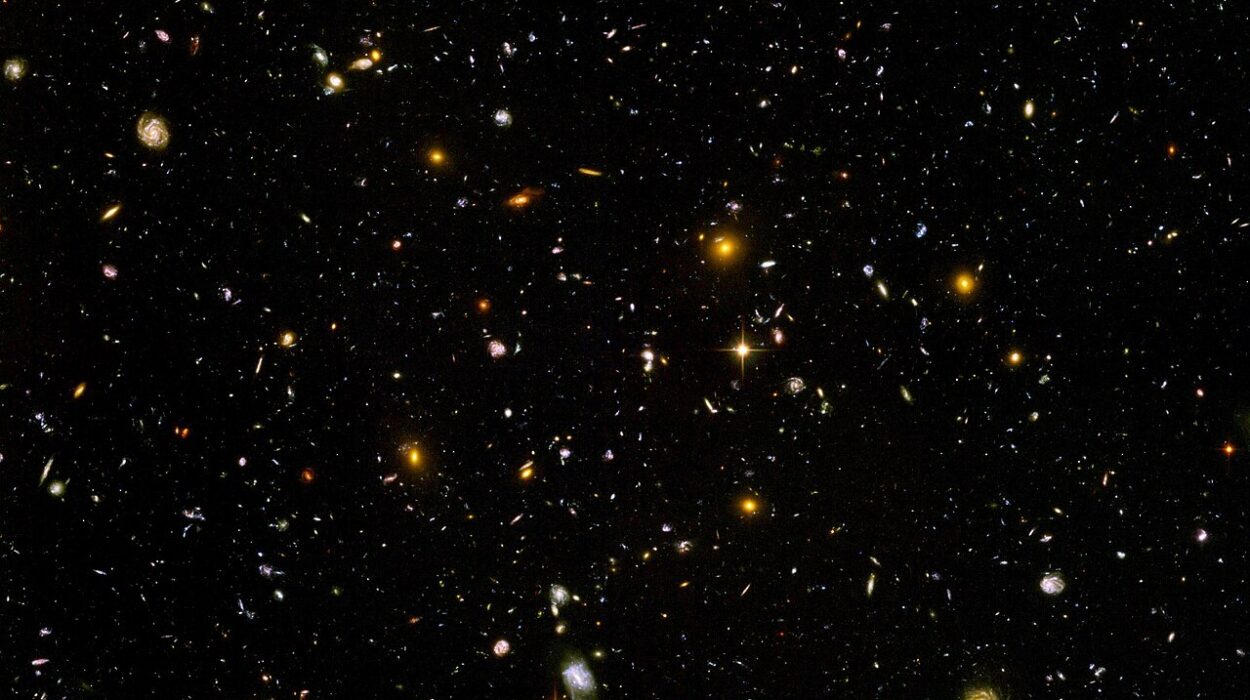
The central conflict in modern cosmology stems from what Gallardo describes as a massive discrepancy in how we account for the universe’s mass and motion. When astronomers measure the speed at which stars orbit within their home galaxies, they expect a drop-off in velocity for those furthest from the center, following the logic of Newtonian physics. Instead, they observe that these outer regions move with startling speed. The same phenomenon occurs at a much larger scale within galaxy clusters, where individual galaxies zip around one another with enough kinetic energy that they should, by all rights, fly off into the void.
To resolve this, two competing camps of thought emerged. The first suggests the existence of dark matter, a concentration of massive, invisible particles that provide the extra gravitational “glue” needed to keep high-speed galaxies intact. The second camp proposed Modified Newtonian Dynamics (MOND), a theory suggesting that the fundamental equations of gravity actually change when you reach the low-acceleration environments of deep space. If gravity did not weaken as quickly over vast distances as we thought, there would be no need for dark matter; the “missing” pull would simply be a feature of the law itself.
Probing the Cosmic Microwave Background
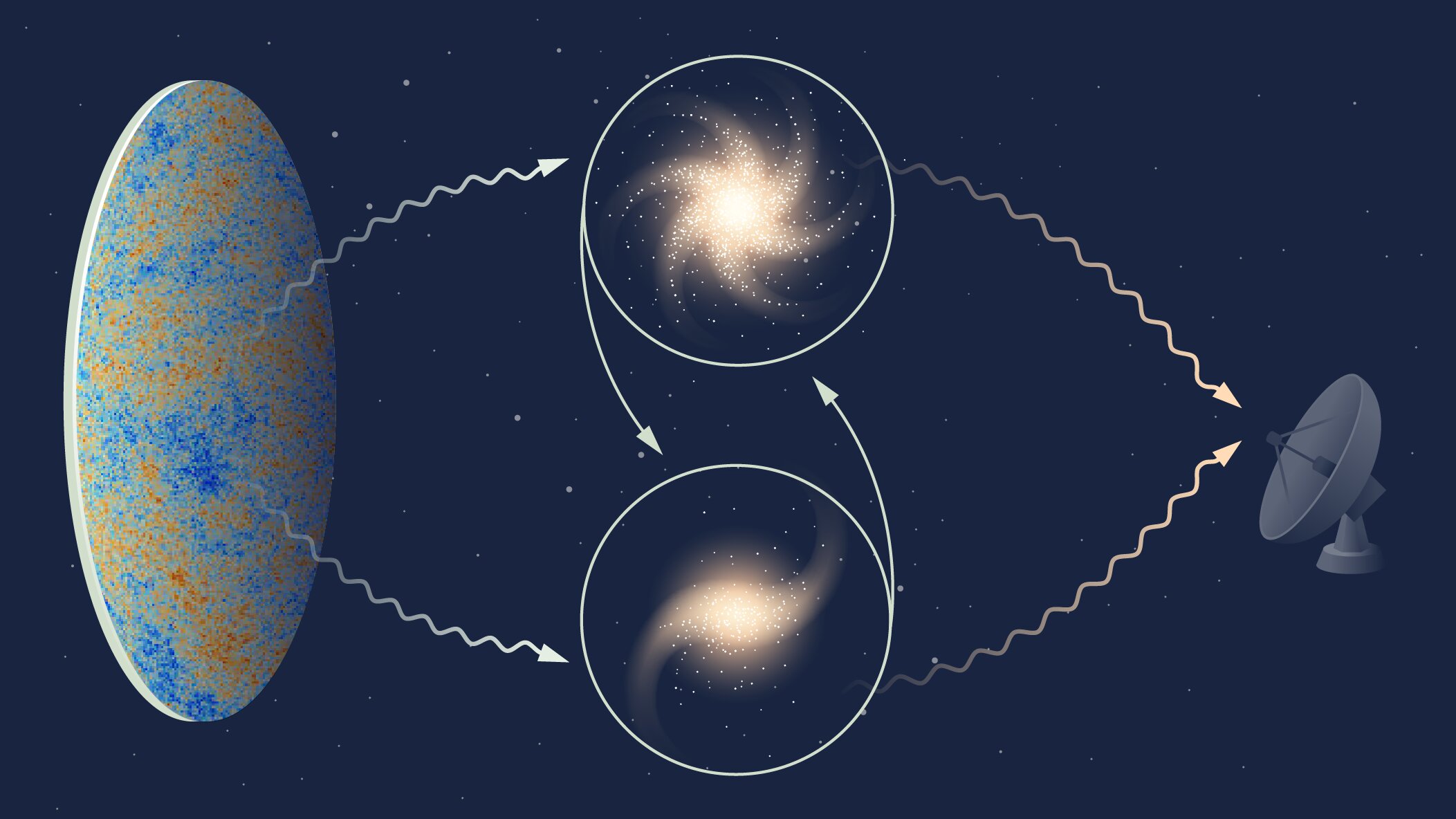
To settle the debate, Gallardo and his collaborators looked to the oldest light in existence: the cosmic microwave background (CMB). This light was released a mere 380,000 years after the Big Bang and has been traveling through the vacuum of space for billions of years. As this ancient radiation journeys toward Earth, it must pass through the massive structures that populate our universe, including hundreds of thousands of galaxy clusters.
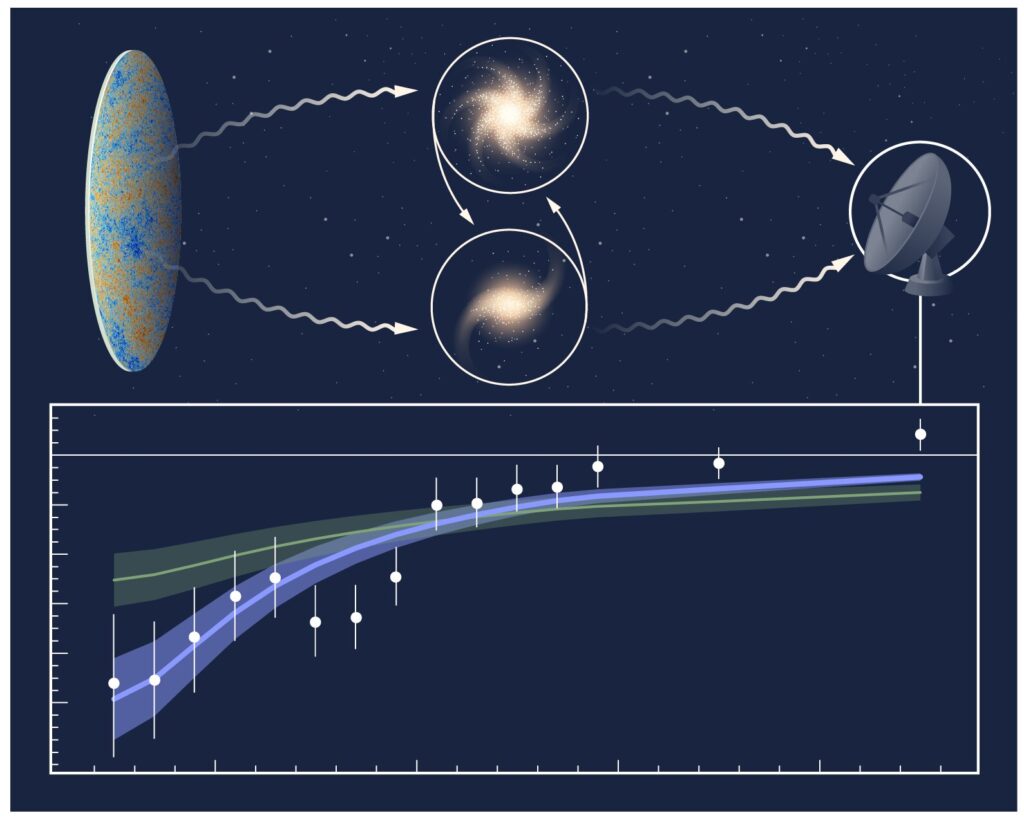
As the CMB light filters through these clusters, it is subtly altered by the motion of the galaxies within them. These movements leave faint, nearly imperceptible imprints on the light. By carefully reading these distortions using the sensitivity of the ACT, the researchers were able to measure the gravitational pull exerted by structures separated by tens of millions of light-years. This allowed them to test the inverse square law—Newton’s 17th-century proposal that gravity weakens in proportion to the square of the distance between two objects—on a scale that would have been inconceivable to the scientists of the Enlightenment.
If the modified gravity theories like MOND were accurate, the data from the ACT would have shown a flatter gravitational falloff, indicating that gravity remains stronger over long distances than standard theory predicts. However, the measurements aligned almost perfectly with the established equations. The strength of gravity weakens with distance exactly as Einstein’s theory of general relativity dictates, proving that the rules of the solar system still apply to the furthest reaches of the observable heavens.
Closing the Door on Modified Physics
This confirmation is a landmark moment for the standard model of cosmology. By demonstrating that gravity does not break down on the largest possible scales, the study effectively narrows the path for theoretical physicists. If the equations of gravity are correct, then the “missing mass” causing galaxies to move so fast cannot be explained away by changing the laws of physics. The extra pull must be coming from somewhere else.
The results provide a significant boost to the dark matter hypothesis. Since gravity is behaving normally, the only remaining logical conclusion is that the universe is indeed populated by a massive component of matter that does not emit, absorb, or reflect light. While the study confirms that dark matter is almost certainly there, it simultaneously highlights the next great hurdle: we still have no idea what it is actually made of. The “cosmic ledger” is no longer missing a line of math, but it is still missing a physical ingredient.
Why This Matters
This discovery is more than just a win for scientific tradition; it provides the structural integrity necessary for all future space exploration and theoretical research. By validating that the inverse square law holds true across hundreds of millions of light-years, scientists can now move forward with greater confidence in their models of how the universe evolved from the Big Bang to its current state.
Confirming that gravity is a universal constant across these massive distances allows astronomers to use it as a reliable tool rather than a variable they have to guess. It simplifies our search for the true nature of the cosmos by eliminating a major category of “modified gravity” theories that have complicated the field for decades. While the mystery of dark matter’s composition remains unsolved, we now know for certain where to look. We are no longer questioning the map of the universe; we are simply trying to identify the invisible travelers who occupy most of its space.
Study Details
Anonymous, Test of the gravitational force law on cosmological scales using the kinematic Sunyaev-Zeldovich effect, Physical Review Letters (2026). DOI: 10.1103/rk8v-rcm3