Researchers at the Pompeii Archaeological Park have successfully used artificial intelligence to digitally reconstruct the face of a man killed during the AD 79 eruption of Mount Vesuvius. The project, which utilizes skeletal and archaeological data, offers a vivid look at a victim who attempted to flee the city using a ceramic bowl as an improvised shield against falling volcanic debris.
As Mount Vesuvius began its catastrophic descent upon the city of Pompeii nearly 2,000 years ago, one man made a desperate break for the coastline. He was not empty-handed; in his final moments, he gripped a large, shallow ceramic bowl over his head, hoping it would provide enough cover to survive the rain of stone and ash. While he did not make it out alive, modern technology has ensured his story did not die with him. In a first-of-its-kind collaboration, archaeologists and researchers have turned to artificial intelligence to give this ancient fugitive a face, bridging the gap between skeletal remains and human identity.
The digital portrait was developed through a partnership between the Pompeii Archaeological Park and the University of Padua. By analyzing archaeological survey data collected during excavations near the Porta Stabia necropolis, located just outside the city walls, experts were able to translate physical evidence into a realistic human likeness. The resulting illustration depicts a man running along a debris-strewn road, the towering eruption of Vesuvius looming behind him as he clutches his improvised protection.
A Desperate Defense in the Debris
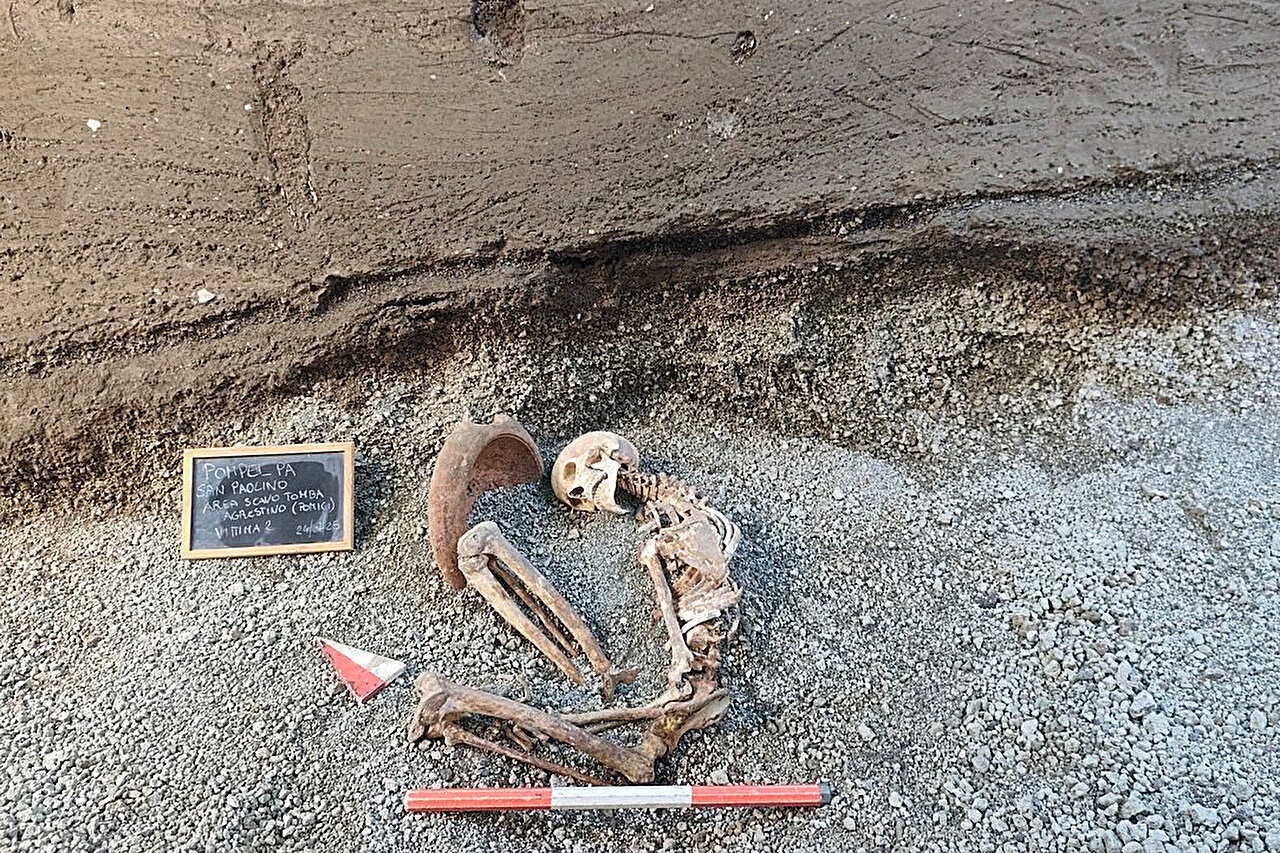
The man’s remains were discovered alongside another individual as they attempted to reach the coast of what is now Italy. Evidence suggests he died early in the disaster, caught in a heavy downfall of volcanic material. The most striking detail of the find was a terracotta mortar found in the man’s possession. Archaeologists interpreted the presence of this heavy bowl as a last-ditch effort to shield his head from the pumice and volcanic stones raining from the sky.
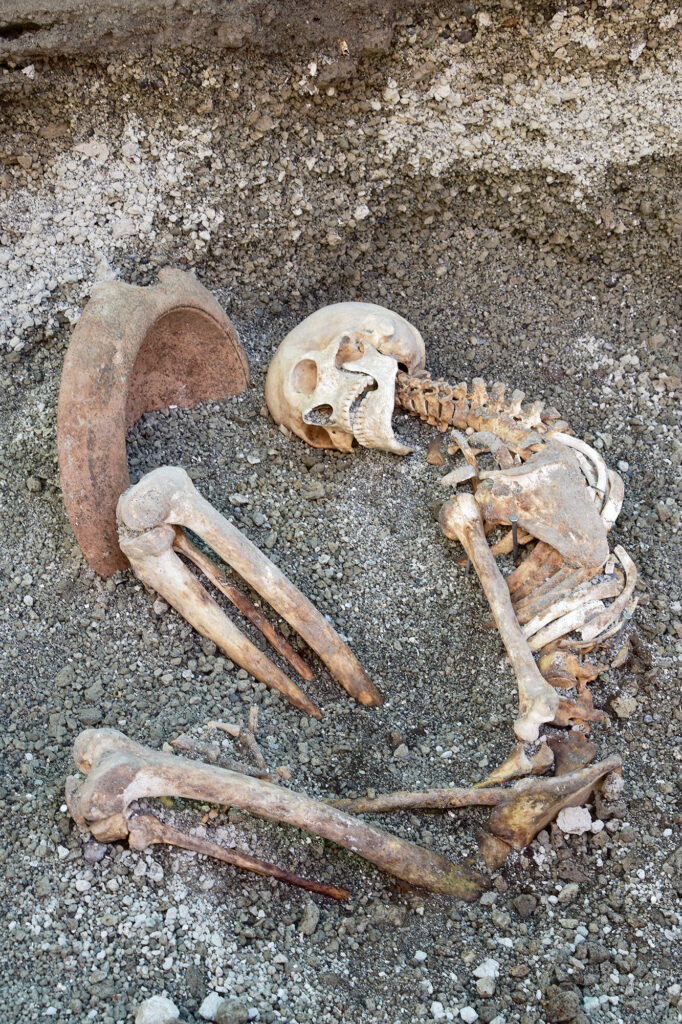
This finding aligns remarkably well with historical records from the period. The Roman writer Pliny the Younger, who witnessed the eruption from across the bay, recorded accounts of Pompeii’s residents tying pillows to their heads and using various objects to protect themselves as the city was blanketed in ash. This man’s use of a kitchen mortar serves as a poignant, physical confirmation of those ancient descriptions of survival and panic.
Evidence of a Life Interrupted
Beyond the shield, the items found with the man provide a snapshot of his status and the items he deemed most precious during the evacuation. Alongside his body, researchers recovered a small iron ring, an oil lamp, and 10 bronze coins. These personal effects offer a rare window into the daily life of a Roman citizen and the sudden, jarring transition from normalcy to a fight for survival.
To create the reconstruction, the team utilized photo-editing techniques and AI algorithms specifically designed to interpret skeletal structures. The goal was to move beyond traditional sketches and create a portrait that feels grounded in reality. This technological leap allows the vast amounts of data preserved by the UNESCO World Heritage site to be processed in ways previously impossible for human researchers alone.
Why This Matters
This reconstruction represents a significant shift in how we interact with the past. By using artificial intelligence to process archaeological data, researchers can protect and enhance the stories of those buried under the ash near Naples. According to Pompeii park director Gabriel Zuchtriegel, the sheer volume of data available at the site means that AI is becoming an essential tool for the future of classical studies.
The project does more than just provide a scientific model; it creates an emotional bridge to the victims of the AD 79 disaster. By turning a skeleton into a recognizable person, the research makes the history of Pompeii more accessible to the public. It transforms a natural disaster into a human story, reminding us that behind every discovery at the site is an individual whose life was caught in the path of one of history’s most famous geological events.