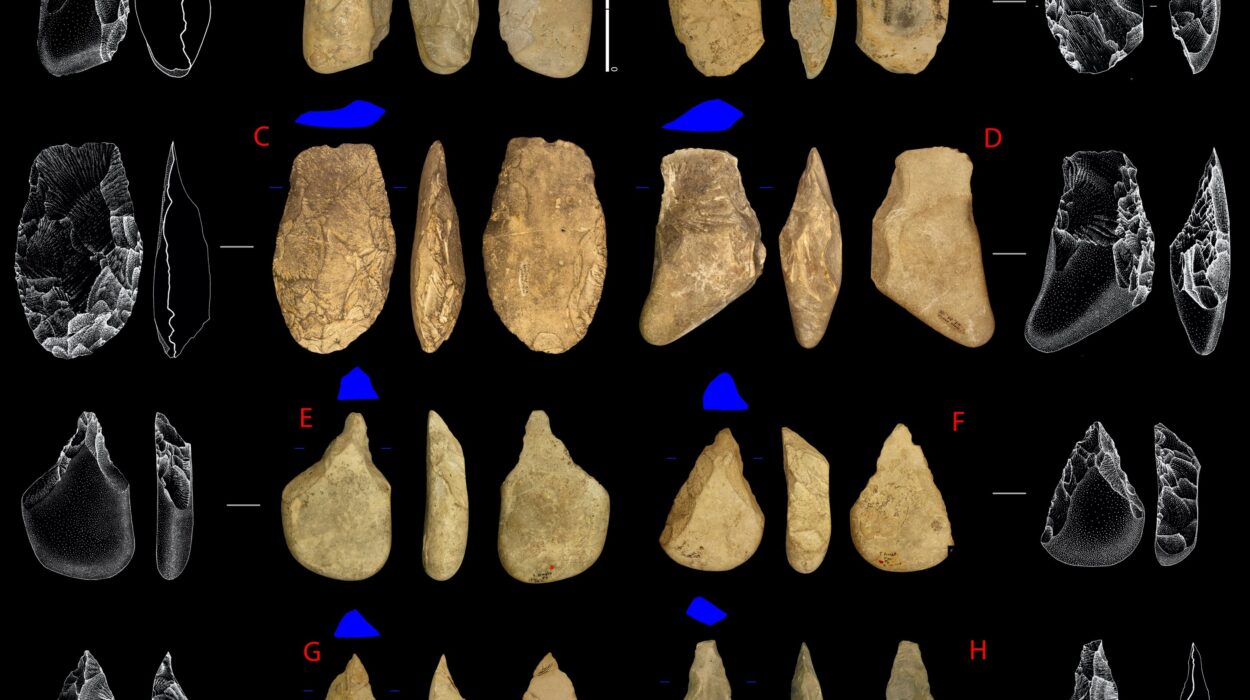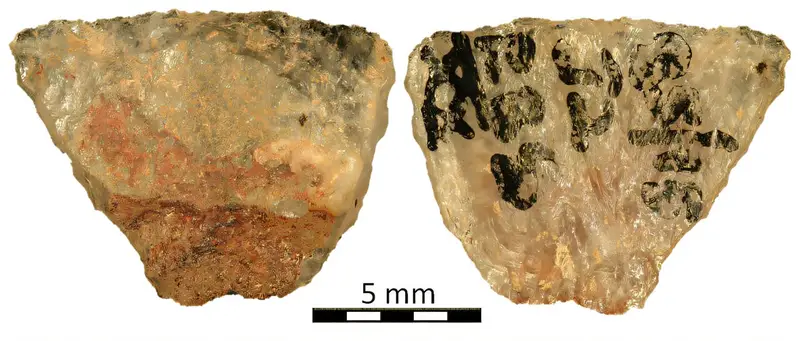
In the rugged landscape of KwaZulu-Natal, South Africa, a shallow indentation in the earth known as the Umhlatuzana Rock Shelter has long held the secrets of our distant ancestors. Within its dusty layers, archaeologists recently unearthed small, sharp pieces of quartz arrowheads that appeared, at first glance, like many others found across the continent. However, these stones carried an invisible legacy that would rewrite the timeline of human ingenuity. Stuck to the surface of these 60,000-year-old tools were organic remains—microscopic whispers of a deadly chemical cocktail that changed the way we understand the prehistoric world.
The Invisible Weapon in the Stone
For years, researchers have debated exactly when humans transitioned from simple tool-makers to master chemists. While the invention of the bow and arrow was a monumental leap in technology, the addition of arrow poison represented a profound shift in cognitive ability. It meant that hunters were no longer relying solely on the physical force of a strike; they were harnessing the hidden powers of the natural world to ensure a successful kill. At the Umhlatuzana Rock Shelter, this theory became a reality. A team of researchers from South Africa and Sweden embarked on a complex collaboration to peer into the chemical makeup of the residues found on these ancient quartz points.
What they discovered was the oldest direct evidence of arrow poison ever recorded. By using advanced chemical analyses, the team identified specific organic compounds that had survived the passage of tens of thousands of years. These were not random environmental contaminants but the deliberate application of nature’s chemistry. The findings suggest that our ancestors in southern Africa did not just invent the bow and arrow much earlier than previously believed, but they also possessed a sophisticated understanding of how to increase their hunting efficiency through lethal additives.
A Toxic Gift from the Earth
The search for the origin of this prehistoric toxin led researchers to a plant still feared and respected today: the gifbol. Scientifically known as Boophone disticha, this plant is often referred to as the poisonous onion due to its bulbous shape. To a casual observer, it might look like a simple piece of greenery, but to the hunters of the Middle Stone Age, it was a source of immense power. Through their rigorous testing, the scientists identified two specific alkaloids within the residue: buphandrine and epibuphanisine.
These substances are the chemical fingerprints of the gifbol. Finding them on quartz arrowheads from 60,000 years ago confirms that early humans were intentionally harvesting this plant, extracting its potent toxins, and applying them to their weapons. This process was not a simple accident of history. Identifying, preparing, and utilizing such toxins required a deep, inherited knowledge of botany and chemistry. The plant has been known among traditional hunters in the region for its highly toxic properties for generations, but this discovery proves that the relationship between humans and the gifbol stretches back into the deep darkness of prehistory.
Bridging the Gap Across Millennia
One of the most striking aspects of this discovery was the bridge it built between the ancient past and the relatively recent historical record. To verify their findings, the researchers compared the ancient quartz residues to 250-year-old arrowheads housed in Swedish collections. These younger artifacts had been gathered by travelers during the 18th century and were known to be coated in traditional poisons. When the chemical profiles were compared, the results were stunning: the same alkaloids found on the 60,000-year-old stones were present on the 18th-century arrows.
This comparison was a crucial “eureka” moment for the team, including Professor Sven Isaksson of Stockholm University. By studying the chemical structure of these substances, the researchers were able to confirm that these specific molecules are stable enough to remain intact even after being buried in the ground for sixty millennia. This stability provided the “smoking gun” needed to prove that the knowledge of the gifbol was not a fleeting trend but a long-standing tradition of survival. It indicates an incredible continuity of knowledge, suggesting that the techniques used by hunters just a few centuries ago were rooted in practices established by their ancestors in the very same region during the dawn of modern human behavior.
The Architecture of an Ancient Mind
The presence of arrow poison tells us far more than just what these people ate; it provides a window into the structure of the prehistoric mind. Using poison is not a move of impulse; it is a move of advanced planning. Unlike a spear, which relies on immediate physical trauma, a poisoned arrow often requires patience and an understanding of cause and effect. A hunter must shoot the prey and then wait for the toxins to take hold, tracking the animal as the chemistry of the gifbol does the work that muscle and stone cannot do alone.
According to researchers like Professor Anders Högberg, this behavior is a hallmark of modern human cognition. It requires the ability to think several steps ahead—identifying the plant, safely extracting the alkaloids, applying them to the quartz, and executing a hunt based on the delayed reaction of the toxin. This level of complex undertaking reveals that 60,000 years ago, our ancestors were already thinking with the same clarity and foresight that we recognize in ourselves today. They were not merely surviving; they were mastering their environment through innovation and a sophisticated grasp of the world’s hidden dangers.
Why This Ancient Chemistry Matters
This research is groundbreaking because it moves us past assumptions and into the realm of direct evidence. For a long time, archaeologists had to rely on indirect clues to guess how ancient people hunted. Now, with the identification of buphandrine and epibuphanisine, we have a definitive link between the tools of the past and the biological world. It confirms that southern Africa was a primary cradle for technical skills and advanced thinking.
Beyond the thrill of the “oldest” find, this discovery highlights the incredible stability of human culture and knowledge. The fact that the same plant, Boophone disticha, has been used for the same purpose for 60,000 years shows a remarkable survival of traditional knowledge. It reminds us that our ancestors were brilliant observers of nature, capable of identifying microscopic solutions to massive problems. This study, published in Science Advances, does more than just date a weapon; it honors the intellectual legacy of the people who first learned how to turn a beautiful plant into a tool for survival, proving that the roots of human science are far deeper than we ever imagined.
Study Details
Direct Evidence for Poison Use on Microlithic Arrowheads in Southern Africa at 60 000 years ago, Science Advances (2026). DOI: 10.1126/sciadv.adz3281