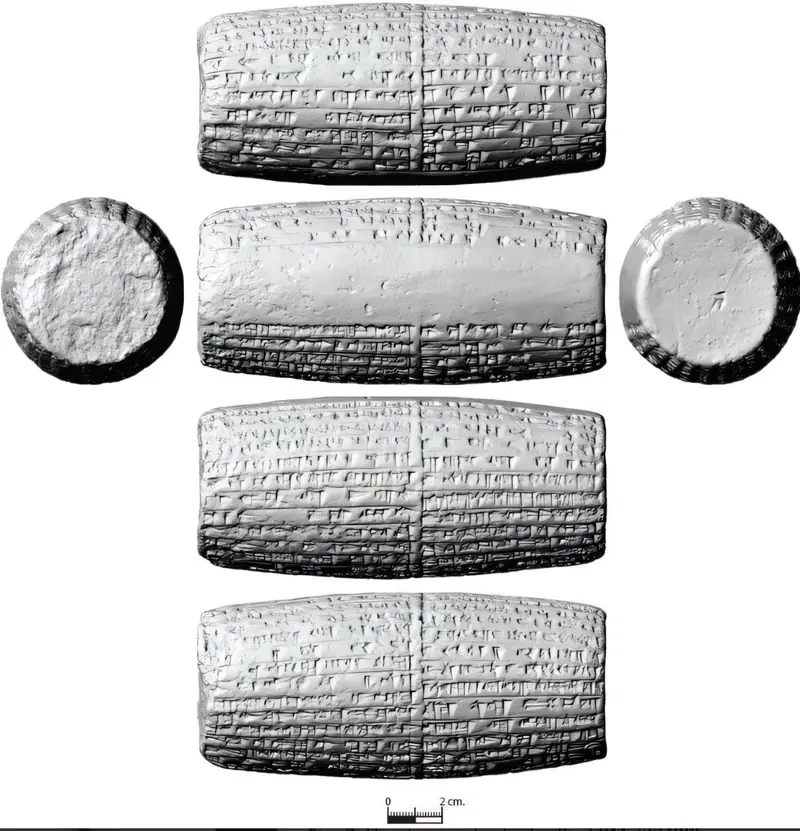
Deep in the heart of modern-day Iraq, the winds of time frequently peel back the layers of the earth to reveal secrets buried for millennia. In 2013, the landscape near Tell Al-Uhaimir yielded such a secret when two local residents stumbled upon a pair of inscribed clay cylinders resting on the sun-baked surface. These were not mere fragments of pottery; they were ancient “foundation texts,” deliberate messages left behind by a ruler who wanted his legacy to endure long after his empire turned to dust. When the finders handed these artifacts over to the State Board of Antiquities and Heritage, they set in motion a scientific investigation that would bridge a gap of over 2,500 years.
The objects were found among the ruins of the ancient city of Kish, a site dominated by the weathered remains of a ziggurat—a massive, stepped temple tower that once reached toward the heavens. For years, archaeologists had suspected that the legendary King Nebuchadnezzar II, who ruled from 604 to 562 BC, had played a role in maintaining this sacred structure. Excavations had previously uncovered stamped bricks bearing his name, but bricks are common construction materials. What scholars lacked was a formal, narrative account of his work. The discovery of these two cylinders changed everything, providing the first primary foundation text documenting the king’s personal dedication to the restoration of this holy site.
The Voice of a King Echoes from the Clay
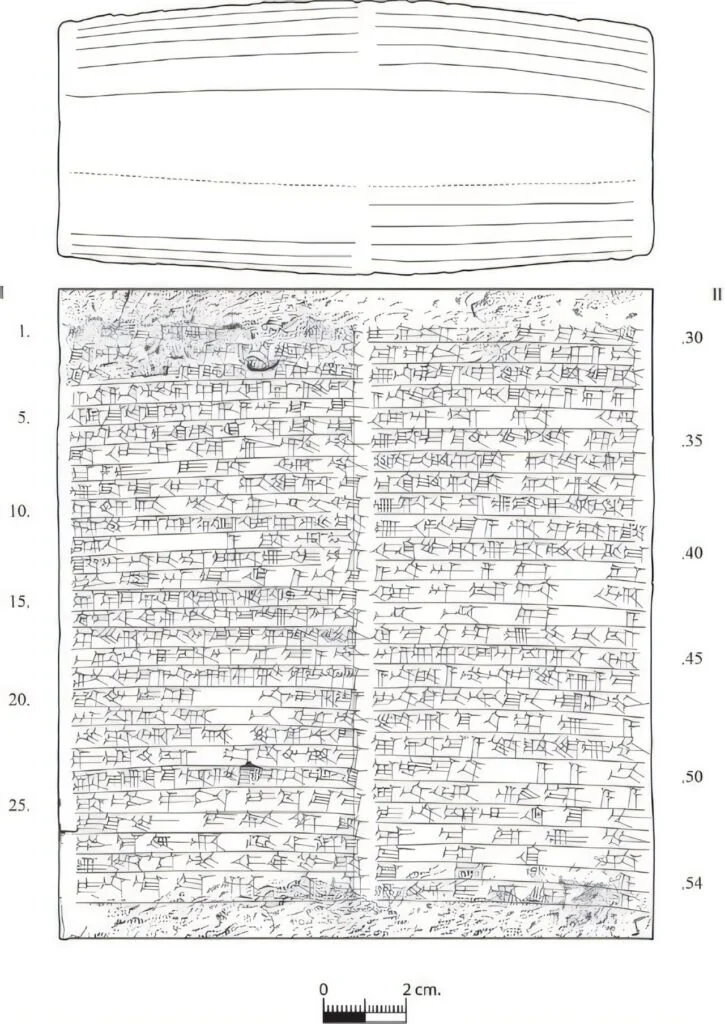
When researchers like Dr. Ahmed Ali Jawad began to translate the dense, wedge-shaped script covering the cylinders, they found themselves listening to the voice of Nebuchadnezzar II himself. The text reveals a king who viewed himself as more than just a political ruler; he was a divinely appointed steward. He introduces himself as the King of Babylon, a man chosen by the high gods Marduk and Nabû to care for the empire’s great temples. This sense of duty drove him to the city of Kish, where he found the city’s spiritual heart in a state of heartbreaking decay.
The cylinders describe the ziggurat as a structure of immense antiquity, originally built by a king of the “past” and later repaired by a “former” king. Interestingly, Nebuchadnezzar II chooses not to name these predecessors in his inscription. Through modern archaeological context, Dr. Jawad suggests these unnamed figures may have been Samsu-iluna, who ruled between 1749 and 1712 BC, and Adad-apla-iddina, whose reign lasted from 1064 to 1043 B.C. Previous excavations had uncovered inscriptions from these specific rulers within the temple’s core. Why the Neo-Babylonian king left their names out remains a mystery, perhaps a tactical omission to center himself as the ultimate savior of the monument.
Against the Elements and the Weight of Time
The narrative etched into the clay cylinders paints a vivid picture of the ziggurat’s physical collapse. Nebuchadnezzar II records that the temple’s massive walls had buckled under the weight of centuries. The harsh Mesopotamian environment had taken its toll; he writes of how showers of rain had slowly melted the brickwork, carrying away the structural integrity of the tower until it became weak and unstable. The once-mighty staircase to the gods was literally washing away into the mud of the floodplain.
Driven by a sense of religious obligation, the king initiated a massive restoration project. This was not a mere patch job but a total transformation. The text describes how he reinforced the buckling sections and embellished the outward appearance of the tower. He claims to have made the structure shine like the daylight, a metaphor likely referring to a new facade of bright or glazed bricks that would have made the ziggurat a shimmering landmark visible for miles across the flat plains. This work was dedicated to the primary deities of Kish: Zababa, the fierce god of war, and his wife Ishtar, the complex goddess of war and love. In the world of ancient Mesopotamia, these divine couples were often worshipped together within the same temple complex, and Nebuchadnezzar II sought to ensure their earthly home reflected their celestial power.
A Prayer for Power and Long Life
The story recorded on the cylinders does not end with the completion of the masonry. It concludes with a deeply personal plea from the king to his gods. In the final lines, Nebuchadnezzar II calls upon Zababa and Ishtar to look upon his work with favor. He asks for the ultimate rewards of a monarch: a very old age and a long, stable reign. But his request is also colored by the violence of his era. He asks the gods to use their fierce weapons to help him conquer his enemies, to kill his opponents, and to cut down and bind those who would stand against him.
These cylinders are nearly identical in their wording, a common practice used to ensure that even if one was lost or destroyed, the king’s message would survive. They represent a high-stakes exchange between the human and the divine—the king provides a magnificent home for the gods, and in return, the gods provide the king with the strength to crush his foes. For the first time, researchers have the explicit construction works of the Neo-Babylonian period at Kish documented in the king’s own words, confirming that the stamped bricks found decades ago were indeed part of this grand royal project.
Why This Ancient Restoration Matters Today
This discovery is significant because it transforms our understanding of Nebuchadnezzar II from a figure of legend and biblical lore into a tangible, historical builder with a specific architectural footprint in Kish. While excavations by Ernst Mackay and others had identified four major stages of the ziggurat’s life—starting with King Hammurabi around 1756 BC—the cylinders provide the definitive link to the final, grand restoration of the site. They prove that even at the height of the Neo-Babylonian empire, the kings felt a profound connection to the rulers of a millennium prior, seeking to preserve the ancient landmarks of their culture.
Beyond the historical data, these artifacts serve as a reminder of the fragility of human heritage. The cylinders tell a story of a monument that was built, forgotten, broken by rain, and reborn through the efforts of a king who feared his own mortality. By finding and translating these texts, modern scientists have fulfilled the king’s ancient wish: his name and his deeds have indeed been remembered, bridging the gap between a buckled wall in the desert and the global community of the twenty-first century. These clay documents provide a rare, unmediated look at how an ancient superpower viewed its responsibility to history, its gods, and its own enduring legacy.
Study Details
Ahmed Ali Jawad et al, Two inscribed cylinders of nebuchadnezzar ii from the ziggurat of kish, Iraq (2025). DOI: 10.1017/irq.2025.10023