Across the vast northern landscapes of China, stretching over mountains, deserts, and grasslands, stands one of the most extraordinary human creations ever built: the Great Wall of China. It is not merely a wall, not just a line of stone and earth, but a symbol of endurance, ambition, fear, power, and unity. It is a structure that whispers stories of emperors and soldiers, of triumph and suffering, of isolation and connection.
The Great Wall is often described in simple terms—as a defensive barrier meant to protect China from northern invaders—but such a description barely scratches the surface. In truth, it is a living archive of Chinese civilization, a structure that evolved over centuries, shaped by shifting dynasties, changing threats, and the relentless determination of millions of workers.
To understand the Great Wall is to step into a vast narrative that spans more than two thousand years. It is to walk along stones worn by history, to imagine the footsteps of soldiers who once stood guard against unseen enemies, and to feel the silent weight of a structure that has outlived empires.
The Geography That Shaped a Wall
China’s northern frontier is a region of stark contrasts. To the south lie fertile plains and river valleys where ancient civilizations flourished. To the north stretch the windswept steppes, home to nomadic tribes who moved freely across the land.
This natural divide created both opportunity and danger. The agricultural societies of ancient China developed stable communities, built cities, and established centralized governments. Meanwhile, the nomadic peoples of the north, skilled in horseback warfare, often raided these settled regions.
The Great Wall emerged as a response to this tension. It followed the contours of the land, winding across mountain ridges, cutting through deserts, and adapting to the terrain in ways that reveal both strategic thinking and deep respect for geography.
Rather than a single continuous wall built at one time, it is a network of fortifications constructed and reconstructed over centuries. Some sections were made of tamped earth, others of brick and stone, depending on the materials available in each region.
The wall’s path was not random. It was carefully chosen to maximize defense, often running along high ground where visibility was greatest. From these elevated positions, watchtowers could observe movement across vast distances, giving defenders crucial time to respond.
The Origins in the Warring States Period
The earliest versions of the Great Wall date back to a time before China was unified, during the Warring States Period. Between the 7th and 3rd centuries BCE, several independent states competed for power, each building its own defensive walls to protect its territory.
These early walls were not yet part of a grand, unified system. They were regional defenses, constructed quickly using local materials. Packed earth was commonly used, as it could be built rapidly and provided reasonable strength.
Among the states that built such fortifications were Qi, Yan, and Zhao. Each faced threats not only from rival states but also from northern nomadic groups.
These early walls laid the foundation for what would eventually become the Great Wall. They established the idea that large-scale defensive construction could protect territory and provide strategic advantage.
Yet at this stage, the walls were fragmented, reflecting the political divisions of the time.
The Vision of Qin Shi Huang
Everything changed with the rise of Qin Shi Huang, the first emperor of a unified China. In 221 BCE, he conquered the rival states and established the Qin Dynasty, bringing an end to centuries of conflict.
With unification came a new challenge: securing the vast northern frontier against external threats, particularly the Xiongnu, a powerful nomadic confederation.
Qin Shi Huang ordered the connection and expansion of existing walls, creating a more unified defensive system. This project marked the beginning of what would later be recognized as the Great Wall.
The scale of the undertaking was immense. Hundreds of thousands of workers, including soldiers, prisoners, and conscripted peasants, were mobilized to build and extend the wall. They worked under harsh conditions, often in remote and unforgiving environments.
Many lives were lost during construction. The wall became not only a symbol of strength but also a testament to human suffering and sacrifice.
The Qin Dynasty itself was short-lived, but its contribution to the Great Wall set a precedent for future dynasties.
Expansion and Transformation in the Han Dynasty
After the fall of the Qin Dynasty, the Han Dynasty continued and expanded the work on the wall. The Han rulers faced ongoing threats from northern nomadic groups, and they recognized the strategic importance of maintaining strong defenses.
During this period, the wall extended further west, reaching into regions that connected China to Central Asia. This expansion was closely linked to the development of the Silk Road, a network of trade routes that facilitated the exchange of goods, culture, and ideas.
The Great Wall during the Han Dynasty served not only as a military barrier but also as a tool for regulating trade and migration. Fortresses and garrisons were established along the wall, creating a system of control that extended beyond simple defense.
The wall became part of a broader strategy to manage relationships with neighboring peoples, combining military strength with diplomacy and trade.
A Structure Reimagined: The Ming Dynasty
The most iconic sections of the Great Wall that exist today were built during the Ming Dynasty, which ruled from 1368 to 1644. After the collapse of the Yuan Dynasty, established by the Mongols, the Ming rulers sought to strengthen China’s defenses against renewed northern threats.
Unlike earlier versions made primarily of earth, the Ming Dynasty constructed walls using bricks, stones, and tiles. These materials made the wall stronger, more durable, and more resistant to erosion.
The Ming engineers also introduced advanced design features. Watchtowers were placed at regular intervals, allowing for communication through smoke signals, fire beacons, and flags. Fortresses and barracks were integrated into the wall, creating a comprehensive defensive network.
The wall during this period reached its greatest extent, stretching thousands of kilometers across northern China. It became not just a barrier but a sophisticated military system.
Despite its strength, the wall was not invincible. In 1644, the Manchus breached the wall with the help of internal forces, leading to the fall of the Ming Dynasty and the rise of the Qing Dynasty.
The Human Cost of an Immortal Structure
Behind the grandeur of the Great Wall lies a story of immense human effort and sacrifice. Millions of people contributed to its construction over the centuries. They labored in extreme conditions, facing harsh weather, difficult terrain, and limited resources.
Workers carried heavy materials up steep mountains, often without modern tools or machinery. Many died from exhaustion, illness, or accidents. The wall has sometimes been called the longest cemetery in the world, a reflection of the countless lives lost during its creation.
These workers were not always volunteers. Many were conscripted peasants or prisoners forced into labor. Their suffering is an inseparable part of the wall’s history.
Yet their work also represents extraordinary resilience. Despite the hardships, they built a structure that has endured for centuries, a testament to human determination.
Architecture and Engineering Brilliance
The Great Wall is not a uniform structure. Its design varies depending on location, materials, and the period of construction. This diversity reflects the adaptability and ingenuity of its builders.
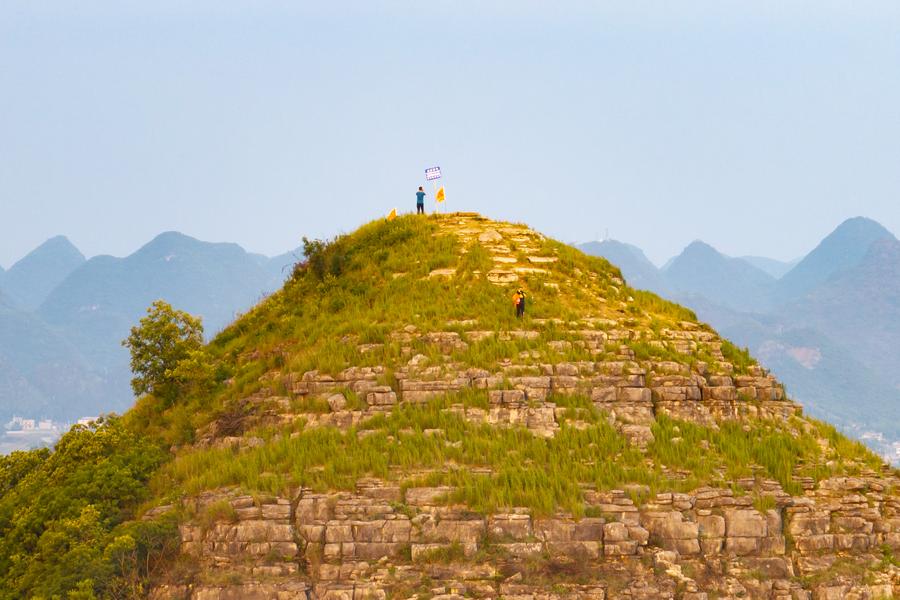
In mountainous regions, the wall follows the natural ridges, using the terrain as a defensive advantage. In desert areas, it is often made of tamped earth and reinforced with local materials such as reeds and gravel.
The width and height of the wall also vary. In some sections, it is wide enough for several soldiers or even horses to move side by side. This allowed for efficient troop movement and communication.
Watchtowers played a crucial role in the wall’s design. They served as observation points, signal stations, and storage areas. Signals could be transmitted over long distances using smoke during the day and fire at night, enabling rapid communication across the frontier.
The engineering behind the wall demonstrates a deep understanding of both materials and environment. It is a masterpiece of ancient construction, combining practicality with strategic vision.
Cultural and Symbolic Meaning
Over time, the Great Wall has taken on meanings that go far beyond its original purpose. It has become a powerful symbol of Chinese identity, resilience, and unity.
In Chinese culture, the wall represents the strength and perseverance of the nation. It is often associated with the idea of protection and stability, reflecting the desire to safeguard civilization from external threats.
The wall also appears in literature, poetry, and art, where it is portrayed as both a physical structure and a metaphor. It can symbolize separation or connection, strength or isolation, depending on the context.
For many people, the Great Wall evokes a sense of awe. It stands as a reminder of what humans can achieve through collective effort, even under challenging circumstances.
The Great Wall in the Modern World
Today, the Great Wall is one of the most famous landmarks on Earth. It attracts millions of visitors each year, drawing people from around the world who come to witness its scale and beauty.
Certain sections, such as Badaling and Mutianyu, have been restored and made accessible to tourists. These areas offer a glimpse into the wall’s grandeur while providing safe and convenient access.
Other sections remain in a more natural state, gradually eroding under the forces of time and weather. Efforts are ongoing to preserve the wall and protect it from further damage.
The Great Wall was designated a UNESCO World Heritage Site in 1987, recognizing its cultural and historical significance. This status has helped raise awareness about the need for conservation.
Modern technology has also played a role in studying the wall. Satellite imagery and advanced mapping techniques have revealed previously unknown sections, deepening our understanding of its true extent.
Myths and Misconceptions
One of the most common myths about the Great Wall is that it can be seen from space with the naked eye. In reality, this is not true under normal conditions. The wall is relatively narrow and blends into the surrounding landscape, making it difficult to distinguish from such a distance.
Another misconception is that the wall is a single continuous structure. In fact, it is a complex network of walls, trenches, and natural barriers built over different periods.
Understanding these realities adds depth to our appreciation of the wall. It is not a simple monument but a layered and evolving structure shaped by history.
The Enduring Legacy
The Great Wall of China is more than a relic of the past. It is a living symbol of human ambition, resilience, and ingenuity. It tells a story that spans centuries, connecting ancient civilizations to the modern world.
Walking along the wall today, one can feel the echoes of history in every stone. The wind that sweeps across its towers carries the voices of those who built and defended it. The mountains that cradle it stand as silent witnesses to its long journey through time.
The wall endures not because it is unchanging, but because it continues to inspire. It reminds us of the power of collective effort, the complexity of history, and the enduring human desire to shape the world.
In the vast narrative of human civilization, the Great Wall of China stands as one of its most remarkable chapters—a structure that transcends its physical form to become a symbol of something far greater: the enduring spirit of humanity itself.