Respiratory illnesses may have affected the vast majority of children buried in one of Europe’s largest prehistoric mass graves, according to new research. Analysis of rare, intact skeletons from Copper Age Spain suggests recurring infections—possibly including tuberculosis—left visible traces on bones and shaped childhood health for centuries.
For nearly 5,000 years, the children buried inside a vast rock-cut burial chamber in southeastern Spain kept their stories hidden. Now, researchers examining one of Europe’s most remarkable prehistoric cemeteries have uncovered striking evidence that respiratory disease was deeply embedded in everyday life—and may have contributed significantly to childhood suffering and death.
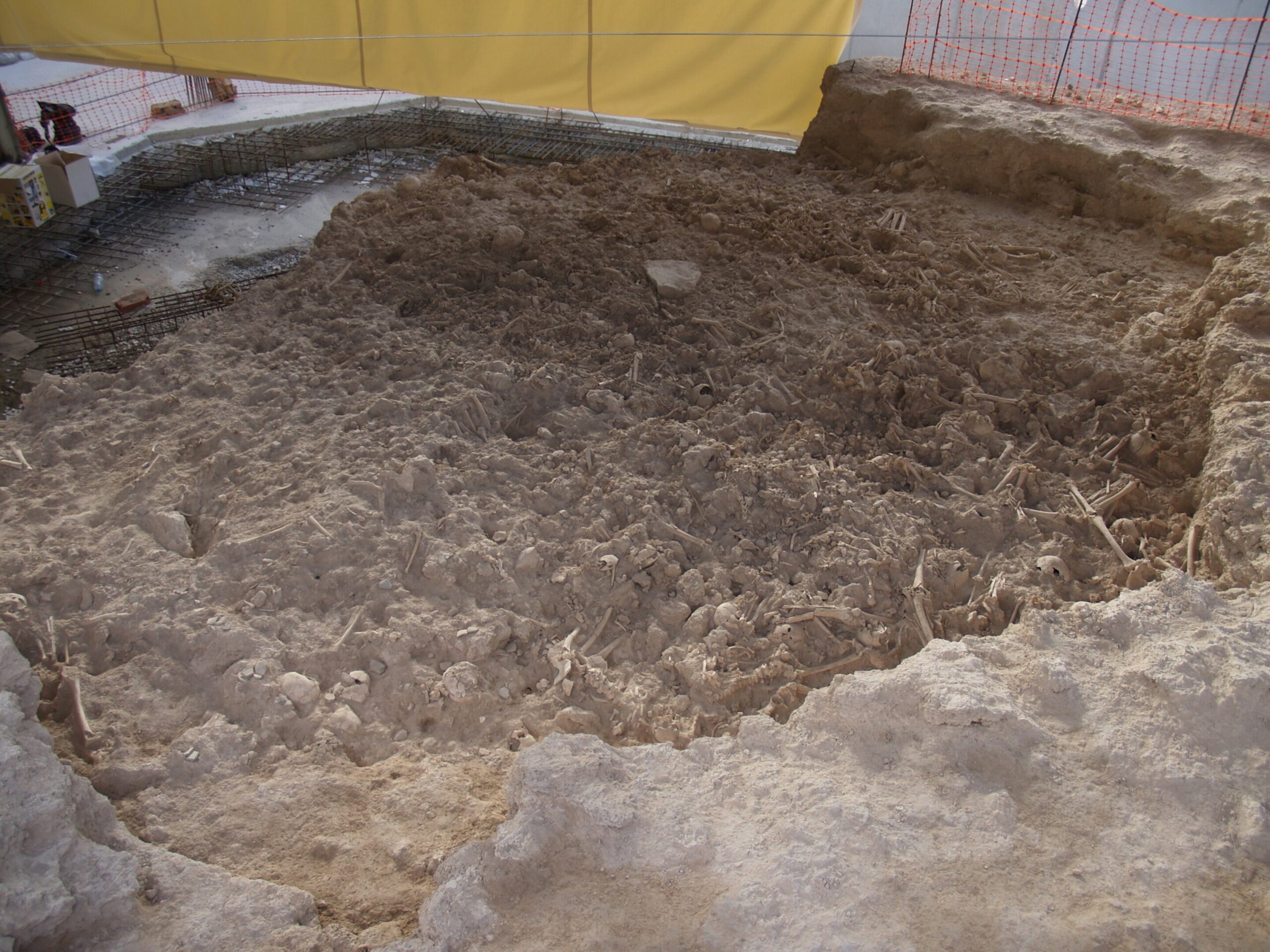
The findings come from Camino del Molino (CMOL), a massive circular burial cave that contains the remains of more than 1,300 individuals and represents Europe’s largest known Copper Age mass burial. A new study published in the International Journal of Paleopathology reveals that disease-related bone changes were extraordinarily common among the site’s youngest inhabitants.
Rare Child Skeletons Offer an Unusual Window Into the Past
Dating to the 3rd millennium BC, Camino del Molino was used repeatedly for more than 700 years, creating a densely packed burial space containing men, women, and children.
Studying childhood disease in prehistoric populations is often difficult because complete juvenile skeletons rarely survive. Over centuries, bones are frequently disturbed, scattered, or poorly preserved, leaving researchers with only fragments of evidence.
Camino del Molino proved different.
Researchers recovered 48 intact child and adolescent skeletons, providing an unusually complete record of childhood health. Because entire skeletons were available for examination, scientists could identify patterns affecting multiple parts of the body rather than relying on isolated bones.
The results were striking.
Among the 48 individuals studied, 92% showed at least one bone alteration associated with disease. Of those affected individuals, roughly 67% displayed both porous bone changes and skeletal markers linked to respiratory infections.
According to lead author Dr. Sonia Díaz-Navarro of the University of Burgos, the pattern points to a broad burden of recurring or long-lasting respiratory illness rather than a single disease.
Bone Damage Suggests Repeated Respiratory Infections
Researchers identified several types of skeletal changes, including porous lesions in skulls and leg bones, as well as infection-related alterations affecting other parts of the skeleton.
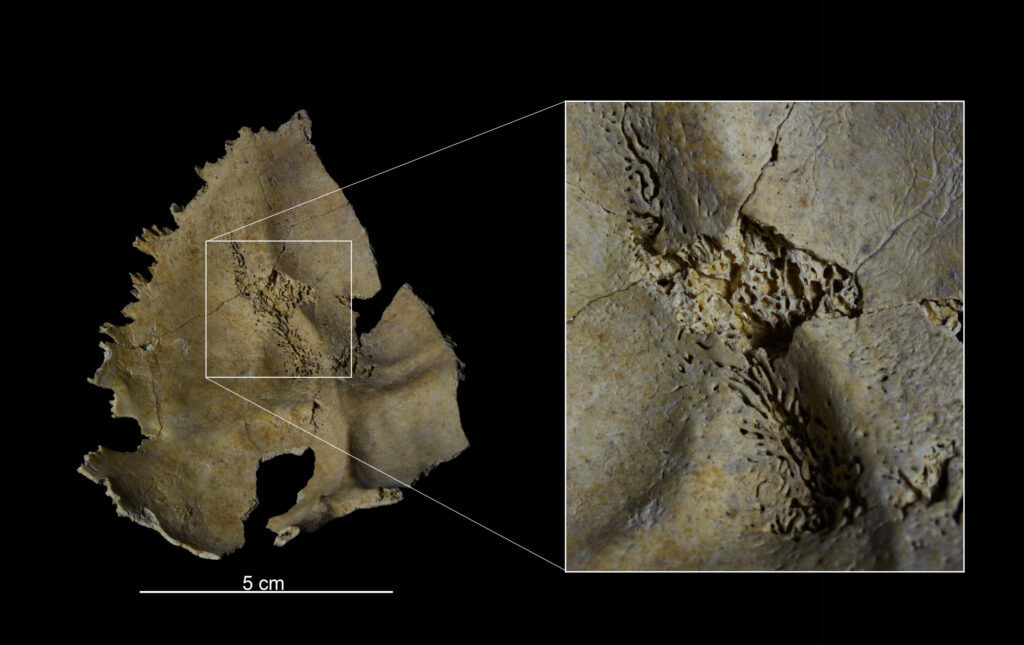
While some of these lesions have previously been associated with periods of rapid childhood growth, the research team argues that growth alone cannot explain what they observed.
The skeletal changes appeared too frequently and occurred alongside other indicators commonly associated with respiratory disease. Importantly, they were found across multiple age groups, including adolescents, rather than being confined to periods of rapid development.
This broader distribution strengthened the case that disease played a major role.
“The pattern we see probably reflects a broader burden of recurrent or prolonged respiratory disease rather than a single pathogen,” Dr. Díaz-Navarro explained.
Young Children and Adolescents Appeared Most Vulnerable
The study found particularly high rates of bone changes among children aged 1 to 4 years and adolescents between 10 and 14 years old.
These individuals frequently exhibited distinctive skeletal features, including serpent-like grooves and pitting on the inner surfaces of the skull as well as changes affecting vertebrae, hips, and pelvic bones.
Previous studies have linked such lesions to early-stage tuberculosis, particularly when bacteria are spreading through the bloodstream.
The researchers emphasize that the evidence does not prove tuberculosis was present. However, the age groups showing the highest rates of these changes correspond with periods when children and adolescents are known to be especially vulnerable to lung infections, including tuberculosis.
The findings suggest respiratory illness may have been a persistent challenge throughout childhood in the community that used the burial site.
Living Conditions May Have Driven Disease Spread
One of the study’s most notable observations was the similarity of disease patterns across children.
Researchers found no indication that boys and girls experienced dramatically different levels of exposure. Instead, the widespread nature of the skeletal changes points toward shared environmental conditions.
According to Dr. Díaz-Navarro, children likely encountered many of the same hazards present within the settlement, including indoor smoke, dust, airborne organic particles generated during food processing and craft activities, close interactions with animals, and potentially disease-causing pathogens transmitted from animals to humans.
These common exposures may have created conditions in which respiratory illness repeatedly affected large numbers of children over generations.
Disease Did Not Appear to Affect Burial Treatment
Despite the high prevalence of illness and other physical conditions, researchers found no evidence that affected individuals were treated differently in death.
Children and adolescents showing signs of disease received the same general burial treatment as others within the cemetery.
That observation is particularly significant because Camino del Molino also contains individuals with highly visible physical conditions. Among them are people who underwent trepanation, a form of skull surgery, as well as an individual with dwarfism.
“The available evidence suggests that individuals received the same general mortuary treatment regardless of their pathological condition,” Dr. Díaz-Navarro said.
The finding challenges assumptions that visible illness or disability automatically led to social exclusion in prehistoric communities.
Future Research Could Reveal the Exact Diseases Involved
Although the skeletal evidence strongly suggests widespread respiratory illness, researchers say further work is needed to identify the specific pathogens involved.
Planned ancient DNA studies may determine whether tuberculosis bacteria or other infectious agents were present among the buried population. Additional ancient DNA and isotopic analyses are also expected to shed light on diet, family relationships, and social organization.
Researchers hope these future investigations will reveal how factors such as age, sex, diet, and social roles influenced disease exposure and vulnerability.
They also aim to determine whether similar patterns of illness affected adults buried at the site.
Why This Matters
The Camino del Molino study provides one of the clearest glimpses yet into the health challenges faced by children in Copper Age Iberia. By examining an exceptionally rare collection of intact juvenile skeletons, researchers uncovered evidence that respiratory disease was widespread, persistent, and likely a major burden on childhood survival nearly 5,000 years ago.
At the same time, the findings offer insight into how prehistoric communities responded to illness. Even in a population marked by disease, disability, and physical differences, burial practices suggest individuals continued to receive similar treatment after death. Together, these discoveries deepen our understanding of both the biological realities and social dynamics of life in prehistoric Europe.
Study Details
Sonia Díaz-Navarro et al, Porous skeletal lesions and respiratory infection-related changes in Chalcolithic non-adults: A biocultural approach from Camino del Molino (southeastern Iberia), International Journal of Paleopathology (2026). DOI: 10.1016/j.ijpp.2026.04.001