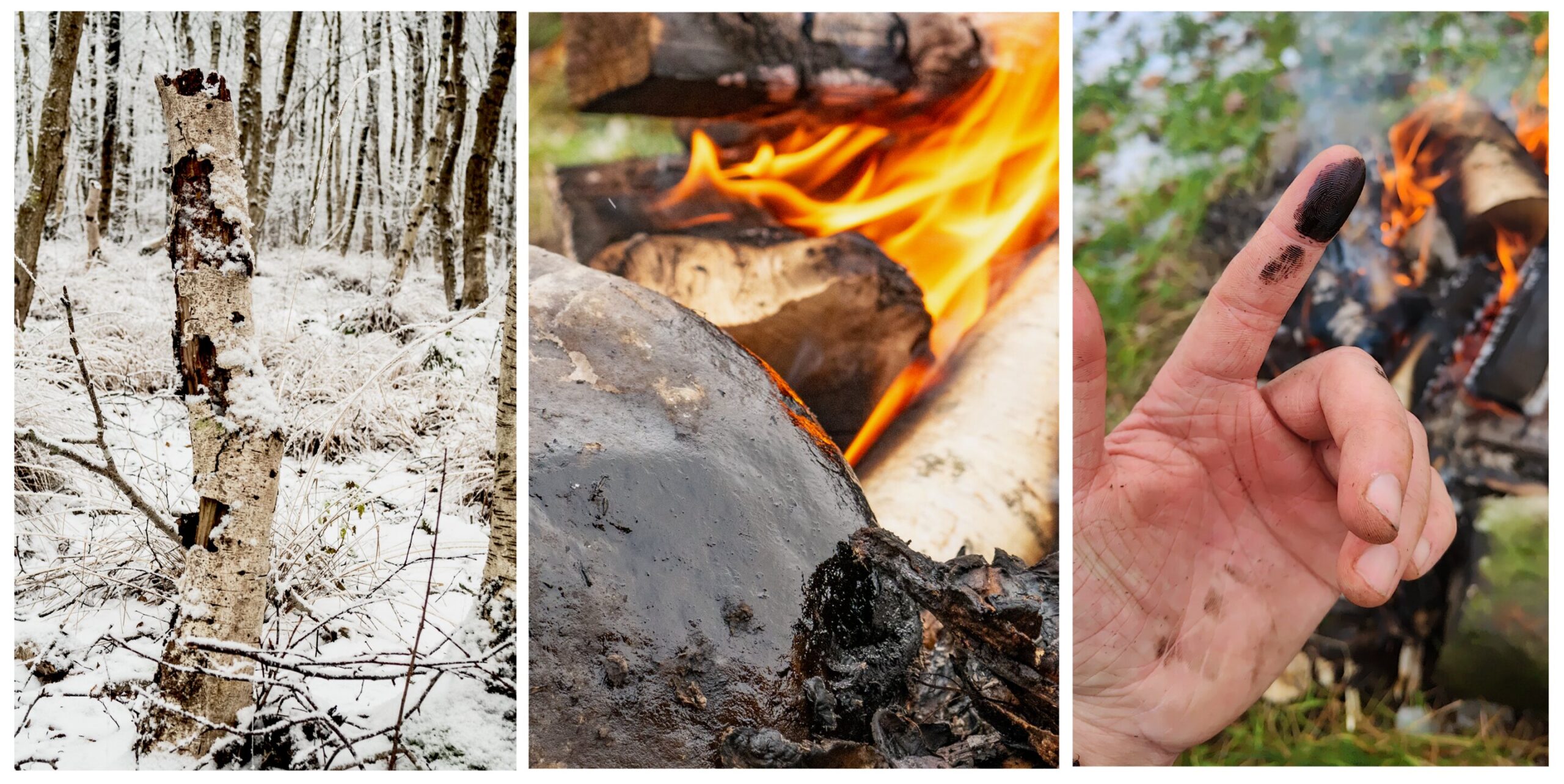
The story of human medicine does not begin in a sterile laboratory or a modern pharmacy. Instead, it likely began in the flickering shadows of a cave, amidst the biting chill of the Ice Age, where the scent of woodsmoke and sticky resin hung heavy in the air. For decades, we viewed our distant cousins, the Neanderthals, as primitive survivors who relied solely on brawn. However, a growing body of evidence suggests they were far more sophisticated, possessing a deep knowledge of the natural world that may have included a rudimentary form of palaeopharmacology.
A team of researchers, led by Tjaark Siemssen from the University of Cologne and the University of Oxford, recently embarked on a journey to uncover the secrets hidden within a common substance found at ancient archaeological sites: birch tar. This thick, black sludge was long known to be the world’s oldest synthetic glue, used by Neanderthals to bind stone blades to wooden handles. But the researchers suspected that this versatile material held a much more vital secret. They wondered if the same substance used to build tools was also used to heal the hands that made them.
The Ancient Secret of the Silver Bark
To understand the past, the scientists had to recreate it. They turned their attention to the birch tree, a hardy species that flourished in the cold climates inhabited by early human communities. In modern times, Indigenous communities in northern Europe and Canada still look to the birch tree as a source of healing, utilizing its tar to treat various skin ailments and wounds. This contemporary wisdom provided the spark for the study: if modern humans found medicinal value in the birch, is it possible the Neanderthals did too?
The researchers began the “messy” process of experimental archaeology, attempting to produce the tar using only the technology available during the Ice Age. This was not a clinical procedure; it was a sensory immersion into a lost way of life. They harvested bark from species known to have existed alongside Neanderthals and set to work by the fire. Every step of the production was a challenge, leaving the scientists with hands stained by the stubborn, tacky resin that refused to wash away—a tactile reminder of the labor required by our ancestors.
Forging Medicine from Fire and Earth
The team tested two primary methods of extraction that Neanderthals could have mastered. The first involved the distillation of tar within a clay pit, a controlled heating process that coaxes the oils from the bark. The second method involved the condensation of tar against a stone surface. These techniques required a high degree of skill and an understanding of how fire interacts with organic matter. The result was a dark, potent substance that the researchers then took into the lab to face a modern invisible enemy.
The scientists pitted their home-made birch tar against various strains of bacteria, specifically focusing on Staphylococcus. These are the common culprits behind wound infections, the kind of everyday injuries that could easily turn fatal in a world without antibiotics. The results were striking. Every single sample of tar, regardless of how it was produced, proved effective at hindering the growth of the bacteria. The “glue” of the ancient world was, in fact, a powerful antibacterial shield.
Healing Hands in a Frozen World
This discovery suggests that Neanderthals were not just toolmakers; they were caregivers. By applying birch tar to injuries, they could have significantly reduced the disease burden within their small, vulnerable communities. In the harsh environment of the Ice Age, preventing a minor cut from becoming a lethal infection would have been a revolutionary advantage. This research reinforces the idea that healthcare is a deeply rooted human trait, shared across different branches of our evolutionary tree.
The implications extend beyond just treating cuts. The researchers noted that birch tar might have also served as an insect repellent, protecting these early humans from the irritation and diseases carried by biting bugs. Furthermore, the study hints that this is just the beginning of our understanding. Neanderthals had access to a vast array of other plants, and it is likely that their “medicine cabinet” was far more diverse than we currently realize. By exploring these natural ingredients, we gain a more thorough understanding of the complexity of Neanderthal culture.
Why the Lessons of the Past Matter Today
The study of palaeopharmacology is more than just a historical curiosity; it is a bridge between ancient wisdom and future survival. As we move deeper into an era defined by a pressing antimicrobial resistance crisis, where our modern drugs are losing their effectiveness against “superbugs,” looking backward may provide the path forward. By bringing together indigenous pharmacology and experimental archaeology, scientists are rediscovering antibiotic remedies that have been hidden in plain sight for millennia.
This research reminds us that the quest for health and healing is a fundamental part of the human story. The birch tar on a Neanderthal’s fingers was a testament to their ingenuity and their desire to protect one another. As we rediscover these ancient practices, we don’t just learn about the survival of a long-lost cousin; we gain new tools to ensure our own. The sticky, smoky residue of the Ice Age might just hold the key to the next generation of life-saving medicine.
Study Details
Siemssen T, et al. Antibacterial properties of experimentally produced birch tar and its medicinal affordances in the Pleistocene, PLOS One (2026). DOI: 10.1371/journal.pone.0343618