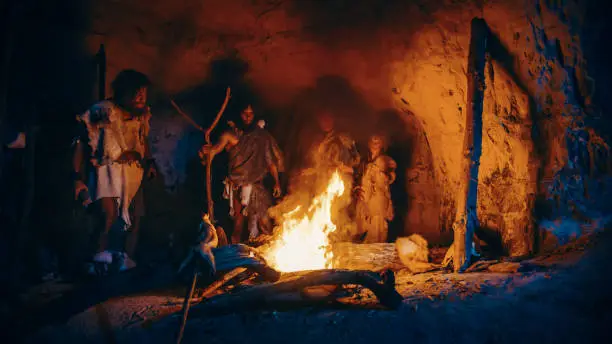
Long before written history, before cities and borders and names for nations, human lives unfolded in a fragile balance with nature. Firelight flickered against cave walls. Stone tools scraped hides. Survival depended on resilience, adaptability, and a body capable of enduring hunger, cold, and uncertainty. Those ancient lives feel impossibly distant, yet a new scientific study suggests they may still be speaking through us—quietly shaping how long some of us live.
A study published in the journal GeroScience has uncovered a striking connection between extraordinary human longevity and genetic echoes from Europe’s earliest inhabitants. By examining the DNA of people who have lived a full century or more, researchers found that Italian centenarians carry a higher proportion of genetic material from Western Hunter-Gatherers, known as WHG, than the rest of the population. It is a finding that turns longevity into a story not just of lifestyle and luck, but of ancestry reaching back thousands of years.
Italy, Where Time Slows Down
Italy is known for many things—its food, its landscapes, its layered history—but it also holds a quieter distinction. It has one of the highest concentrations of people in the world who live to be 100 years old or more. For scientists searching for clues about human longevity, this makes the country a living archive.
To understand why so many Italians reach such advanced ages, researchers turned to genetics. They analyzed the genomes of 333 centenarians and compared them with those of 690 healthy adults around the age of 50. These two groups represented different points on the human lifespan, offering a way to see whether certain genetic patterns might tilt the odds toward a longer life.
But the analysis did not stop there. To truly understand what they were seeing, the scientists placed modern DNA alongside the genetic material of the past. They compared these genomes with 103 ancient genomes representing the four ancestral groups that together make up the modern Italian gene pool.
Four Ancestries, One Surprising Signal
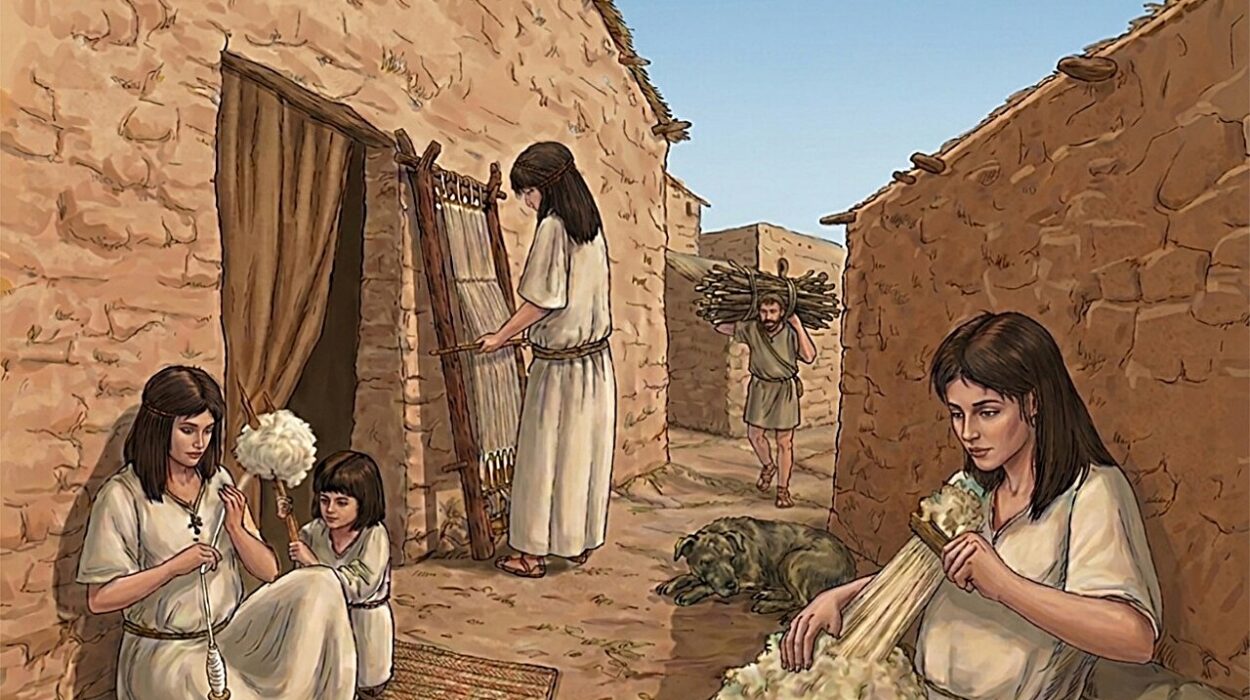
The ancient groups used for comparison form a genetic timeline of Europe. There were the Western Hunter-Gatherers, among the earliest inhabitants of Europe after the Ice Age. There were Anatolian Neolithic farmers, whose arrival brought agriculture and transformed human societies. There were Bronze Age nomadic groups, moving across landscapes with new technologies. And there were ancient groups from the Iranian and Caucasus regions, whose migrations further shaped the genetic map of the continent.
Every person in the study carried a mixture of DNA from all four of these ancestral groups. This was expected. Modern populations are mosaics of ancient migrations and encounters. What surprised the researchers was that only one of these ancestral contributions showed a clear link to living longer.
The centenarians consistently carried more genetic material from Western Hunter-Gatherers than the average person. This was not a subtle trend buried in the data. It stood out clearly, even when accounting for the shared genetic background of the Italian population.
“The present study shows for the first time that the Villabruna cluster/WHG lineage… contributes to longevity in the Italian population,” wrote the research team.
When Small Differences Matter
Longevity is often discussed as the result of many small factors adding up over time. Genetics, environment, daily habits, and chance all play their part. This study reinforces that idea, while also revealing just how powerful those small genetic differences can be.
The researchers found that for every small increase in Western Hunter-Gatherer DNA, a person’s odds of becoming a centenarian rose by 38%. This effect was even stronger in women. Women with a higher proportion of this ancient DNA were more than twice as likely to reach the age of 100.
These numbers transform ancestry from an abstract concept into something deeply personal. Tiny fragments of DNA inherited across countless generations may quietly tip the balance toward a longer life.
The researchers did not suggest that Western Hunter-Gatherer ancestry guarantees longevity. Rather, it appears to raise the probability, acting alongside all the other known influences on lifespan. As they explained, “We propose that the variants involved in this trait [longevity] may have been introduced into the Italian gene pool at a very ancient time.”
A Legacy Forged in Ice and Hunger
Why would genes from ancient hunter-gatherers help people live longer today? To answer that question, the scientists looked back to the harsh realities of the past.
Western Hunter-Gatherers lived during and after the last Ice Age, a period marked by extreme cold and limited food resources. Survival under these conditions required bodies that could do more with less. According to the researchers, natural selection during this time may have favored genetic variants that improved metabolism, allowing food to be processed more efficiently, and strengthened the immune system, helping the body withstand stress and disease.
These traits would have been invaluable in an environment where survival was never guaranteed. Over thousands of years, such genetic advantages may have been passed down, eventually becoming part of the modern Italian gene pool.
The idea is not that ancient hunter-gatherers lived exceptionally long lives by modern standards. Rather, the traits that helped them survive harsh conditions may now help protect the body from the stresses of aging.
Longevity as a Shared Story
For decades, scientists have known that longevity is influenced by “good” genes as well as by environment and daily habits. Some studies have identified individual genes linked to longer life, while others have hinted that broader ancestral DNA might play a role. This study brings those ideas together, suggesting that longevity may be shaped not just by single genetic variants, but by deep ancestral lineages.
It also reshapes how we think about inheritance. The genes that may help someone reach 100 are not new innovations. They are ancient solutions to ancient problems, still quietly working within modern bodies.
There is something profoundly human in this realization. Every centenarian carries within them a living connection to people who walked Europe thousands of years ago, adapting to ice, hunger, and uncertainty. Their long lives today may be one of the final echoes of those distant struggles.
Why This Discovery Matters
This research matters because it deepens our understanding of what longevity truly is. It shows that living a long life is not only about individual choices or modern medicine, but also about a genetic inheritance shaped by prehistoric survival.
By identifying a clear link between Western Hunter-Gatherer ancestry and longevity, the study opens new paths for understanding how ancient genetic variants influence aging and resilience. It suggests that the roots of healthy aging may lie far deeper in our past than previously imagined.
Perhaps most importantly, the findings remind us that humanity’s story is continuous. The challenges faced by our ancestors did not end with them. Their solutions live on in our DNA, quietly influencing how our bodies age and endure.
In the end, this research tells a story of connection across time. It reveals that when someone celebrates their hundredth birthday in modern Italy, they may also be celebrating a legacy forged in the cold and uncertainty of the Ice Age—a reminder that the past is never truly gone, and that sometimes, the secret to a long life is written in the oldest chapters of our shared human history.
More information: Stefania Sarno et al, Western Hunter-Gatherer genetic ancestry contributes to human longevity in the Italian population, GeroScience (2025). DOI: 10.1007/s11357-025-02043-4