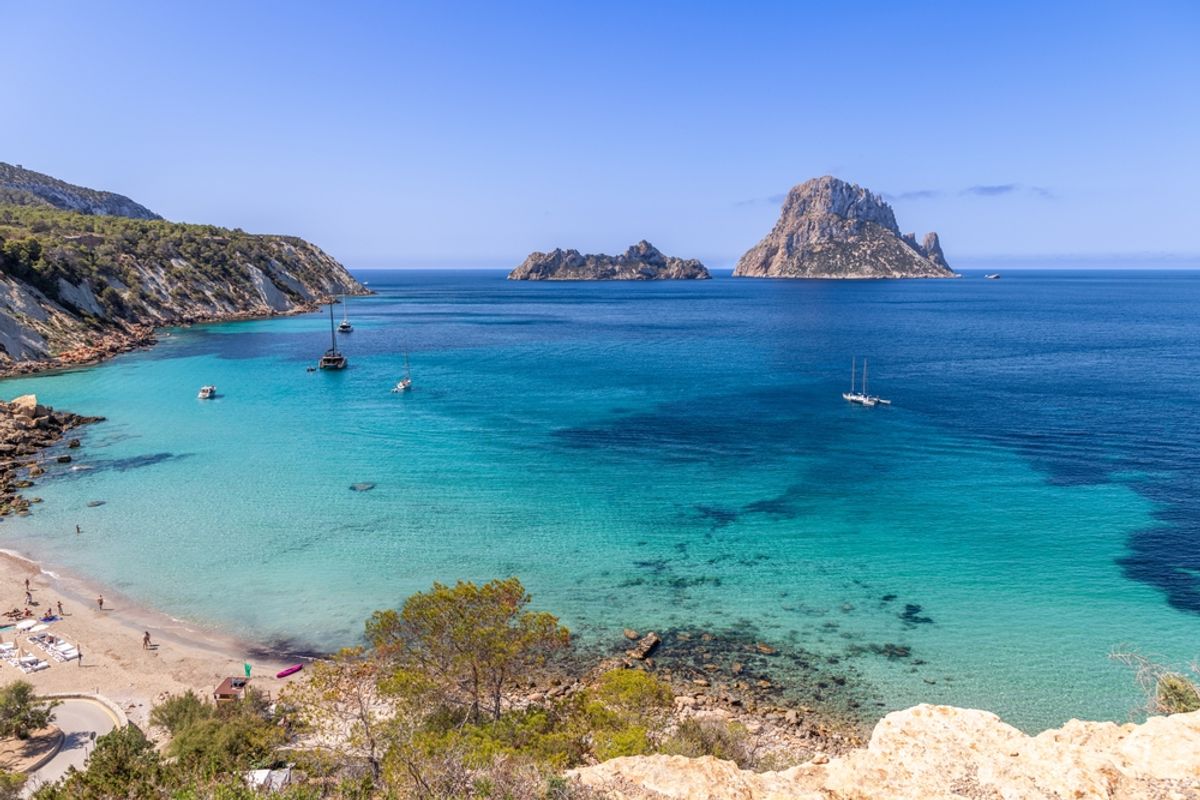
The blue waters surrounding the island of Ibiza have long been viewed by modern travelers as a serene escape, but a millennium ago, these shores were anything but a quiet Mediterranean backwater. Beneath the soil of a tenth- to twelfth-century Islamic cemetery, thirteen individuals lay undisturbed for centuries, holding within their bones the genetic map of a world far more interconnected than history books often suggest. Recently, an international research team led by the Centre for Palaeogenetics (CPG)—a collaboration between Stockholm University and the Swedish Museum of Natural History—decided to peer into the past using the lens of ancient DNA. What they discovered was not a secluded island population, but a vibrant, bustling crossroads where three continents met.
The Winds of Change and the Arrival of New Ancestors
The story of medieval Ibiza underwent a dramatic shift in 902 CE, the year of the Muslim conquest. Before this era, the island’s genetic makeup followed a different path, but the arrival of the Umayyad expansion brought with it a wave of demographic change. As researchers analyzed the genomes of those buried in the ancient cemetery, they found a wide spectrum of genetic ancestries. Some individuals possessed roots that were predominantly European, while others leaned heavily toward North African lineages. This mixture was not a singular event but a process of varying degrees of blending that followed the initial conquest.
Historical records have long whispered of two major demographic waves that reshaped the island: the first linked to the Umayyad settlers and a later influx tied to the Almoravid conquest in the early twelfth century. By using advanced genomic techniques like genotype imputation and haplotype-based local ancestry analysis, the scientific team was able to pinpoint exactly when these worlds began to collide. They estimated that the primary flow of North African genes into the Ibiza population began a mere two to seven generations before the individuals in the cemetery lived. This data places the most significant admixture event in the late ninth century, capturing the precise moment when the Islamic world and the Christian societies of Iberia began to influence and reshape one another.
From the Golden Sands of the Sahel to the Mediterranean Shore
Perhaps the most startling revelation hidden within the ancient DNA was the evidence of connections stretching far beyond the Mediterranean basin. Two of the individuals studied carried sub-Saharan African ancestry, a finding that provides tangible, biological proof of the vast trans-Saharan networks described in medieval Arabic texts. One of these individuals could trace their lineage back to present-day Senegambia, while the other shared roots with people from southern Chad.
These findings suggest that Ibiza was a vital node in a network that reached deep into the western and central Sahel zone, south of the Sahara Desert. Whether these individuals arrived through military networks or the somber paths of slave networks, their presence confirms that the reach of medieval Islamic Iberia was expansive. These genomes serve as direct genetic evidence of long-distance trade and social networks that bridged the gap between the arid heart of Africa and the islands of Europe. It is a reminder that even a thousand years ago, the movement of people and ideas spanned thousands of miles, linking distant ecosystems and cultures.
A Silent Passenger and a Community’s Compassion
While the researchers were mapping the heritage of these individuals, they were also looking for smaller, more microscopic travelers. By screening for infectious agents, the team made a significant medical discovery: one individual was infected with Mycobacterium leprae, the bacterium that causes leprosy. This represents the very first genetically confirmed case of the disease from medieval Islamic Iberia.
In many historical narratives, leprosy is associated with fear and forced isolation, but the soil of Ibiza tells a different story. Despite his illness, the man was buried according to standard Islamic practices. There were no signs of social exclusion or specialized treatment in his burial context. This pattern of inclusion and care for the sick mirrors what has been reported in contemporaneous Christian communities, suggesting a shared human response to suffering that transcended religious boundaries.
The analysis of this specific M. leprae genome also offered clues about how diseases traveled during the Middle Ages. The strain was placed near the base of a lineage found across Europe between the seventh and thirteenth centuries, closely related to an early-diverging strain from Italy. This suggests that Ibiza was not just a hub for people and goods, but also a key point in epidemiological networks, potentially facilitating the dispersal of leprosy lineages from the Mediterranean into the rest of Europe.
Why These Ancient Lives Matter Today
This research is far more than a study of old bones; it is a reconstruction of the complex social fabric that defines our shared history. By moving beyond general historical narratives, the work of the Centre for Palaeogenetics allows us to see how massive historical processes—conquests, trade, and migrations—unfolded in the lives of real people. The diversity found in medieval Ibiza proves that the Mediterranean has always been a place of blending rather than a barrier.
Understanding these long-distance networks helps modern scientists and historians grasp how interconnected the medieval world truly was. It shows that the Sahel, North Africa, and Europe were part of a single, dynamic system. Furthermore, the genetic tracking of infectious agents like leprosy provides a roadmap for how diseases evolved and spread, offering vital context for the history of medicine. Ultimately, these thirteen individuals remind us that diversity is not a modern invention, but a fundamental characteristic of human civilization that has been written in our DNA for a millennium.
Analysis of medieval burials from Ibiza reveal genetic and pathogenic diversity during the Islamic period, Nature Communications (2026). DOI: 10.1038/s41467-026-70615-9