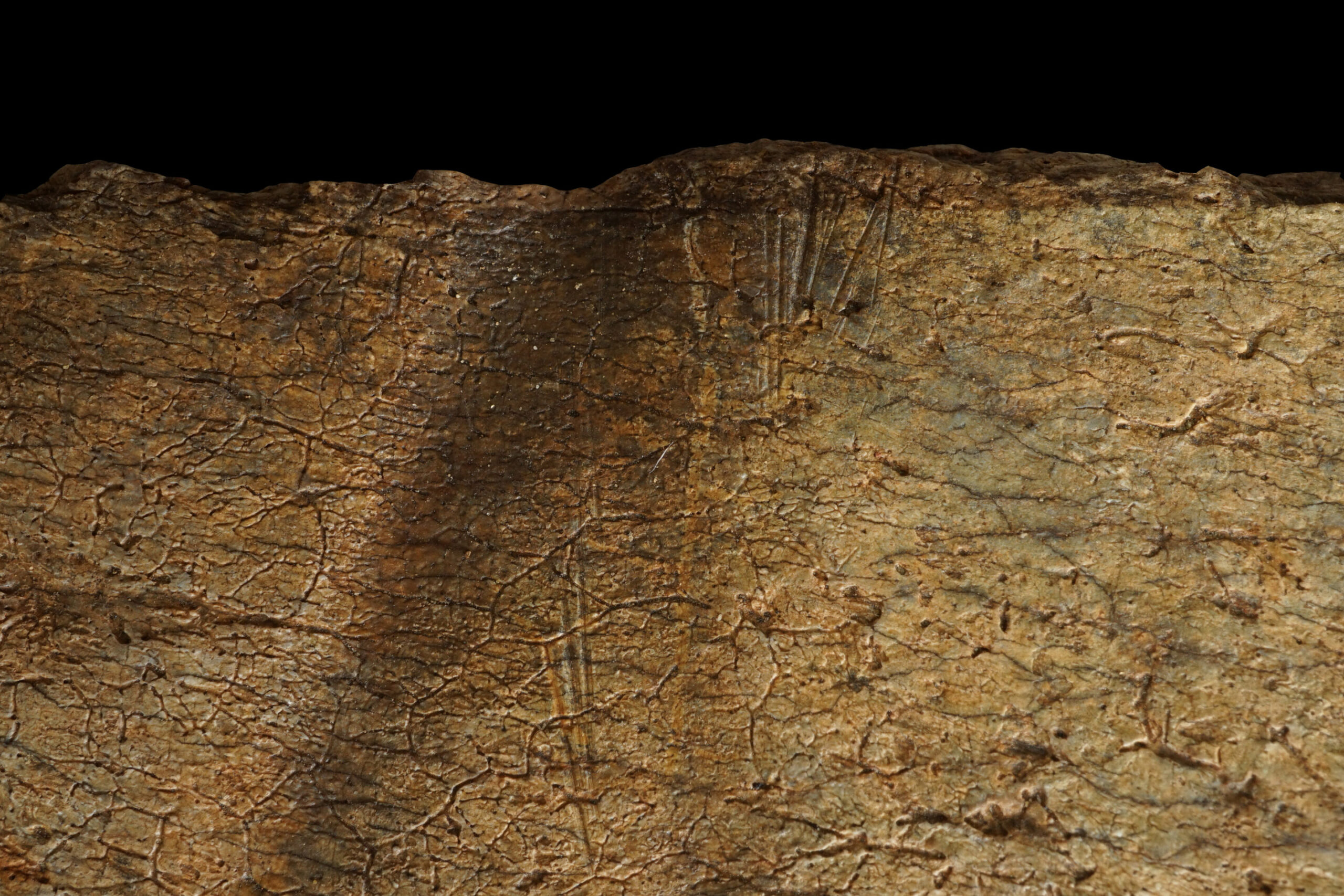
New research analyzing more than 1,000 fossil bones from northern Kenya shows that early Homo were not merely scavengers, but consistent and strategic meat foragers. Evidence from 1.6-million-year-old remains suggests they butchered animals with stone tools, transported the best limbs, and cracked bones for nutrients across multiple environments.
At a fossil site in northern Kenya, the remains of long-dead antelopes and grazing animals are telling a surprisingly detailed story—one written in tiny scratches, pits, and fractures that survived for 1.6 million years. And according to new research, those marks reveal that early humans weren’t just opportunistically picking over leftovers. They were actively processing meat, moving valuable food, and doing it repeatedly.
The findings, published in the Proceedings of the National Academy of Sciences, come from a detailed study of fossilized animal bones from the Koobi Fora Formation, a major fossil region in northern Kenya. By closely examining the damage patterns preserved on ancient bones, researchers say they uncovered strong evidence that early members of the genus Homo were effective and systematic meat foragers.
A Fossil Site That Captured Ancient Behavior
The Koobi Fora Formation is one of the world’s most important windows into early human history. In this study, researchers focused on animal fossils dating to around 1.6 million years ago, a time when early humans were living in landscapes that included both wide grasslands and thick, vegetated floodplains.
That environmental diversity makes the site especially valuable. It allows scientists to test whether early humans changed their survival strategies depending on conditions—or whether they relied on a consistent approach.
The researchers concluded that early Homo maintained the same basic carcass-processing strategy even as the environment shifted. In their words, a “consistent carcass-exploitation strategy” was sustained across “environmental heterogeneity and shifting competitive regimes.”
Over 1,000 Bones, Examined Mark by Mark
To reach their conclusions, the team analyzed more than 1,000 fossilized bone specimens, most of them from antelopes and other grazing animals.
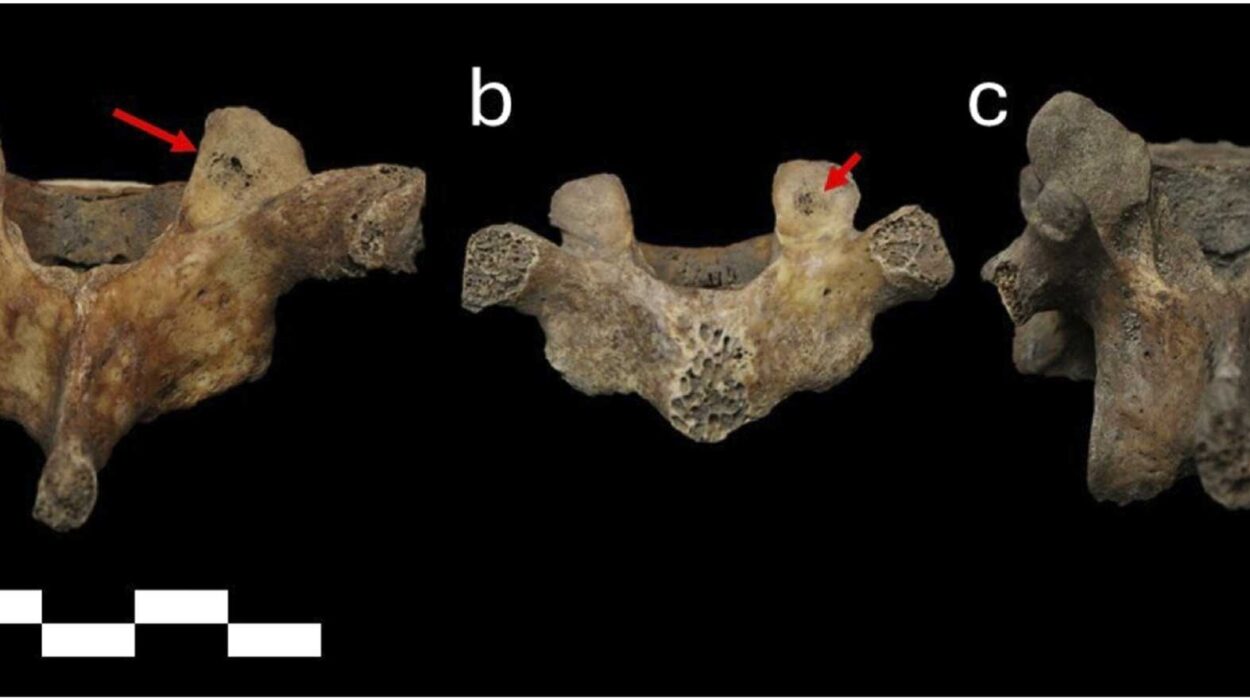
Using high-powered magnification, they searched for microscopic surface damage that could distinguish between different causes. Certain marks can be linked to stone tool butchery, while others come from carnivore teeth. Hammerstone impacts leave their own recognizable signatures as well.
By comparing scratches, pits, and fractures, the researchers could reconstruct what happened to these animals after death—whether they were torn apart by predators first, or accessed early by humans with tools.
The pattern that emerged pointed strongly toward deliberate human involvement.
Cut Marks Suggest Early Access to Fresh Meat
One of the most telling findings was the location and nature of the cut marks.
The team found sharp tool-made marks concentrated on the middle of leg bones, a detail that matters because it suggests early humans were working on carcasses when significant meat was still present. If humans had arrived late, after carnivores had stripped most flesh away, the marks would likely look different and appear in different locations.
Instead, the researchers argue that these bones show early Homo reached carcasses early and processed them heavily.
The team wrote that these patterns indicate early Homo “accessed carcasses early and intensively processed transported limbs, with minimal carnivore involvement.”
That conclusion directly challenges the idea that early humans were mostly passive scavengers dependent on predator leftovers.
Breaking Bones for Nutrients Inside
The study also identified evidence that these early humans were not stopping at meat alone.
In addition to cut marks from stone tools, the bones displayed hammerstone marks, which indicate deliberate smashing. This kind of damage strongly suggests early humans were breaking open bones to reach the nutrient-rich contents inside.
Together, the cut marks and impact marks paint a picture of systematic processing: meat stripped away efficiently, followed by bone cracking to extract additional food resources.
It wasn’t random feeding behavior. It was a repeated, purposeful strategy.
Why So Many Leg Bones Were Left Behind
Another striking feature of the fossil collection was the type of bones found.
Most remains recovered from the site were leg bones, while skulls, vertebrae, and other skeletal parts were relatively rare. That uneven distribution is important because it hints at what happened between the kill site and the location where these bones were deposited.
If an animal had died naturally and been eaten where it fell, researchers would expect to find a more complete skeleton. Instead, the dominance of limb bones suggests early humans may have been selectively transporting the most valuable parts of carcasses.
Legs contain large muscle groups and represent some of the best cuts of meat. The researchers believe early humans may have carried these limbs away from dangerous areas where predators might have been nearby.
Transporting Food to Safer Places
The researchers interpret the bone distribution as evidence that early humans were moving food intentionally.
Rather than staying at kill sites—where they could have been vulnerable to larger carnivores—these early Homo groups likely carried limbs to safer locations. The study suggests these may have included sheltered areas near water.
This behavior implies planning and risk management. Transporting food requires time, coordination, and a clear understanding of which carcass parts are worth the effort.
The researchers argue that this pattern reflects repeated decisions to extract high-value resources and relocate them to places where early humans could feed with less danger.
A Strategy That Worked Across Different Landscapes
One of the strongest conclusions from the study is that this was not a one-time occurrence.
Around 1.6 million years ago, the Koobi Fora region contained multiple habitat types, from grasslands to floodplains. Yet the same general patterns of carcass use appear across the fossil record.
That consistency suggests early Homo had developed a stable approach to acquiring and processing animal resources, even as environmental conditions changed and competition from carnivores shifted.
In other words, this was a reliable survival strategy—one that could be repeated in different settings.
Fueling Bigger Brains and Social Change
The study authors also connect these findings to a larger evolutionary question: how early humans gained the energy needed for expanding brains and increasingly complex behavior.
Meat and marrow represent high-quality food sources. If early Homo could reliably access these resources, it may have helped support the long-term evolution of larger brains. It may also have supported later developments in human social behavior, including food sharing.
The researchers suggest that dependable access to these nutrient-rich resources may have played a role in shaping both human biology and emerging social dynamics.
Why This Matters
This research adds strong evidence that early Homo were not simply surviving on chance scavenging. The fossil record at Koobi Fora shows repeated, strategic behavior: systematic butchering, selective transport of valuable limbs, and intensive processing of bones for nutrients.
By revealing how early humans consistently obtained and managed high-quality food across diverse environments, the study strengthens the idea that organized foraging was already well established 1.6 million years ago. That kind of reliability could have provided the foundation for later human evolution—supporting larger brains, greater cooperation, and the early roots of human social life.
Study Details
Frances Forrest et al, Early evidence for a stable and flexible foraging niche in the evolution of Homo, Proceedings of the National Academy of Sciences (2026). DOI: 10.1073/pnas.2537631123