The biting winds of the Late Pleistocene swept across the western Great Plains more than 12,000 years ago, chilling the landscape of what we now call Wyoming, Colorado, and New Mexico. In the shadow of the retreating Ice Age glaciers, small groups of Native American hunter-gatherers—members of the Folsom culture—gathered around flickering hearths. While history books often paint this era as a desperate struggle for survival against mammoths and the elements, a new story is emerging from the dirt. These ancient people weren’t just hunters; they were thinkers, socialites, and perhaps most surprisingly, gamblers.
For decades, the origins of structured games of chance were anchored firmly in the Bronze Age societies of the Old World, dated to roughly 5,500 years ago. However, groundbreaking research by Robert J. Madden, a Ph.D. student at Colorado State University, has shattered that timeline. By re-examining the archaeological record, Madden has revealed that dice and the complex concept of probability were thriving in North America a staggering 6,000 years before they appeared in the East. These weren’t accidental discoveries, but a deliberate cultural tradition that has persisted on this continent for over twelve millennia.
The Bone Tools That Chased Randomness
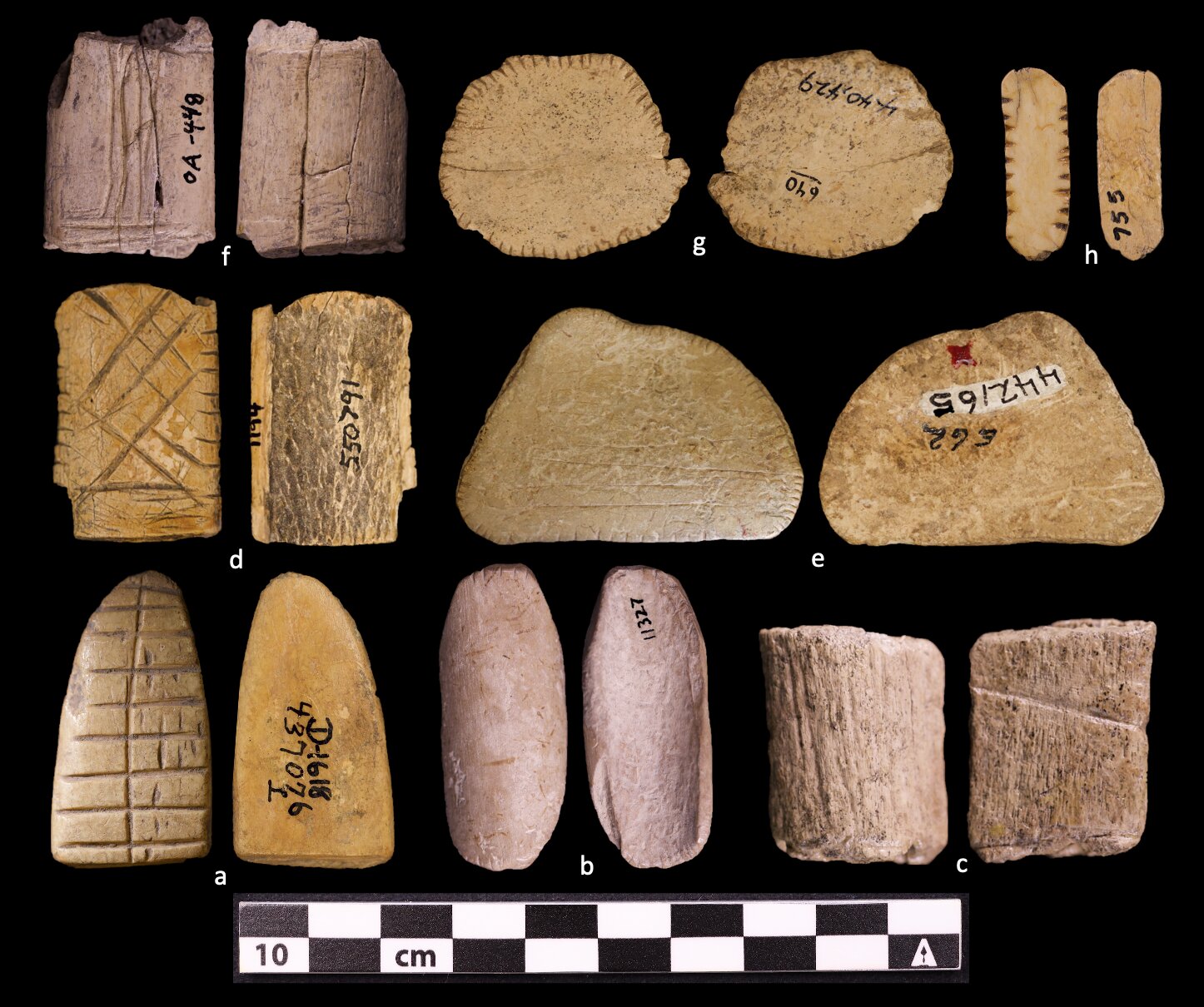
To find these ancient “engines of chance,” one must look closer than the typical six-sided cubes found in modern board games. The Ice Age dice of the Folsom period were binary lots—elegant, two-sided tools crafted from small pieces of bone. These artifacts were meticulously shaped to be flat or slightly rounded, usually appearing as small ovals or rectangles designed to fit perfectly within a human palm.
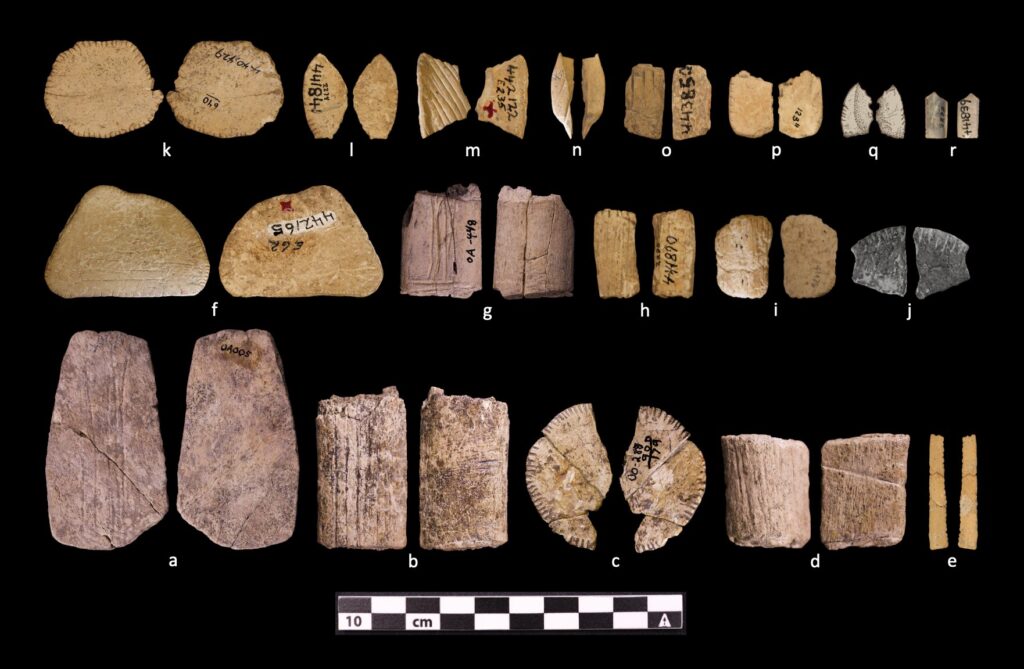
What transformed a simple sliver of bone into a die was a purposeful modification of its surface. One side would be left plain while the other was treated with coloration, applied markings, or specific surface treatments to distinguish it as the counting side. In a world of survival, these objects served no “practical” purpose like a needle or a scraper; their only job was to land one way or the other. When tossed in groups onto a playing surface, they functioned exactly like a prehistoric version of “heads or tails.” The score wasn’t determined by a single number, but by how many “counting” faces looked back at the players from the dust. These were binary outcomes, the very foundation of randomization and rule-based play.
Decoding a Forgotten Language of Play
The evidence for these games hasn’t been hidden in undiscovered caves; much of it has been sitting in museum drawers at the Smithsonian Institution and the Denver Museum of Nature and Science for nearly a century. The challenge for archaeologists wasn’t a lack of artifacts, but a lack of a standardized test to recognize them. For years, these small bones were vaguely labeled as “possible gaming pieces” or simply overlooked as byproducts of bone-working.
To solve this, Madden turned to the past to find a key for the present. He analyzed 293 sets of historic dice documented in the early 1900s by the ethnographer Stewart Culin. By studying these documented pieces, Madden developed a rigorous, attribute-based morphological test—a scientific checklist of physical features that define a North American die. When he applied this objective standard to the existing archaeological record, the results were overwhelming. He identified over 600 diagnostic and probable dice spanning every major period of North American history. The artifacts had been speaking all along; we just hadn’t been using the right dictionary to translate their meaning.
Ancient Minds and the Laws of Large Numbers
This discovery does more than move a date on a timeline; it rewrites the intellectual history of humanity. Historians of mathematics have long viewed dice games as the earliest evidence of humans grappling with randomness, the necessary precursor to statistics and probability theory. By proving that Folsom-period hunter-gatherers were using these tools, the study suggests that Native American groups were engaging with these sophisticated concepts thousands of years earlier than previously recognized.
While these Ice Age players weren’t writing out formal equations, they were intentionally creating and observing random outcomes. By casting sets of dice together, they were leveraging probabilistic regularities, such as the law of large numbers, to govern their games. They understood that while one throw was unpredictable, a series of throws followed a reliable pattern. This reflects a deep, structured engagement with the world that goes far beyond simple luck; it shows a human mind trying to organize and interact with the very nature of uncertainty.
A Social Technology for a Changing World
Why would a group of people living on the edge of an Ice Age invest time and effort into making dice? The answer lies in the power of the social technology these games provided. Throughout the Paleoindian, Archaic, and Late Prehistoric periods, dice have been found at 57 different sites across 12 states. This incredible geographic breadth and cultural endurance suggest that gambling wasn’t just a pastime; it was a vital tool for survival in a different sense.
Games of chance created neutral, rule-governed spaces where different groups could meet without conflict. In a landscape where resources were uncertain and neighbors might be strangers, a game of dice offered a way to exchange goods, share vital information, and form alliances. It was a way to manage the inherent risks of life by creating a structured environment where those risks could be played out safely.
Why This Ancient Gamble Matters Today
This research is a powerful reminder that the history of scientific and mathematical thinking is not a straight line that began in one corner of the globe. It demonstrates that the ancestors of modern Native American people were pioneers in the study of probability and the creation of complex social systems.
By identifying these 12,000-year-old dice, we see a clear, unbroken thread of cultural persistence that connects the inhabitants of the Ice Age to their living descendants. It elevates these small, marked bones from mere curiosities to “elegant tools” of human intelligence. Ultimately, this study proves that the drive to understand randomness and the desire to connect through play are among the oldest and most universal traits of the human experience.
Study Details
Probability in the Pleistocene: Origins and Antiquity of Native American Dice, Games of Chance, and Gambling, American Antiquity (2026). DOI: 10.1017/aaq.2025.10158