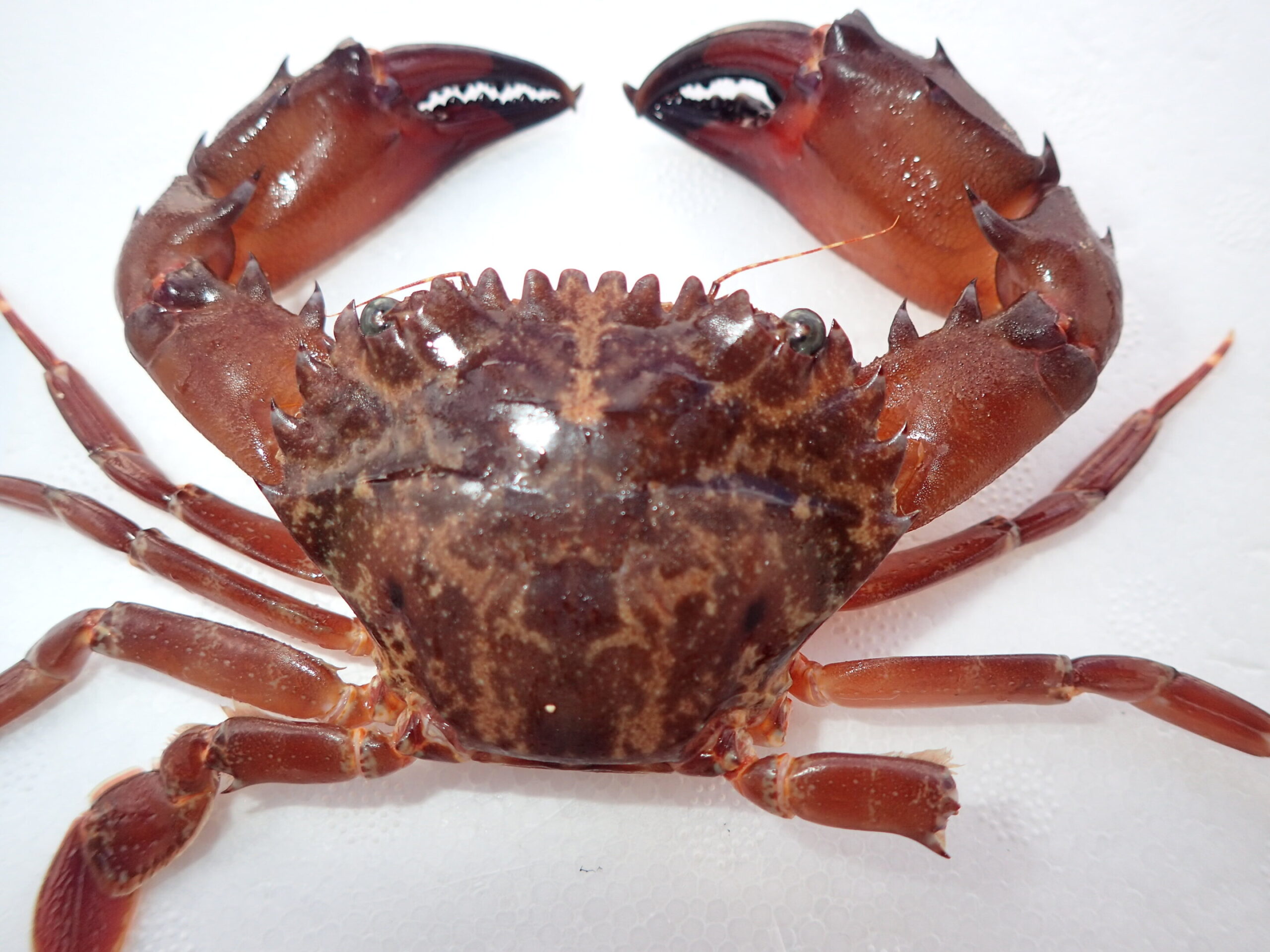
The waters of the Ionian Sea have long been a cradle of ancient myths and steady tides, but beneath the sapphire surface off the coast of Italy, a new and silent revolution is unfolding. It began with a single, unexpected discovery at Portopalo di Capo Passero in November 2025. A lone non-indigenous species, a crab known to scientists as Gonioinfradens giardi, was pulled from the depths. At the time, it might have been dismissed as a biological fluke—a solitary wanderer lost at sea. However, nature quickly proved that this was no isolated incident. What started as a single record rapidly evolved into a series of sightings that have put the scientific community on high alert.
A Stranger from Distant Tides
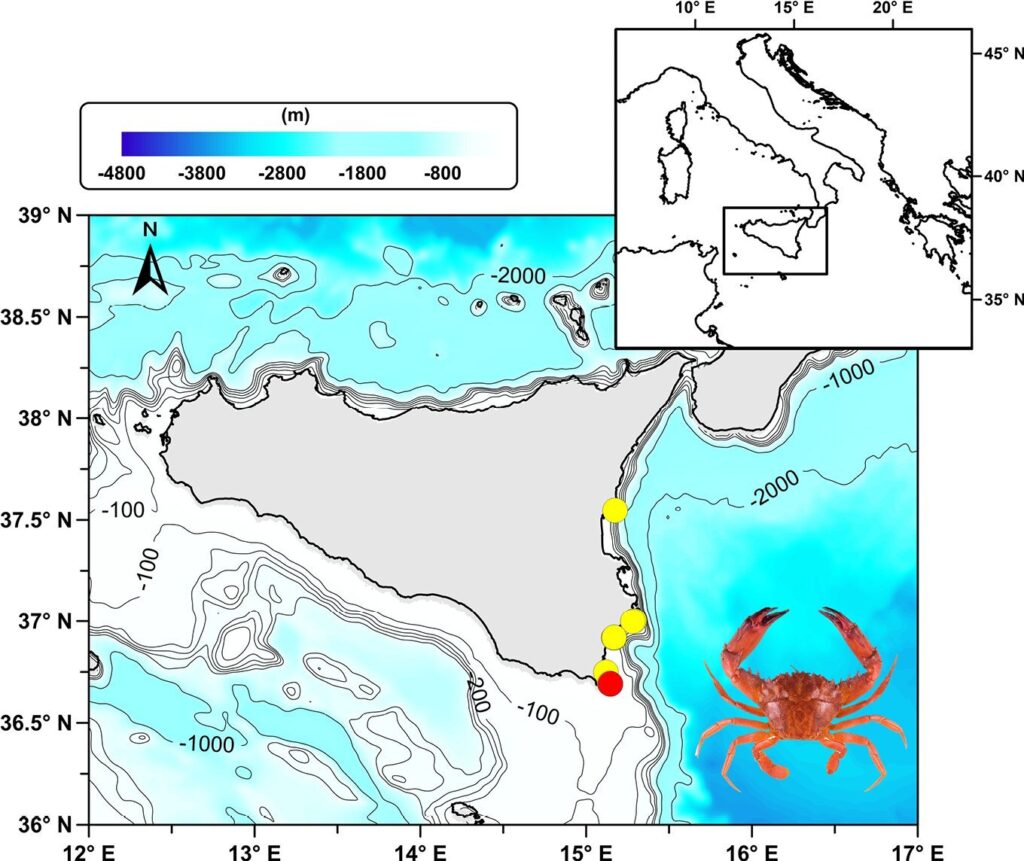
In the short window between November 2025 and January 2026, the narrative of this decapod’s arrival shifted from a curiosity to a documented expansion. Researchers, led by Francesco Tiralongo, discovered that the lone pioneer had company. Eleven additional individuals were documented in the same region, bringing the total to a dozen specimens in just two months. This sudden cluster of sightings suggests that Gonioinfradens giardi is no longer just a transient visitor; it is transitioning into a consistent presence within the central Mediterranean.
This movement is part of a much larger and more complex biological phenomenon known as Lessepsian migration. For decades, the Suez Canal has acted as a gateway, allowing Indo-Pacific species to cross into the Mediterranean. While many species struggle to adapt to the cooler, saltier waters of the West, the recent haul of these crabs suggests that the environmental barriers are thinning. For this specific crab, the Ionian Sea represents a new frontier, marking the westernmost presence of the species recorded in the Mediterranean to date.
Guardians of the Nets
The discovery of this crab’s expansion was not made in a vacuum or solely within the confines of a sterile laboratory. Instead, it was the result of a vital collaboration between formal science and the traditional knowledge of local fishers. Using standard artisanal fishing gear, these fishers became the eyes and ears of the research team. By integrating field observations from those who work the water every day, the study was able to reconstruct a clearer picture of where Gonioinfradens giardi is hiding and how quickly it is moving.
This partnership highlights a shift in how we monitor our changing planet. The fact that a dozen individuals were caught in such a brief timeframe indicates that the local environmental conditions are becoming increasingly favorable for the crab’s persistence. As Alberto Felici points out, these marine ecosystems are incredibly dynamic and responsive. The speed at which this crab has asserted itself serves as a real-time demonstration of how quickly a habitat can change when the right conditions—likely driven by climate change—align.
The Invisible Ripples of Change
When a new predator or competitor enters an ecosystem, they never arrive alone; they bring the potential for cascading effects. The establishment of non-indigenous crustaceans like Gonioinfradens giardi introduces a new set of variables into a delicate biological equation. These crabs do not exist in isolation; they must eat, find shelter, and reproduce, all of which brings them into direct competition with native species.
The concern for scientists and the local community is not just about the crabs themselves, but about the “what happens next.” If the population continues to grow and becomes a stable population, it could shift the balance of the local food web. There are also potential implications for fisheries, as the arrival of new species can change the composition of the catch or disrupt the life cycles of the native fish and crustaceans that the local economy relies upon. While the long-term impacts are still being studied and remain uncertain, the sheer speed of the spread is a mirror reflecting the broader, ongoing transformations of Mediterranean marine biodiversity.
Mapping a New Mediterranean
The story of this crab is a single chapter in a much larger book about the Mediterranean becoming a global hotspot for biological invasions. The sea is being reshaped, species by species, into something unrecognizable from the waters of a century ago. This is why documenting the early phases of establishment is so critical. It allows researchers to move from being reactive to being proactive, creating future ecological scenarios that can help guide how we protect these waters.
To keep pace with these changes, the scientific community is calling for a “all hands on deck” approach. This includes continuous monitoring that bridges the gap between academic research, citizen scientists, and the fishing industry. By working together, they can track the dynamics of these invasions and support adaptive management strategies that are as flexible as the sea itself.
Why This Research Matters
Understanding the movement of Gonioinfradens giardi is about more than just tracking a single crab; it is about monitoring the health and future of one of the world’s most vital marine environments. The Mediterranean is currently a laboratory for the effects of climate change and human-mediated migration. If we can understand how and why these species are successfully establishing themselves now, we can better predict the ecological role they will play in the future.
This research provides the essential data needed to make informed management decisions that protect both the environment and the livelihoods of those who depend on it. In a world where the oceans are changing faster than ever, these early warnings are the only way to ensure that we are prepared for the new Mediterranean that is emerging beneath the waves.
Study Details
Francesco Tiralongo et al, Rapid expansion of a Lessepsian migrant crab, Gonioinfradens giardi (Crustacea, Brachyura, Portunidae), in the Ionian Sea: New records and early evidence of establishment, Acta Ichthyologica et Piscatoria (2026). DOI: 10.3897/aiep.56.185183