The night sky looks peaceful.
Stars shimmer with quiet constancy. The Moon glides across darkness with gentle predictability. Constellations appear eternal, frozen in place across the centuries. Yet this calm is an illusion born of distance. The universe is not serene. It is violent, energetic, and governed by forces that dwarf human comprehension.
Our planet survives because of balance—because our Sun is stable, because we orbit at a safe distance, because massive planets like Jupiter deflect some cosmic debris, because Earth’s magnetic field shields us from charged particles. But that safety is conditional. The cosmos is vast, and it contains phenomena capable of extinguishing life—or even destroying the planet itself—in moments.
Most of these events are extraordinarily rare. Some are statistically improbable within the lifetime of the solar system. But rare does not mean impossible.
Here are fifteen scientifically grounded cosmic phenomena that, under the wrong circumstances, could wipe out Earth in an instant.
1. A Large Asteroid Impact
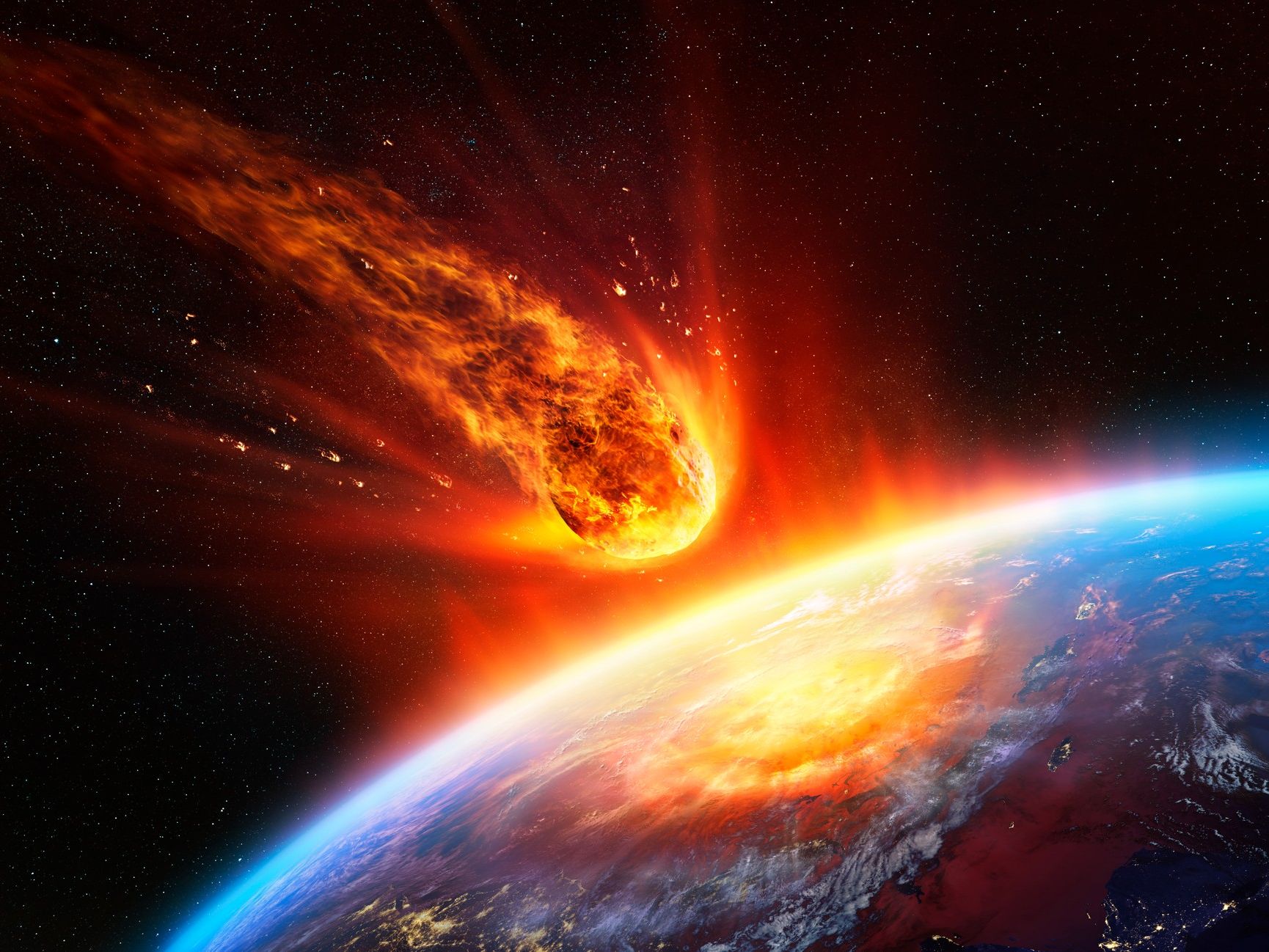
Sixty-six million years ago, a roughly 10-kilometer-wide asteroid struck near what is now the Yucatán Peninsula, forming the Chicxulub crater. The energy released was equivalent to billions of atomic bombs. The impact triggered global wildfires, massive tsunamis, atmospheric dust clouds, and long-term climate collapse. It ended the age of non-avian dinosaurs.
If an object of similar size struck Earth today, the devastation would be civilization-ending and possibly species-ending.
Asteroids are remnants from the early solar system, primarily found in the asteroid belt between Mars and Jupiter. Most remain in stable orbits, but gravitational interactions can nudge some into Earth-crossing trajectories.
NASA and other agencies track near-Earth objects, and so far no known large asteroid poses an imminent threat. Yet not all objects have been discovered, particularly those approaching from the direction of the Sun.
An asteroid tens of kilometers wide would not merely devastate a region—it would inject enormous quantities of dust and aerosols into the atmosphere, blocking sunlight for months or years. Photosynthesis would collapse. Food chains would fail.
Earth has endured such impacts before.
It could happen again.
2. A Cometary Impact from the Oort Cloud
Unlike most asteroids, long-period comets originate from the distant Oort Cloud, a spherical shell of icy bodies extending perhaps 100,000 astronomical units from the Sun. These comets are perturbed by passing stars or galactic tides, occasionally sending one plunging toward the inner solar system.
Long-period comets travel at extremely high velocities relative to Earth, often exceeding 50 kilometers per second. That means even a smaller comet can release enormous energy upon impact.
Because these comets originate so far away and arrive from unpredictable directions, warning times may be short—perhaps months instead of decades.
A sufficiently large comet impact would rival or exceed the Chicxulub event in energy. Its volatile-rich composition could also inject massive amounts of water vapor and other compounds into the atmosphere, compounding climatic consequences.
The sky would blaze.
Then the Earth would burn.
3. A Nearby Supernova
Stars more than eight times the mass of our Sun end their lives in supernova explosions. These events release vast quantities of energy and heavy elements, briefly outshining entire galaxies.
If a supernova occurred within about 30 light-years of Earth, the consequences could be catastrophic.
The initial flash of high-energy radiation—X-rays and gamma rays—would damage the ozone layer. Subsequent cosmic rays would continue bombarding the atmosphere for years. With ozone depleted, ultraviolet radiation from the Sun would reach the surface at lethal levels, devastating ecosystems.
Fortunately, no known star capable of supernova lies close enough to pose an imminent threat. The red supergiant Betelgeuse, often discussed in popular media, is about 600 light-years away—far too distant to cause mass extinction-level damage.
But the Milky Way has experienced supernovae before, and it will again.
Distance is everything.
4. A Gamma-Ray Burst Directed at Earth
Gamma-ray bursts are among the most energetic events in the universe. They occur when massive stars collapse into black holes or when neutron stars merge. For a few seconds, they release more energy than the Sun will emit over its entire lifetime.
Crucially, gamma-ray bursts emit energy in tightly focused beams. If Earth were caught directly in such a beam from within a few thousand light-years, the consequences could be severe.
The intense gamma radiation would strip away much of the ozone layer almost instantly. Nitrogen oxides produced in the atmosphere could persist for years, prolonging ozone depletion. Surface life would be exposed to extreme ultraviolet radiation.
Some scientists have proposed that a gamma-ray burst may have contributed to past mass extinctions, though evidence remains speculative.
The universe contains countless gamma-ray bursts every year.
Most occur in distant galaxies.
We are fortunate to be far from the action.
5. A Rogue Black Hole Passing Through the Solar System
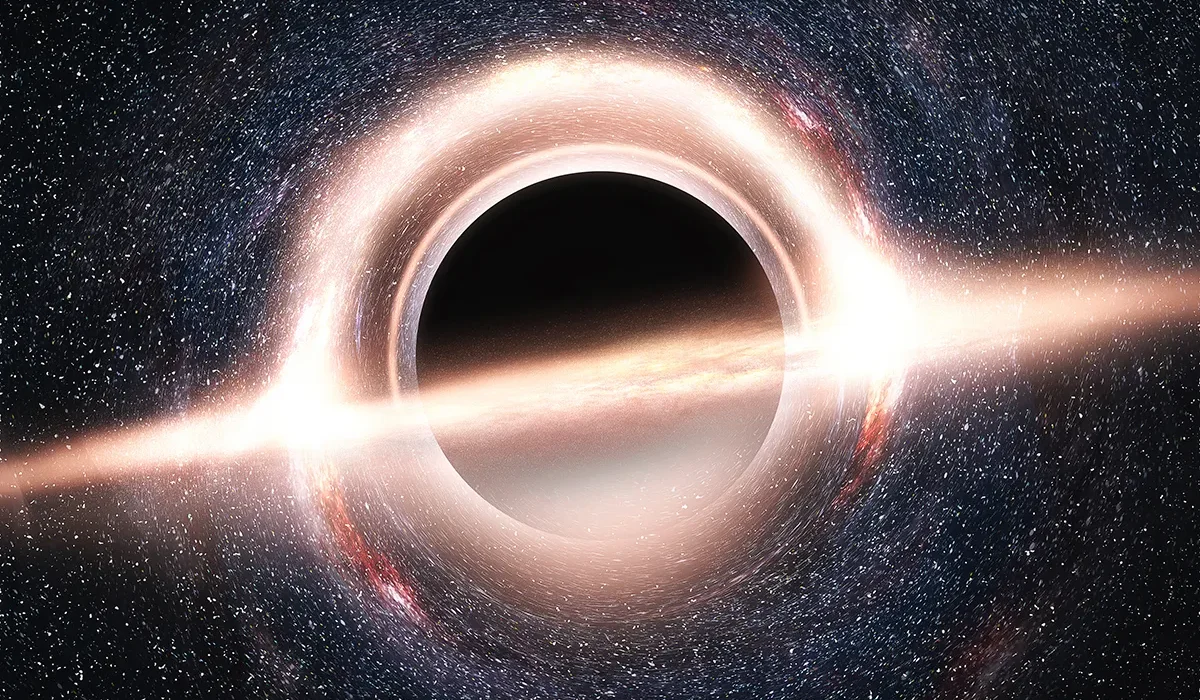
Black holes are not cosmic vacuum cleaners roaming randomly. They follow gravitational dynamics like any other massive object. Yet the Milky Way contains millions of stellar-mass black holes, remnants of massive stars.
If one were to pass near our solar system, its gravitational influence could destabilize planetary orbits. A close encounter could eject Earth from its orbit or send it spiraling into the Sun.
Such an event is extraordinarily unlikely given the vast distances between stars. The average separation in our region of the galaxy is several light-years.
But over billions of years, stars move. Orbits shift.
A rogue black hole drifting invisibly through interstellar space would emit no light, only gravitational influence.
We would detect it only when the sky itself began to rearrange.
6. A Massive Solar Superflare
Our Sun is relatively stable, but it is not inert. Solar flares and coronal mass ejections release bursts of electromagnetic radiation and charged particles.
In 1859, the Carrington Event produced powerful geomagnetic storms, disrupting telegraph systems. If a similar event occurred today, it would severely damage power grids and satellites.
But what about something larger?
Observations of Sun-like stars show that some produce “superflares” thousands of times more energetic than typical solar flares. If our Sun were capable of such an event, the radiation and particle storm could strip portions of the atmosphere and devastate technological infrastructure.
Current evidence suggests our Sun is less prone to extreme superflares than some other stars. Still, stellar physics does not absolutely forbid larger outbursts.
Our star gives life.
It also holds immense power.
7. A Neutron Star Merger Nearby
Neutron stars are the collapsed cores of massive stars, composed almost entirely of neutrons. When two neutron stars orbit each other, gravitational wave emission gradually shrinks their orbit until they merge.
The collision produces gravitational waves, gamma rays, and heavy elements such as gold and platinum.
If such a merger occurred sufficiently close—within a few dozen light-years—the gamma radiation could strip Earth’s atmosphere and cause severe biological damage.
The first observed neutron star merger in 2017 confirmed theoretical predictions. These events are rare in any given galaxy.
But rare is not zero.
8. Vacuum Decay
Quantum field theory suggests that our universe may exist in a metastable vacuum state—not the lowest possible energy state, but a local minimum.
If true, a transition to a lower-energy “true vacuum” could occur via quantum tunneling. A bubble of true vacuum would expand outward at nearly the speed of light, altering fundamental constants of nature as it passed.
Atoms would no longer behave the same way. Chemistry would cease to exist as we know it.
There would be no warning. No defense.
The bubble would arrive at light speed.
While theoretical, current measurements of the Higgs boson mass and top quark mass leave open the possibility that our vacuum is metastable. The timescale, however, may be vastly longer than the current age of the universe.
Still, the concept is chilling: reality itself could change without notice.
9. A Collision with a Massive Interstellar Object
In 2017, astronomers detected ‘Oumuamua, the first known interstellar object passing through our solar system. In 2019, another object, 2I/Borisov, followed.
These discoveries confirm that material from other star systems occasionally enters ours.
Most such objects are small. But if a large interstellar body—perhaps a rogue planet or massive asteroid—entered on a collision course with Earth, detection time could be limited.
High velocities would amplify impact energy.
The universe is not neatly partitioned into isolated systems. Material travels between stars.
Sometimes, it might arrive uninvited.
10. A Nearby Magnetar Flare
Magnetars are neutron stars with magnetic fields trillions of times stronger than Earth’s. Occasionally, they release giant flares of gamma radiation.
In 2004, a magnetar flare from 50,000 light-years away briefly affected Earth’s upper atmosphere.
If such a flare occurred within a few thousand light-years, it could damage satellites and affect atmospheric chemistry.
At closer distances, biological consequences could be severe.
Magnetars are rare.
But they exist.
11. A Galactic Core Outburst
At the center of the Milky Way lies a supermassive black hole known as Sagittarius A*. It is currently relatively quiet.
However, observations of other galaxies show that supermassive black holes can become active, accreting large amounts of matter and producing powerful jets of radiation.
If such a jet were aligned with Earth, high-energy radiation could impact our atmosphere.
Fortunately, Sagittarius A* is not currently in an active phase, and its orientation does not appear directed toward us.
But galaxies evolve.
12. A Massive Coronal Mass Ejection Direct Hit
While related to solar flares, coronal mass ejections involve enormous clouds of charged particles expelled from the Sun.
A sufficiently powerful CME directly aligned with Earth could compress our magnetosphere dramatically. If extreme enough, it might erode atmospheric layers over time.
Life would likely survive a single event, but repeated extreme events could alter atmospheric chemistry significantly.
The Sun is dynamic.
Its mood matters.
13. A Nearby Pair-Instability Supernova
Very massive stars—over about 130 solar masses—can undergo pair-instability supernovae, completely obliterating themselves without leaving remnants.
Such explosions release tremendous amounts of energy and heavy elements.
These stars are rare in the modern universe, but more common in the early cosmos.
If one occurred nearby, its radiation could severely impact Earth.
Fortunately, none are known in our stellar neighborhood.
14. Gravitational Disturbance from a Passing Star
Stars orbit the Milky Way’s center. Occasionally, they pass relatively close to one another.
A close stellar flyby could gravitationally perturb the Oort Cloud, sending a barrage of comets toward the inner solar system.
Such events may have happened in Earth’s distant past.
We know that stars like Gliese 710 will pass relatively close in the distant future—close in astronomical terms, though still thousands of astronomical units away.
Most likely, effects would be limited to increased comet activity.
But under extreme conditions, orbital stability could be threatened.
15. Total Solar Instability in the Far Future
Our Sun is currently in a stable main-sequence phase, fusing hydrogen into helium. In about five billion years, it will exhaust its core hydrogen and expand into a red giant.
As it expands, it will likely engulf Mercury and Venus. Earth’s fate is uncertain—tidal interactions and mass loss complicate predictions—but even if not swallowed, the planet will become uninhabitable long before that.
Oceans will boil. The atmosphere will escape.
This is not an instant catastrophe in human terms, but in cosmic perspective, it is inevitable.
Stars evolve.
So will our Sun.
The Fragility of Existence
Most of these scenarios are exceedingly improbable within human timescales. The universe is vast, and distances are immense. Catastrophic alignments are rare.
Yet the possibility exists.
Earth has survived asteroid impacts, supernovae in the galactic neighborhood, gamma-ray bursts in distant galaxies, and billions of years of solar activity. Life has endured and adapted.
But survival is not guaranteed forever.
The cosmos is not designed for us. It is governed by physical laws indifferent to biology.
And yet, here we are—aware of the dangers, capable of calculating probabilities, tracking asteroids, studying stars, and imagining defenses.
Perhaps the most remarkable fact is not that the universe contains forces capable of destroying us.
It is that, for billions of years, it has allowed us to exist long enough to understand them.
The night sky remains beautiful.
But behind its beauty lies power beyond imagination.