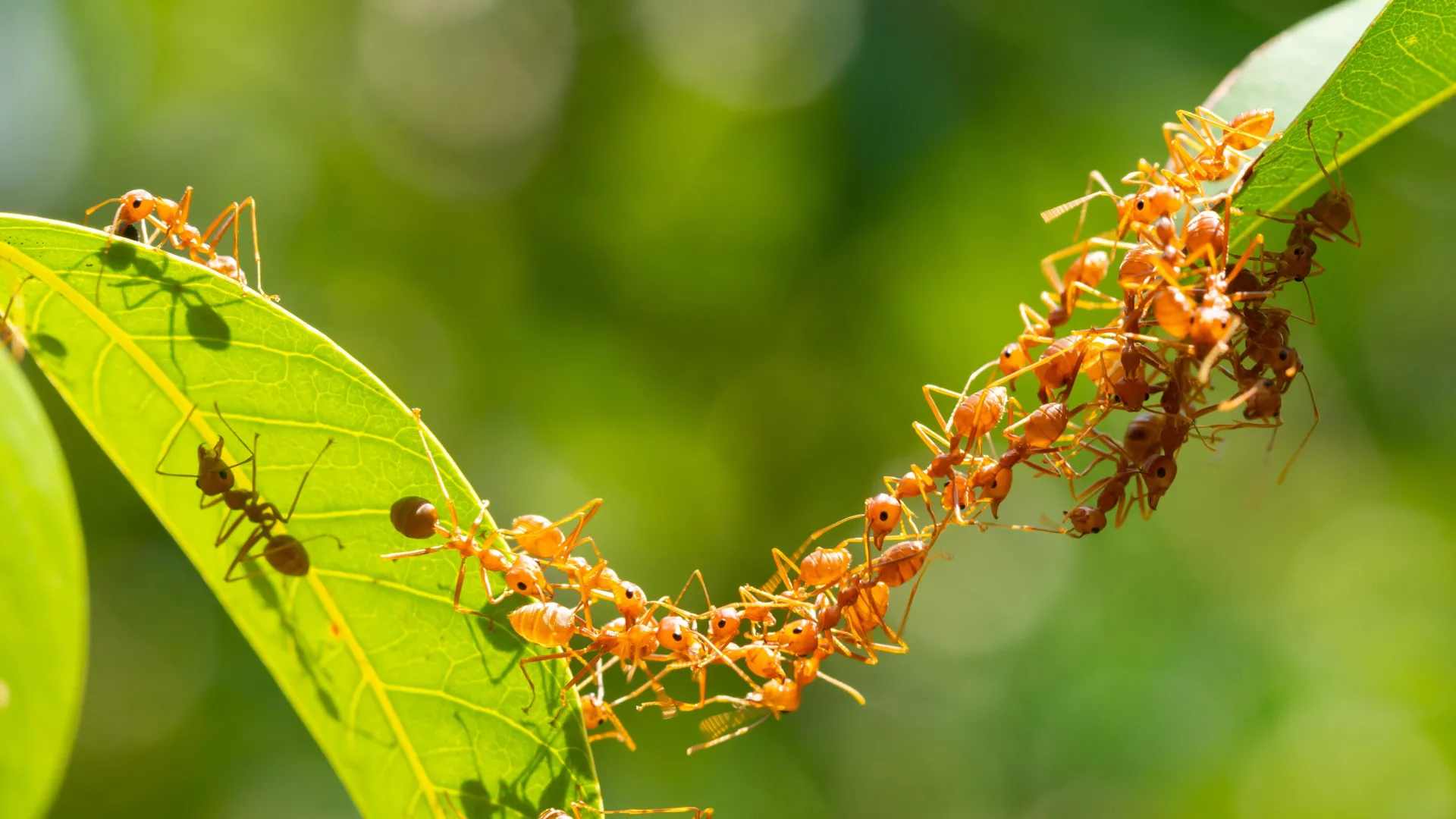
Swarm intelligence is one of the most compelling ideas to emerge at the intersection of biology, physics, computer science, and robotics. It describes how large groups of relatively simple agents—such as ants, bees, birds, fish, or even cells—can collectively produce behaviors that appear intelligent, adaptive, and purposeful, even though no single individual possesses a global view or central control. From the outside, a swarm can look almost magical: ants find the shortest path to food, bees make democratic decisions about new homes, and birds wheel through the sky in perfect synchrony. Yet beneath this apparent magic lies a set of physical principles, local rules, and feedback mechanisms that can be studied, modeled, and, increasingly, engineered.
For roboticists and artificial intelligence researchers, swarm intelligence offers a powerful alternative to traditional, top-down control systems. Instead of building one highly complex robot that must sense, compute, and decide everything on its own, swarm robotics explores how large numbers of simple robots can cooperate to solve problems collectively. Ants and bees, refined by millions of years of evolution, provide a natural laboratory for understanding how intelligence can emerge from simplicity. Their lessons are not merely metaphorical; they are mathematically formalizable, experimentally testable, and technologically actionable.
The Conceptual Foundations of Swarm Intelligence
Swarm intelligence rests on a deceptively simple idea: complex global behavior can emerge from simple local interactions. Each individual in a swarm follows relatively straightforward rules based on local information, such as the presence of nearby neighbors, environmental cues, or chemical signals. There is no leader directing the swarm as a whole, and no individual possesses a complete map of the system. Intelligence, in this context, is not stored in a single brain but distributed across the collective.
From a scientific perspective, swarm intelligence is a form of self-organization. Self-organizing systems spontaneously form ordered structures or behaviors without external control, driven by internal interactions and energy flows. Physics provides many examples of such systems, from the formation of snowflakes to the convection patterns in heated fluids. Biological swarms belong to this broader class of systems, but with the added dimension of adaptation and evolution.
What makes swarm intelligence particularly fascinating is its robustness. Because control is decentralized, the failure or loss of individual agents rarely causes the entire system to collapse. Ant colonies continue to function even after losing many workers, and bee swarms can reorganize themselves in response to environmental disruptions. This resilience is precisely what makes swarm-based approaches attractive for robotics, especially in unpredictable or hazardous environments.
Ant Colonies as Distributed Problem Solvers
Ants are among the most studied examples of swarm intelligence, and for good reason. Individually, an ant has limited cognitive capacity, yet collectively, an ant colony can solve complex problems related to foraging, nest construction, defense, and resource allocation. These capabilities arise from interactions mediated primarily by pheromones, chemical substances that ants deposit in their environment.
One of the most famous demonstrations of ant intelligence is their ability to find efficient paths between their nest and food sources. When ants search for food, they initially explore their surroundings more or less randomly. As they move, they leave behind pheromone trails. If an ant finds food and returns to the nest, it reinforces the trail with additional pheromones. Other ants are more likely to follow stronger pheromone trails, and if they also find food, they reinforce the same path. Over time, shorter paths accumulate pheromone more quickly than longer ones, because ants can traverse them faster. Without any central planning, the colony converges on an efficient solution.
This process is a striking example of positive feedback combined with local decision-making. Positive feedback amplifies small initial differences, while evaporation of pheromones provides a form of negative feedback that prevents the system from becoming rigid. The result is a dynamic balance between exploration and exploitation, allowing the colony to adapt when conditions change, such as when a food source is depleted.
For robotics, this ant-inspired mechanism has been translated into algorithms such as ant colony optimization, which are used to solve complex computational problems like routing, scheduling, and network design. In swarm robotics, similar principles guide how robots can explore unknown environments, allocate tasks, and coordinate movement without centralized control.
Bees and the Physics of Collective Decision-Making
Bees offer a complementary perspective on swarm intelligence, particularly in the domain of decision-making. When a honeybee colony becomes too large, it splits, and a swarm of bees must find a new nest site. This decision is critical for the survival of the colony, and yet it is made without any single bee being in charge.
Scout bees explore potential nest sites and evaluate them based on criteria such as volume, entrance size, and location. When a scout finds a promising site, it returns to the swarm and performs a waggle dance, a behavior that encodes information about the site’s quality and location. Other bees observe these dances and may choose to inspect the site themselves. If they agree with the assessment, they also dance in support of that site.
Over time, a form of competition emerges among candidate sites, mediated by the intensity and frequency of dances. Importantly, bees also use inhibitory signals to reduce support for less favorable options. The decision process continues until a threshold is reached, at which point the swarm moves collectively to the chosen site.
From a scientific standpoint, this process resembles a distributed consensus algorithm. It balances speed and accuracy, allowing the swarm to make reliable decisions even in noisy and uncertain environments. Mathematical models and empirical studies have shown that this collective decision-making can approach optimality, selecting the best available option with high probability.
For robotics, bee-inspired decision-making provides insights into how groups of autonomous agents can reach consensus without centralized coordination. This is particularly relevant for applications such as search-and-rescue missions, where robots must quickly agree on priorities and strategies in dynamic conditions.
Emergence: From Local Rules to Global Intelligence
The key concept that unifies ant and bee behavior is emergence. Emergent phenomena arise when interactions at a small scale produce patterns or behaviors at a larger scale that are not explicitly encoded in the rules governing individual agents. In swarm intelligence, no single ant “knows” the shortest path, and no single bee “decides” the new nest location. The intelligence resides in the collective dynamics.
Emergence challenges traditional notions of intelligence, which often emphasize centralized reasoning and explicit representation. Instead, swarm intelligence suggests that intelligence can be embodied in processes rather than stored in symbols or plans. This perspective aligns with broader trends in cognitive science and artificial intelligence that emphasize embodied and situated cognition.
From a physical perspective, emergence in swarms can be understood in terms of nonlinear interactions and feedback loops. Small changes can have large effects, and the system’s behavior can shift abruptly when certain thresholds are crossed. These features make swarm systems rich and adaptive, but also challenging to predict and control.
Roboticists who seek to harness emergence must therefore strike a careful balance. They must design local rules that are simple enough to implement on limited hardware, yet structured enough to produce desirable global behavior. This design process often involves simulation, experimentation, and iterative refinement, mirroring the evolutionary processes that shaped biological swarms.
Swarm Robotics: Translating Biology into Machines
Swarm robotics is an active research field that seeks to apply the principles of swarm intelligence to groups of physical robots. These robots are typically relatively simple, with limited sensing, computation, and communication capabilities. Their power lies not in individual sophistication but in collective action.
One of the central motivations for swarm robotics is scalability. In a centralized system, adding more robots increases the burden on the control architecture. In a swarm system, additional robots can often be integrated seamlessly, enhancing performance and redundancy. This makes swarm robotics particularly appealing for large-scale applications, such as environmental monitoring or agricultural automation.
Another motivation is robustness. Because control is distributed, swarm robotic systems can tolerate individual failures. If one robot breaks down, others can compensate, much as ants compensate for the loss of workers. This resilience is critical for deployments in harsh or inaccessible environments, such as disaster zones or extraterrestrial surfaces.
Biological inspiration plays a crucial role in the design of swarm robotic algorithms. Ant foraging models inform how robots can explore and map unknown areas, while bee-inspired consensus mechanisms guide collective decision-making. However, translation from biology to robotics is not straightforward. Robots operate under different physical constraints, such as limited battery life, sensor noise, and communication delays. Effective swarm robotics requires careful abstraction of biological principles rather than direct imitation.
Communication in Swarms: Signals Without Language
Communication is central to swarm intelligence, yet it differs fundamentally from human language. Ants communicate primarily through chemical signals, while bees use a combination of movement, vibration, and sound. These signals are typically local, transient, and context-dependent.
In robotic swarms, communication often takes the form of short-range wireless signals, visual markers, or modifications to the environment. Some systems even employ digital analogs of pheromones, where robots leave virtual markers in a shared map or physical markers detectable by sensors. These approaches preserve the decentralized nature of biological communication while adapting it to technological constraints.
From a physics perspective, communication in swarms involves the propagation of information through a medium, subject to noise, delay, and attenuation. Understanding these processes is essential for designing reliable swarm systems. Too much communication can lead to congestion and interference, while too little can prevent coordination. Biological swarms often operate near an optimal balance, using minimal signals to achieve maximal effect.
The emotional appeal of swarm communication lies in its subtlety. Intelligence emerges not from explicit commands but from gentle nudges and indirect cues. This challenges the intuition that coordination requires constant, detailed communication, and suggests instead that simplicity and restraint can be powerful.
Learning and Adaptation in Swarm Systems
While many swarm behaviors can be explained by fixed rules, learning and adaptation play an important role in both biological and robotic swarms. Ant colonies can adjust their foraging strategies based on past success, and bee colonies can adapt their decision thresholds to environmental conditions.
In swarm robotics, learning can occur at multiple levels. Individual robots may use simple learning algorithms to adjust their behavior based on local experience, while the swarm as a whole can exhibit collective learning as successful patterns are reinforced over time. This collective learning does not require explicit memory at the group level; it emerges from changes in individual behavior and interaction patterns.
Machine learning techniques, including reinforcement learning, have been integrated into swarm systems to enhance adaptability. However, care must be taken to preserve the decentralized nature of the swarm. Overly complex learning algorithms can undermine scalability and robustness, defeating the purpose of swarm intelligence.
The scientific challenge lies in understanding how learning at the individual level translates into improved performance at the collective level. This remains an active area of research, drawing on insights from statistical physics, nonlinear dynamics, and evolutionary biology.
The Role of Physics in Understanding Swarms
Physics provides essential tools for analyzing and modeling swarm intelligence. Many swarm systems can be described using concepts from statistical mechanics, where large numbers of interacting particles give rise to macroscopic phenomena. Models of phase transitions, for example, help explain how swarms shift between disordered and ordered states, such as when a group of robots transitions from random exploration to coordinated movement.
Continuum models treat swarms as density fields, smoothing out individual differences to focus on collective dynamics. These models are particularly useful for large swarms, where tracking each agent individually becomes impractical. At the same time, agent-based models capture the discrete nature of swarm interactions, allowing researchers to explore how specific local rules affect global behavior.
The interplay between these modeling approaches reflects a broader theme in physics: the relationship between micro-level interactions and macro-level patterns. Swarm intelligence offers a living laboratory for studying this relationship, bridging physics, biology, and engineering.
Ethical and Societal Implications of Swarm Robotics
As swarm robotics moves from the laboratory to real-world applications, ethical and societal questions become increasingly important. Swarm systems have the potential to transform industries, enhance disaster response, and enable new forms of environmental stewardship. At the same time, they raise concerns about surveillance, autonomy, and accountability.
Because swarm systems are decentralized, it can be difficult to assign responsibility for their actions. If a swarm of robots causes harm, who is accountable: the designers, the operators, or the system itself? These questions echo broader debates about artificial intelligence but are sharpened by the collective nature of swarm behavior.
Biological analogies can be both illuminating and misleading in this context. While ants and bees operate without moral agency, human-designed swarms exist within social and legal frameworks. Ensuring that swarm technologies are used ethically requires transparency, regulation, and public engagement.
Emotionally, the prospect of autonomous swarms can evoke both fascination and unease. This dual response underscores the importance of grounding technological development in scientific understanding and societal values.
Swarm Intelligence Beyond Ants and Bees
While ants and bees are iconic examples, swarm intelligence extends far beyond insects. Flocks of birds, schools of fish, bacterial colonies, and even human crowds exhibit swarm-like behavior. Each system operates under different constraints and timescales, yet similar principles recur.
Studying these diverse systems enriches our understanding of swarm intelligence and broadens its applications. Insights from bird flocking have informed algorithms for coordinated motion in drone swarms, while studies of bacterial chemotaxis inspire new approaches to navigation and search.
This diversity reinforces the idea that swarm intelligence is not a narrow biological curiosity but a general principle of complex systems. It reflects a deep connection between physical laws, biological evolution, and collective behavior.
The Future of Swarm Intelligence and Robotics
The future of swarm intelligence research lies in deeper integration across disciplines. Advances in sensing, computation, and materials science will enable more capable swarm robots, while theoretical progress will refine our understanding of emergence and self-organization.
One promising direction is the development of heterogeneous swarms, where different types of robots with complementary capabilities cooperate. Biological swarms often exhibit such diversity, with specialized roles enhancing overall performance. Translating this idea into robotics presents both technical and conceptual challenges.
Another frontier is the integration of swarm robotics with human systems. Rather than replacing human decision-makers, swarm systems may act as collaborators, augmenting human capabilities in complex environments. Achieving this synergy requires careful design of interfaces and control mechanisms that respect both human intuition and swarm dynamics.
Conclusion: Lessons from the Collective
Swarm intelligence teaches a profound lesson about the nature of intelligence itself. It shows that intelligence does not always require centralized control, complex cognition, or detailed planning. Instead, it can emerge from simple interactions, guided by local information and shaped by feedback.
Ants and bees, through their collective lives, reveal how order can arise from apparent chaos, how robustness can coexist with flexibility, and how simple rules can yield sophisticated outcomes. For robotics, these lessons offer a pathway toward systems that are scalable, resilient, and adaptive.
Beyond technology, swarm intelligence invites a broader reflection on cooperation and collective action. In a world facing complex, interconnected challenges, the idea that simple agents can achieve remarkable feats by working together carries both scientific and emotional resonance. It reminds us that intelligence, whether biological or artificial, is not merely a property of individuals, but a dynamic process woven into relationships, interactions, and shared environments.