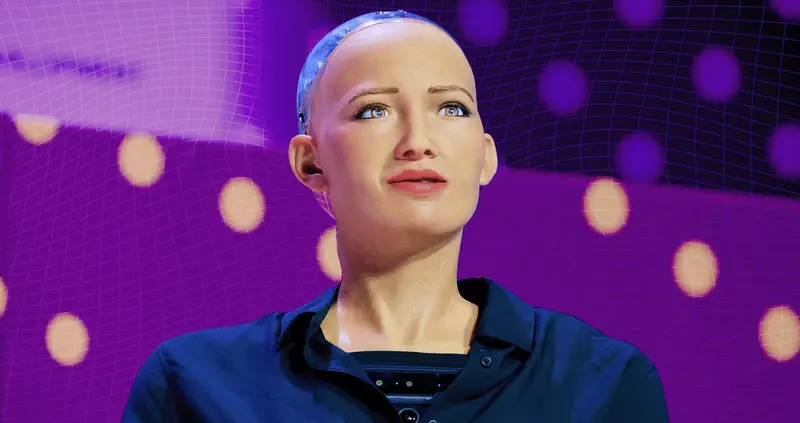
The sight is familiar and strangely unsettling. A robot smiles, its lips moving with near-human precision, its eyes tracking faces in the room. At first glance, it appears almost alive. Yet something feels off. The longer we look, the stronger the discomfort becomes. This reaction, often described as unease, eeriness, or even revulsion, lies at the heart of a phenomenon known as the uncanny valley. It is the paradoxical response that emerges when artificial beings become very similar to humans, but not similar enough.
The uncanny valley is not merely a cultural curiosity or a matter of personal taste. It represents a deep intersection of psychology, neuroscience, evolutionary biology, aesthetics, and robotics. As machines increasingly enter social spaces—hospitals, homes, classrooms, and public venues—the question of why human-like robots disturb us has moved from philosophy into urgent scientific relevance. Understanding the uncanny valley is essential not only for designing better machines, but for understanding ourselves.
The Origin of the Uncanny Valley Concept
The term “uncanny valley” was first introduced in 1970 by Japanese roboticist Masahiro Mori. Writing during a period of rapid technological optimism, Mori proposed a simple but provocative idea. As robots become more human-like in appearance and movement, people’s emotional responses become increasingly positive—up to a point. Beyond this point, affinity drops sharply into a “valley” of discomfort before rising again when the artificial being becomes indistinguishable from a real human.
Mori’s original essay was brief and speculative, yet remarkably prescient. At the time, humanoid robots were largely theoretical, and realistic androids were confined to fiction. Mori’s insight was not derived from advanced neuroscience or experimental psychology, but from careful observation of human reactions to prosthetic hands, mannequins, and early robotic designs. He noticed that objects resembling humans too closely—but imperfectly—elicited discomfort rather than admiration.
What made Mori’s idea enduring was its intuitive resonance. People immediately recognized the feeling he described. Wax figures, lifelike dolls, and later computer-generated characters often provoked the same uneasy response. Over time, the uncanny valley shifted from a metaphor to a testable hypothesis, inspiring decades of interdisciplinary research.
Defining the Uncanny Experience
The term “uncanny” itself has a rich psychological history. Sigmund Freud described the uncanny as something that is both familiar and foreign at the same time, producing cognitive and emotional dissonance. In this sense, human-like robots are uncanny because they blur fundamental categories. They look like people but are not alive. They move intentionally but lack consciousness. They communicate socially without truly understanding.
Scientific studies have attempted to operationalize the uncanny valley by measuring emotional responses such as discomfort, fear, trust, and likability. Participants are shown images or videos of robots with varying degrees of human likeness, while researchers track subjective ratings, facial expressions, physiological responses, and neural activity. Although results vary depending on context and design, many studies support the existence of a nonlinear relationship between human resemblance and emotional comfort.
Importantly, the uncanny valley is not defined by fear alone. The discomfort it evokes is often subtle, characterized by unease rather than panic. This nuance suggests that the uncanny valley taps into cognitive processes related to expectation, prediction, and social perception rather than simple threat detection.
The Role of Evolutionary Psychology
One influential explanation for the uncanny valley comes from evolutionary psychology. According to this perspective, human discomfort toward near-human entities may reflect adaptive mechanisms shaped by natural selection. Throughout evolutionary history, accurately identifying other humans was essential for survival, cooperation, and reproduction. Subtle deviations in appearance or behavior could signal illness, genetic abnormality, or death.
From this viewpoint, human-like robots that exhibit unnatural movements, asymmetrical faces, or mismatched expressions may trigger ancient avoidance responses. These responses are not consciously reasoned judgments but fast, automatic reactions rooted in the brain’s threat-detection systems. The robot is not perceived as a predator, but as something biologically wrong.
This explanation aligns with findings that uncanny reactions are particularly strong when artificial beings resemble humans who are injured, diseased, or deceased. Corpses, zombies, and lifelike dolls often evoke similar discomfort. The uncanny valley, in this sense, may reflect a sensitivity to cues associated with mortality and contamination, both of which carried high survival costs in ancestral environments.
Neural Mechanisms Behind the Uncanny Valley
Neuroscience offers further insight into why the uncanny valley exists. Human social perception relies on specialized neural networks dedicated to recognizing faces, interpreting biological motion, and inferring mental states. Regions such as the fusiform face area, superior temporal sulcus, and medial prefrontal cortex play crucial roles in processing human-like stimuli.
When an entity looks human, these networks are activated automatically. The brain expects certain patterns of movement, emotional expression, and responsiveness. When these expectations are violated—when a face looks human but moves mechanically, or when eyes appear lifelike but fail to express emotion—the brain experiences a prediction error.
Functional brain imaging studies suggest that such prediction errors may underlie uncanny feelings. The brain struggles to reconcile conflicting signals: visual cues suggest humanity, while motion or behavior suggests artificiality. This mismatch increases cognitive load and triggers discomfort. Rather than smoothly categorizing the entity as human or non-human, the brain becomes stuck between categories.
Motion, Timing, and the Importance of Subtlety
Appearance alone does not define the uncanny valley. Movement plays a crucial role. A robot with a stylized, clearly non-human face may be accepted if its movements are fluid and expressive. Conversely, a highly realistic android may provoke discomfort if its gestures are slightly delayed, overly precise, or lacking in natural variability.
Human movement is inherently imperfect. Micro-expressions, slight asymmetries, and subtle timing variations convey authenticity. When robots attempt to replicate these patterns but fail to capture their complexity, the result can feel eerie. Even small deviations, such as unnatural blinking rates or rigid posture, can disrupt social perception.
This sensitivity reflects how finely tuned humans are to biological motion. From infancy, people can distinguish between living and non-living movement patterns. The uncanny valley exploits this sensitivity by presenting entities that mimic life closely enough to activate social cognition, yet poorly enough to betray their artificial nature.
Cultural and Individual Differences
Although the uncanny valley appears across cultures, its intensity and triggers vary. Cultural familiarity with robots, media exposure, and social norms influence how people respond to human-like machines. In societies where robots are commonly portrayed as helpful companions, reactions may be less negative than in cultures where artificial beings are framed as threats.
Individual differences also matter. Personality traits such as openness to experience, empathy, and anxiety influence uncanny responses. Prior exposure to robots, professional background, and age can further shape perception. Children, for example, often respond more positively to humanoid robots than adults, possibly due to less rigid category boundaries.
These variations highlight that the uncanny valley is not a fixed psychological law but a dynamic interaction between biology, culture, and experience. Its existence does not imply universal rejection of human-like robots, but rather sensitivity to design and context.
The Uncanny Valley in Digital Humans
The uncanny valley extends beyond physical robots into digital environments. Computer-generated characters in films, video games, and virtual reality often elicit uncanny responses when realism approaches but does not reach perfection. Early attempts at realistic animation frequently fell into this valley, producing characters that looked human yet felt lifeless.
Advances in rendering, motion capture, and artificial intelligence have narrowed this gap, but challenges remain. Digital faces can appear flawless yet emotionally hollow. Eyes, in particular, are notoriously difficult to animate convincingly. Slight inconsistencies in gaze direction, pupil response, or blink timing can undermine realism.
The persistence of the uncanny valley in digital media underscores that the phenomenon is not tied to physical embodiment alone. It arises whenever artificial representations attempt to replicate human presence without fully capturing its complexity.
Trust, Empathy, and Social Interaction
Beyond discomfort, the uncanny valley affects trust and empathy. Studies suggest that people are less likely to trust human-like robots that fall into the uncanny valley compared to either clearly mechanical robots or actual humans. This has significant implications for applications in healthcare, education, and customer service, where trust is essential.
Empathy is similarly affected. Humans readily attribute emotions and intentions to entities that appear alive, a process known as anthropomorphism. However, when an artificial being appears human-like but behaves inconsistently, this attribution breaks down. The resulting ambiguity can inhibit emotional connection.
This breakdown reveals that social interaction depends not only on appearance but on coherent behavior. A robot that looks human but fails to respond appropriately in social contexts violates expectations, leading to disengagement rather than connection.
Philosophical Dimensions of the Uncanny Valley
The uncanny valley raises profound philosophical questions about what it means to be human. Why do we react so strongly to entities that resemble us? What boundaries define personhood, life, and consciousness? These questions have long been explored in literature and philosophy, from ancient myths of artificial life to modern science fiction.
Philosophically, the uncanny valley confronts us with our own self-concept. Human-like robots act as mirrors, reflecting both our physical form and our assumptions about mind and identity. When these reflections are imperfect, they challenge our sense of uniqueness and continuity.
Some scholars argue that discomfort arises from moral confusion. If an entity looks human, should it be treated with dignity? If it is not conscious, does it deserve empathy? The uncanny valley may represent a moment where ethical categories lag behind technological capability.
Can the Uncanny Valley Be Overcome?
One of the most debated questions in robotics is whether the uncanny valley is an inevitable feature of human perception or a temporary design problem. Some researchers believe that as technology improves, robots will eventually cross the valley, achieving human likeness without discomfort. Others argue that perfect realism may be unnecessary or even undesirable.
An alternative approach emphasizes stylization rather than imitation. Robots with clearly non-human features but expressive behavior often elicit positive responses. By avoiding ambiguous similarity, designers can bypass the uncanny valley altogether. This strategy aligns with the success of animated characters that are emotionally compelling despite their unrealistic appearance.
Another approach focuses on improving behavioral realism rather than visual perfection. Enhancing timing, responsiveness, and emotional coherence may reduce prediction errors even if physical appearance remains imperfect. This suggests that the uncanny valley is not a single obstacle but a multidimensional design challenge.
The Future of Human-Robot Coexistence
As robots become more integrated into daily life, the stakes of understanding the uncanny valley grow higher. Social robots are increasingly used in elder care, therapy, education, and companionship. In these contexts, emotional acceptance is as important as technical functionality.
Designers must navigate a delicate balance between familiarity and difference. Robots that are too machine-like may feel cold or alienating, while those that are too human-like risk provoking discomfort. Achieving the right balance requires not only engineering skill but deep insight into human psychology.
The uncanny valley thus serves as both a warning and a guide. It reminds us that technological progress does not occur in a vacuum. Machines interact with deeply rooted cognitive and emotional systems shaped by evolution and culture.
What the Uncanny Valley Reveals About Us
Ultimately, the uncanny valley is as much about humans as it is about robots. It exposes the mechanisms by which we recognize life, attribute intention, and form social bonds. Our discomfort reveals how finely tuned and fragile these mechanisms are.
The phenomenon also highlights the limits of reductionism. Replicating human appearance without replicating human experience leads to imbalance. This suggests that humanity cannot be reduced to surface features alone. Movement, emotion, context, and history all contribute to what we perceive as genuinely human.
In this sense, the uncanny valley carries a quiet lesson. It teaches humility in the face of complexity and cautions against assuming that technological imitation equals understanding.
Conclusion: Between Fascination and Fear
The uncanny valley occupies a strange psychological landscape between fascination and fear. It emerges when artificial beings approach humanity closely enough to challenge our perceptual and emotional systems, yet fall short of complete authenticity. Far from being a mere design flaw, it reflects deep truths about how humans perceive life, identity, and social presence.
As robotics and artificial intelligence continue to advance, the uncanny valley will remain a critical concept. Whether it is eventually bridged, bypassed, or redefined, its study offers invaluable insight into both technological design and human nature. In confronting the discomfort of human-like machines, we are ultimately confronting ourselves—our expectations, our vulnerabilities, and our enduring desire to understand what it truly means to be human.