Gravity is so constant, so quiet, so unrelenting in its presence that we rarely think about it. It presses our feet against the floor. It guides the fall of rain. It keeps oceans in their basins and air wrapped around the planet. It defines up and down. It gives weight to our bodies and structure to our days.
Now imagine it gone.
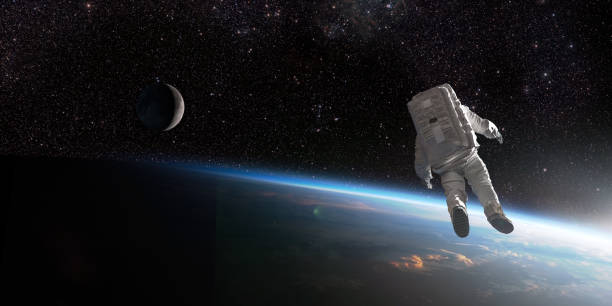
In orbit around Earth—aboard spacecraft like the International Space Station—astronauts experience microgravity, often called “zero gravity.” In reality, gravity is still present; Earth’s pull remains strong even hundreds of kilometers above the surface. But because astronauts and their spacecraft are in continuous free fall around Earth, they experience weightlessness.
In this strange environment, daily life transforms. Actions so ordinary on Earth become confusing, awkward, or downright impossible. Physics does not vanish in space—it simply reveals itself in new and unsettling ways.
Below are fifteen everyday tasks that become impossible—or fundamentally unworkable—in zero gravity.
1. Pouring a Glass of Water
On Earth, pouring a glass of water feels automatic. Tilt the container, and gravity pulls the liquid downward into the waiting glass. The stream forms, curves, splashes, settles.
In zero gravity, this simple act collapses.
Without gravity, water does not “fall.” Instead, surface tension dominates. Liquids cling stubbornly to containers. If you tilt a bottle in space, the water does not obediently flow downward—it may form a shimmering, wobbling sphere that floats away.
Even if you try to guide it, the water forms drifting blobs that can scatter through the cabin. Surface tension causes it to stick to walls, equipment, or faces. A free-floating droplet can damage electronics or obscure vision.
Astronauts aboard the International Space Station drink from sealed pouches with straws, carefully designed to prevent stray droplets. A simple open glass would be useless.
Pouring requires gravity. Without it, liquid refuses to behave.
2. Taking a Normal Shower
Showers depend entirely on gravity. Water sprays, falls, and drains away.
In zero gravity, sprayed water would not cascade down your body. It would cling to your skin in thick, floating layers. Droplets would gather into blobs that hover nearby instead of falling into a drain.
Even worse, without gravity, there is no “down” for wastewater to flow. Drains rely on gravity to pull water away. In space, drainage systems must use suction and airflow to capture moisture.
For this reason, astronauts do not shower in the traditional sense. They use rinseless wipes, no-rinse shampoos, and careful sponge baths.
A relaxing, gravity-fed shower is simply impossible in orbit.
3. Sleeping in a Bed
On Earth, we lie down. Our bodies press into mattresses. Blankets rest gently atop us.
In zero gravity, there is no lying down. There is no up or down at all.
If you attempt to lie in a bed, you will simply float above it unless restrained. Blankets would drift away. Your body would not feel the reassuring pressure of contact.
Astronauts sleep inside tethered sleeping bags attached to walls or ceilings. They zip themselves in to prevent drifting. Some report that the lack of pressure feels strange at first, as the body is accustomed to gravity’s constant pull.
The concept of “lying down” loses meaning in a world without weight.
4. Walking Normally
Walking is a dance between gravity and friction. Each step involves pushing downward and backward against the ground, using gravity to maintain contact.
In zero gravity, if you try to walk, your foot pushes against the surface—and you drift away in the opposite direction. There is no weight pressing you to the floor to provide traction.
Astronauts aboard the International Space Station move by pulling themselves along handrails or gently pushing off surfaces. Movement must be controlled; push too hard and you ricochet across the module.
Walking, as we know it, becomes impossible.
5. Lighting a Candle
On Earth, a candle flame flickers upward. Hot air rises, cooler air flows in from below, and the flame forms its familiar teardrop shape.
In zero gravity, convection disappears. Hot gases do not rise. Instead, combustion products linger around the flame.
Experiments conducted in orbit show that flames become small, spherical, and blue. They burn differently because oxygen is not delivered by rising air currents but only by diffusion.
A typical open candle would be both impractical and hazardous in a spacecraft. Fire behaves unpredictably in microgravity. The lack of buoyant flow changes flame dynamics entirely.
The comforting flicker of a candle flame cannot exist in its familiar form without gravity.
6. Using a Traditional Toilet
Gravity assists every flush on Earth. Waste falls into the bowl, water flows downward, and gravity carries everything into plumbing systems.
In zero gravity, nothing falls.
Human waste does not naturally move downward into a toilet. Specially designed space toilets use airflow and suction to guide waste away from the body and into containment systems.
Even with advanced engineering, astronauts must carefully position themselves and secure restraints to ensure proper function.
A gravity-dependent toilet would simply fail in orbit.
7. Crying with Flowing Tears
On Earth, tears spill over eyelids and stream down cheeks.
In zero gravity, tears do not fall. Instead, they accumulate on the surface of the eye, forming a growing, wobbling liquid mass. Surface tension keeps the water clinging to the eye and face.
Astronauts have reported that tears can blur vision and cause discomfort until they are wiped away.
Even sorrow behaves differently in space.
8. Sweeping the Floor
Sweeping relies on gravity to keep dust and debris on the ground. The broom pushes particles into a pile that stays put.
In zero gravity, dust does not remain on the floor. It floats. Every small motion sends particles drifting in three dimensions.
Trying to sweep would simply disperse debris further into the air. Instead, spacecraft rely on air filtration systems to capture floating particles.
Without gravity, cleanliness requires airflow, not brooms.
9. Playing Basketball
Sports assume gravity.
A basketball thrown on Earth follows a parabolic arc determined by gravity’s downward acceleration. Players jump and return to the ground. The ball bounces because gravity pulls it back to the floor.
In zero gravity, throw a ball and it travels in a straight line until it hits something. There is no arc. Jump and you do not come down unless you push yourself back.
Dribbling would be impossible. A ball would float away after the first push.
Gravity gives structure to every sport we know.
10. Building a Sandcastle
Sandcastles depend on weight. Sand grains pile up because gravity pulls them downward. Friction between grains allows structures to hold shape.
In zero gravity, sand would not settle. It would float apart with the slightest disturbance.
Trying to stack loose material without gravitational compression would result in drifting particles.
Even the simplest beach activity is gravity-dependent.
11. Letting Food Sit on a Plate
On Earth, food rests obediently on plates because gravity holds it there.
In zero gravity, food floats. Crumbs drift into air vents. Liquids escape.
Meals in space are carefully packaged. Tortillas are often used instead of bread because they produce fewer crumbs. Every bite must be managed to prevent floating debris.
A plate of loose food would quickly become a cloud of edible projectiles.
12. Pouring Cereal into a Bowl
Cereal pouring combines solids and liquids under gravity. The flakes fall into the bowl. Milk fills the spaces.
In zero gravity, cereal pieces would scatter. Milk would form floating globules.
Even if you managed to gather both into a container, they would not settle into layers. Without weight, buoyancy behaves differently.
Breakfast becomes an engineering challenge.
13. Watching Smoke Rise
Smoke rises because hot gases are less dense than cooler air. Gravity pulls denser air downward, forcing lighter smoke upward.
In zero gravity, buoyancy-driven convection disappears. Smoke does not rise; it lingers and diffuses slowly in all directions.
This has serious safety implications. On Earth, rising smoke alerts occupants to fire. In spacecraft, smoke detection must rely on airflow systems, not buoyancy.
Even danger signals change without gravity.
14. Drinking from an Open Cup
Drinking from an open cup relies on gravity to keep liquid at the bottom and allow controlled sipping.
In zero gravity, liquid clings to surfaces and may not gather at the rim.
Interestingly, specially designed cups have been engineered to exploit surface tension, allowing astronauts to sip fluids without straws. But a normal cup? It fails.
The simplest act of sipping water reveals how deeply gravity shapes fluid behavior.
15. Sitting in a Chair
Sitting seems effortless. Gravity pulls your body downward, and the chair resists.
In zero gravity, you cannot truly sit. Without weight, there is no force pressing you into the seat. You must strap yourself in to stay put.
Chairs become unnecessary or purely symbolic. Every surface can function as a “floor” or “wall.”
The act of sitting dissolves in a world without weight.
The Invisible Force That Shapes Everything
Gravity feels ordinary. It is constant. Predictable. Silent.
But remove it, and the familiar unravels. Water no longer pours. Flames change shape. Tears refuse to fall. Walking disappears. Even eating becomes complicated.
Zero gravity does not break the laws of physics. It reveals them. Surface tension becomes dominant. Inertia becomes obvious. Newton’s laws become personal.
Astronauts aboard the International Space Station adapt with ingenuity and discipline. They float gracefully, turning inconvenience into routine. But the effort required underscores a profound truth: our daily lives are engineered by gravity.
Every cup of water, every step, every falling leaf depends on a force we rarely notice.
And perhaps that is the most astonishing part. Gravity shapes our existence so completely that we only understand its importance when it is gone.
In the silent orbit above Earth, where astronauts drift in perpetual free fall, the universe offers a quiet lesson: the simplest human actions are not simple at all.
They are choreography—written by gravity itself.