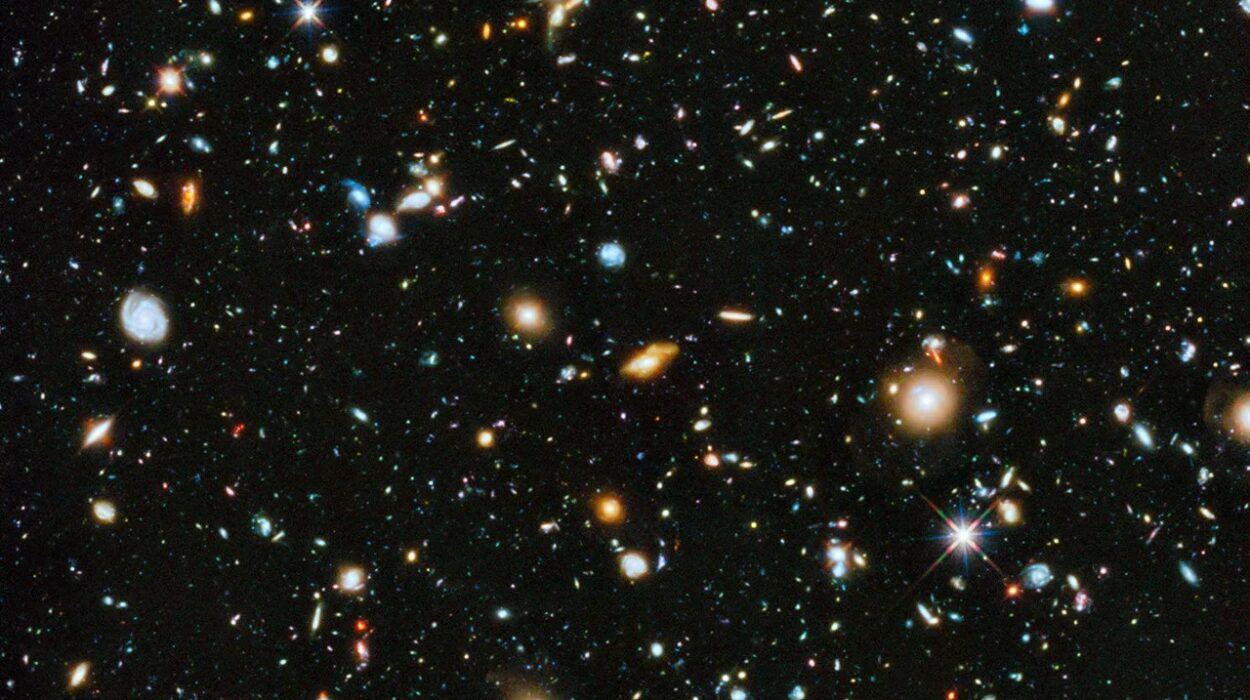
Not long ago, planets beyond our solar system were speculation. Philosophers debated them. Science fiction imagined them. Astronomers suspected them. But today, exoplanets are not theoretical—they are cataloged, measured, and studied in astonishing detail.
Since the mid-1990s, more than five thousand exoplanets have been confirmed. Yet the last decade, fueled by powerful observatories such as the Kepler Space Telescope, the Transiting Exoplanet Survey Satellite (TESS), and the James Webb Space Telescope, has transformed exoplanet science from detection to characterization. We are no longer merely asking whether planets exist around other stars. We are asking what they are like. What they are made of. Whether they have oceans. Whether their skies hold clouds. Whether their atmospheres might contain the faint chemical whisper of life.
The discoveries of the past ten years have expanded our understanding of planetary systems in ways that are as unsettling as they are magnificent. Worlds of molten lava. Planets darker than coal. Super-Earths with crushing atmospheres. Ocean worlds cloaked in steam. And perhaps, just perhaps, planets where life could take hold.
Below are fifteen of the most incredible exoplanet discoveries of the last decade—each one a reminder that our solar system is only one arrangement in a universe of possibilities.
1. Proxima Centauri b
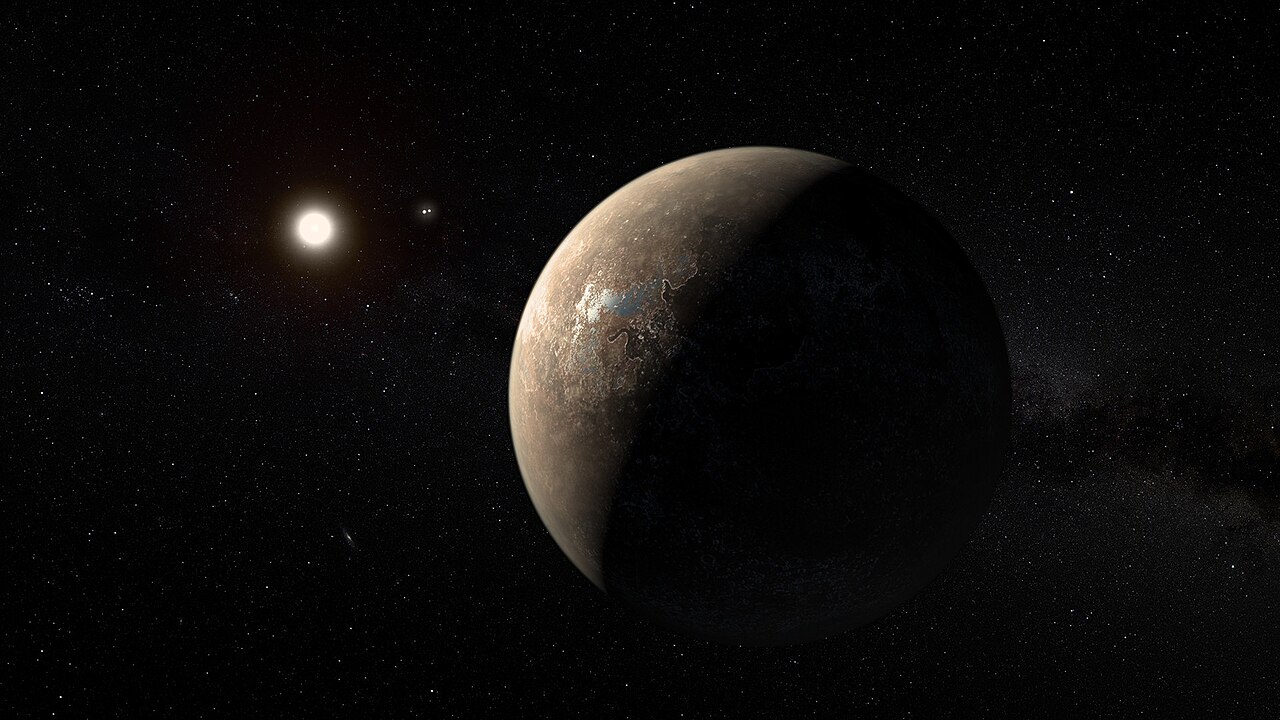
In 2016, astronomers announced the discovery of Proxima Centauri b, a planet orbiting Proxima Centauri, the closest star to our Sun at just over four light-years away.
This was more than a routine detection. Proxima Centauri b orbits within its star’s habitable zone—the region where temperatures could allow liquid water to exist on a planet’s surface. The planet has a minimum mass slightly greater than Earth’s and completes an orbit every 11 days.
But proximity to its star comes with complications. Proxima Centauri is a red dwarf, smaller and cooler than the Sun, yet prone to intense stellar flares. These flares can blast planets with high-energy radiation, potentially stripping atmospheres and sterilizing surfaces.
Is Proxima Centauri b a rocky world with oceans and clouds, or a barren rock scorched by radiation? We do not yet know. But its discovery marked the first time a potentially habitable planet was found orbiting the nearest star to us.
It turned the nearest point of light into a place.
2. TRAPPIST-1 System
In 2017, astronomers revealed one of the most extraordinary planetary systems ever discovered: seven Earth-sized planets orbiting the ultracool dwarf star TRAPPIST-1.
Located about 40 light-years away, this compact system stunned researchers. All seven planets are roughly Earth-sized, and three of them orbit within the star’s habitable zone.
Because TRAPPIST-1 is small and faint, its planets transit frequently, passing in front of the star and allowing detailed study of their atmospheres. Observations have already ruled out thick hydrogen-dominated atmospheres for some of the planets, suggesting they may be rocky worlds.
The planets are so close together that from the surface of one, neighboring planets would appear enormous in the sky. Gravitational interactions create orbital resonances, a delicate cosmic dance.
The TRAPPIST-1 system demonstrated that tightly packed, multi-planet systems of Earth-sized worlds are common—and that habitable-zone planets may not be rare exceptions.
3. K2-18 b
In 2019, scientists detected water vapor in the atmosphere of K2-18 b, a planet about eight times the mass of Earth orbiting within the habitable zone of a red dwarf star 124 light-years away.
This was one of the first detections of water vapor on a potentially habitable exoplanet. K2-18 b is likely what scientists call a “sub-Neptune” or possibly a “Hycean” world—a planet with a hydrogen-rich atmosphere and a deep global ocean beneath.
While it may not resemble Earth, the presence of water vapor indicated that complex atmospheres on habitable-zone planets can be studied remotely.
Later observations using the James Webb Space Telescope have provided even more detailed atmospheric data, refining our understanding of its composition.
K2-18 b showed that atmospheric chemistry on distant worlds is within our reach.
4. WASP-121b
WASP-121b is a “hot Jupiter” orbiting so close to its star that its year lasts just over one Earth day. But what makes it extraordinary is what rains from its skies.
In 2017, observations revealed evidence of water vapor and later confirmed the presence of metals like iron in its atmosphere. At the extreme temperatures of this world—exceeding 2,500 degrees Celsius—iron does not condense near the dayside. Instead, it likely vaporizes and is transported by fierce winds to the cooler nightside, where it condenses and falls as molten iron rain.
WASP-121b is tidally locked, with one side perpetually facing its star. The temperature differences drive violent atmospheric circulation.
This world is a laboratory for understanding atmospheric physics under extreme conditions, revealing how alien weather can become.
5. LHS 1140 b
Discovered in 2017, LHS 1140 b is a super-Earth about 40 light-years away, orbiting within the habitable zone of a red dwarf star.
It is roughly 1.7 times Earth’s radius and about 6.6 times its mass, suggesting a dense, rocky composition. Unlike some red dwarfs, its host star appears relatively calm, reducing the risk of atmospheric erosion from stellar flares.
Because the planet transits its star, astronomers can probe its atmosphere during these events. It has become a prime target for atmospheric studies with advanced telescopes.
LHS 1140 b represents one of the most promising nearby rocky exoplanets for studying potential habitability.
6. TOI-700 d
In 2020, NASA’s TESS mission announced the discovery of TOI-700 d, an Earth-sized planet orbiting within the habitable zone of a red dwarf star about 100 light-years away.
The excitement surrounding TOI-700 d stems from its size and orbit. It is only slightly larger than Earth and receives a similar amount of stellar energy.
Climate modeling suggests that if it possesses an atmosphere similar to Earth’s, it could maintain surface temperatures capable of supporting liquid water.
TOI-700 d strengthened the idea that Earth-sized planets in habitable zones are not rare cosmic accidents.
7. HD 21749 c
HD 21749 c, discovered in 2019, was significant because it was the first Earth-sized planet found by the TESS mission.
Although it orbits too close to its star to be habitable, its detection demonstrated TESS’s capability to find small rocky planets around nearby stars.
The star itself is relatively bright, making follow-up studies feasible. This discovery signaled the beginning of a new era of exoplanet hunting focused on nearby systems.
HD 21749 c proved that TESS could deliver on its promise.
8. GJ 357 d
GJ 357 d, discovered in 2019, is a super-Earth located about 31 light-years away. It orbits within the outer edge of its star’s habitable zone.
With a minimum mass around six times that of Earth, it could retain a thick atmosphere capable of trapping heat. If so, surface temperatures might allow liquid water under the right conditions.
GJ 357 d is intriguing because it orbits a relatively quiet red dwarf, potentially improving its chances of retaining an atmosphere.
9. Kepler-452b Revisited with New Analysis
Though originally discovered earlier, improved data analysis in the past decade refined our understanding of Kepler-452b.
Often dubbed “Earth’s cousin,” this planet orbits within the habitable zone of a Sun-like star. It is about 60 percent larger than Earth, raising questions about whether it is rocky or more akin to a mini-Neptune.
Reanalysis of Kepler data has helped clarify its potential composition, underscoring how archival data continues to yield discoveries.
10. HIP 65426 b
In 2022, the James Webb Space Telescope directly imaged HIP 65426 b, a massive gas giant orbiting far from its star.
Direct imaging of exoplanets is rare and technically challenging. Most are detected via transits or radial velocity methods. But Webb’s infrared sensitivity allowed scientists to capture detailed images and spectra of this young, hot planet.
Studying directly imaged planets provides insights into atmospheric composition and formation processes.
HIP 65426 b demonstrated Webb’s extraordinary power in exoplanet science.
11. WASP-96b Atmospheric Detection
In 2022, one of the first exoplanet spectra released by the James Webb Space Telescope was for WASP-96b.
The data revealed a clear signature of water vapor and provided detailed evidence of clouds and atmospheric structure. The precision surpassed previous observations dramatically.
WASP-96b became a showcase for Webb’s ability to analyze exoplanet atmospheres in unprecedented detail.
12. 55 Cancri e Reexamined
Recent studies in the past decade have refined our understanding of 55 Cancri e, a super-Earth with extreme temperatures.
Observations suggest it may have a lava-covered surface and possibly a dynamic atmosphere influenced by volcanic activity.
This world challenges our imagination—a planet where oceans of magma may glow under a blazing star.
13. HAT-P-11 b Storm Systems
Observations of HAT-P-11 b revealed evidence of water vapor and possibly cloud systems.
Though it is a Neptune-sized planet, studying its atmosphere helps scientists understand how different planetary types form and evolve.
The detection of atmospheric features on such worlds deepens our knowledge of planetary diversity.
14. TOI-561 b
TOI-561 b is one of the oldest rocky planets discovered, estimated to be more than 10 billion years old.
Its existence suggests that rocky planet formation began early in the galaxy’s history. This raises profound implications for the potential age of life elsewhere.
If rocky planets formed billions of years before Earth, life elsewhere could be far older than life here.
15. K2-141 b Lava Ocean World
K2-141 b is a rocky exoplanet with extreme temperatures that likely create oceans of molten rock on its dayside.
Its proximity to its star produces dramatic temperature differences between its day and night sides. Models suggest vaporized rock may condense and rain down on the nightside.
K2-141 b reveals the extremes of planetary physics and atmospheric dynamics.
A Universe Overflowing with Possibilities
In just a decade, exoplanet science has shifted from counting worlds to studying their climates, chemistry, and potential habitability.
We have discovered compact systems of Earth-sized planets, water vapor in distant atmospheres, molten iron rain, ancient rocky worlds, and planets with oceans of lava.
Each discovery expands the boundaries of what is possible. Each one challenges our assumptions about how planetary systems form and evolve.
We now know that planets are more diverse than we ever imagined. Some are scorched, some frozen, some oceanic, some gaseous, some ancient beyond comprehension.
And somewhere among the thousands already discovered—and the billions yet to be found—there may be a world where biology has taken hold.
The last decade has not merely added new entries to a catalog. It has transformed our cosmic perspective. The universe is not empty between stars. It is filled with worlds.
Worlds waiting to be understood.