Humanity has always been a species that looks up. From ancient stargazers mapping constellations to modern engineers designing interplanetary spacecraft, our story is intertwined with the sky. In just over six decades of space exploration, we have walked on the Moon, sent robotic explorers to every major planet, photographed black holes, and placed telescopes so powerful they can glimpse galaxies born shortly after the Big Bang.
And yet, what lies ahead may be even more transformative.
The coming decades promise missions that will not merely expand scientific knowledge—they will reshape civilization, redefine our understanding of life, and perhaps even alter the trajectory of our species. These missions are not fantasy. They are real programs, under development or planned by major space agencies and international collaborations. Each carries the potential to change history.
Below are ten future space missions that stand poised to alter our understanding of the universe and our place within it.
1. Artemis III – Humanity Returns to the Moon
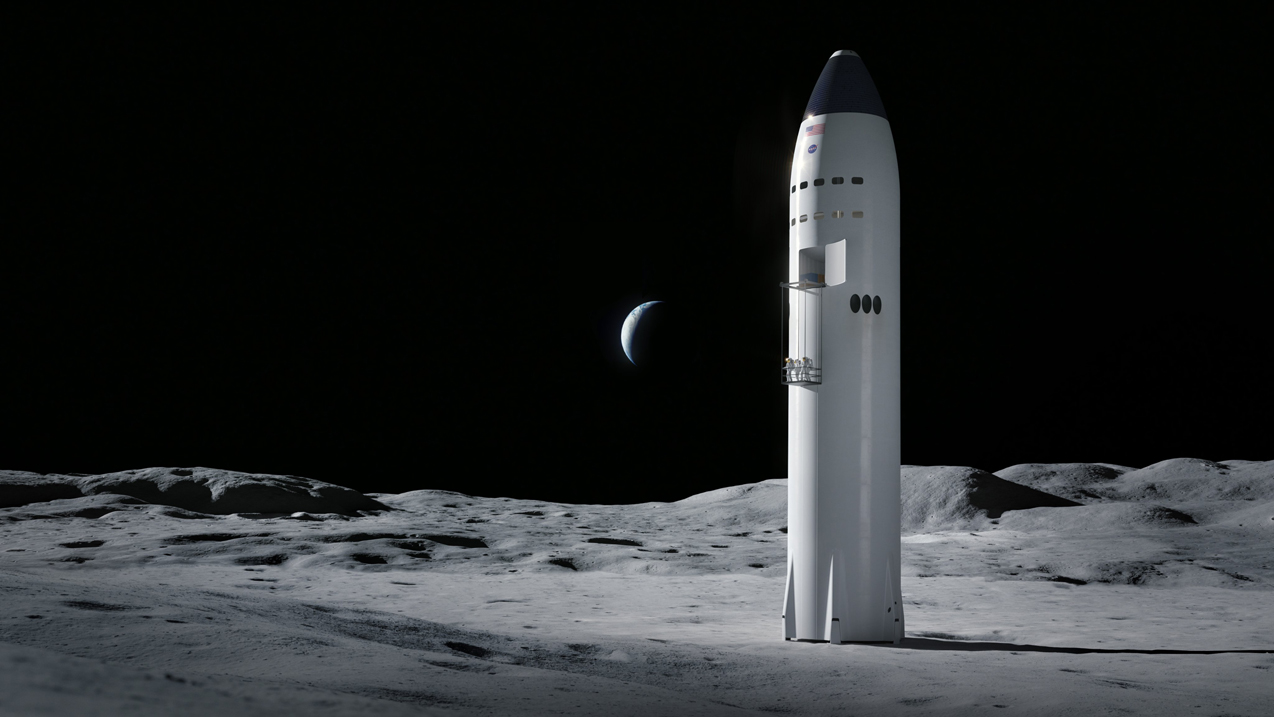
More than half a century after the last Apollo astronaut left the lunar surface, humanity is preparing to return. Artemis III, part of NASA’s Artemis program, aims to land astronauts near the Moon’s south pole—a region never before visited by humans.
Unlike the brief Apollo visits, Artemis is designed with sustainability in mind. The south pole is scientifically compelling because permanently shadowed craters there contain water ice. This ice could be used for drinking water, oxygen production, and even rocket fuel. Establishing access to these resources would transform the Moon from a destination into a staging ground for deeper exploration.
Artemis III will also mark the first time a woman and a person of color set foot on the lunar surface, expanding the human story beyond the era of the 1960s. The mission will test new technologies, including advanced spacesuits and the use of the Space Launch System rocket and Orion spacecraft.
If successful, Artemis will not just revisit history—it will begin a new chapter of sustained human presence beyond Earth. A permanent lunar base could serve as a laboratory for science, a testbed for Mars missions, and a symbol of global cooperation in space.
2. Mars Sample Return – Bringing the Red Planet Home
For decades, robotic explorers have studied Mars in extraordinary detail. Rovers like Perseverance are currently collecting carefully selected rock samples and sealing them in tubes on the Martian surface.
The Mars Sample Return mission, a joint effort between NASA and the European Space Agency, is designed to retrieve these samples and bring them back to Earth. This would be the first time material from another planet is returned for detailed laboratory analysis.
Why is this so significant? Because the instruments available on Earth are vastly more sophisticated than those that can be sent on a rover. If there are subtle chemical or isotopic signatures of ancient life preserved in Martian rocks, scientists stand the best chance of detecting them in terrestrial laboratories.
The mission requires unprecedented technological feats, including launching a rocket from the Martian surface and transferring samples in orbit before returning them to Earth.
If even microscopic evidence of past life is discovered in those samples, it will mark one of the most profound scientific discoveries in history.
3. Europa Clipper – Exploring an Ocean World
Jupiter’s moon Europa hides a global ocean beneath its icy crust. The Europa Clipper mission is designed to perform detailed reconnaissance of this intriguing world.
Rather than landing, Europa Clipper will conduct dozens of close flybys, mapping the surface, analyzing its composition, and probing the thickness of its ice shell. Instruments will search for evidence of water plumes and study the chemistry of surface materials that may have originated from the ocean below.
The mission seeks to answer a critical question: is Europa habitable?
If the data confirm that Europa’s ocean contains the right ingredients and energy sources for life, it will elevate this icy moon to one of the most promising locations for extraterrestrial biology.
Europa Clipper may not detect life directly, but it could provide the roadmap for a future mission that does.
4. Dragonfly – Flying on Titan
Scheduled to launch in the coming years, Dragonfly is a rotorcraft lander bound for Titan, Saturn’s largest moon. Unlike traditional rovers, Dragonfly will fly from location to location, taking advantage of Titan’s dense atmosphere and low gravity.
Titan is a world rich in organic chemistry. Its surface hosts rivers and lakes of liquid methane and ethane, while beneath its icy crust lies a subsurface ocean.
Dragonfly will analyze surface materials, study atmospheric chemistry, and search for signs of prebiotic processes—the chemical steps that precede life. Titan’s complex organic molecules may resemble early Earth chemistry before life emerged.
By exploring Titan’s chemistry in detail, Dragonfly could help answer one of humanity’s oldest questions: how does life begin?
5. James Webb Space Telescope’s Extended Mission
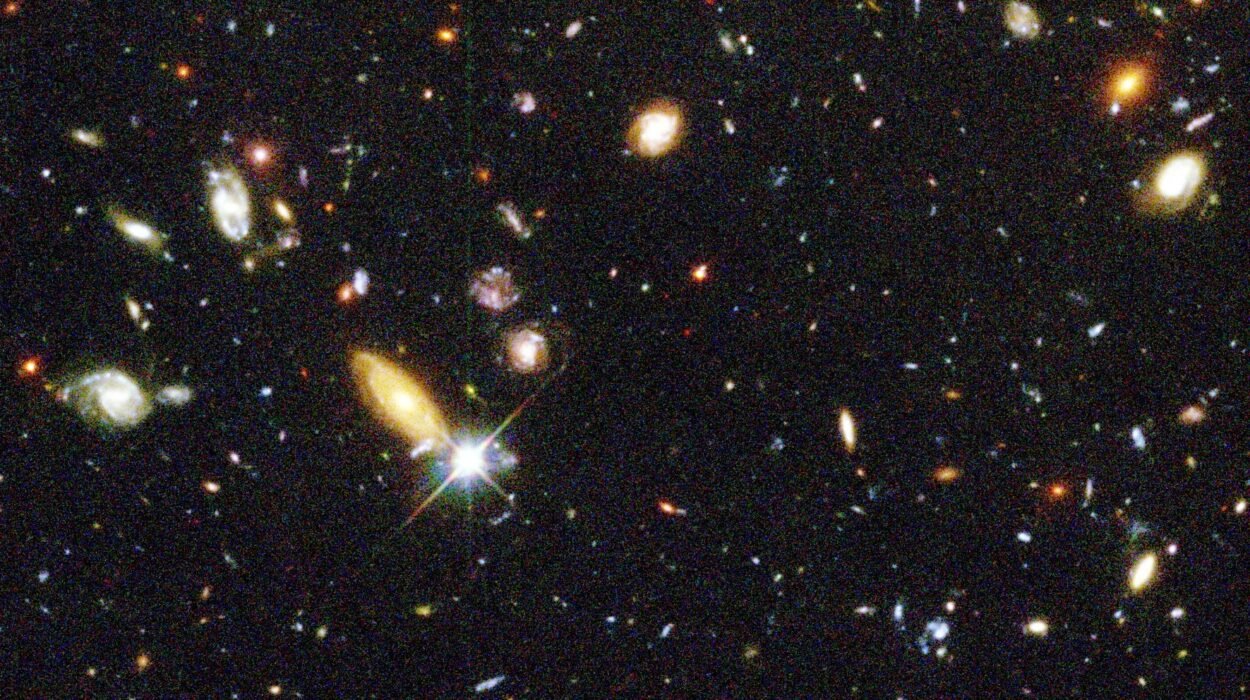
The James Webb Space Telescope has already transformed astronomy by revealing unprecedented detail in distant galaxies and probing the atmospheres of exoplanets.
As its mission continues, Webb will analyze the chemical fingerprints of exoplanet atmospheres, searching for molecules such as water vapor, carbon dioxide, methane, and possibly even biosignatures.
The detection of a convincing biosignature in the atmosphere of an exoplanet would change history overnight. While such a discovery remains uncertain, Webb’s sensitivity brings us closer than ever before.
Webb’s extended operations will continue to push the frontier of cosmic history, peering back to the first generations of stars and galaxies.
6. Nancy Grace Roman Space Telescope – Mapping the Dark Universe
Named after NASA’s first Chief of Astronomy, the Nancy Grace Roman Space Telescope will investigate dark energy and dark matter with unprecedented precision.
Using wide-field imaging and gravitational lensing measurements, Roman will study how cosmic structures evolve over time. By mapping the expansion history of the universe, it aims to constrain the nature of dark energy—the mysterious force driving cosmic acceleration.
Understanding dark energy is not merely an academic pursuit. It concerns the ultimate fate of the universe.
Roman will also discover thousands of exoplanets using microlensing techniques, expanding our census of planetary systems in the Milky Way.
7. ESA’s JUICE Mission – Jupiter’s Icy Moons Explorer
The Jupiter Icy Moons Explorer, known as JUICE, is designed to study Ganymede, Callisto, and Europa in detail.
Ganymede, the largest moon in the solar system, possesses its own magnetic field and likely harbors a subsurface ocean. JUICE will eventually enter orbit around Ganymede, making it the first spacecraft to orbit a moon other than Earth’s.
By investigating the magnetic fields, ice shells, and potential oceans of these moons, JUICE will deepen our understanding of ocean worlds and their habitability.
It represents a major step toward assessing whether life-friendly environments are common in the outer solar system.
8. Lunar Gateway – A Space Station Around the Moon
The Lunar Gateway is a planned space station in orbit around the Moon, developed as part of the Artemis program in collaboration with international partners.
Gateway will serve as a staging point for lunar surface missions and potentially for missions to Mars. It will enable long-duration human presence in deep space beyond low Earth orbit.
Operating Gateway will test life-support systems, radiation protection, and logistics necessary for deep-space travel. It will also provide a platform for scientific experiments and technology demonstrations.
Gateway represents a shift from short visits to sustained exploration beyond Earth.
9. China’s Tianwen-3 Mars Sample Return
China’s Tianwen-3 mission aims to independently conduct a Mars sample return effort.
If successful, it would demonstrate advanced interplanetary capabilities and provide additional scientific material for analysis. Multiple sample return missions increase the chances of diverse discoveries.
International competition and cooperation in Mars exploration will accelerate technological progress and scientific insight.
The return of Martian samples by multiple nations underscores the global importance of understanding our planetary neighbor.
10. Future Crewed Mars Missions
Perhaps the most ambitious endeavor of the coming century is sending humans to Mars.
Space agencies and private companies are actively developing technologies required for long-duration interplanetary travel, including life support, radiation shielding, and surface habitats.
A crewed Mars mission would represent the first time humans set foot on another planet. The psychological, cultural, and scientific impact would be enormous.
Astronauts could conduct field geology in ways robots cannot, accelerating discoveries about Mars’ history and potential past life.
Establishing a human presence on Mars would mark the beginning of humanity as a multiplanetary species.
A New Era Dawns
These missions are not isolated projects. Together, they form a coherent narrative.
We are returning to the Moon not just to plant flags, but to build infrastructure. We are exploring ocean worlds to search for life beyond Earth. We are mapping dark energy to understand the destiny of the cosmos. We are collecting samples from Mars to answer whether life ever arose elsewhere.
Each mission builds upon decades of scientific progress. Each represents the combined effort of engineers, scientists, and dreamers from around the globe.
History will not change in a single dramatic moment. It will change through discoveries—one sample analyzed, one atmosphere characterized, one ocean confirmed.
Perhaps within our lifetimes, we will know whether life exists elsewhere. Perhaps we will witness humans walking on Mars. Perhaps we will finally unravel the mystery of dark energy.
The future of space exploration is not distant. It is unfolding now.
And when future generations look back, they may see this era as the moment humanity truly stepped beyond its cradle and began to understand the vast universe it inhabits.