We experience time as a steady, unstoppable current. Seconds become minutes, minutes become years, and our lives unfold along that invisible river without pause or reversal. We set clocks, celebrate birthdays, measure lifetimes, and assume that time moves the same everywhere in the universe.
But it does not.
In the early twentieth century, Albert Einstein revealed a truth so astonishing that it reshaped physics forever: time is not absolute. It stretches. It slows. It bends. It depends on motion and gravity. Under certain extreme conditions, time can slow so dramatically that, from one perspective, it nearly stops.
This is not metaphor. It is measurable, experimentally verified reality. Atomic clocks flown on airplanes tick slightly slower than identical clocks on Earth’s surface. Satellites orbiting Earth experience time differently due to both their speed and weaker gravity. Without correcting for time dilation predicted by relativity, GPS systems would fail within hours.
If such tiny differences occur around Earth, imagine what happens near the most extreme objects in the cosmos.
Across the universe, there are locations where gravity crushes spacetime, where velocities approach the speed of light, where clocks tick at wildly different rates compared to distant observers. In these places, time almost stops.
Below are seven scientifically grounded locations in space where time slows to extraordinary degrees, revealing the universe in its strangest form.
1. The Event Horizon of a Black Hole
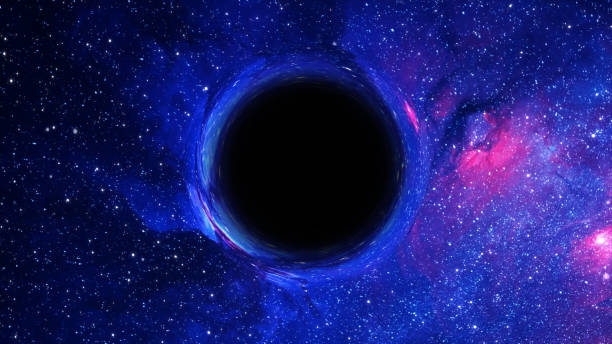
No place in the universe demonstrates extreme time dilation more dramatically than the event horizon of a black hole.
A black hole forms when a massive star collapses under its own gravity. The result is an object so dense that its escape velocity exceeds the speed of light. The boundary beyond which nothing—not even light—can escape is called the event horizon.
According to general relativity, gravity is not a force in the traditional sense but a curvature of spacetime caused by mass and energy. The stronger the gravity, the more spacetime bends. Time itself is part of this fabric. As gravity increases, time slows relative to regions with weaker gravity.
To a distant observer watching an object fall toward a black hole, something extraordinary happens. The object appears to slow down as it approaches the event horizon. Its clock ticks more and more slowly. Light emitted from the object becomes increasingly redshifted, stretched to longer wavelengths by the intense gravitational field.
From far away, the falling object never quite crosses the event horizon. It appears frozen in time, fading and reddening, asymptotically approaching the boundary but never passing it.
Yet from the perspective of the falling object itself, time flows normally. It crosses the event horizon in finite time and continues inward toward the singularity.
This duality is one of the most mind-bending consequences of relativity. Time does not behave universally. It depends on where you are and how you observe.
Near the event horizon of a supermassive black hole, such as those found at the centers of galaxies, the effect becomes even more dramatic. A clock hovering just above the horizon would tick vastly slower than one far away. In principle, if you could hover close enough without being torn apart by tidal forces, you could experience minutes while centuries pass in the outside universe.
In this region, time does not merely slow. It nearly stops from the perspective of distant observers.
2. The Photon Sphere Around a Black Hole
Just outside the event horizon lies another extraordinary region known as the photon sphere. This is the distance from a black hole at which light itself can orbit in circular paths.
Light normally travels in straight lines through space. But in extreme gravitational fields, spacetime curves so strongly that light follows that curvature. At the photon sphere, gravity is precisely strong enough to force photons into closed loops.
Any object attempting to orbit at this radius would have to travel at nearly the speed of light. And according to special relativity, as velocity approaches the speed of light, time dilation becomes enormous.
An observer moving at such extreme speed would experience time far more slowly than a distant stationary observer. Combined with the intense gravitational time dilation of the black hole, this creates one of the most extreme slow-time environments in the universe.
In theory, if a spacecraft could somehow maintain orbit just outside the photon sphere—an engineering impossibility with current physics—the crew would experience a dramatic slowing of time relative to the rest of the cosmos.
It is a place where both gravity and velocity conspire to nearly halt the passage of time.
3. The Surface of a Neutron Star
Neutron stars are the collapsed cores of massive stars that exploded as supernovae. They pack more mass than our Sun into a sphere roughly the size of a city. A teaspoon of neutron star material would weigh billions of tons on Earth.
The gravitational field at the surface of a neutron star is staggering. Though not as extreme as a black hole’s, it is powerful enough to significantly slow time.
Gravitational time dilation near a neutron star means that a clock placed on its surface would tick noticeably slower than a clock far away in space. The effect is measurable and consistent with general relativity.
Neutron stars also often spin incredibly rapidly. Some rotate hundreds of times per second. This rapid rotation adds another layer of relativistic time dilation due to velocity.
The combination of immense gravity and rapid motion creates a region where time passes substantially more slowly than in interstellar space.
Standing on the surface of a neutron star—if it were possible—would mean watching the rest of the universe age faster than you do.
4. Inside an Accretion Disk Around a Black Hole
Black holes rarely exist in isolation. Many are surrounded by swirling disks of superheated gas and dust known as accretion disks. As matter spirals inward, it accelerates to tremendous speeds, heating up and emitting intense radiation.
Near the inner edge of the accretion disk, matter moves at a significant fraction of the speed of light. At these velocities, special relativistic time dilation becomes profound.
In addition, the entire disk lies deep within the gravitational well of the black hole, adding gravitational time dilation to the effect.
The result is a region where both motion and gravity drastically slow time relative to distant observers.
Particles orbiting near the innermost stable circular orbit around a rotating black hole experience extreme spacetime distortion. From afar, processes in this region appear slowed and stretched.
Accretion disks are not just spectacular cosmic light shows. They are laboratories of extreme relativistic time.
5. Near the Core of a Supermassive Black Hole at Galactic Centers
At the center of most galaxies, including the Milky Way, lies a supermassive black hole containing millions or billions of times the mass of the Sun.
The region near these cosmic giants is one of intense gravitational curvature. Stars orbiting close to the galactic center experience measurable relativistic effects. Observations of stars near Sagittarius A* in our galaxy confirm predictions of general relativity, including gravitational redshift and time dilation.
If one could approach extremely close to such a supermassive black hole—while remaining outside the event horizon—time would slow dramatically compared to distant regions of the galaxy.
Because supermassive black holes have larger event horizons than stellar-mass black holes, tidal forces near the horizon are less extreme. This means that, in theory, an observer could approach closer without being immediately destroyed, experiencing significant time dilation.
In such a place, one might witness cosmic history accelerate outside while personal time crawls forward.
6. Objects Traveling Near the Speed of Light
Extreme time dilation is not confined to strong gravity. Special relativity tells us that velocity alone can dramatically slow time.
As an object’s speed approaches the speed of light, time for that object slows relative to stationary observers. This effect has been confirmed experimentally with high-speed particles and atomic clocks.
Cosmic rays—subatomic particles accelerated to near-light speed by astrophysical processes—demonstrate this vividly. Muons created in Earth’s upper atmosphere have short lifetimes when at rest. Yet because they travel at speeds close to light, time dilation allows many of them to reach Earth’s surface before decaying.
Imagine a spacecraft capable of traveling at 99.999 percent the speed of light. For those aboard, time would slow enormously compared to Earth. A journey lasting years for them could correspond to centuries or millennia passing back home.
Regions near powerful astrophysical jets emitted by active galactic nuclei contain particles moving at relativistic speeds. In those jets, time dilation is extreme.
Motion alone, without crushing gravity, can nearly halt time.
7. The Early Universe Moments After the Big Bang
Time dilation in the early universe is more subtle but no less profound.
In the first fractions of a second after the Big Bang, the universe was extraordinarily dense and hot. Gravity was intense everywhere. Spacetime curvature was extreme on a cosmic scale.
While general relativity describes the expansion of the universe rather than local gravitational wells in this context, the density of energy influenced the rate at which time unfolded relative to the expanding cosmic framework.
During cosmic inflation, a hypothesized brief period of exponential expansion, spacetime itself expanded faster than light. Though not a direct example of local time stopping, this epoch represents a regime where our conventional understanding of time and causality strains under extreme conditions.
In the densest moments of cosmic history, time behaved differently from the calm, slowly expanding cosmos we observe today.
The early universe was a realm where time, space, and energy were intertwined in ways we are still striving to understand.
The Relativity of Existence
These seven locations and conditions share a common foundation: Einstein’s theory of relativity.
General relativity shows that gravity curves spacetime, slowing time in strong gravitational fields. Special relativity shows that velocity alters time, slowing it as speed increases.
In everyday life, these effects are negligible. But near black holes, neutron stars, relativistic jets, and at extreme velocities, they become dominant.
Time is not a universal metronome ticking identically everywhere. It is elastic. It stretches and compresses depending on mass and motion.
In some regions of space, time slows so dramatically that what feels like minutes locally could correspond to centuries elsewhere.
The Psychological Impact of Slow Time
The idea of time nearly stopping challenges more than physics. It challenges our sense of identity.
We define ourselves by memory and change. If time flows differently for different observers, then aging, causality, and history are not universal experiences.
An astronaut traveling at relativistic speed would return to an Earth that has aged far beyond them. A theoretical observer hovering near a black hole could witness the distant universe race toward its future.
Time dilation makes the universe feel less like a shared stage and more like a mosaic of overlapping but unequal experiences.
The Ultimate Limit
Can time truly stop?
According to relativity, from the perspective of a distant observer, time appears to stop at the event horizon of a black hole. However, locally, time always moves forward for any physical observer. There is no experience of frozen time from within.
The only entities that experience no passage of time are photons. For light, traveling at the speed of light, proper time between emission and absorption is zero. In a sense, light exists outside conventional time.
But for matter, time can slow to extraordinary degrees without ever fully halting.
A Universe Where Time Bends
The concept of places where time almost stops is not science fiction. It is built into the equations that govern reality. It is observed in particle accelerators, confirmed in astronomical measurements, and required for technologies we use daily.
The universe is not a static clockwork machine. It is a dynamic fabric where time and space intertwine, stretch, and twist.
Somewhere near a black hole’s horizon, time crawls nearly to stillness. Somewhere in a relativistic jet, particles experience slowed internal clocks. Somewhere in the deep gravity of a neutron star, seconds stretch long.
And here on Earth, time flows gently, almost imperceptibly altered by gravity and motion.
We live in a universe where time is not absolute but responsive—where it bends to mass and speed, where it nearly stops in the presence of extremes.
To understand this is to glimpse a deeper layer of reality.
Time is not the steady river we once imagined. It is a landscape—warped, uneven, astonishing.
And in certain corners of space, it almost stands still.