There are moments in science when the universe feels less like a random scatter of matter and more like an intricate arrangement of unlikely alignments. These moments are not supernatural claims. They are not mystical assertions. They are observations—measured, calculated, confirmed—that reveal patterns so delicately balanced they almost feel intentional.
Physics, astronomy, and cosmology repeatedly confront us with “coincidences” that seem improbably precise. If certain values were slightly different, stars might never form. Chemistry might never stabilize. Galaxies might never condense. Life—at least life as we understand it—might never emerge.
These cosmic coincidences do not prove design. They do not demand metaphysical conclusions. But they do invite awe. They force us to ask deeper questions about why the universe has the properties it does. And they remind us that our existence depends on a fragile lattice of physical parameters that could have been otherwise.
Below are ten scientifically grounded cosmic coincidences that appear almost too perfect to be real.
1. The Strength of Gravity Is Incredibly Weak—and Perfectly So
Gravity is the weakest of the four fundamental forces. Compared to electromagnetism, it is astonishingly feeble. A small refrigerator magnet can lift a paperclip against the gravitational pull of the entire Earth.
And yet, gravity governs the architecture of the cosmos.
If gravity were significantly stronger, stars would burn through their nuclear fuel far more quickly. Many would collapse violently before life had time to evolve on surrounding planets. Stellar lifetimes would shrink dramatically, possibly preventing stable planetary environments.
If gravity were significantly weaker, gas clouds in space might never collapse to form stars at all. The universe would remain diffuse, filled with cold hydrogen and helium, without the nuclear furnaces needed to forge heavier elements like carbon and oxygen.
The balance is delicate. The gravitational constant is set at a value that allows stars to form, shine steadily for billions of years, and synthesize the chemical ingredients necessary for life.
We exist because gravity is not too strong and not too weak. It sits within a narrow range that permits cosmic structure to emerge and persist.
2. The Cosmological Constant Is Almost Zero
The expansion of the universe is influenced by dark energy, often associated with the cosmological constant first introduced by Albert Einstein. Observations show that this constant is extremely small but positive, driving an accelerated expansion.
Here is the startling part: theoretical calculations from quantum field theory predict that vacuum energy should be vastly larger—by factors of 10¹²⁰ or more—than what we observe.
If the cosmological constant were even slightly larger than its measured value, the universe would have expanded so rapidly after the Big Bang that matter would never have clumped together to form galaxies and stars. The cosmos would be an empty, rapidly inflating void.
If it were significantly negative, the universe might have recollapsed before complex structures could form.
Instead, it is tiny. Almost zero. Balanced at a value that allows billions of years of cosmic evolution before dark energy dominates.
This is sometimes called the worst fine-tuning problem in physics, because the discrepancy between predicted and observed values is so enormous. Why the cosmological constant has the life-permitting value it does remains one of the deepest unsolved questions in cosmology.
3. The Ratio of the Strong Nuclear Force to Electromagnetism
Inside atomic nuclei, protons are positively charged. They repel one another due to electromagnetism. The strong nuclear force must overcome this repulsion to bind protons and neutrons together.
If the strong force were slightly weaker relative to electromagnetism, atomic nuclei would not hold together effectively. Elements heavier than hydrogen might not form in stable configurations.
If it were slightly stronger, nuclear fusion in stars could proceed too rapidly or produce very different element abundances.
The balance between these two forces determines the stability of atoms and the periodic table. It allows stars to fuse hydrogen into helium and then into heavier elements in predictable stages.
The chemistry of life depends on carbon, nitrogen, oxygen, and other elements forged in stars. Their existence depends on this precise interplay between fundamental forces.
It is a microscopic balance with cosmic consequences.
4. The Exact Resonance That Produces Carbon in Stars
One of the most extraordinary coincidences in physics involves the creation of carbon inside stars.
Carbon forms through a process called the triple-alpha reaction. First, two helium nuclei combine to form beryllium-8, which is unstable and decays extremely quickly. But if a third helium nucleus collides with it before it decays, carbon-12 can form.
For this reaction to occur efficiently, carbon-12 must have a specific excited energy level that matches the combined energy of beryllium-8 and helium. This resonance, predicted by physicist Fred Hoyle before it was experimentally confirmed, allows stars to produce large amounts of carbon.
If this energy level were slightly different, the production of carbon would drop dramatically. Since carbon is central to known biological chemistry, this resonance is often cited as one of the most striking fine-tunings in nature.
It is not a miracle in the supernatural sense. It is a nuclear energy level precisely positioned in a way that enables the chemistry of life.
Without it, the universe might contain far less carbon—and perhaps no life as we know it.
5. The Mass Difference Between Protons and Neutrons
Protons and neutrons are similar particles, but the neutron is slightly heavier than the proton.
This small mass difference has enormous consequences.
If neutrons were significantly lighter than protons, free protons could decay into neutrons. Hydrogen—the simplest and most abundant element in the universe—might not exist in stable form.
If neutrons were significantly heavier, atomic nuclei beyond hydrogen could become unstable.
The slight mass difference allows hydrogen to remain stable while also enabling the formation of heavier elements in stars.
The entire structure of atomic matter depends on this subtle imbalance.
6. The Perfect Timing of Solar Eclipses
On a more local scale, there is a coincidence that feels almost poetic.
The Sun is about 400 times larger in diameter than the Moon. It is also about 400 times farther from Earth than the Moon. As a result, they appear almost exactly the same size in our sky.
This precise angular alignment allows total solar eclipses, during which the Moon perfectly covers the Sun’s bright disk, revealing the faint solar corona.
This alignment is not permanent. The Moon is slowly drifting away from Earth at a rate of a few centimeters per year. Hundreds of millions of years ago, total solar eclipses would have been different. Hundreds of millions of years in the future, they will no longer occur.
We happen to live in a geological window during which the Sun and Moon appear nearly equal in size from Earth.
This coincidence has no known deeper physical necessity. It is a consequence of orbital mechanics and chance. Yet it is a breathtaking example of cosmic geometry aligning just so.
7. The Flatness of the Universe
Observations of the cosmic microwave background show that the universe is remarkably flat on large scales. In geometric terms, parallel lines remain parallel, and the angles of large triangles sum to 180 degrees.
If the density of the universe had been slightly higher shortly after the Big Bang, gravity would have caused it to collapse rapidly. If slightly lower, it would have expanded too quickly for galaxies to form.
The early universe’s density appears to have been tuned to extraordinary precision—within one part in 10⁶⁰ or more—relative to the critical density required for flatness.
Inflation theory, which proposes a rapid exponential expansion in the early universe, helps explain this flatness by stretching space to near-perfect smoothness. Yet inflation itself introduces new questions about initial conditions.
The geometry of the universe sits at a knife-edge balance between collapse and runaway expansion.
8. The Stability of Planetary Orbits
Our solar system exhibits a remarkable degree of long-term stability. The planets orbit the Sun in nearly the same plane, with relatively low eccentricities compared to many observed exoplanet systems.
Jupiter, the most massive planet, plays a complex role. Its gravity can both shield inner planets from some incoming comets and perturb asteroids into potentially dangerous orbits. Simulations suggest that slight changes in Jupiter’s mass or orbit could significantly alter Earth’s impact history.
Earth’s orbit lies within the Sun’s habitable zone, where temperatures allow liquid water to exist on the surface. It is not too close, not too far.
The architecture of our solar system appears unusually conducive to long-term planetary stability. While other stable systems exist, many discovered exoplanetary systems contain “hot Jupiters” or highly eccentric orbits that would be less favorable for Earth-like conditions.
The cosmic choreography that allowed Earth to remain habitable for billions of years is delicate.
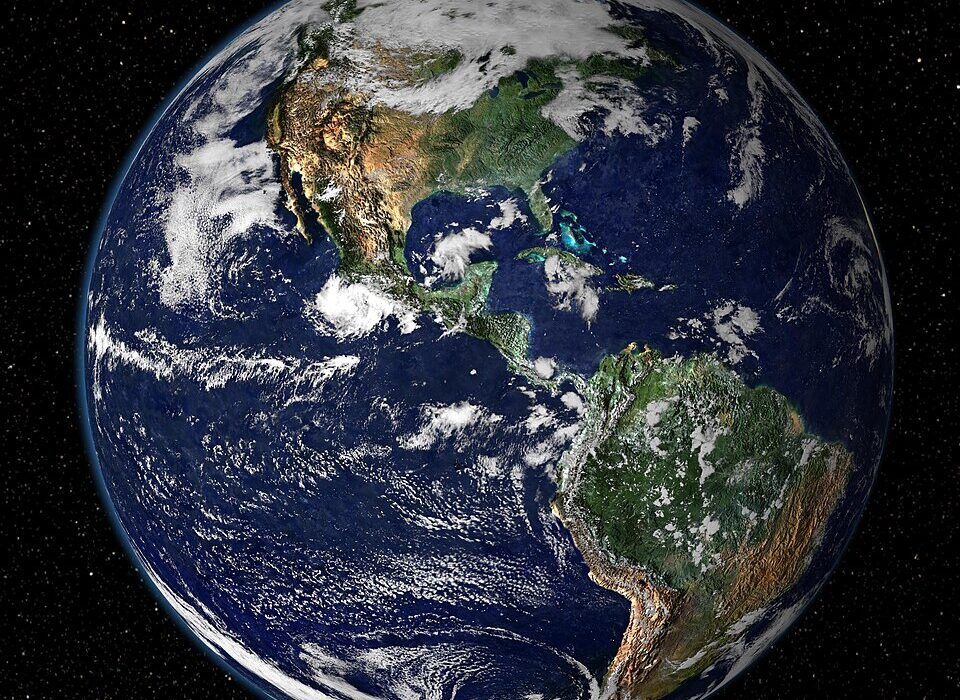
9. The Existence of Liquid Water on Earth
Water has extraordinary properties that make it uniquely suited for life.
It remains liquid over a wide temperature range. It has a high heat capacity, stabilizing climates. It expands upon freezing, causing ice to float and insulate oceans rather than sink and freeze them solid.
Water is an excellent solvent, enabling complex chemistry. Its molecular polarity facilitates biochemical reactions.
The distance of Earth from the Sun allows water to remain liquid on the surface. The planet’s mass is sufficient to retain an atmosphere. Its magnetic field protects the atmosphere from solar wind stripping.
Many of these factors could have been different.
While water likely exists elsewhere in the solar system in subsurface oceans, the combination of surface liquid water, atmospheric stability, and moderate temperatures on Earth represents a rare and fragile convergence.
10. The Initial Conditions of the Universe
Perhaps the most profound coincidence of all lies in the universe’s beginning.
The early universe was extraordinarily uniform, with density variations of only about one part in 100,000. Yet those tiny fluctuations were sufficient to seed the formation of galaxies and clusters through gravitational collapse.
If the fluctuations had been much smaller, matter might not have clumped into galaxies. If much larger, the universe might have become dominated by black holes early on.
The initial entropy of the universe was also remarkably low, allowing the arrow of time to emerge as entropy increased.
Why the universe began in this specific state remains unknown.
The initial conditions appear exquisitely set to allow cosmic structure, chemistry, and eventually conscious observers capable of contemplating these coincidences.
Standing at the Edge of Understanding
Each of these coincidences can be approached scientifically. None require abandoning physics or invoking supernatural explanations. Some may ultimately be explained through deeper theories. Others may reflect selection effects—perhaps many universes exist with different constants, and we inhabit one compatible with our existence.
But the fact remains: the universe contains numerous parameters and balances that lie within narrow life-permitting ranges.
We do not yet know why.
Perhaps future discoveries will reveal underlying principles that make these values inevitable. Perhaps they are consequences of symmetry-breaking in the early universe. Perhaps our understanding of probability in cosmology is incomplete.
For now, these coincidences stand as reminders of how finely structured reality appears to be.
The universe is vast beyond imagination, indifferent to human hopes, governed by mathematical laws. And yet within that immensity, within those equations, lies a delicate architecture that allowed stars to ignite, planets to form, oceans to flow, and minds to awaken.
Whether these alignments are necessary, accidental, or part of a deeper multiversal tapestry remains unknown.
But they are real. Measured. Calculated. Verified.
And they are astonishing.
In contemplating them, we are not merely studying physics. We are confronting the profound mystery of why anything exists in a form capable of supporting life at all.
The coincidences may one day dissolve into deeper understanding. Or they may point toward horizons we have not yet imagined.
Either way, they remind us that the universe is not just large.
It is exquisitely, unsettlingly precise.