Spaceflight has always lived on the razor’s edge between triumph and catastrophe. Every rocket launch is a controlled explosion. Every orbit is a delicate balance between gravity and velocity. Every reentry is a fiery plunge through the atmosphere at hypersonic speed. Behind the breathtaking images of astronauts floating in microgravity and spacecraft gliding past distant worlds lies a truth that engineers and astronauts understand deeply: space is unforgiving.
Across the history of space exploration, there have been moments when the margin between survival and disaster narrowed to seconds. Moments when radios went silent. When warning lights blinked red. When human beings stared into the abyss and waited to see whether physics would spare them.
The following nine events represent some of the most terrifying, scientifically significant, and emotionally charged moments in the history of spaceflight. Each one reshaped the way we approach exploration beyond Earth.
1. The Apollo 13 Oxygen Tank Explosion in 1970
On April 13, 1970, during NASA’s third crewed mission intended to land on the Moon, the spacecraft known as Apollo 13 suffered a catastrophic failure nearly 200,000 miles from Earth.
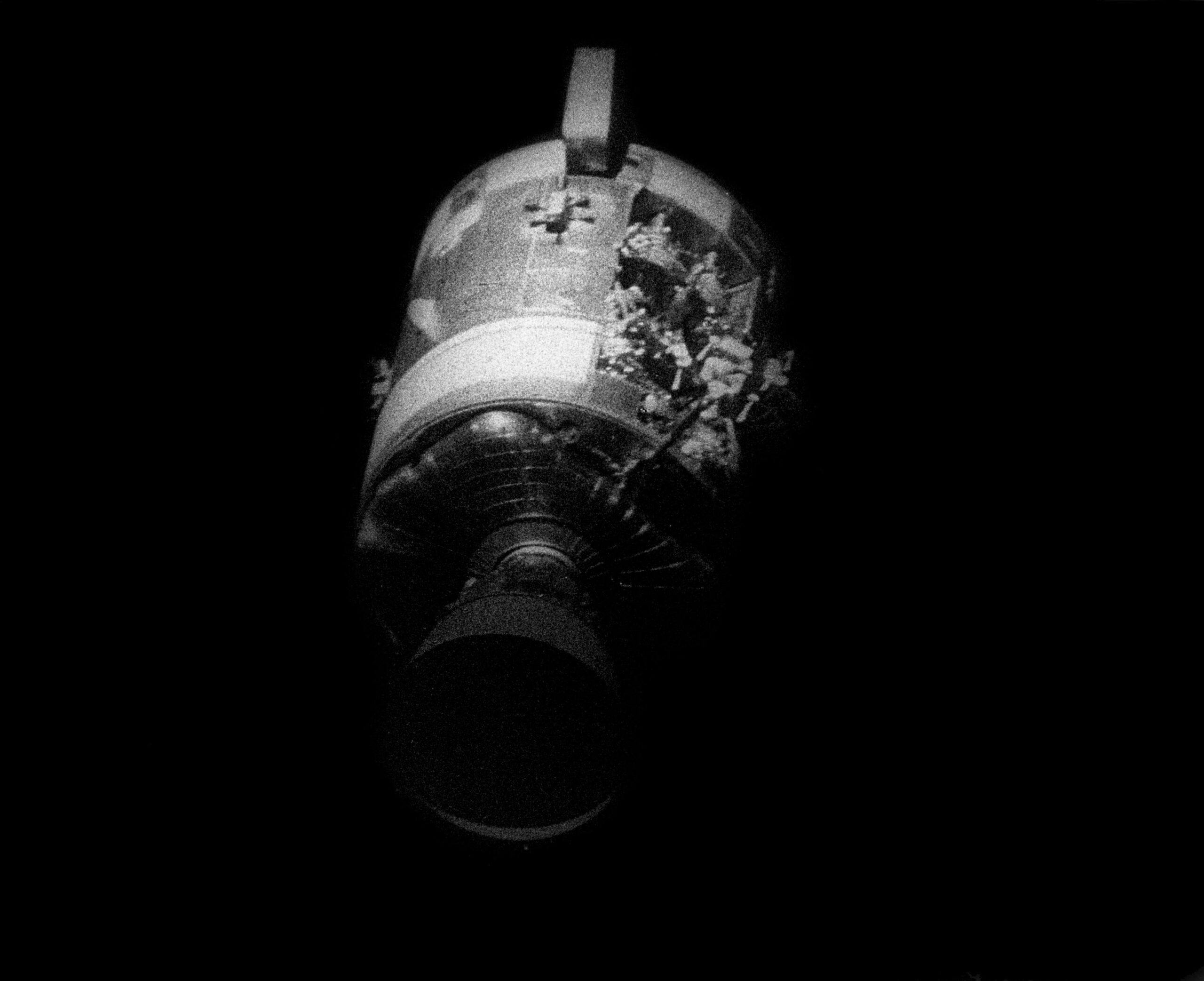
An oxygen tank in the service module exploded after a routine procedure to stir its contents. The explosion crippled the spacecraft’s electrical systems, disabled fuel cells that generated power, and vented precious oxygen into space. Commander Jim Lovell’s now-famous words echoed across mission control: “Houston, we’ve had a problem.”
The Moon landing was immediately aborted. The mission transformed from exploration to survival.
The explosion forced the crew—Lovell, Jack Swigert, and Fred Haise—to power down the command module and use the lunar module as a lifeboat. The lunar module had been designed to support two astronauts for a short surface stay. It now had to sustain three astronauts for nearly four days.
Carbon dioxide levels began to rise dangerously because the lunar module’s filtration system could not handle three people. Engineers on the ground devised a solution using spare materials available onboard: plastic bags, cardboard, and duct tape. Astronauts assembled the improvised device in space, lowering carbon dioxide to survivable levels.
Navigational burns had to be performed manually using the Sun as a reference point. The spacecraft swung around the Moon in a free-return trajectory, using lunar gravity to sling them back toward Earth.
When the crew finally reentered Earth’s atmosphere, the usual radio blackout period during reentry felt longer than ever. Mission control waited in tense silence. Then, the parachutes deployed.
Apollo 13 never landed on the Moon, but it became a defining example of engineering ingenuity and human resilience under extreme pressure.
2. The Apollo 1 Cabin Fire in 1967
Not all terrifying moments end in survival.
On January 27, 1967, during a ground test of the spacecraft for what would have been the first crewed Apollo mission, tragedy struck. Inside the command module of Apollo 1, astronauts Gus Grissom, Ed White, and Roger Chaffee were conducting a routine pre-launch simulation.
The cabin was filled with pure oxygen at high pressure. A spark—likely from faulty wiring—ignited a fire. In a pure oxygen environment, flames spread with explosive intensity. Within seconds, the cabin was engulfed.
The inward-opening hatch made escape impossible under the increased internal pressure. The astronauts perished before they could be rescued.
The Apollo 1 fire exposed critical design flaws: the dangerous use of pure oxygen at high pressure, flammable materials inside the cabin, and inadequate emergency escape procedures.
NASA halted crewed Apollo missions for nearly two years. The spacecraft was redesigned extensively. Fire-resistant materials replaced flammable ones. The hatch was redesigned to open outward rapidly. Wiring and environmental controls were overhauled.
The loss was devastating, but it fundamentally improved spacecraft safety. It served as a grim reminder that even on the ground, spaceflight can be lethal.
3. The Near-Loss of Soyuz 1 in 1967
In April 1967, the Soviet Union launched Soyuz 1 with cosmonaut Vladimir Komarov onboard. The mission was plagued with technical issues from the beginning.
One solar panel failed to deploy, reducing electrical power. Attitude control systems malfunctioned. The spacecraft began tumbling unpredictably.
Plans to launch a second spacecraft were canceled, leaving Komarov alone with a malfunctioning vehicle.
Reentry was attempted despite numerous system failures. As Soyuz 1 descended through the atmosphere, the main parachute failed to deploy properly. The backup chute became entangled.
The capsule slammed into the ground at high speed. Komarov was killed instantly.
This was the first human fatality during an actual spaceflight. The disaster forced the Soviet space program to reexamine spacecraft design and testing procedures.
Soyuz spacecraft were redesigned, and later versions would go on to become one of the most reliable human-rated spacecraft in history.
But in 1967, spaceflight’s fragility was brutally clear.
4. The Space Shuttle Challenger Disaster in 1986
On January 28, 1986, millions watched live as STS-51-L launched from Kennedy Space Center aboard the orbiter Space Shuttle Challenger.
Seventy-three seconds after liftoff, the shuttle disintegrated in a plume of smoke and flame.
The cause was traced to a failure of O-ring seals in the right solid rocket booster. Cold temperatures that morning had reduced the elasticity of the O-rings, allowing hot gases to escape. The escaping flame impinged on the external tank, leading to structural breakup.
All seven crew members were lost, including schoolteacher Christa McAuliffe.
The explosion was not a traditional detonation. The shuttle stack broke apart under aerodynamic forces after the structural failure. The crew cabin remained largely intact for several seconds before impacting the ocean.
Investigations revealed systemic issues in decision-making and risk assessment. Engineers had expressed concerns about launching in cold weather, but their warnings were not adequately heeded.
The shuttle program was grounded for nearly three years. Booster designs were modified, and NASA reformed its safety culture.
Challenger became a symbol of both ambition and vulnerability in space exploration.
5. The Space Shuttle Columbia Reentry Disaster in 2003
Seventeen years after Challenger, tragedy struck again.
On February 1, 2003, the orbiter Space Shuttle Columbia was returning from mission STS-107.
During launch, a piece of foam insulation from the external tank had struck the shuttle’s left wing. The impact damaged thermal protection tiles and likely created a breach in the reinforced carbon-carbon leading edge.
As Columbia reentered Earth’s atmosphere, superheated plasma entered the wing through the damaged area. Internal structures weakened. Sensors failed one by one.
Mission control began noticing unusual readings—rising temperatures and loss of tire pressure sensors. Then communication was lost.
Columbia broke apart over Texas at hypersonic speed. All seven astronauts were killed.
The investigation revealed that foam shedding had been known but underestimated as a serious risk. Communication breakdowns and flawed risk assessment again played a role.
The shuttle fleet was grounded for more than two years. Inspection procedures were overhauled, and in-orbit repair capabilities were added.
Columbia’s loss marked the beginning of the end for the shuttle program, which was retired in 2011.
6. The Salyut 7 Near-Freezing Crisis in 1985
In 1985, the Soviet space station Salyut 7 suddenly lost contact with ground control. The station had lost power, leaving it frozen and drifting.
Without electricity, its systems shut down. Interior temperatures plummeted well below freezing. Condensation turned to ice on equipment and walls.
A daring rescue mission was launched aboard Soyuz T-13. Cosmonauts Vladimir Dzhanibekov and Viktor Savinykh had to manually dock with a powerless, tumbling space station—a feat never before attempted.
Inside, they found a dark, frozen environment. Water lines were ruptured. Equipment was coated in frost.
Over weeks, they gradually restored power, thawed systems, and revived the station.
The mission demonstrated extraordinary piloting skill and endurance. Had they failed, Salyut 7 might have been lost entirely.
The episode showed that space stations are not self-sustaining. Without constant maintenance, even orbital outposts can quickly become lifeless shells.
7. The Near Collision of Gemini 8 in 1966
In March 1966, astronauts Neil Armstrong and David Scott launched aboard Gemini 8. The mission successfully achieved the first docking in space with an uncrewed Agena target vehicle.
Then something went wrong.
After docking, the combined spacecraft began to roll slowly. At first, the astronauts suspected the Agena vehicle. They undocked—but the spinning worsened dramatically.
A stuck thruster on Gemini 8 was firing continuously, causing the spacecraft to spin faster and faster. Within seconds, the rotation rate reached one revolution per second. The astronauts experienced blurred vision and rising g-forces. Continued spinning risked loss of consciousness.
Armstrong made the decision to activate the reentry control system—intended only for return to Earth—to counteract the spin. The maneuver worked, stabilizing the spacecraft.
But using the reentry thrusters meant the mission had to be aborted. Gemini 8 returned to Earth early.
Had Armstrong hesitated, the outcome could have been fatal. His calm response under pressure foreshadowed his later role in the first Moon landing.
8. The Mir Fire in 1997
In February 1997, aboard the Russian space station Mir, a solid-fuel oxygen generator malfunctioned and caught fire.
Flames erupted inside the station, filling modules with smoke and molten debris. In microgravity, fire behaves unpredictably. Without convection, flames can form spherical shapes and spread differently than on Earth.
The fire burned for about 14 minutes. During that time, it blocked access to one of the Soyuz escape vehicles, potentially cutting off evacuation.
Astronauts donned masks and used fire extinguishers to put out the blaze. The situation was chaotic and dangerous. Had the fire spread or damaged critical systems, the crew might have been forced to abandon the station—or worse.
The incident highlighted the unique challenges of firefighting in space and led to improvements in safety protocols and equipment.
9. The First Spacewalk Crisis During Voskhod 2 in 1965
In March 1965, Soviet cosmonaut Alexei Leonov conducted the first spacewalk during the mission Voskhod 2.
As Leonov floated outside the spacecraft, he experienced an unexpected and terrifying problem. His spacesuit began to inflate excessively in the vacuum of space. The suit stiffened, making movement extremely difficult.
When it was time to return to the airlock, Leonov found he could not fit back inside. His suit had expanded too much.
With oxygen running low and rising body temperature, Leonov made a dangerous decision. He manually vented oxygen from his suit to reduce internal pressure, risking decompression sickness.
The suit softened enough for him to squeeze back into the airlock.
The crisis was not over. During reentry, the spacecraft’s automatic landing system failed, forcing a manual reentry and landing deep in a remote forest.
Leonov and his crewmate spent hours in freezing conditions before rescue teams reached them.
The first spacewalk nearly became the first fatal one.
The Thin Line Between Survival and Silence
These nine moments span different countries, spacecraft, and decades. Yet they share common themes: fragile technology, human courage, and the relentless physics of space.
Spaceflight is not routine, even when it appears so. Every mission relies on thousands of systems functioning perfectly in environments that tolerate no mistakes.
From fiery launches to freezing orbits, from explosive decompressions to silent system failures, space has tested the limits of engineering and human resolve.
And yet, despite these terrifying moments, exploration continues.
We launch rockets. We build stations. We send probes to distant worlds.
Because in the end, fear has never stopped humanity from reaching outward. It has only made us more careful, more determined, and more aware of the extraordinary risks involved in leaving our planet behind.
Spaceflight is dangerous. It always has been.
But it is also one of the most powerful expressions of human curiosity—balanced forever on the edge between catastrophe and discovery.