When humans first looked up at the night sky, space was a realm of myth and mystery. It belonged to gods and constellations, not to fragile creatures bound by gravity. Yet within a single century, humanity did something extraordinary: we left Earth.
Outer space is unforgiving. It offers no air to breathe, no pressure to protect the body, no warmth to cradle life. Radiation saturates it. Temperatures swing violently. Distances are so immense that even light struggles across them. And yet, humans have repeatedly ventured into that darkness, setting records that were once unimaginable.
These records are not merely statistics. They represent courage, technological triumph, endurance, and the relentless human desire to explore. Each one pushed the boundaries of physics, engineering, and human resilience. Each one rewrote what was thought possible.
Here are ten of the most astonishing records broken by humans in outer space.
1. The First Human in Space – Yuri Gagarin
On April 12, 1961, a young Soviet pilot named Yuri Gagarin became the first human to leave Earth and enter outer space. Aboard the spacecraft Vostok 1, he completed one orbit of the planet in approximately 108 minutes.
It is difficult to overstate how daring this mission was. At the time, spaceflight was still experimental. Engineers were unsure how the human body would respond to weightlessness. Would the brain function normally? Would the heart behave predictably? No one knew for certain.
Gagarin’s spacecraft reached an altitude of about 327 kilometers above Earth. From that vantage point, he witnessed the curvature of the planet and the thin blue atmosphere hugging it. His historic flight proved that humans could survive in space, even if only for a short time.
That single orbit changed history. It ignited the space race and transformed space from fantasy into reality. Humanity had officially become a spacefaring species.
2. The First Human to Walk on the Moon – Neil Armstrong
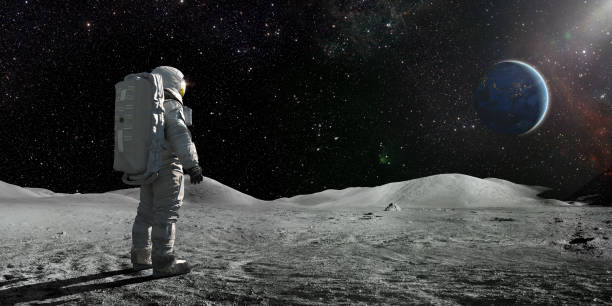
On July 20, 1969, during the Apollo 11 mission, astronaut Neil Armstrong stepped onto the lunar surface and uttered the famous words about a small step and a giant leap.
This moment marked the first time a human set foot on another celestial body.
The Moon is approximately 384,400 kilometers from Earth. Reaching it required overcoming immense engineering challenges: powerful rockets, precise navigation, life-support systems capable of sustaining astronauts in a vacuum, and a lunar module designed to land gently in one-sixth Earth’s gravity.
Armstrong and fellow astronaut Buzz Aldrin spent about two and a half hours walking on the lunar surface. They collected samples, deployed experiments, and demonstrated that humans could operate in another world’s gravity.
This achievement was not just symbolic. It showed that humanity could travel beyond Earth orbit, land safely, and return. It remains one of the most extraordinary accomplishments in human history.
3. The Longest Continuous Time Spent in Space – Valeri Polyakov
Living in space is not just about launch and landing. It is about endurance. The human body evolved under Earth’s gravity. In orbit, muscles weaken, bones lose density, and fluids shift toward the head.
Russian cosmonaut Valeri Polyakov holds the record for the longest continuous time spent in space. Between 1994 and 1995, he lived aboard the space station Mir for 437 days—more than 14 months—without returning to Earth.
His mission was designed to simulate the duration of a potential journey to Mars. Doctors and scientists carefully monitored his physical and psychological health.
Remarkably, Polyakov was able to walk unaided shortly after landing back on Earth, demonstrating that humans could potentially endure long interplanetary voyages.
His record stands as proof that the human body, though stressed by microgravity, can adapt to extended stays beyond Earth.
4. The Most Time Spent in Space by a Human – Gennady Padalka
While Polyakov holds the record for a single continuous mission, the record for cumulative time in space belongs to Russian cosmonaut Gennady Padalka.
Across five missions between 1998 and 2015, Padalka spent a total of 878 days in space. That is nearly two and a half years of his life lived in orbit.
Much of his time was spent aboard the International Space Station, the largest human-made structure in space. Orbiting approximately 400 kilometers above Earth, the ISS serves as a laboratory for studying microgravity, biology, physics, and human adaptation.
Padalka’s cumulative record reflects not just personal endurance but the maturation of long-duration space habitation. It shows that space is no longer a brief destination. It is a place humans can inhabit for years.
5. The Farthest Distance from Earth Traveled by Humans – Apollo 13 Crew
In April 1970, during the Apollo 13 mission, an explosion in the service module crippled the spacecraft on its way to the Moon. The mission was aborted, and the astronauts’ survival became the priority.
As they looped around the Moon to use its gravity to return home, astronauts Jim Lovell, Jack Swigert, and Fred Haise reached a distance of approximately 400,171 kilometers from Earth—the farthest humans have ever traveled.
Ironically, this record was set not during a triumphant landing, but during a life-threatening emergency.
The crew survived through ingenuity and teamwork, improvising solutions with limited resources. Their journey demonstrated both the vulnerability and resilience of human exploration.
To this day, no human mission has traveled farther from Earth.
6. The First Spacewalk – Alexei Leonov
On March 18, 1965, Soviet cosmonaut Alexei Leonov performed the first extravehicular activity, or spacewalk, during the Voskhod 2 mission.
Leonov exited the spacecraft and floated freely in space for about 12 minutes. He was tethered to the capsule, but otherwise exposed to the vacuum.
The experience was more dangerous than anticipated. His spacesuit expanded in the vacuum, becoming rigid and making it difficult to re-enter the spacecraft. He had to manually release pressure from the suit to squeeze back inside—a risky maneuver that could have led to decompression sickness.
Spacewalking is now a routine part of operations on the International Space Station, but Leonov’s pioneering effort proved it was possible.
He became the first human to float untethered from Earth, surrounded only by stars and silence.
7. The Longest Single Spacewalk – Anatoly Solovyev
Spacewalks are physically demanding. Astronauts must wear pressurized suits that limit mobility while performing precise tasks in microgravity.
Russian cosmonaut Anatoly Solovyev set the record for the longest single spacewalk at 8 hours and 29 minutes during a mission to the Mir space station in 1997.
Solovyev also holds the record for the most cumulative time spent on spacewalks, totaling over 82 hours across 16 excursions.
Each spacewalk involves meticulous planning, oxygen management, temperature regulation, and coordination. Solovyev’s record reflects extraordinary physical stamina and technical skill.
Spacewalks are among the most hazardous activities humans perform in orbit. They represent direct contact with the vacuum of space.
8. The Fastest Speed Ever Achieved by Humans – Apollo 10 Crew
Speed in space is not just impressive—it is essential. To escape Earth’s gravity, spacecraft must reach velocities exceeding 11 kilometers per second.
During re-entry from lunar orbit in 1969, the crew of Apollo 10 reached a top speed of approximately 39,897 kilometers per hour relative to Earth.
At that velocity, they became the fastest humans in history.
Re-entering Earth’s atmosphere at such speed generates intense friction and heat. The command module’s heat shield endured temperatures of around 3,000 degrees Celsius.
This record illustrates the extreme energies involved in space travel and the precision required to survive them.
9. The Longest Continuous Presence of Humans in Space – International Space Station
Since November 2000, the International Space Station has maintained a continuous human presence in orbit.
For more than two decades, astronauts and cosmonauts from multiple nations have lived and worked aboard this orbiting laboratory without interruption.
The ISS circles Earth roughly every 90 minutes at an altitude of about 400 kilometers. It serves as a platform for scientific research in microgravity, from protein crystallization to fluid dynamics and human physiology.
Maintaining continuous habitation in space represents a monumental logistical and engineering achievement. Supplies must be regularly delivered. Systems must be maintained. Crews must adapt psychologically to confinement and isolation.
This record signifies a new era: humanity is no longer visiting space briefly. We are living there.
10. The First Commercial Spaceflight and Civilian Astronauts
For decades, space was the domain of government agencies. That changed in the 21st century with the rise of commercial spaceflight.
In 2020, astronauts launched aboard SpaceX’s Crew Dragon spacecraft to the International Space Station, marking the first crewed orbital flight conducted by a private company in partnership with NASA.
Subsequent missions carried private citizens into orbit, demonstrating that space access is expanding beyond career astronauts.
This shift represents a new kind of record: the democratization of space.
Commercial spaceflight has introduced reusable rockets, reduced launch costs, and accelerated innovation. Companies are now developing plans for lunar missions and eventual journeys to Mars.
Humanity’s presence in space is no longer limited to superpower rivalry. It is becoming a broader, more global enterprise.
Beyond the Records
Each of these records represents a milestone in human exploration. The first human in space shattered the boundary of atmosphere. The first lunar step carried us to another world. Long-duration missions proved we could endure the harshness of orbit. Daring rescues, extreme speeds, and record-breaking spacewalks tested the limits of technology and courage.
Yet these records are not endpoints. They are stepping stones.
Future missions may set new records: the first humans to walk on Mars, the longest journey beyond Earth orbit, the first permanent settlement beyond our planet. Distances will grow larger. Durations will stretch longer. Speeds may increase.
Space is vast beyond imagination. Even the Moon, our nearest neighbor, is nearly 400,000 kilometers away. Mars lies tens of millions of kilometers distant at its closest approach. The outer planets are far beyond that.
And yet, within just over sixty years, humans have orbited Earth thousands of times, lived in space for years, walked on another world, and traveled farther from Earth than anyone thought possible in the early 20th century.
These achievements are not merely technological. They are deeply human. They represent curiosity refusing to be confined, fear overcome by courage, and knowledge pursued at enormous risk.
The vacuum of space does not forgive mistakes. It does not compromise. But record by record, mission by mission, humanity has learned how to survive there.
And as we continue to break new records in the decades ahead, one truth becomes clear: space is no longer just a distant dream.
It is our next frontier.