For centuries, physics has been humanity’s most powerful tool for decoding reality. With it, we predicted the existence of unseen planets, split the atom, detected gravitational waves, and traced the birth of the universe to a hot, dense beginning nearly 13.8 billion years ago. Our equations describe how stars burn, how black holes warp spacetime, and how particles flicker into and out of existence.
And yet, scattered across the cosmos are anomalies—observations that do not sit comfortably within our current theories. They are not minor inconveniences. They are cracks in the structure. They are signals that somewhere, in some regime of scale or energy, our understanding of physics is incomplete.
These anomalies are not proof that physics is wrong. Rather, they are proof that it is unfinished. Each one is a reminder that the universe is deeper than our models and stranger than our expectations.
Below are ten space anomalies that strongly suggest we do not yet fully understand the laws governing the cosmos.
1. The Accelerating Expansion of the Universe
In the late 1990s, astronomers studying distant Type Ia supernovae made a stunning discovery. Instead of slowing down under the pull of gravity, the expansion of the universe is accelerating.
According to classical expectations, the mutual gravitational attraction of galaxies should gradually decelerate cosmic expansion. Instead, distant supernovae appeared dimmer than predicted, implying they were farther away than expected in a decelerating universe. The only consistent explanation was that some unknown force was driving galaxies apart faster over time.
This mysterious phenomenon is attributed to what physicists call dark energy. It appears to account for roughly 68 percent of the total energy density of the universe.
One simple explanation is Einstein’s cosmological constant—a constant energy density inherent to space itself. But when physicists attempt to calculate the vacuum energy predicted by quantum field theory, they obtain a value wildly larger than what observations indicate. The discrepancy is so enormous—by a factor of about 10^120—that it is often described as the worst prediction in the history of physics.
Alternatively, dark energy might not be constant. It could evolve over time, or perhaps gravity behaves differently on cosmological scales than general relativity predicts.
The accelerating universe forces us to confront a sobering possibility: most of the cosmos is governed by something we do not understand at all.
2. Dark Matter and the Missing Mass Problem
When astronomers measure the rotation speeds of stars in galaxies, they encounter a profound discrepancy. Stars at the outer edges of galaxies orbit much faster than they should based solely on the visible mass present.
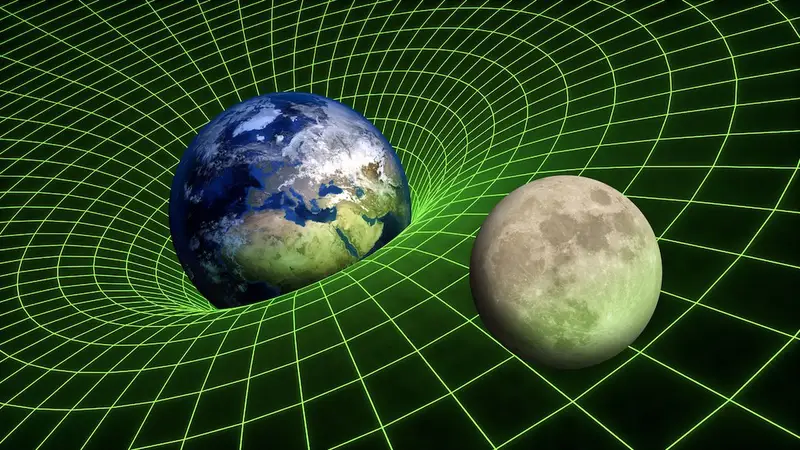
According to Newtonian gravity and general relativity, the gravitational pull of visible matter should determine orbital velocities. But observations consistently show that galaxies behave as though they contain far more mass than we can see.
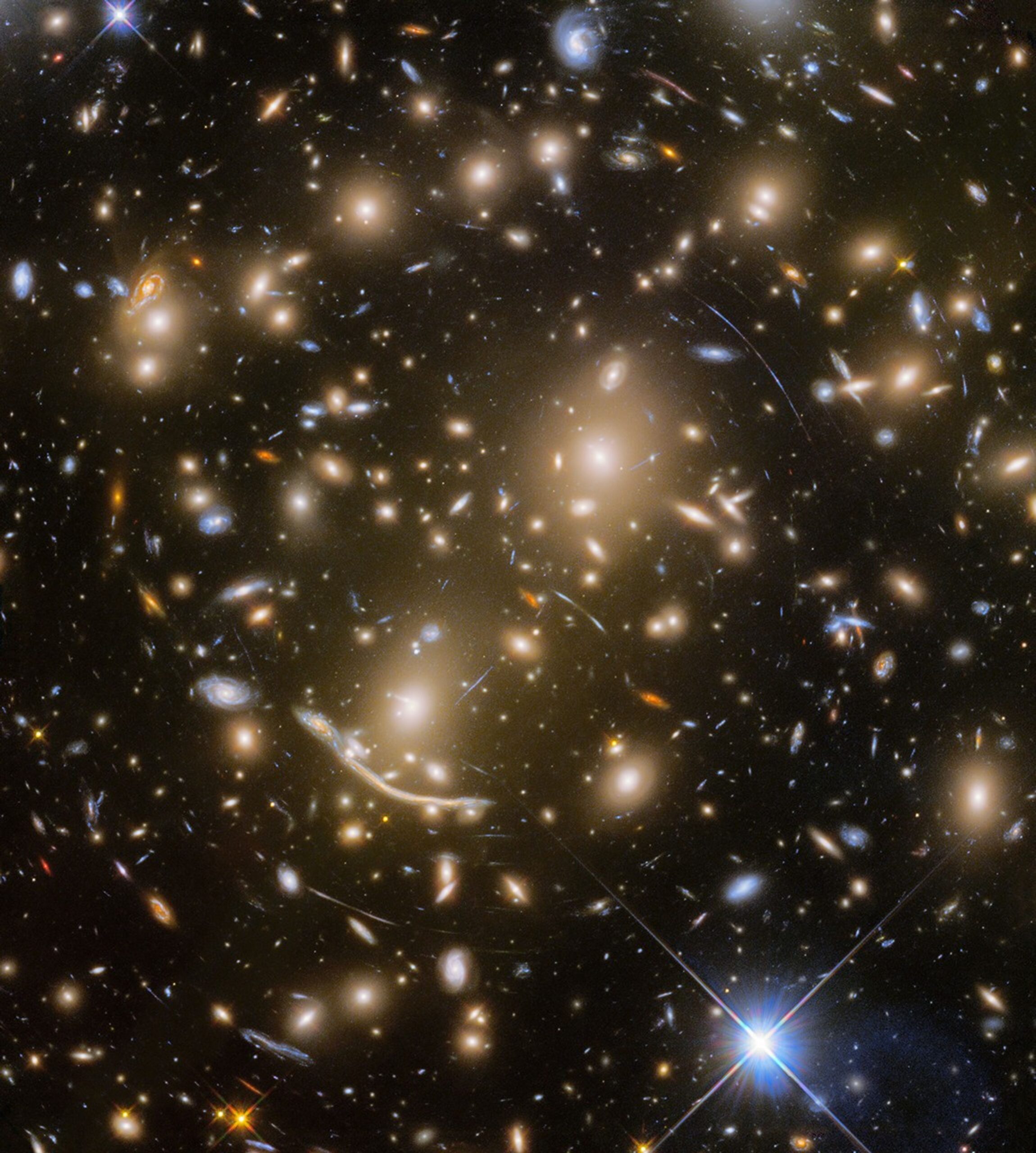
This unseen mass has been named dark matter. It does not emit, absorb, or reflect light. Its presence is inferred through gravitational effects, including galaxy rotation curves, gravitational lensing, and the behavior of galaxy clusters.
The prevailing hypothesis is that dark matter consists of unknown particles that interact weakly with ordinary matter. Candidates such as WIMPs and axions have been proposed. Massive underground detectors and particle accelerators have searched for evidence of these particles, but so far no definitive detection has been made.
Some alternative theories propose that gravity itself might need modification at large scales, such as Modified Newtonian Dynamics. However, while such models explain certain galactic behaviors, they struggle to account for large-scale cosmological observations.
The missing mass problem tells us something fundamental is incomplete. Either an entire category of matter exists beyond our detection—or gravity behaves differently than we think.
3. The Hubble Tension
The rate at which the universe expands is known as the Hubble constant. In principle, this value should be the same regardless of how it is measured.
Yet two primary methods yield conflicting results. One method uses observations of the cosmic microwave background—the relic radiation from the early universe—to infer the expansion rate based on cosmological models. Another method directly measures distances and velocities of nearby galaxies using standard candles like Cepheid variables and supernovae.
These two approaches produce values that differ by more than can be explained by measurement errors. This discrepancy is known as the Hubble tension.
If both measurements are correct, then our cosmological model may be incomplete. Perhaps new physics influenced the early universe in ways we do not yet understand. Perhaps dark energy evolves over time. Perhaps unknown particles affected early expansion dynamics.
The Hubble tension is not a small rounding error. It may be pointing toward new physics beyond the current standard cosmological model.
4. Fast Radio Bursts
Fast radio bursts, or FRBs, are extremely powerful pulses of radio waves that last only milliseconds. First discovered in 2007, they originate from distant galaxies and release enormous amounts of energy in brief flashes.
Some FRBs repeat, while others appear to be one-time events. Observations have linked certain repeating FRBs to highly magnetized neutron stars known as magnetars. Yet not all FRBs fit neatly into this explanation.
Their brightness, brevity, and extragalactic origins make them challenging to model. The exact mechanisms producing these bursts remain under investigation.
While magnetars provide a plausible explanation for many cases, the diversity of FRB behaviors suggests we do not yet fully understand the processes generating them.
FRBs are cosmic sirens—brief, brilliant, and still not entirely explained.
5. The Pioneer Anomaly
In the late 20th century, data from the Pioneer 10 and Pioneer 11 spacecraft revealed something unexpected. As they traveled beyond the outer planets, both spacecraft experienced a tiny, unexplained acceleration toward the Sun.
For years, this anomaly puzzled scientists. Was gravity behaving differently at large distances? Was new physics required?
Eventually, detailed analysis showed that uneven heat radiation from the spacecraft could account for most or all of the observed acceleration. Yet the Pioneer anomaly remains a cautionary tale.
It demonstrated how even well-tested gravitational theory can appear challenged by subtle effects. It reminded scientists that unexpected observations demand rigorous scrutiny—and sometimes hint at deeper insights.
Though largely resolved, the anomaly underscored how fragile certainty can be.
6. The Ultra-High-Energy Cosmic Rays
Cosmic rays are high-energy particles that travel through space at nearly the speed of light. Most originate from supernova remnants or other energetic astrophysical processes.
But some cosmic rays have been detected with energies so extreme that they challenge theoretical limits. According to known physics, interactions with the cosmic microwave background should limit the maximum energy of cosmic rays traveling over vast distances. This predicted cutoff is known as the Greisen–Zatsepin–Kuzmin limit.
Yet detectors have recorded events that appear to approach or exceed this threshold. While measurement uncertainties exist, the presence of such ultra-high-energy particles raises questions about their origins and acceleration mechanisms.
What astrophysical processes can produce such extraordinary energies? Are there nearby sources? Or is new physics involved?
The universe continues to fling particles at us with energies that strain our theoretical frameworks.
7. The Matter-Antimatter Asymmetry
The Big Bang should have produced equal amounts of matter and antimatter. When matter and antimatter meet, they annihilate into pure energy.
If the early universe contained equal amounts, it should have annihilated itself into radiation, leaving no matter behind.
And yet, matter dominates. Stars, planets, and galaxies exist because a tiny excess of matter survived annihilation.
The Standard Model of particle physics includes small violations of symmetry that allow matter and antimatter to behave slightly differently. But the amount of asymmetry observed in particle experiments appears insufficient to explain the cosmic imbalance.
Some additional mechanism—known as baryogenesis—must have occurred in the early universe. But its nature remains unknown.
Our very existence depends on a subtle imbalance we do not yet fully understand.
8. Black Hole Information Paradox
Black holes, as described by general relativity, are regions of spacetime where gravity is so strong that nothing—not even light—can escape.
In the 1970s, Stephen Hawking showed that black holes are not completely black. Quantum effects allow them to emit radiation, now known as Hawking radiation. Over immense timescales, black holes can evaporate.
But here lies the paradox. If information about matter that falls into a black hole is permanently lost when the black hole evaporates, then quantum mechanics—which states that information is conserved—is violated.
This conflict between general relativity and quantum mechanics represents one of the deepest unsolved problems in theoretical physics.
Proposed resolutions include the holographic principle, quantum entanglement across the event horizon, and exotic concepts such as firewalls. None have achieved universal agreement.
The information paradox signals that our two most successful theories cannot both be complete.
9. The Nature of Inflation
Shortly after the Big Bang, the universe is believed to have undergone a brief but dramatic period of exponential expansion known as cosmic inflation.
Inflation explains several puzzling features of the universe, such as its large-scale uniformity and flat geometry. It also provides a mechanism for generating the tiny fluctuations that grew into galaxies.
Yet inflation remains hypothetical. The field responsible for driving inflation—the inflaton—has not been identified. Its physical nature is unknown.
Moreover, some models of inflation predict a multiverse, where different regions of spacetime have different physical constants. If true, this would radically alter our understanding of cosmic uniqueness.
While inflation elegantly solves several problems, it raises new ones. We know the universe expanded rapidly—but we do not yet know why.
10. The Behavior of Gravity at Quantum Scales
Gravity is described exquisitely by general relativity on large scales. Quantum mechanics describes the other three fundamental forces with astonishing precision at small scales.
But these two frameworks are mathematically incompatible.
Attempts to quantize gravity using standard methods lead to infinities that cannot be renormalized. Proposed solutions such as string theory and loop quantum gravity aim to reconcile these inconsistencies, but neither has been experimentally confirmed.
Until a theory of quantum gravity is established, we lack a complete understanding of phenomena where both quantum effects and strong gravity are important—such as inside black holes or at the Big Bang singularity.
The absence of a unified framework is not merely an academic inconvenience. It represents a fundamental gap in our understanding of nature.
The Edge of Knowledge
These anomalies are not failures of science. They are signs of progress. Every time observations contradict expectations, physics evolves.
In the early 20th century, unexplained phenomena led to the revolutions of relativity and quantum mechanics. Today’s anomalies may herald equally transformative discoveries.
Perhaps dark matter will be detected in a laboratory. Perhaps dark energy will be explained by new fields or modified gravity. Perhaps quantum gravity will unify our theories in an elegant and testable way.
Or perhaps the universe will surprise us in ways we cannot yet imagine.
Physics is not a finished story. It is an unfolding conversation between humanity and the cosmos. The anomalies listed here are the universe whispering that there is more to learn.
And in that whisper lies both humility and hope.
We do not yet understand everything. But we are listening.