Look up at the night sky and you might think you’re seeing calm, silent beauty—stars gently shining, planets slowly orbiting, galaxies peacefully swirling in the distance. But beneath that tranquil appearance lies a universe so extreme, so bizarre, that it often feels as if it is breaking its own rules.
Yet it is not truly defying physics. Rather, it is stretching physics to its absolute limits. These cosmic objects challenge our intuition, push our equations to their edge, and force us to rethink what is possible in nature. They bend spacetime, crush matter beyond comprehension, erupt with unimaginable energy, and glow with radiation that can sterilize entire worlds.
Here are fifteen of the strangest, most astonishing objects in space—each one so extraordinary that it feels like a rebellion against reality itself.
1. Black Holes – Gravity Without Mercy
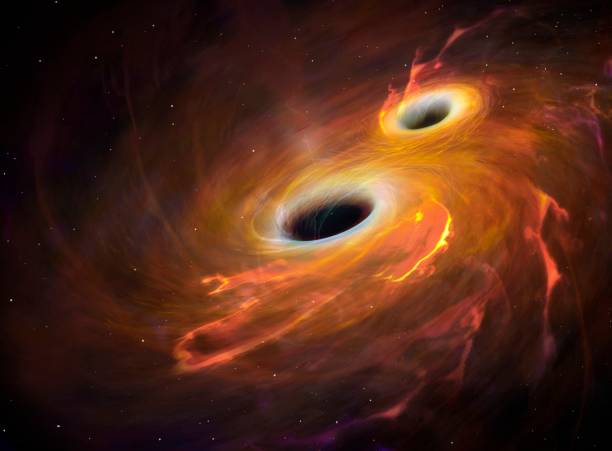
Few objects inspire as much awe and fear as black holes. Predicted by Albert Einstein’s theory of general relativity, black holes form when massive stars collapse under their own gravity at the end of their lives.
When this collapse occurs, matter is compressed into an incredibly small region. The gravitational pull becomes so intense that nothing—not even light—can escape beyond a boundary called the event horizon. At the center lies what physics describes as a singularity, a point where density and curvature of spacetime approach infinity.
They seem to violate common sense. How can something be so dense that it traps light itself? Yet observations confirm their existence. In 2019, the Event Horizon Telescope captured the first direct image of a black hole’s shadow in galaxy M87. In 2022, Sagittarius A*, the supermassive black hole at the center of our own galaxy, was imaged as well.
Black holes do not break the laws of physics—they obey them too well. They are the logical consequence of gravity taken to its most extreme conclusion.
2. Neutron Stars – A City-Sized Atomic Nucleus
If black holes represent gravitational collapse pushed to infinity, neutron stars represent collapse paused just before the final plunge.
When a massive star explodes as a supernova, its core can compress so tightly that protons and electrons merge into neutrons. The result is a neutron star: an object about 20 kilometers across but containing more mass than our Sun.
A teaspoon of neutron star matter would weigh billions of tons on Earth. The density is so immense that atoms cannot exist. Matter becomes a tightly packed sea of neutrons.
One famous neutron star, PSR J1748–2446ad, spins more than 700 times per second. Its surface moves at a significant fraction of the speed of light. These objects warp spacetime, generate magnetic fields trillions of times stronger than Earth’s, and challenge our understanding of matter under extreme pressure.
3. Magnetars – The Universe’s Most Powerful Magnets
Some neutron stars are even more extreme. Magnetars are neutron stars with magnetic fields so powerful they defy imagination.
A typical refrigerator magnet is harmless. A magnetar’s magnetic field, however, is trillions of times stronger than Earth’s. If one passed within a thousand kilometers of Earth, it could erase every credit card and disrupt electronics instantly.
Magnetars occasionally unleash enormous bursts of gamma rays and X-rays. In 2004, a flare from magnetar SGR 1806–20 briefly altered Earth’s upper atmosphere—even though it was located about 50,000 light-years away.
These objects push electromagnetism to cosmic extremes. Their magnetic forces can distort atoms themselves, stretching them into elongated shapes.
4. Quasars – Beacons from the Early Universe
In the distant universe shine quasars, powered by supermassive black holes consuming matter at furious rates. As gas spirals into the black hole’s accretion disk, friction heats it to millions of degrees, causing it to glow intensely.
Some quasars outshine entire galaxies. One of the brightest known, 3C 273, emits more light than trillions of Suns combined.
It seems impossible that a single region of space could produce such energy. Yet the mechanism is gravity converting mass into radiation with remarkable efficiency.
Quasars are not just bright—they are ancient. Many formed when the universe was less than a billion years old. Their existence challenges our understanding of how supermassive black holes grew so rapidly after the Big Bang.
5. Pulsars – Cosmic Lighthouses
Pulsars are rotating neutron stars that emit beams of radiation from their magnetic poles. As they spin, these beams sweep across space like lighthouse beams. If aligned correctly, they flash past Earth at precise intervals.
Discovered in 1967, pulsars were initially so mysterious that some scientists jokingly labeled them LGM, for “Little Green Men.”
One famous pulsar, located in the Crab Nebula, is the remnant of a supernova recorded by Chinese astronomers in 1054 CE. Today it continues to pulse dozens of times per second, its rotation gradually slowing over millennia.
Their precision rivals atomic clocks. Pulsars help astronomers test general relativity and search for gravitational waves.
6. Rogue Planets – Worlds Without Suns
Planets are supposed to orbit stars. That’s the rule we learn in school. But rogue planets break that expectation.
These are planetary-mass objects drifting through interstellar space without a host star. Some were likely ejected from their systems by gravitational interactions. Others may have formed in isolation.
One example is CFBDSIR 2149-0403, an object wandering alone in the galaxy. Without a star’s warmth, rogue planets are cold and dark.
Yet some may retain internal heat from formation or radioactive decay. In theory, subsurface oceans could exist beneath thick ice layers—even in the darkness between stars.
7. The Diamond Planet 55 Cancri e
About 40 light-years away lies an exoplanet called 55 Cancri e. Early studies suggested it might contain large amounts of carbon, possibly forming diamond-rich interiors.
Though later research refined those claims, the planet remains extraordinary. It is about twice Earth’s size and orbits extremely close to its star, completing a year in less than 18 hours. Surface temperatures exceed 2,000 degrees Celsius.
Lava oceans may cover its surface. It is a world of extremes—a planet where familiar geology gives way to alien chemistry.
8. The Boomerang Nebula – Colder Than Space Itself
Space is cold, around 2.7 degrees above absolute zero due to cosmic microwave background radiation. Yet the Boomerang Nebula is even colder.
Located about 5,000 light-years away, it has been measured at about 1 degree above absolute zero. Rapidly expanding gas from a dying star cools as it spreads outward, dropping below the temperature of the surrounding universe.
It is astonishing: a natural refrigerator colder than the cosmic background itself.
9. The Great Attractor – An Invisible Pull
Galaxies, including our Milky Way, are moving toward a mysterious region in space known as the Great Attractor.
This gravitational anomaly lies in the direction of the constellation Centaurus. It appears to contain an enormous concentration of mass—possibly clusters of galaxies—exerting a gravitational pull across hundreds of millions of light-years.
We cannot see it clearly because it lies behind the dense plane of our galaxy. Yet its influence is measurable. It reminds us that invisible structures shape cosmic motion.
10. Dark Matter Halos – The Invisible Scaffold
Galaxies spin too fast for visible matter alone to hold them together. Something unseen provides additional gravity. That something is dark matter.
Dark matter does not emit, absorb, or reflect light. It reveals itself only through gravitational effects. Galaxies are embedded in massive dark matter halos that extend far beyond their visible edges.
We do not yet know what dark matter is made of. It may consist of unknown particles. Though invisible, it forms the cosmic scaffolding upon which galaxies assemble.
11. Dark Energy – The Force Driving Expansion
If gravity pulls, dark energy pushes.
In 1998, observations of distant supernovae revealed that the universe’s expansion is accelerating. Something is counteracting gravity on cosmic scales. This phenomenon is called dark energy.
It makes up roughly 70 percent of the universe’s energy content. Yet its nature remains unknown. It could be a property of space itself, a cosmological constant first proposed by Einstein.
Dark energy challenges our understanding of fundamental physics more than almost anything else.
12. Fast Radio Bursts – Millisecond Mysteries
Fast radio bursts, or FRBs, are intense pulses of radio waves lasting mere milliseconds. First discovered in 2007, they originate from distant galaxies.
Some repeat, others do not. In 2020, astronomers linked at least one FRB to a magnetar within our galaxy, confirming that highly magnetized neutron stars can produce them.
Yet not all FRBs are fully understood. They release enormous energy in fractions of a second, rivaling the Sun’s output over days.
13. The Black Widow Pulsar – A Star That Devours Its Companion
The system PSR B1957+20 contains a pulsar orbiting a low-mass companion star. The pulsar’s intense radiation gradually strips material from its partner.
This earned it the nickname “Black Widow Pulsar.” The companion star is being slowly evaporated, consumed by energetic winds and radiation.
It is a celestial example of destruction driven by extreme physics.
14. The Largest Known Star – UY Scuti
Some stars dwarf our Sun beyond comprehension. UY Scuti is one of the largest known stars by radius.
If placed at the center of our solar system, its outer layers would extend beyond the orbit of Jupiter. Despite its enormous size, it is not especially massive compared to its volume. It is a swollen red supergiant nearing the end of its life.
Its sheer scale challenges our sense of proportion. The Sun suddenly feels small.
15. Sagittarius A* – The Monster at Our Galaxy’s Heart
At the center of the Milky Way lies Sagittarius A*, a supermassive black hole with about four million times the mass of the Sun.
Stars orbit it at tremendous speeds, providing direct evidence of its presence. In 2022, the Event Horizon Telescope collaboration released its first image.
It is both terrifying and magnificent—a reminder that our galaxy revolves around a gravitational abyss.
The Universe Does Not Break Its Laws
These objects may seem to defy physics, but in truth they reveal physics at its most extreme. They show us gravity pushed to collapse, magnetism amplified beyond imagination, matter compressed to nuclear densities, energy unleashed with ferocious brilliance.
They teach us humility. The universe is not limited by our intuition. It is governed by consistent laws that operate everywhere—from laboratory experiments to the edge of cosmic time.
What feels bizarre is often simply unfamiliar. Each discovery forces us to expand our understanding, to refine our theories, to ask deeper questions.
The cosmos is not breaking its rules. It is inviting us to learn them more completely. And as we peer into the darkness and uncover these astonishing objects, we realize something profound: reality is far stranger, far grander, and far more beautiful than we ever dared to imagine.