Deep within every cell of your body lies an extraordinary molecule that silently carries the instructions for your existence. It determines the color of your eyes, the structure of your body, and even influences certain aspects of your health and behavior. This molecule is DNA.
DNA, short for deoxyribonucleic acid, is often described as the blueprint of life. Every living organism on Earth—from tiny bacteria to massive blue whales—depends on DNA to store and transmit biological information. In humans, DNA contains the genetic instructions that guide growth, development, reproduction, and the daily functioning of cells.
The discovery of DNA’s structure in 1953 by James Watson and Francis Crick revolutionized biology and opened a new window into understanding life itself. Later advances in genetics revealed that this microscopic molecule contains an astonishing amount of information and complexity.
Your DNA is not simply a chemical structure hidden inside cells. It is a dynamic record of evolution, a library of biological instructions, and a key to understanding who you are. Scientists have spent decades studying DNA, and the deeper they look, the more fascinating facts they uncover.
Below are ten mind-blowing facts about your DNA that reveal just how incredible this molecule truly is.
1. Your DNA Could Stretch to the Sun and Back Multiple Times
One of the most astonishing facts about DNA is its incredible length when fully stretched out.
Every human cell contains about two meters of DNA tightly packed into the cell nucleus, which is only about six micrometers in diameter. This means an extremely long molecule is folded, coiled, and compressed into a space far smaller than a grain of dust.
The human body contains roughly 30 to 37 trillion cells. If the DNA from all these cells were stretched end to end, the total length would be approximately 74 billion kilometers.
To put that into perspective, the average distance between Earth and the Sun is about 150 million kilometers. This means the DNA in your body could theoretically stretch from Earth to the Sun and back more than 200 times.
This remarkable compression is made possible by proteins called histones. DNA wraps around histone proteins like thread around spools, forming structures known as nucleosomes. These structures coil further to form chromosomes, which allow DNA to fit neatly inside the nucleus.
Despite this extreme packaging, cells can still access specific parts of DNA when needed. When a gene must be used, the tightly packed DNA temporarily loosens so that cellular machinery can read its instructions.
This ability to store massive amounts of information in an incredibly compact space is one of the reasons DNA is considered one of the most efficient information storage systems in the universe.
2. Humans Share About 99.9% of Their DNA with Each Other
Although people appear very different from one another, genetically we are almost identical.
Any two humans share approximately 99.9 percent of their DNA. The remaining 0.1 percent accounts for the differences between individuals, including variations in physical appearance, susceptibility to diseases, and certain traits.
This tiny fraction of variation may seem insignificant, but it represents millions of differences in DNA letters.
DNA is composed of four chemical bases: adenine, thymine, cytosine, and guanine. These bases are often abbreviated as A, T, C, and G. The human genome contains about three billion of these base pairs.
A 0.1 percent difference between individuals therefore corresponds to roughly three million genetic variations.
These variations are responsible for diversity among humans. They influence characteristics such as skin color, height, metabolism, and even how individuals respond to certain medications.
The remarkable similarity in human DNA also highlights a profound truth: despite differences in culture, language, and appearance, all humans are genetically very closely related.
3. Humans Share a Significant Portion of DNA with Other Species
One of the most surprising discoveries in modern genetics is how much DNA humans share with other organisms.
For example, humans share about 98 to 99 percent of their DNA with chimpanzees. This close similarity reflects our shared evolutionary ancestry.
Even more surprisingly, humans share about 60 percent of their DNA with bananas. At first glance, this may sound unbelievable, but it reflects the fact that many fundamental biological processes are common to all living organisms.
Basic cellular functions such as DNA replication, energy production, and protein synthesis rely on genes that have been conserved throughout evolution.
Humans also share approximately 85 percent of their DNA with mice, which is one reason mice are frequently used in medical research.
These genetic similarities reveal an important insight: life on Earth is interconnected. All organisms evolved from common ancestors, and DNA preserves the record of that shared history.
4. Your DNA Contains Instructions for Building Thousands of Proteins
DNA functions primarily as an instruction manual for building proteins.
Proteins are complex molecules that perform a vast array of functions inside the body. They act as enzymes that speed up chemical reactions, structural components that give cells shape, and signaling molecules that allow cells to communicate.
The sections of DNA that contain instructions for making proteins are called genes.
Humans have approximately 20,000 to 21,000 protein-coding genes. Each gene contains a specific sequence of DNA bases that determines the order of amino acids in a protein.
When a cell needs to produce a protein, it first copies the relevant gene into a molecule called messenger RNA. This RNA then travels to ribosomes, where the instructions are translated into a chain of amino acids.
The resulting chain folds into a unique three-dimensional structure, forming a functional protein.
Although humans have only around twenty thousand genes, these genes can produce far more proteins through processes such as alternative splicing, where a single gene can generate multiple protein variations.
This flexibility greatly expands the complexity of biological systems.
5. Only a Small Portion of Your DNA Codes for Proteins
For many years, scientists believed that most DNA in the human genome served a specific purpose. However, research revealed a surprising fact.
Only about 1 to 2 percent of human DNA actually codes for proteins.
The remaining 98 percent consists of non-coding DNA. Early researchers sometimes referred to this as “junk DNA” because its function was unclear.
Today, scientists know that much of this non-coding DNA plays important regulatory roles.
Some segments control when genes are turned on or off. Others influence how genes are expressed in different tissues or at different stages of development. Certain regions help organize chromosomes within the nucleus.
There are also DNA sequences known as repetitive elements, which appear many times throughout the genome. Some of these sequences originated from ancient viruses that inserted their genetic material into our ancestors’ DNA millions of years ago.
Rather than being useless, non-coding DNA contributes to the complexity and regulation of genetic systems.
The discovery of these functions has transformed our understanding of the genome.
6. Every Cell in Your Body Contains the Same DNA
Another fascinating fact about DNA is that nearly every cell in your body contains the same genetic information.
The DNA in a skin cell is essentially identical to the DNA in a neuron or a muscle cell. Yet these cells look and behave completely differently.
The reason lies in gene expression.
Different types of cells activate different sets of genes while keeping others turned off. For example, muscle cells activate genes related to contraction and movement, while neurons activate genes involved in transmitting electrical signals.
This selective gene activation allows cells with identical DNA to specialize and perform different roles within the body.
The process begins early in embryonic development. As cells divide and differentiate, they adopt distinct gene expression patterns that determine their structure and function.
This phenomenon illustrates the remarkable flexibility of DNA. A single genetic blueprint can generate hundreds of specialized cell types.
7. Mutations in DNA Drive Evolution
DNA is not perfectly stable. Occasionally, changes occur in the sequence of bases within the genome. These changes are known as mutations.
Mutations can arise from errors during DNA replication, exposure to radiation, or interactions with certain chemicals.
Many mutations have little or no effect. Some are harmful, while others may provide advantages.
Over long periods of time, beneficial mutations can spread through populations via natural selection, contributing to the process of evolution.
The theory of evolution by natural selection was first proposed by Charles Darwin, long before DNA was discovered. Today, genetic research provides strong evidence supporting Darwin’s ideas.
Mutations introduce variation into populations, and natural selection favors traits that improve survival or reproduction.
In this way, DNA mutations have played a crucial role in shaping the diversity of life on Earth.
8. Your DNA Is Constantly Being Repaired
DNA molecules face continuous threats from environmental factors such as ultraviolet radiation, chemical exposure, and metabolic by-products produced by cells.
Fortunately, cells possess sophisticated repair systems that constantly monitor and fix damaged DNA.
Specialized enzymes detect abnormalities in DNA structure and remove damaged sections. The missing segments are then replaced using the undamaged strand as a template.
Without these repair mechanisms, genetic damage would accumulate rapidly, leading to severe cellular dysfunction.
Scientists estimate that thousands of DNA repair events occur in each cell every day.
These repair systems are essential for maintaining genetic stability and preventing diseases such as cancer.
When DNA repair processes fail or become less effective, mutations can accumulate and disrupt normal cellular regulation.
The existence of these repair mechanisms highlights the remarkable resilience of living systems.
9. Identical Twins Have Nearly Identical DNA
Identical twins provide one of the most fascinating examples of genetic similarity.
Identical twins develop from a single fertilized egg that splits into two embryos during early development. Because both embryos originate from the same egg and sperm, they share almost identical DNA sequences.
This genetic similarity often results in very similar physical appearances and traits.
However, identical twins are not perfectly identical in every respect. Environmental factors, lifestyle choices, and random biological events can lead to differences between them over time.
For example, identical twins may develop different fingerprints, health conditions, or personality traits.
Additionally, small genetic differences can arise due to mutations that occur after the embryos separate.
Studying identical twins has provided scientists with valuable insights into the roles of genetics and environment in shaping human characteristics.
10. Your DNA Carries the Story of Human History
Perhaps the most awe-inspiring aspect of DNA is that it preserves the history of our species.
Genetic analysis allows scientists to trace human ancestry and migration patterns across thousands of years.
By studying variations in DNA among different populations, researchers can reconstruct ancient human movements and relationships.
For instance, mitochondrial DNA—passed from mothers to their children—has helped scientists trace human origins to populations in Africa tens of thousands of years ago.
Similarly, analysis of Y-chromosome DNA passed from fathers to sons has provided insights into paternal lineages and historical migrations.
DNA evidence has also revealed interactions between early modern humans and other hominin species such as Neanderthals. Many modern humans outside Africa carry small amounts of Neanderthal DNA inherited from ancient interbreeding events.
These discoveries show that our genomes are not merely biological instructions; they are historical archives.
Within every person’s DNA lies a record of ancient journeys, evolutionary struggles, and the shared origins of humanity.
Conclusion: The Astonishing Power of DNA
DNA is far more than a chemical molecule hidden inside cells. It is the foundation of life’s complexity and diversity.
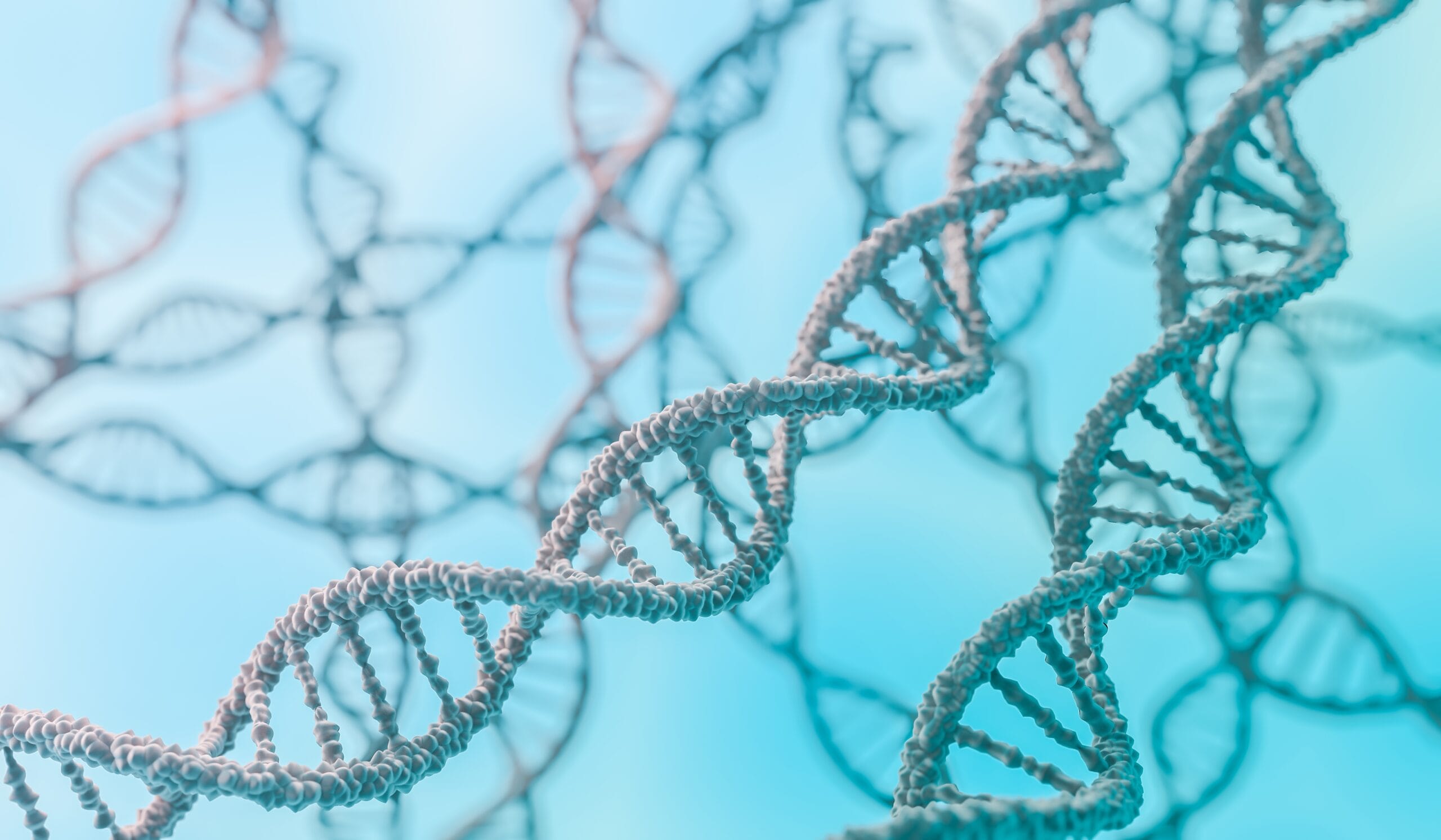
Within its elegant double-helix structure lies a vast store of biological information that guides the development and functioning of every organism. It shapes our physical traits, influences our health, and connects us to our ancestors across deep time.
From its incredible length and compact storage to its role in evolution, DNA continues to amaze scientists and researchers around the world.
The study of DNA has transformed medicine, agriculture, forensic science, and biotechnology. It has helped diagnose genetic diseases, identify individuals through genetic fingerprints, and develop treatments tailored to specific genetic profiles.
Yet despite decades of research, DNA still holds many mysteries. Scientists continue to explore how genes interact with one another, how environmental factors influence gene expression, and how genetic knowledge can improve human health.
In many ways, DNA represents both the past and the future of life on Earth.
It carries the legacy of billions of years of evolution while offering powerful tools for shaping the future of science and medicine.
When we look closely at DNA, we are not just examining a molecule. We are witnessing the extraordinary complexity of life itself.