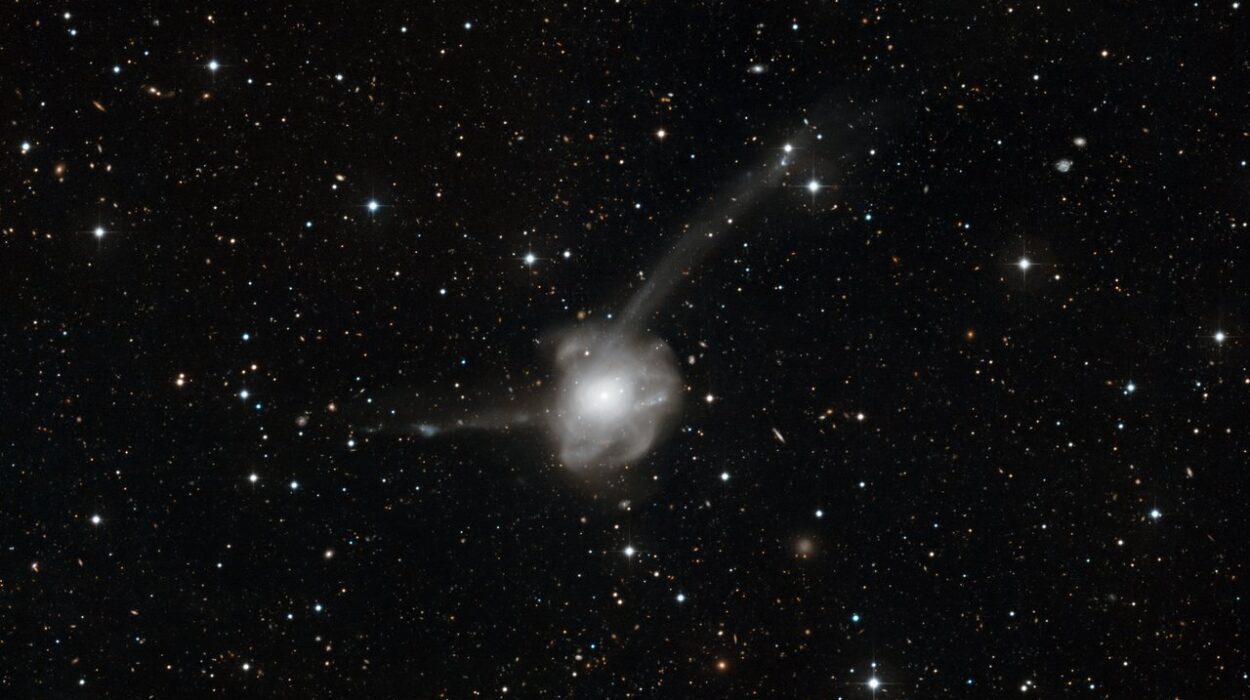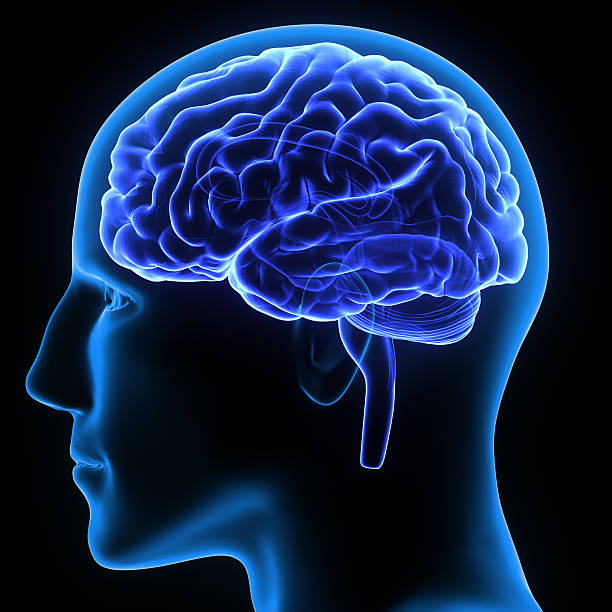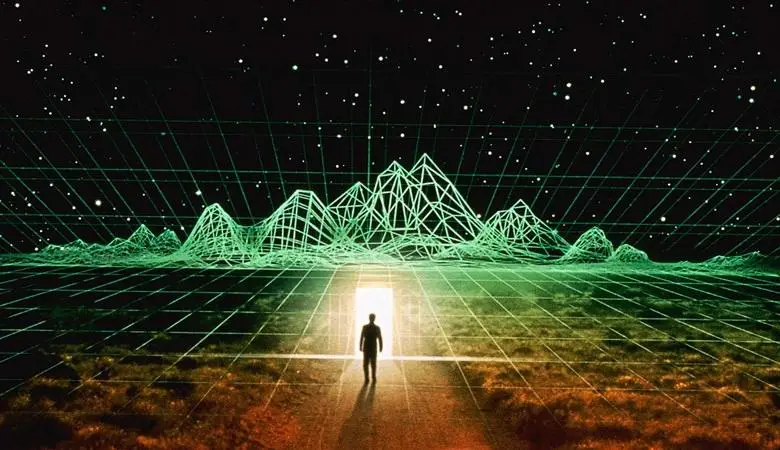
Few ideas in modern science and philosophy feel as unsettling—and strangely captivating—as the suggestion that reality itself might be a simulation. The notion sounds like science fiction, echoing stories of artificial worlds and hidden programmers pulling the strings behind existence. Yet in recent decades, this idea has moved from speculative storytelling into serious academic discussion, debated by physicists, philosophers, and computer scientists. The question is no longer asked only in novels or movies, but in lecture halls and research papers: Could we be living inside a computer program?
This question reaches deep into our sense of self and meaning. If reality is simulated, what does that say about our lives, our choices, our emotions, and our sense of purpose? Are we merely lines of code, or does our experience remain real regardless of its underlying structure? To explore simulated reality is to explore the boundaries between physics, technology, consciousness, and philosophy. It is a journey that forces us to confront what we truly mean when we say something is “real.”
The Ancient Roots of a Modern Idea
Although the language of computers is new, the suspicion that reality might be deceptive is ancient. Thousands of years ago, philosophers were already questioning whether the world we perceive corresponds to what truly exists. In Plato’s famous allegory of the cave, prisoners mistake shadows on a wall for reality, unaware of a deeper world beyond their perception. This metaphor captures a timeless anxiety: that what we experience may be only a surface-level projection of something more fundamental.
Later thinkers expanded this doubt. René Descartes imagined an evil demon deceiving him about everything he perceived, planting false sensations and thoughts. His thought experiment was not about computers, but about the reliability of experience. The simulated reality hypothesis is, in many ways, a modern update of this tradition. Instead of demons or shadows, we imagine algorithms, processors, and virtual environments.
What has changed is not the doubt itself, but the plausibility of the mechanism. Computers have shown us, in concrete terms, how convincing artificial worlds can be.
The Rise of Virtual Worlds and Digital Illusions
In the last few decades, humanity has created increasingly immersive virtual environments. Video games, virtual reality simulations, and digital avatars allow people to interact in worlds that feel vivid and emotionally engaging. These environments follow rules, have consistent physics, and respond to user actions in ways that feel natural.
As technology improves, the line between simulation and physical reality appears thinner. Virtual environments now include realistic lighting, physics engines, and artificial intelligence that can mimic human behavior. When someone feels fear, joy, or attachment inside a virtual world, those emotions are undeniably real, even if their cause is digital.
This technological progress fuels the simulation question. If humans can already build small, imperfect simulated worlds, what might be possible for an advanced civilization with vastly greater computational power? If such a civilization exists—or ever will exist—could it create entire universes filled with conscious beings?
The Simulation Hypothesis and Its Core Argument
The modern simulation hypothesis is often associated with philosopher Nick Bostrom, who framed the idea in a rigorous and unsettling way. The argument does not claim that we are definitely living in a simulation. Instead, it suggests that at least one of several possibilities must be true: either intelligent civilizations almost never reach a level of technological maturity capable of running large-scale simulations; or they reach it but choose not to run simulations of conscious beings; or simulations vastly outnumber base-level realities, making it statistically likely that we are in one.
The power of this argument lies in its logic rather than speculation. It relies on assumptions that seem reasonable based on current trends: computing power increases over time, simulations become more detailed, and curiosity drives intelligent beings to explore their past or alternative histories. If even a small fraction of advanced civilizations run many simulations, then simulated minds could outnumber biological ones by an enormous margin.
In such a scenario, the odds might favor us being simulated rather than “original.” This conclusion is disturbing not because it is proven, but because it emerges naturally from premises that feel uncomfortably plausible.
Physics as Software: Is the Universe Computable?
One reason the simulation idea resonates with scientists is the strange, mathematical nature of physical law. The universe appears to operate according to precise rules that can be expressed as equations. Particles follow mathematical patterns. Forces behave predictably. Even randomness, in quantum mechanics, follows strict statistical laws.
This has led some thinkers to ask whether the universe behaves less like a continuous substance and more like an information-processing system. Concepts such as spacetime discreteness, quantum information, and digital physics suggest that reality may have a finite resolution, like pixels on a screen or bits in memory.
If space and time are fundamentally quantized, then reality might be describable as a vast computational process. This does not prove that the universe is a simulation, but it makes the idea less absurd. A universe that behaves like software is easier to imagine as being run on some deeper hardware.
The Limits of Reality and the Speed of Light
One intriguing detail often cited in discussions of simulated reality is the existence of universal limits. The speed of light is a maximum speed for information transfer. Energy comes in discrete packets. Physical systems cannot process infinite information in finite time.
In a simulated environment, such limits would make sense. They would prevent the system from being overwhelmed, keeping computations manageable. Finite resolution and maximum speeds are common features of digital simulations.
However, scientific caution is essential here. Limits in physics can arise for many reasons unrelated to computation. The speed of light, for example, emerges naturally from the structure of spacetime in relativity. Interpreting these features as evidence of simulation risks confusing metaphor with mechanism.
Still, the parallels are provocative. They invite us to wonder whether physical laws are not just descriptions of reality, but constraints imposed by some deeper architecture.
Quantum Mechanics and the Strangeness of Observation
Quantum mechanics adds another layer of mystery. At the quantum level, reality behaves in ways that defy classical intuition. Particles exist in superpositions, occupying multiple states at once until measured. The act of observation seems to play a role in determining outcomes.
Some have drawn analogies between this behavior and computational optimization. In a simulation, details might only be rendered when observed, saving resources. A video game does not calculate every blade of grass in a distant field unless a player looks there.
This comparison is emotionally compelling, but scientifically delicate. Quantum theory does not require a simulator to explain its predictions. The role of measurement is subtle and does not imply conscious observation in the everyday sense. Nonetheless, the fact that reality appears fuzzy and probabilistic until interactions occur continues to inspire speculative connections between physics and computation.
Consciousness Inside a Simulation
Perhaps the most emotionally charged aspect of the simulation question concerns consciousness. If we are simulated, are our thoughts and feelings real? Or are they mere illusions, empty patterns in code?
From a scientific perspective, consciousness is closely tied to information processing. The brain is a physical system that processes signals, stores memories, and generates behavior. If a simulation accurately reproduces these processes, then the resulting conscious experience would, in principle, be as real as any other.
Pain would still hurt. Love would still matter. Fear would still feel terrifying. The substrate—biological neurons or digital circuits—might differ, but the experience could be indistinguishable from the inside.
This realization shifts the emotional impact of the hypothesis. Even if reality is simulated, our lives do not automatically become meaningless. Meaning arises from experience, relationships, and values, not from the ultimate nature of the universe’s hardware.
Free Will and Determinism in a Simulated World
The idea of simulation raises deep questions about free will. If the universe is a program, does that mean everything is predetermined? Are our choices scripted by code written elsewhere?
Yet this concern mirrors older debates in physics and philosophy. Even in a non-simulated universe, physical laws constrain behavior. Determinism was already a challenge in classical physics, long before computers existed. Quantum mechanics introduces randomness, but randomness alone does not guarantee free will.
If our decisions emerge from complex internal processes—whether biological or digital—they can still be meaningfully ours. A simulated agent capable of reflection, learning, and self-modification could possess a form of autonomy, even if the underlying system follows rules.
The presence of a programmer does not automatically negate agency, just as the existence of physical laws does not reduce humans to puppets.
Searching for Glitches in the Matrix
One popular idea is that if we live in a simulation, there might be detectable flaws: glitches, inconsistencies, or limits that reveal the underlying system. People sometimes point to unexplained phenomena or perceived oddities in physics as possible hints.
Scientifically, this approach faces serious challenges. Any sufficiently advanced simulation could be designed to hide its nature. Moreover, unexplained phenomena often turn out to have natural explanations once our understanding improves. History is filled with mysteries that seemed supernatural until science caught up.
The absence of evidence is not evidence of absence, but neither is ambiguity evidence of simulation. From a rigorous standpoint, the simulation hypothesis is difficult to test. It risks becoming unfalsifiable, existing more as a philosophical possibility than a scientific theory.
The Ethics of Creating Simulated Worlds
If simulated reality is possible, it raises ethical questions that extend beyond our own existence. Should advanced civilizations create simulations containing conscious beings? Would doing so be an act of exploration, creativity, or cruelty?
A simulated world could contain immense suffering, especially if it recreates harsh historical periods or allows agents to harm one another. On the other hand, simulations might also provide joy, learning, and meaning to their inhabitants.
These ethical concerns matter even if we are not simulated. As our own technology advances, humanity may face similar decisions. The simulation hypothesis thus acts as a mirror, forcing us to confront our responsibilities as potential creators of artificial minds.
Scientific Skepticism and the Limits of the Hypothesis
Despite its popularity, many scientists remain skeptical of the simulation idea. One major concern is that it may not be testable. Science relies on predictions that can be compared with observation. If every possible observation is compatible with both simulated and non-simulated reality, then the hypothesis cannot be empirically confirmed or refuted.
Additionally, invoking a simulation does not necessarily explain physical laws; it merely relocates the mystery. Why do the simulators exist? What laws govern their reality? Each answer seems to generate deeper questions.
For this reason, some physicists view the simulation hypothesis as an interesting philosophical exercise rather than a scientific theory. It stimulates thought but does not yet provide new predictive power.
Existential Impact: Does It Change Anything?
Emotionally, the idea that we might be living in a simulation can provoke anxiety, wonder, or even liberation. Some fear that it undermines meaning, turning life into a game. Others find comfort in the idea that reality might have a purpose or designer, even if impersonal.
Yet when examined closely, daily life remains unchanged. Hunger still hurts. Kindness still matters. Knowledge still expands our understanding. Whether the universe is simulated or fundamental, the human condition unfolds in the same way from within.
This realization can be grounding. It suggests that meaning is not granted from outside reality but created within it, through experience and choice.
The Simulation Hypothesis as a Modern Myth
In some sense, the simulation idea functions like a modern myth. It uses the language and symbols of our time—computers, code, virtual worlds—to express ancient questions about illusion, reality, and control.
Myths are not valuable because they are literally true, but because they frame questions in emotionally resonant ways. The simulation hypothesis invites us to reflect on how little we truly know about the universe, and how fragile our assumptions about reality can be.
It also reflects our relationship with technology. As we build more powerful systems, we project their logic onto the cosmos, imagining the universe itself as a kind of machine.
The Future of the Question
As physics and computing continue to evolve, the simulation question may take on new dimensions. Advances in quantum computing, artificial intelligence, and cosmology could reshape how plausible the idea appears.
We may never definitively answer whether reality is simulated. The question might remain forever balanced between possibility and uncertainty. But its value lies not only in the answer, but in the thinking it provokes.
It forces us to examine the foundations of science, the nature of consciousness, and the source of meaning. It challenges complacency and invites humility, reminding us that our understanding of existence is still partial and evolving.
Living Meaningfully in an Uncertain Reality
Ultimately, whether or not we are living in a computer program, we still find ourselves here, experiencing this world from the inside. The stars still inspire awe. Relationships still shape our lives. Curiosity still drives us to explore and understand.
If reality is a simulation, then it is one in which love, suffering, creativity, and wonder are undeniably real experiences. If it is not, then it is still a universe of astonishing depth and mystery.
The question “Could we be living in a computer program?” does not diminish reality. Instead, it expands our sense of what reality might be. It reminds us that the universe, however it is constructed, is capable of producing minds that can question their own existence—and that alone is something extraordinary.