The history of life on Earth is not a smooth narrative of progress, but a story punctuated by catastrophe. Species arise, flourish, and disappear, often in response to forces far beyond their control. Among all the biological crises that have reshaped life on this planet, none rivals the scale or severity of the event known as the “Great Dying.” Occurring at the boundary between the Permian and Triassic periods, roughly 252 million years ago, this mass extinction eliminated the vast majority of species on Earth and fundamentally altered the course of evolution.
Unlike more familiar extinction events, such as the one that ended the reign of the dinosaurs, the Great Dying was not a sudden, singular disaster with a clear beginning and end. It was a complex, multi-stage collapse of ecosystems, driven by profound changes in Earth’s climate, oceans, and atmosphere. Understanding this event requires not only paleontology, but also geology, chemistry, physics, and climate science. The Great Dying is not merely a chapter in ancient history; it is a cautionary tale about the fragility of life under extreme environmental stress.
The following nine facts explore the Great Dying in depth, revealing what happened, why it happened, and why it still matters today.
1. It Was the Most Severe Mass Extinction in Earth’s History
Earth has experienced at least five major mass extinctions, each marked by the rapid loss of a large fraction of global biodiversity. Among them, the Great Dying stands alone in its sheer magnitude. Scientific evidence indicates that approximately 90 to 96 percent of all marine species disappeared during this event. On land, around 70 percent of vertebrate species went extinct, making it the only known mass extinction to severely affect both marine and terrestrial ecosystems simultaneously.
To grasp the scale of this loss, it is helpful to imagine modern Earth stripped nearly bare of complex life. Coral reefs vanish entirely. Forest ecosystems collapse. Insects, amphibians, reptiles, and early mammal-like creatures are reduced to a handful of survivors. Entire branches of the evolutionary tree are pruned away, never to return.
Marine ecosystems were particularly devastated. Trilobites, which had thrived in Earth’s oceans for over 270 million years, vanished completely. Reef-building organisms disappeared, leading to a collapse of reef ecosystems that would not recover for millions of years. The ocean, once teeming with diverse life forms, became a biological wasteland in many regions.
What makes this extinction especially remarkable is not just the number of species lost, but the depth of ecological disruption. Food webs disintegrated, energy flow through ecosystems broke down, and biological recovery was painfully slow. In evolutionary terms, the Great Dying reset life on Earth almost entirely, creating a profound bottleneck from which all later complex life emerged.
2. The Great Dying Was Driven by Extreme Volcanism
Unlike mass extinctions linked to asteroid impacts, the Great Dying appears to have been triggered primarily by prolonged and intense volcanic activity. The geological culprit is known as the Siberian Traps, a vast region of volcanic rock in what is now northern Russia. Over a period of hundreds of thousands of years, massive volcanic eruptions released enormous quantities of lava, ash, and gases into the atmosphere.
These eruptions were not ordinary volcanoes erupting briefly and then quieting down. They involved flood basalts, where lava poured out of the Earth’s crust across enormous areas, covering millions of square kilometers. The volume of erupted material was so large that it fundamentally altered Earth’s surface and atmosphere.
Volcanic gases released during these eruptions included carbon dioxide, sulfur dioxide, and methane. Carbon dioxide is a powerful greenhouse gas, capable of trapping heat and driving long-term global warming. Sulfur dioxide can initially cool the climate by reflecting sunlight, but it also leads to acid rain, which damages ecosystems on land and in the oceans. Methane, released both directly and indirectly, is an even more potent greenhouse gas than carbon dioxide.
The scale and duration of this volcanic activity meant that Earth’s climate system was pushed far beyond its capacity to stabilize. Rather than a brief shock, the planet experienced sustained environmental stress that accumulated over time, driving ecosystems toward collapse.
3. Runaway Global Warming Transformed the Planet
One of the most devastating consequences of Siberian Trap volcanism was extreme global warming. Climate models and geological evidence suggest that average global temperatures rose by at least 5 to 10 degrees Celsius, with some regions experiencing even greater increases. This level of warming far exceeds anything experienced in human history and would be catastrophic for modern ecosystems.
On land, rising temperatures led to widespread droughts, heat stress, and the collapse of plant communities. Many plants were unable to tolerate the new climate conditions, leading to deforestation on a global scale. Without stable vegetation, soils eroded, and food chains unraveled.
In the oceans, warming had equally destructive effects. Warmer water holds less dissolved oxygen, leading to widespread marine hypoxia. As oxygen levels dropped, large regions of the ocean became uninhabitable for complex organisms. This phenomenon, known as oceanic anoxia, played a central role in the collapse of marine ecosystems.
Global warming during the Great Dying was not a temporary spike. It persisted for hundreds of thousands of years, preventing rapid recovery. Species that might have survived a short-term crisis were instead subjected to relentless environmental pressure, pushing them beyond their physiological limits.
The emotional weight of this fact lies in its familiarity. The mechanisms driving warming during the Great Dying—greenhouse gas emissions and feedback loops—are well understood today, making this ancient event uncomfortably relevant.
4. Earth’s Oceans Became Poisonous to Life
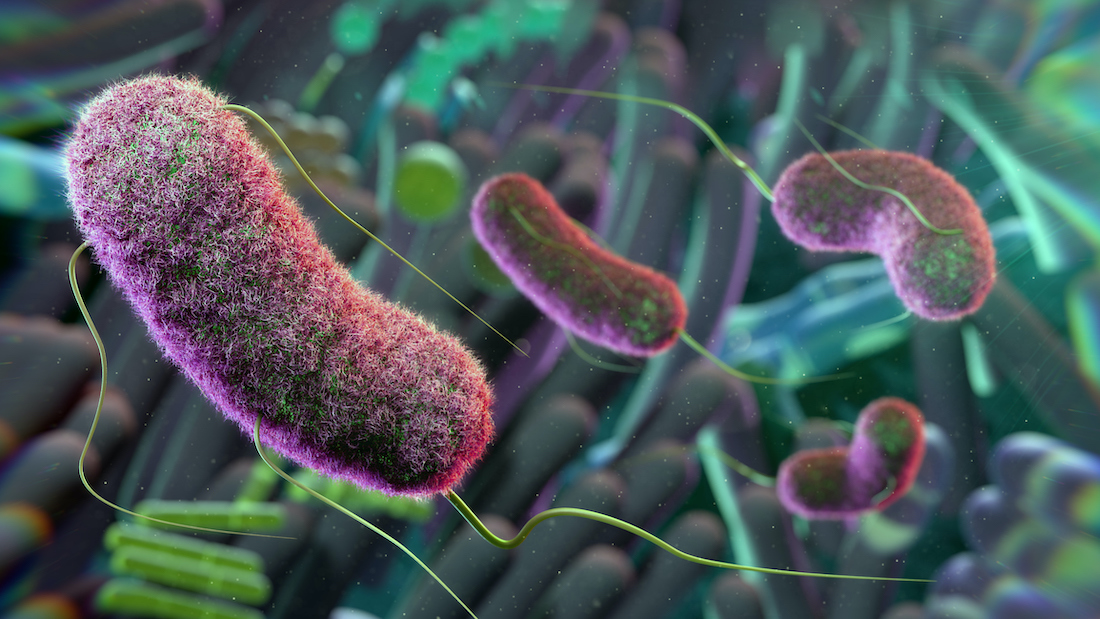
As the climate warmed and oxygen levels dropped, Earth’s oceans underwent a dramatic and deadly transformation. Large portions of the seafloor and even mid-water regions became anoxic, meaning they lacked oxygen entirely. In these oxygen-starved environments, a different kind of life began to thrive: anaerobic bacteria that do not require oxygen to survive.
Some of these bacteria produce hydrogen sulfide as a metabolic byproduct. Hydrogen sulfide is highly toxic to most forms of life, including marine organisms and terrestrial animals. Geological evidence suggests that during the Great Dying, hydrogen sulfide accumulated in the deep ocean and may have periodically reached the surface.
This process effectively turned parts of the ocean into toxic zones where few complex organisms could survive. Fish, mollusks, and other oxygen-dependent creatures died off in massive numbers. Coral reefs, already stressed by warming and acidification, collapsed entirely.
The spread of anoxic and toxic waters likely occurred in pulses, creating repeated waves of extinction. Even species that survived earlier phases of the crisis were eventually overwhelmed as conditions continued to deteriorate.
The idea of oceans turning hostile to life challenges the assumption that water is always a refuge. During the Great Dying, the seas became not a sanctuary, but a source of death on a planetary scale.
5. Acid Rain and Ocean Acidification Worsened the Crisis
Volcanic emissions during the Great Dying did more than warm the planet; they also altered the chemistry of Earth’s surface environments. Sulfur dioxide released into the atmosphere combined with water vapor to form sulfuric acid, resulting in widespread acid rain. This acid precipitation damaged plant tissues, leached nutrients from soils, and disrupted freshwater ecosystems.
At the same time, rising carbon dioxide levels led to ocean acidification. When carbon dioxide dissolves in seawater, it forms carbonic acid, lowering the pH of the ocean. This chemical shift makes it more difficult for organisms to build calcium carbonate shells and skeletons, including many mollusks, corals, and plankton species.
Ocean acidification during the Great Dying would have placed enormous stress on marine life already struggling with warming and oxygen loss. Shell-forming organisms, which often form the base of marine food webs, declined sharply. As these foundational species disappeared, the effects cascaded upward, affecting predators and entire ecosystems.
The combined impact of acid rain on land and acidification in the oceans created a hostile chemical environment across the planet. Life was assaulted not only by temperature and oxygen stress, but by fundamental changes in the chemistry of air, water, and soil.
6. The Extinction Unfolded Over Multiple Phases
Contrary to the idea of a single catastrophic moment, the Great Dying appears to have occurred in multiple phases, spread over tens to hundreds of thousands of years. Fossil records and isotopic data indicate at least two major pulses of extinction, each associated with environmental upheaval.
The first phase saw significant losses in marine species, likely driven by initial warming and oxygen decline. Some ecosystems showed signs of partial recovery afterward, suggesting that life briefly attempted to rebound. However, this recovery was cut short by subsequent environmental shocks, including further warming and intensified anoxia.
On land, extinction patterns suggest a similarly staggered process. Plant communities collapsed and reformed multiple times, while vertebrate populations dwindled progressively. This prolonged instability prevented ecosystems from reestablishing long-term balance.
The multi-phase nature of the Great Dying underscores its complexity. It was not a single blow, but a sustained assault that eroded resilience over time. This prolonged stress left little opportunity for adaptation, ensuring that even once-dominant species eventually succumbed.
7. Recovery Took Millions of Years
One of the most striking aspects of the Great Dying is how long it took for life to recover. After the extinction event ended, Earth did not quickly return to its previous level of biodiversity. Instead, the Early Triassic period was marked by low diversity, unstable ecosystems, and repeated environmental disturbances.
For several million years, ecosystems were dominated by a small number of opportunistic species capable of tolerating harsh conditions. These organisms often had simple body plans and broad environmental tolerances. Complex, specialized ecosystems such as coral reefs did not reappear until much later.
The slow pace of recovery reflects the depth of ecological damage. When extinction eliminates not only species but entire functional groups, rebuilding ecosystems becomes far more difficult. The loss of reef builders, top predators, and key primary producers created gaps that took evolutionary time to fill.
This extended recovery period reminds us that mass extinctions are not brief interruptions. Their consequences echo through deep time, shaping the evolutionary trajectory of life for tens of millions of years.
8. The Great Dying Reshaped the Course of Evolution
Despite its devastation, the Great Dying also set the stage for new evolutionary possibilities. By eliminating many dominant groups, it opened ecological niches that surviving species could exploit. This process ultimately paved the way for the rise of new forms of life, including the ancestors of dinosaurs and mammals.
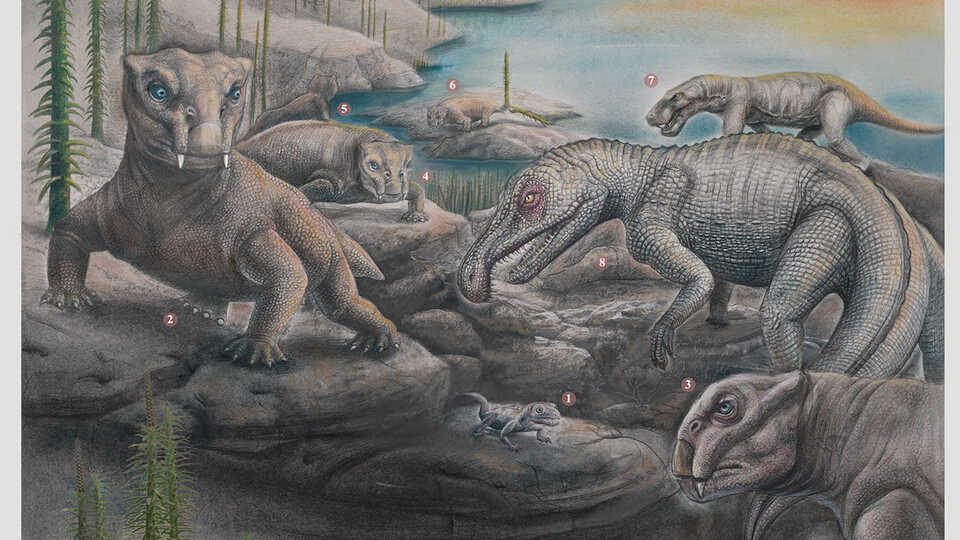
In the aftermath of the extinction, reptile-like animals diversified rapidly, adapting to environments left vacant by extinct competitors. Over time, this diversification led to the dominance of dinosaurs during the Mesozoic Era and, much later, to the emergence of mammals as major players in Earth’s ecosystems.
Plants also evolved in response to new conditions. Seed-bearing plants gained prominence, offering advantages in unstable climates. Insects co-evolved with these plants, reshaping terrestrial ecosystems.
The Great Dying thus represents both an ending and a beginning. It erased much of what had come before, but it also reset evolutionary pathways, allowing life to explore new forms and strategies. Every complex terrestrial ecosystem today is, in a sense, a legacy of survival and innovation after this catastrophe.
9. The Great Dying Holds Urgent Lessons for the Present
Perhaps the most unsettling fact about the Great Dying is how closely its causes align with processes occurring today. Rapid greenhouse gas emissions, global warming, ocean deoxygenation, and acidification are all features of the modern world, driven this time not by volcanism but by human activity.
While the timescales differ, the underlying physics and chemistry are the same. Earth’s climate system responds to energy imbalance and atmospheric composition in predictable ways. The Great Dying demonstrates that when these systems are pushed beyond certain thresholds, the consequences can be severe and long-lasting.
This does not mean that modern Earth is destined to experience a repeat of the Permian extinction. The contexts are different, and humanity has the capacity to understand and mitigate environmental change. However, the fossil record offers a clear warning: planetary systems can change faster and more dramatically than ecosystems can adapt.
The Great Dying is not just a story of ancient loss. It is a reminder that life on Earth is resilient but not invulnerable, and that stability depends on maintaining environmental conditions within certain bounds.
Conclusion: Remembering Earth’s Darkest Biological Hour
The Great Dying stands as the most profound biological crisis in Earth’s history, a moment when life itself teetered on the brink. Through extreme volcanism, runaway climate change, poisoned oceans, and chemical upheaval, the planet became hostile to its own inhabitants. Yet life endured, reshaped, and eventually flourished again in new forms.
Studying the Great Dying is an act of both scientific inquiry and humility. It reveals the immense power of natural processes and the delicate balance that sustains ecosystems. It also connects the deep past to the present, reminding us that the forces shaping Earth today are governed by the same laws that once brought the planet to its knees.
In understanding the Great Dying, we do not merely reconstruct an ancient catastrophe. We gain insight into the boundaries of habitability, the resilience of life, and the responsibility that comes with altering a planetary system. The story of Earth’s deadliest mass extinction is, ultimately, a story about the conditions that make life possible—and what happens when those conditions are pushed too far.