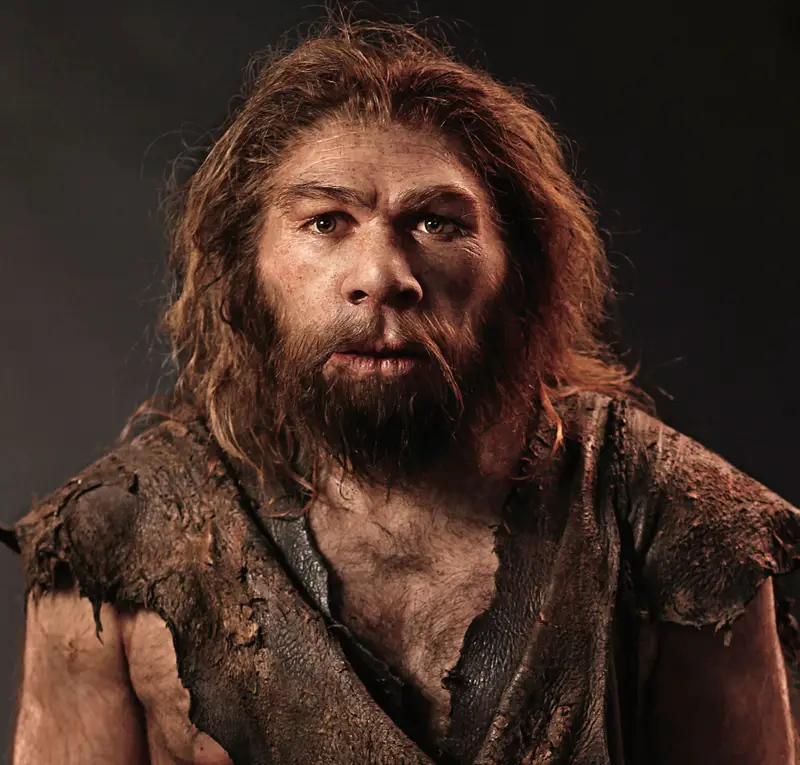
For much of modern history, Neanderthals have occupied a peculiar place in the human imagination. They have been portrayed as brutish cavemen, evolutionary failures, and dim-witted cousins who were inevitably replaced by superior modern humans. These images are powerful, emotionally charged, and deeply ingrained in popular culture. Yet they are also profoundly misleading. Over the past few decades, advances in archaeology, genetics, paleoanthropology, and climate science have transformed our understanding of who Neanderthals were and how they lived.
Neanderthals were not a primitive footnote in the story of humanity. They were a successful, intelligent, and adaptable human species who survived for hundreds of thousands of years across some of the harshest environments on Earth. The myths surrounding them often say more about human prejudice and outdated science than about Neanderthals themselves.
What follows are six of the most persistent myths about Neanderthals—ideas once taught as fact, now overturned by overwhelming scientific evidence.
1. Neanderthals Were Stupid and Less Intelligent Than Modern Humans
Few myths have been as damaging or enduring as the belief that Neanderthals were intellectually inferior to Homo sapiens. For much of the twentieth century, Neanderthals were depicted as dim-witted, slow-thinking beings whose extinction was a natural consequence of their limited cognitive abilities. This idea was largely shaped by early fossil reconstructions and cultural assumptions rather than solid evidence.
Modern science tells a very different story. Neanderthal brains were, on average, as large as or larger than those of modern humans. While brain size alone does not determine intelligence, it immediately undermines the notion that Neanderthals were mentally deficient. More importantly, the internal organization of the Neanderthal brain appears to have supported complex cognitive functions, including spatial reasoning, social awareness, and problem-solving.
Archaeological evidence reveals that Neanderthals manufactured sophisticated stone tools using standardized techniques passed down through generations. These tools were not crude improvisations but carefully designed implements tailored to specific tasks, such as hunting large animals, processing hides, and woodworking. The consistency of these tools across vast geographic regions suggests shared knowledge systems and cultural transmission.
Neanderthals also demonstrated advanced planning abilities. Large-game hunting requires coordination, foresight, and an understanding of animal behavior. Evidence from hunting sites indicates that Neanderthals strategically targeted prime-age animals and used the landscape to their advantage, behavior that demands complex decision-making.
Perhaps most striking is growing evidence of symbolic behavior. Neanderthals used pigments, collected unusual objects like shells and feathers, and may have created abstract markings. While debates continue about the extent of their symbolic culture, it is no longer scientifically defensible to claim that Neanderthals lacked intellectual depth.
The myth of Neanderthal stupidity has collapsed under the weight of data. Rather than being intellectually inferior, Neanderthals appear to have been cognitively different in subtle ways, shaped by their environments and lifestyles, not by a lack of intelligence.
2. Neanderthals Could Not Speak or Use Language
Another deeply rooted myth holds that Neanderthals were incapable of complex speech and therefore lacked true language. This belief reinforced the image of Neanderthals as primitive and socially limited, unable to communicate ideas or emotions with the richness seen in modern humans.
Scientific discoveries over the last several decades have steadily dismantled this assumption. Anatomical studies of Neanderthal fossils reveal that they possessed the physical structures necessary for speech. The hyoid bone, a small bone in the throat crucial for vocalization, has been found in Neanderthals and is virtually indistinguishable from that of modern humans. This suggests that Neanderthals had the anatomical capacity to produce a wide range of sounds.
Genetic evidence further strengthens this conclusion. Neanderthals carried a version of the FOXP2 gene, often referred to as a “language-related gene,” that is identical to the version found in modern humans. While FOXP2 alone does not create language, it plays a key role in speech and language development, and its presence indicates that Neanderthals had the neurological foundation for complex vocal communication.
Beyond anatomy and genetics, behavior offers powerful clues. The coordination required for group hunting, tool production, and social caregiving implies some form of structured communication. Teaching tool-making techniques or coordinating hunts involving multiple individuals would be extraordinarily difficult without a system of shared symbols or spoken language.
While it is impossible to reconstruct exactly what Neanderthal language sounded like, the evidence overwhelmingly suggests that they were capable of speech. Their language may have differed in vocabulary or complexity from that of Homo sapiens, but silence and grunts belong to fiction, not science.
3. Neanderthals Lived Brutal, Short, and Miserable Lives
The popular image of Neanderthal life is one of constant struggle, marked by violence, starvation, and early death. According to this myth, Neanderthals barely survived from day to day, lacking the social structures or knowledge needed for anything resembling a stable life.
Scientific evidence paints a far more nuanced and humane picture. Neanderthals certainly lived in challenging environments, including Ice Age Europe, but they were remarkably well adapted to these conditions. Their stocky bodies, large nasal cavities, and muscular builds helped conserve heat and process cold, dry air efficiently.
Importantly, Neanderthals cared for one another. Fossil remains show individuals who survived severe injuries, including broken bones, amputations, and degenerative diseases that would have made independent survival impossible. These individuals lived for years after their injuries, indicating that they received sustained care from their communities. Such caregiving requires empathy, social bonds, and cooperative behavior.
Neanderthal diets were also more diverse than once believed. While they relied heavily on meat, evidence shows they consumed a wide range of foods, including plants, nuts, fruits, and even medicinal herbs. Dental calculus analysis has revealed plant residues and compounds with medicinal properties, suggesting that Neanderthals understood the healing potential of their environment.
Life expectancy was lower than in modern societies, but this was true for all prehistoric humans, including early Homo sapiens. The idea that Neanderthal life was uniquely harsh or miserable reflects a misunderstanding of prehistoric conditions rather than an accurate assessment of Neanderthal resilience.
Neanderthals did not merely endure their world; they inhabited it skillfully, forming social networks that allowed them to survive for hundreds of thousands of years.
4. Neanderthals Were Incapable of Art, Culture, or Symbolism
For much of the twentieth century, culture and symbolic thought were considered the exclusive domain of modern humans. Neanderthals were assumed to lack art, ritual, and abstract thinking, reinforcing the idea that they occupied a lower rung on the evolutionary ladder.
This myth has been decisively challenged by archaeological discoveries across Europe and western Asia. Neanderthals used pigments such as ochre and manganese dioxide, substances often associated with symbolic or aesthetic purposes. These pigments were not merely utilitarian; in some cases, they were collected and transported over long distances, suggesting intentional use beyond immediate survival needs.
There is also evidence that Neanderthals modified feathers and claws from birds of prey, possibly for decorative or symbolic purposes. Such behavior implies an appreciation for visual display and perhaps social signaling. Additionally, engravings and abstract markings found in caves have been attributed to Neanderthals, predating the arrival of modern humans in those regions.
Burial practices offer further insight into Neanderthal culture. Some Neanderthal sites contain intentional burials, with bodies placed carefully in pits and sometimes accompanied by objects. While the interpretation of these burials remains debated, they strongly suggest a respect for the dead and possibly ritual behavior.
Culture does not require permanent settlements, written language, or monumental art. It requires shared meaning, traditions, and social identity. By this definition, Neanderthals were unquestionably cultural beings, expressing themselves in ways that were meaningful within their communities.
5. Neanderthals Were Completely Wiped Out by Modern Humans
One of the most dramatic myths about Neanderthals is that they were violently exterminated by Homo sapiens in a brutal struggle for dominance. This narrative, often influenced by early evolutionary thinking and popular storytelling, presents extinction as a simple tale of winners and losers.
Modern science reveals a far more complex and less sensational reality. Genetic evidence shows that Neanderthals and modern humans interbred repeatedly. Today, most people of non-African ancestry carry between one and two percent Neanderthal DNA. This alone proves that Neanderthals were not simply wiped out but became part of the genetic heritage of modern humans.
Rather than a single moment of replacement, Neanderthal disappearance appears to have been a gradual process influenced by multiple factors. Climate fluctuations during the last Ice Age dramatically altered habitats, fragmenting Neanderthal populations and reducing their numbers. Smaller populations are more vulnerable to extinction due to reduced genetic diversity and increased sensitivity to environmental change.
Competition with Homo sapiens may have played a role, particularly as modern humans expanded with larger social networks and more flexible technologies. However, competition does not necessarily imply violence. In many cases, it likely involved competition for resources, territory, and mates, alongside periods of coexistence and cultural exchange.
Neanderthals did not vanish in a single catastrophe. They faded into humanity’s shared ancestry, their legacy carried forward in our genes and, possibly, in aspects of our biology and behavior.
6. Neanderthals Were an Evolutionary Dead End
Perhaps the most misleading myth of all is the idea that Neanderthals represent a failed experiment in human evolution. This view frames evolution as a linear progression toward modern humans, with Neanderthals cast as an inferior branch that deserved extinction.
Evolution does not work this way. It is not a ladder but a branching tree, shaped by changing environments and chance events. By any reasonable evolutionary measure, Neanderthals were a success. They survived for over 300,000 years across vast and varied landscapes, adapting to extreme climates and developing complex social and technological strategies.
Neanderthals were not replaced because they were “worse,” but because circumstances changed. Rapid climate instability, population pressures, and interactions with other human groups created conditions under which their particular adaptations were no longer advantageous.
Far from being a dead end, Neanderthals live on in modern humans. Their genetic contributions influence immune responses, metabolism, skin physiology, and even aspects of neurological function. These inherited traits helped early modern humans adapt to environments outside Africa, demonstrating that Neanderthals contributed directly to human evolutionary success.
Recognizing this truth transforms our understanding of humanity. Neanderthals are not “them” in opposition to “us.” They are part of us, a reminder that human history is shared, intertwined, and richer than any simple story of superiority.
Conclusion: Rethinking Our Closest Relatives
The myths surrounding Neanderthals have endured because they are emotionally compelling, offering simple explanations and flattering narratives about human uniqueness. Science, however, rarely supports simple stories. As evidence accumulates, Neanderthals emerge not as primitive caricatures, but as intelligent, social, creative, and resilient humans shaped by their environments.
Debunking these myths does more than correct the historical record. It challenges the assumption that progress is linear and that survival equates to superiority. Neanderthals remind us that intelligence comes in many forms, that culture is not exclusive to any one species, and that extinction often reflects circumstance rather than failure.
In understanding Neanderthals more accurately, we gain a deeper appreciation of our own origins. Their story is not one of inevitable doom, but of shared humanity, adaptation, and endurance in a world that is always changing.