Death has always marked a hard boundary in human experience. Across cultures and centuries, people have invented rituals, stories, and beliefs to soften its finality, yet the separation it creates remains absolute. In recent years, however, a provocative idea has emerged at the intersection of artificial intelligence, psychology, and digital culture: the creation of “deadbots,” AI systems designed to simulate the personalities, voices, or conversational patterns of people who have died. These systems do not resurrect the dead in any biological sense, yet they raise a profound question that once belonged only to science fiction. Can artificial intelligence, trained on the digital traces of a person’s life, give us a meaningful form of presence after death?
The emergence of deadbots forces society to confront uncomfortable issues about grief, memory, identity, and the limits of technology. They promise comfort to some, unease to others, and ethical dilemmas to nearly everyone. Understanding what deadbots are, how they work, and what they can and cannot offer requires careful attention to both scientific reality and human emotion. The subject is not merely about machines, but about the ways humans cope with loss in a digital age.
The Digital Afterlife and the Rise of Deadbots
Modern life generates an unprecedented volume of personal data. Messages, emails, voice notes, social media posts, photographs, videos, and browsing histories collectively form a detailed record of how individuals communicate, think, and express emotion. Long after a person has died, these digital traces often persist, frozen in servers and cloud storage systems. For decades, such remnants served primarily as static memories. Artificial intelligence has transformed them into something far more dynamic.
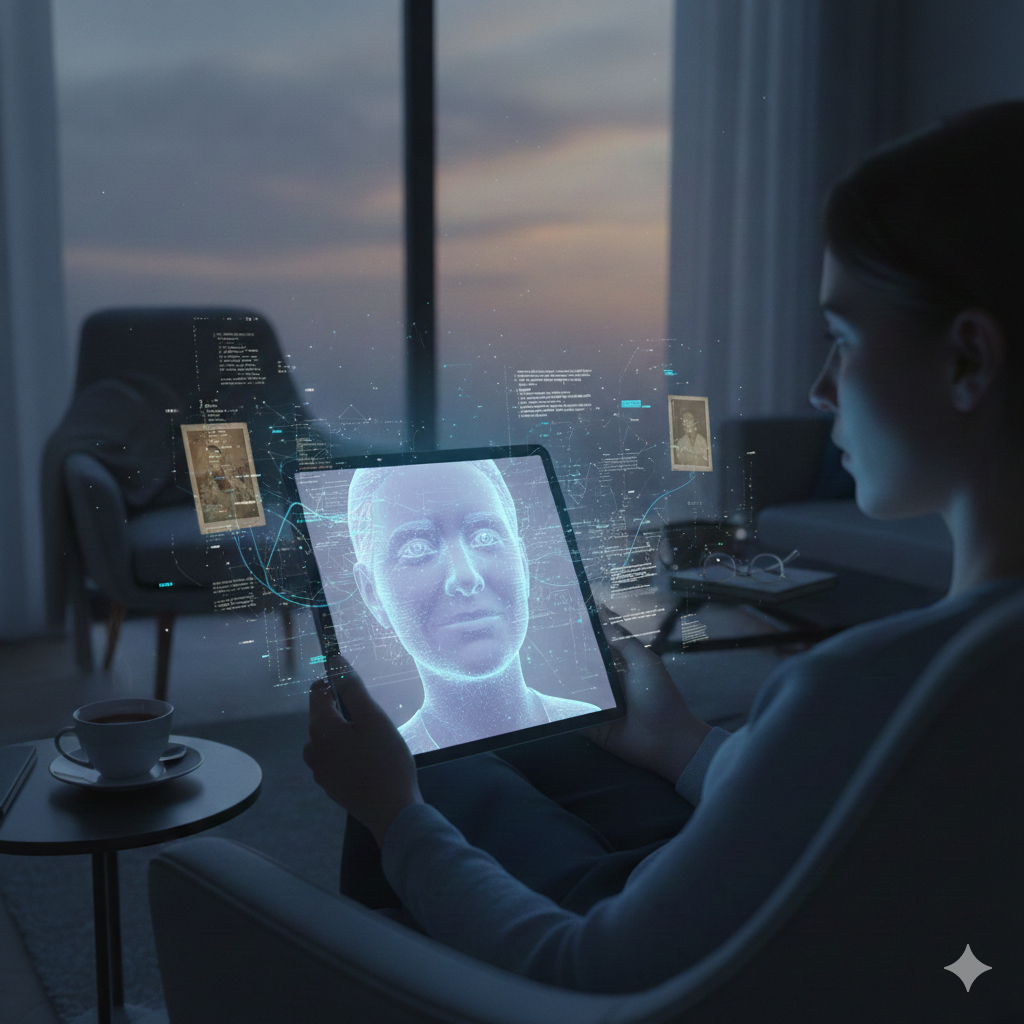
Deadbots are AI-driven systems that use machine learning models to analyze a deceased person’s digital data and generate responses that resemble how that person might have spoken or written. Early versions appeared as simple chatbots trained on text messages or emails. More recent systems incorporate voice synthesis, image generation, and even animated avatars, creating experiences that feel startlingly lifelike to users.
The term “deadbot” itself reflects both fascination and discomfort. It suggests a hybrid entity, neither fully alive nor entirely inert, occupying a liminal space between memory and simulation. While the technology is still evolving, its rapid progress has intensified debates about whether such systems represent a healthy extension of remembrance or a troubling refusal to accept death’s finality.
How Deadbots Work: The Science Behind the Simulation
At a technical level, deadbots rely on advances in natural language processing, machine learning, and data modeling. Large language models are trained on vast datasets to learn patterns in human language. When fine-tuned on a specific individual’s digital communications, these models can approximate that person’s vocabulary, tone, and conversational habits. The result is not a stored script, but a generative system capable of producing new responses in real time.
Voice-based deadbots add another layer of complexity. Text-to-speech systems, trained on audio recordings of a person’s voice, can replicate vocal characteristics such as pitch, rhythm, and accent. When combined with language models, these systems can produce spoken responses that closely resemble how the person sounded when alive. Visual avatars, created using computer graphics and deep learning techniques, further enhance the illusion by mimicking facial expressions and gestures.
Despite their sophistication, deadbots do not possess consciousness, memory, or subjective experience. They do not “know” the person they imitate, nor do they understand the emotional significance of their responses. Their apparent personality emerges from statistical correlations in data, not from lived experience. This distinction is crucial for scientific accuracy, yet it is often blurred in popular narratives that describe deadbots as digital resurrections.
Memory, Identity, and the Illusion of Presence
Human identity is more than a pattern of words or behaviors. It is shaped by consciousness, embodiment, relationships, and the capacity for genuine experience. Deadbots replicate fragments of expression, but they do not recreate the inner life that made those expressions meaningful. Nevertheless, for users, the experience of interacting with a deadbot can evoke a powerful sense of presence.
Psychological research on memory shows that humans construct internal representations of loved ones that persist long after death. These representations influence emotions, decisions, and even internal dialogues. Deadbots externalize this process, providing an interactive medium through which memory can be engaged. The emotional impact can be intense, as familiar phrases or vocal tones trigger associations deeply rooted in personal history.
This effect raises philosophical questions about identity. If a system responds in ways indistinguishable from a deceased person, does it preserve something essential about who they were? From a scientific standpoint, the answer remains no. The system preserves patterns, not personhood. Yet emotionally, the distinction can feel fragile, particularly in moments of vulnerability.
Grief in the Age of Artificial Companions
Grief is a complex psychological process involving emotional pain, adjustment, and the gradual integration of loss into one’s life narrative. For some individuals, deadbots appear to offer comfort by maintaining a sense of connection. Conversations with a simulated loved one can feel soothing, especially in the early stages of bereavement when absence feels unbearable.
Clinical psychology, however, emphasizes that healthy grieving involves acknowledging the permanence of loss while forming new ways of remembering. There is concern that prolonged reliance on deadbots might interfere with this process, reinforcing denial rather than acceptance. Research on grief adaptation suggests that while symbolic bonds with the deceased can be beneficial, they must coexist with recognition that the person is no longer physically present.
The impact of deadbots likely varies across individuals and contexts. Some may find them helpful as transitional tools, while others may experience increased distress or confusion. The absence of long-term empirical studies means that claims about their therapeutic value remain speculative. As with many emerging technologies, emotional effects are uneven and difficult to predict.
Ethical Questions and the Problem of Consent
The creation of deadbots raises profound ethical questions, beginning with consent. Many deceased individuals never agreed to have their digital data used to create posthumous simulations. Even when consent is given, it is unclear whether individuals can fully anticipate how such representations might be used or experienced by others.
There are also concerns about ownership and control. Who has the right to create or modify a deadbot? Family members may disagree about whether such a system honors or exploits the memory of the deceased. Commercial interests further complicate the issue, as companies may profit from deeply personal data under the guise of providing comfort.
Privacy is another critical concern. Deadbots require access to sensitive personal information, including private conversations and emotional expressions. Ensuring that this data is handled securely and respectfully is essential, yet difficult in practice. Ethical frameworks for posthumous data use remain underdeveloped, lagging behind technological capabilities.
The Risk of Manipulation and Emotional Dependence
Deadbots are not neutral tools. Their design choices, response patterns, and limitations shape user experience in subtle ways. There is a risk that systems could be engineered to encourage prolonged engagement, fostering emotional dependence. In extreme cases, users might prioritize interactions with simulated personalities over real human relationships.
Manipulation is another concern. If a deadbot is trained on incomplete or biased data, it may present a distorted version of the deceased. Over time, this distortion could influence how the person is remembered, reshaping personal and collective memory. The malleability of digital simulations stands in contrast to the fixed finality of death, introducing new forms of historical uncertainty.
These risks highlight the importance of transparency. Users must understand that deadbots are simulations, not continuations of consciousness. Without clear communication, the emotional power of the technology may overwhelm critical awareness, blurring the line between memory and illusion.
Cultural Perspectives on Death and Technology
Attitudes toward deadbots are deeply influenced by cultural beliefs about death, memory, and the self. In some traditions, maintaining ongoing bonds with ancestors is a longstanding practice, making digital simulations feel like a natural extension of existing rituals. In others, death is understood as a definitive separation, rendering deadbots unsettling or even taboo.
Technological mediation of grief also reflects broader social changes. As communication increasingly occurs online, digital identities become integral to how people are known and remembered. Deadbots represent an attempt to preserve these identities beyond biological life, aligning with a cultural emphasis on continuity and presence.
However, cultural acceptance does not equate to ethical clarity. Societies must negotiate how new technologies fit within existing values, balancing innovation with respect for human vulnerability. The debate over deadbots is as much about cultural meaning as it is about technical feasibility.
Scientific Limits: What AI Cannot Do
Despite impressive advances, artificial intelligence has clear limitations. Deadbots do not possess self-awareness, emotional understanding, or moral judgment. They cannot grow, reflect, or genuinely respond to new experiences. Their outputs are constrained by training data and algorithmic design.
Claims that AI can “bring people back to life” misrepresent the science. Biological life involves complex processes that extend far beyond information patterns. Consciousness, while not fully understood, appears to arise from dynamic neural activity that cannot be captured by static data alone. Deadbots simulate expression, not existence.
Recognizing these limits is essential for informed public discourse. Overstating AI’s capabilities risks creating unrealistic expectations and emotional harm. Scientific accuracy demands clear differentiation between symbolic representation and actual continuity of life.
Legal Challenges and Emerging Regulation
The legal landscape surrounding deadbots is largely uncharted. Existing laws on data protection, intellectual property, and personality rights offer partial guidance, but they were not designed for posthumous AI simulations. Questions about who controls a digital likeness after death remain unresolved in many jurisdictions.
Some legal scholars argue for treating digital personas as extensions of personal identity, deserving protection even after death. Others caution against granting excessive rights to simulations, emphasizing that they are artifacts rather than persons. Regulatory approaches will likely vary across countries, reflecting different legal traditions and cultural priorities.
As technology advances, proactive regulation becomes increasingly important. Clear guidelines can help prevent exploitation while allowing responsible innovation. Without such frameworks, the development of deadbots risks proceeding faster than society’s ability to manage their consequences.
Deadbots and the Future of Remembrance
Throughout history, humans have sought ways to remember the dead, from oral storytelling to written epitaphs and photographic archives. Deadbots represent a new chapter in this long tradition, distinguished by interactivity and immediacy. They transform remembrance from passive reflection into active engagement.
Whether this transformation enriches or impoverishes human experience remains an open question. On one hand, deadbots can preserve voices and expressions that might otherwise fade, offering comfort and continuity. On the other, they may alter the nature of memory itself, replacing reflective remembrance with ongoing simulation.
The future of deadbots will likely involve a spectrum of applications, from limited memorial tools to more immersive experiences. Their impact will depend not only on technological design, but on the values and boundaries societies choose to uphold.
Can AI Truly Bring Back the Dead?
The central question surrounding deadbots is not technological, but existential. Can artificial intelligence bring our lost loved ones back to life? Scientifically, the answer is no. Life, consciousness, and personal identity cannot be recreated through data and algorithms alone. What AI can do is reconstruct patterns of communication and behavior, creating an echo rather than a return.
Yet this echo can feel emotionally powerful, particularly in moments of grief. The challenge lies in recognizing both the comfort and the illusion it provides. Deadbots do not erase death; they reshape how it is experienced. They offer presence without being, conversation without consciousness, memory without mortality.
In confronting this reality, humanity faces a choice. We can use technology to support healthy remembrance, guided by ethical reflection and scientific honesty. Or we can allow fascination to obscure limits, blurring the line between memory and denial. The story of deadbots is ultimately a story about how humans respond to loss, and how technology amplifies both our hopes and our vulnerabilities.
Conclusion: Between Memory and Meaning
Deadbots stand at a crossroads of science, emotion, and ethics. They reveal the extraordinary capacity of artificial intelligence to model human expression, while also exposing the irreplaceable depth of human life. In their simulated voices and familiar phrases, people may find comfort, confusion, or both.
Understanding deadbots requires resisting simple narratives of resurrection or rejection. They are neither miracles nor monstrosities, but tools shaped by human intention. Their significance lies not in what they promise to revive, but in what they reveal about our relationship with death in a digital age.
As society navigates this emerging terrain, one principle remains essential: scientific accuracy must anchor emotional exploration. AI can preserve traces, but it cannot restore life. Acknowledging this truth allows deadbots to be understood not as replacements for the dead, but as mirrors reflecting how deeply the living yearn to remember, to connect, and to find meaning beyond loss.