The idea of reviving extinct species once belonged firmly to myth and science fiction. Ancient legends spoke of lost creatures returning from the past, while modern popular culture imagined laboratories resurrecting vanished giants. Today, however, de-extinction has moved from fantasy into the realm of serious scientific discussion. Advances in genetics, molecular biology, and reproductive technology have made it possible—at least in principle—to restore certain extinct species or organisms closely resembling them.
De-extinction does not mean reversing time or perfectly recreating the past. Instead, it involves reconstructing key genetic traits of extinct organisms using preserved DNA, closely related living species, and powerful gene-editing tools. The goal is not only to revive lost forms of life, but also to restore ecological functions that disappeared with them. Some species are better candidates than others, depending on how recently they went extinct, how much genetic material remains, and whether close living relatives still exist.
The following eight ancient species stand out as scientifically plausible candidates for de-extinction. Each tells a story not only about life long gone, but also about humanity’s evolving relationship with nature, responsibility, and technological power.
1. Woolly Mammoth
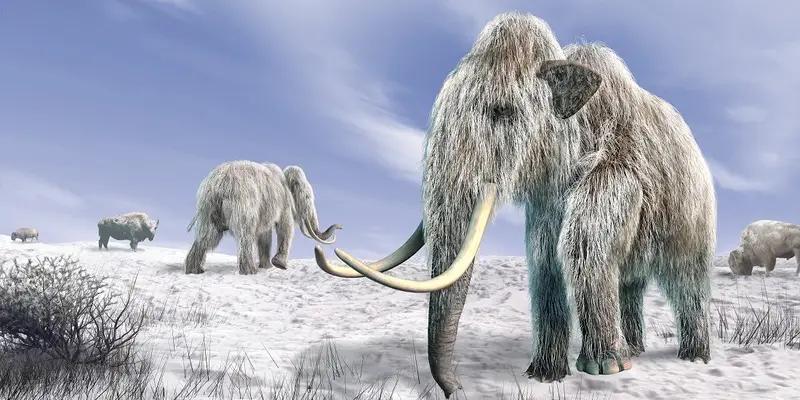
Few extinct animals capture the human imagination as powerfully as the woolly mammoth. These massive, shaggy relatives of modern elephants once roamed the frozen landscapes of the Northern Hemisphere during the Ice Age. With their curved tusks and thick fur, mammoths were superbly adapted to cold environments, playing a crucial role in shaping ancient ecosystems.
From a scientific perspective, the woolly mammoth is one of the strongest candidates for de-extinction. Mammoths vanished relatively recently, with the last populations surviving until about 4,000 years ago. As a result, well-preserved remains have been found in Arctic permafrost, some containing remarkably intact DNA. This genetic material allows researchers to reconstruct large portions of the mammoth genome.
Modern Asian elephants are the mammoth’s closest living relatives, sharing a high degree of genetic similarity. Using gene-editing technologies such as CRISPR, scientists can modify elephant DNA to include mammoth-specific traits, such as cold-resistant hemoglobin, thick hair, and fat layers. The resulting organism would not be a perfect mammoth, but a hybrid with many mammoth-like characteristics.
Beyond curiosity, mammoth de-extinction carries ecological significance. Large grazing animals once maintained Arctic grasslands by trampling snow and promoting plant growth. Reintroducing mammoth-like creatures could help restore these ecosystems and potentially slow permafrost melting by keeping the ground colder. In this sense, the mammoth represents de-extinction as both remembrance and repair.
2. Thylacine (Tasmanian Tiger)
The thylacine, often called the Tasmanian tiger, was a carnivorous marsupial that survived into the twentieth century before being driven to extinction by hunting, habitat loss, and disease. Its striped back, dog-like posture, and unusual jaw structure made it one of the most distinctive predators of modern times.
Scientifically, the thylacine is an attractive candidate because it went extinct very recently, with the last known individual dying in captivity in 1936. Numerous museum specimens exist, including preserved skins, bones, and embryos, providing valuable genetic material. While DNA degradation remains a challenge, enough fragments survive to allow partial genome reconstruction.
The thylacine’s closest living relatives are smaller marsupials such as the Tasmanian devil and numbat. Although these animals differ significantly in size and behavior, their genetic similarity offers a foundation for de-extinction efforts. Researchers aim to edit the genome of a living marsupial to match that of the thylacine as closely as possible, followed by assisted reproduction techniques.
Emotionally, the thylacine symbolizes the consequences of human actions. Its extinction occurred in recorded history, documented by photographs and film. Reviving the thylacine would serve as both scientific achievement and moral reckoning, reminding humanity that extinction is not always inevitable—but often inflicted.
3. Dodo
The dodo, a flightless bird native to the island of Mauritius, became extinct in the late seventeenth century after humans arrived on the island. With no natural predators, the dodo evolved without fear, making it highly vulnerable to hunting and introduced animals. Today, the dodo stands as one of the most iconic symbols of extinction.
Despite its disappearance centuries ago, the dodo remains a viable candidate for de-extinction. Subfossil remains, including bones and tissues, have yielded fragments of DNA sufficient to reconstruct much of its genome. Importantly, the dodo has a close living relative: the Nicobar pigeon. This genetic connection provides a template for reconstructing dodo traits.
Bird de-extinction presents unique challenges, particularly in embryonic development, but advances in avian genetics and reproductive biology have made the concept increasingly plausible. Instead of cloning, scientists would likely use germ-line editing, altering the reproductive cells of a living bird species to express dodo characteristics over generations.
The return of the dodo would carry profound symbolic weight. It would transform a cautionary tale into a story of restoration, demonstrating that scientific responsibility can follow scientific harm. At the same time, it would raise essential questions about whether humans should intervene so directly in evolutionary history.
4. Saber-Toothed Cat
Saber-toothed cats, with their elongated canine teeth and powerful forelimbs, were among the most formidable predators of the Ice Age. Species such as Smilodon dominated ecosystems in the Americas until their extinction around 10,000 years ago, likely due to a combination of climate change and human pressure.
From a genetic standpoint, saber-toothed cats are more challenging than mammoths, but not impossible. DNA preservation is less complete due to their older extinction date, yet ongoing improvements in ancient DNA analysis continue to push the boundaries of what can be recovered. The existence of modern big cats—such as lions, tigers, and leopards—offers potential genetic scaffolding for reconstruction.
Any attempt at saber-tooth de-extinction would aim to recreate functional traits rather than exact replicas. This could involve engineering a large cat species with reinforced jaws, elongated canines, and muscular adaptations suited to ambush predation. The result would be an organism occupying a similar ecological niche to its extinct counterpart.
The saber-toothed cat highlights a key philosophical dimension of de-extinction. Is the goal to resurrect precise historical species, or to restore lost ecological roles? In many cases, the latter may be more scientifically and ethically defensible, making saber-tooth-like predators a theoretical possibility.
5. Giant Ground Sloth
Giant ground sloths once roamed the Americas, reaching sizes comparable to modern elephants. These slow-moving herbivores shaped vegetation patterns through their feeding behavior, dispersing seeds and altering landscapes. They disappeared around the end of the last Ice Age, coinciding with human expansion.
Ground sloths have living relatives in modern tree sloths, which, despite their much smaller size, share genetic ancestry. Fossil remains of giant sloths have yielded usable DNA fragments, though less complete than those of mammoths. Nevertheless, these fragments provide insights into the genetic differences responsible for size, metabolism, and skeletal structure.
De-extinction efforts involving giant ground sloths would likely focus on modifying the genome of a modern sloth species to express ancient traits. This would be an ambitious undertaking, given the significant anatomical differences involved. Yet advances in developmental biology suggest that large-scale morphological changes are not beyond theoretical reach.
The ecological appeal of ground sloth restoration lies in their role as megafaunal gardeners. Reintroducing large herbivores could help restore ecological processes disrupted thousands of years ago, particularly in grasslands and forest edges.
6. Aurochs
The aurochs was the wild ancestor of modern domestic cattle, roaming Europe, Asia, and North Africa until its extinction in the seventeenth century. Larger, stronger, and more aggressive than today’s cows, aurochs played a central role in ancient ecosystems and human culture.
Among de-extinction candidates, the aurochs stands out because of its exceptionally close genetic relationship to living animals. Modern cattle still carry much of the aurochs genome, making selective breeding and gene editing powerful tools for reconstruction. In fact, projects already exist that aim to “back-breed” cattle to resemble aurochs in appearance and behavior.
Because aurochs DNA is well understood and reproductive technologies in cattle are highly advanced, restoring an aurochs-like animal is one of the most achievable de-extinction goals. These animals could be reintroduced into protected landscapes to restore natural grazing dynamics.
The aurochs demonstrates that de-extinction does not always require cutting-edge biotechnology alone. Sometimes, it involves rediscovering what still survives within living species, blurring the line between extinction and continuity.
7. Passenger Pigeon
Once numbering in the billions, the passenger pigeon darkened the skies of North America during migration. Within a few decades of intense hunting and habitat destruction, the species was driven to extinction, with the last individual dying in 1914. Its rapid disappearance remains one of the most dramatic examples of human-caused extinction.
Passenger pigeons have left behind preserved specimens containing DNA suitable for genomic analysis. Their closest living relative, the band-tailed pigeon, offers a biological foundation for de-extinction efforts. By introducing passenger pigeon genes into band-tailed pigeons, scientists aim to recreate birds capable of flocking behavior and ecological impact similar to the original species.
Restoring passenger pigeons is not just about bringing back a bird; it is about reviving a phenomenon. These pigeons shaped forests through their mass nesting and feeding, influencing tree composition and nutrient cycles. A successful de-extinction would require not only genetic reconstruction but also careful ecological planning.
The passenger pigeon represents a lesson in scale. Extinction can happen not slowly and quietly, but rapidly and catastrophically. De-extinction offers a chance to confront that history with humility and responsibility.
8. Steppe Bison
The steppe bison was a massive ancestor of modern bison, adapted to cold, open environments during the Ice Age. Larger and more robust than today’s American bison, it played a vital role in grazing ecosystems across Eurasia and North America.
Ancient DNA recovered from frozen remains has allowed scientists to map much of the steppe bison genome. Modern bison retain many genetic similarities, making them suitable candidates for targeted gene editing. By reintroducing ancient traits such as size, fur density, and metabolic adaptations, researchers could recreate an animal functionally similar to its extinct ancestor.
The ecological importance of large grazers like steppe bison is increasingly recognized. They maintain grasslands, influence soil composition, and support biodiversity. Reintroducing bison-like megafauna could help stabilize fragile ecosystems affected by climate change.
The steppe bison illustrates how de-extinction can serve future ecosystems rather than merely resurrecting the past. It embodies the idea that ancient species may still have a role to play in a rapidly changing world.
Conclusion: De-Extinction as Responsibility, Not Resurrection
De-extinction is not about undoing death or rewriting history. It is about using scientific knowledge to address the consequences of loss, especially when that loss was driven by human activity. Each of the eight species discussed here represents a unique intersection of biology, ecology, ethics, and emotion.
Scientific accuracy demands caution. De-extinction will never perfectly recreate what once was, and it carries risks that must be carefully managed. Yet it also offers unprecedented opportunities to restore ecological balance, deepen our understanding of evolution, and redefine humanity’s relationship with the natural world.
In contemplating the return of ancient species, we are ultimately confronted with a deeper question: not whether we can bring them back, but whether we are prepared to care for what returns. De-extinction challenges us to move beyond nostalgia and toward stewardship, reminding us that the power to reshape life comes with the obligation to protect it.