There is something profoundly moving about a face. Long after names fade and empires crumble, a face has the power to bridge centuries. It carries expression, individuality, and the silent suggestion of a life once lived. For most of history, the faces of ancient people were lost to time, preserved only as bone. Skulls, with their hollow eye sockets and rigid contours, told scientists about age, sex, ancestry, trauma, and disease—but not about smiles, wrinkles, or the curve of a cheek.
In recent decades, advances in forensic anthropology, anatomy, imaging technology, and digital modeling have allowed researchers to reconstruct faces from ancient skulls with increasing scientific rigor. These reconstructions are not guesses born of artistic whim. They are grounded in measurable anatomical relationships between bone and soft tissue. Tissue depth markers are placed on skulls based on population averages. Muscles are modeled according to their attachment points. Cartilage of the nose is inferred from nasal aperture shape. The thickness of lips depends on dental structure. The final result is a scientifically informed approximation of how a person might have looked in life.
No reconstruction can claim perfect certainty. Hair color, eye color, and skin tone may require genetic testing or contextual inference. Expressions are choices made by artists in collaboration with scientists. Yet when done carefully, these faces offer something extraordinary: a human connection across time.
Here are ten famous faces reconstructed from ancient skulls—each one a meeting point between science and story.
1. Tutankhamun
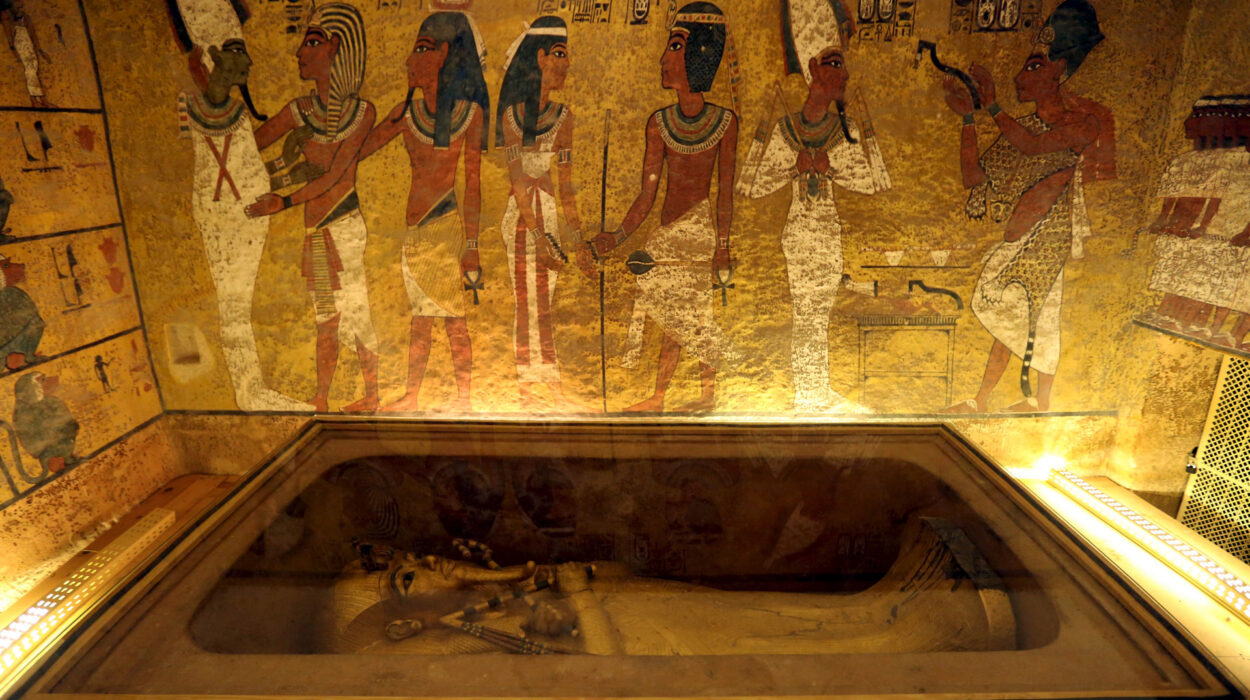
The boy king of ancient Egypt, Tutankhamun, ruled during the 14th century BCE and died at approximately 19 years of age. His tomb, discovered in 1922, became one of the most famous archaeological finds in history because it was largely intact. For decades, golden masks and funerary treasures defined the image of Tutankhamun. But what did the young pharaoh truly look like?
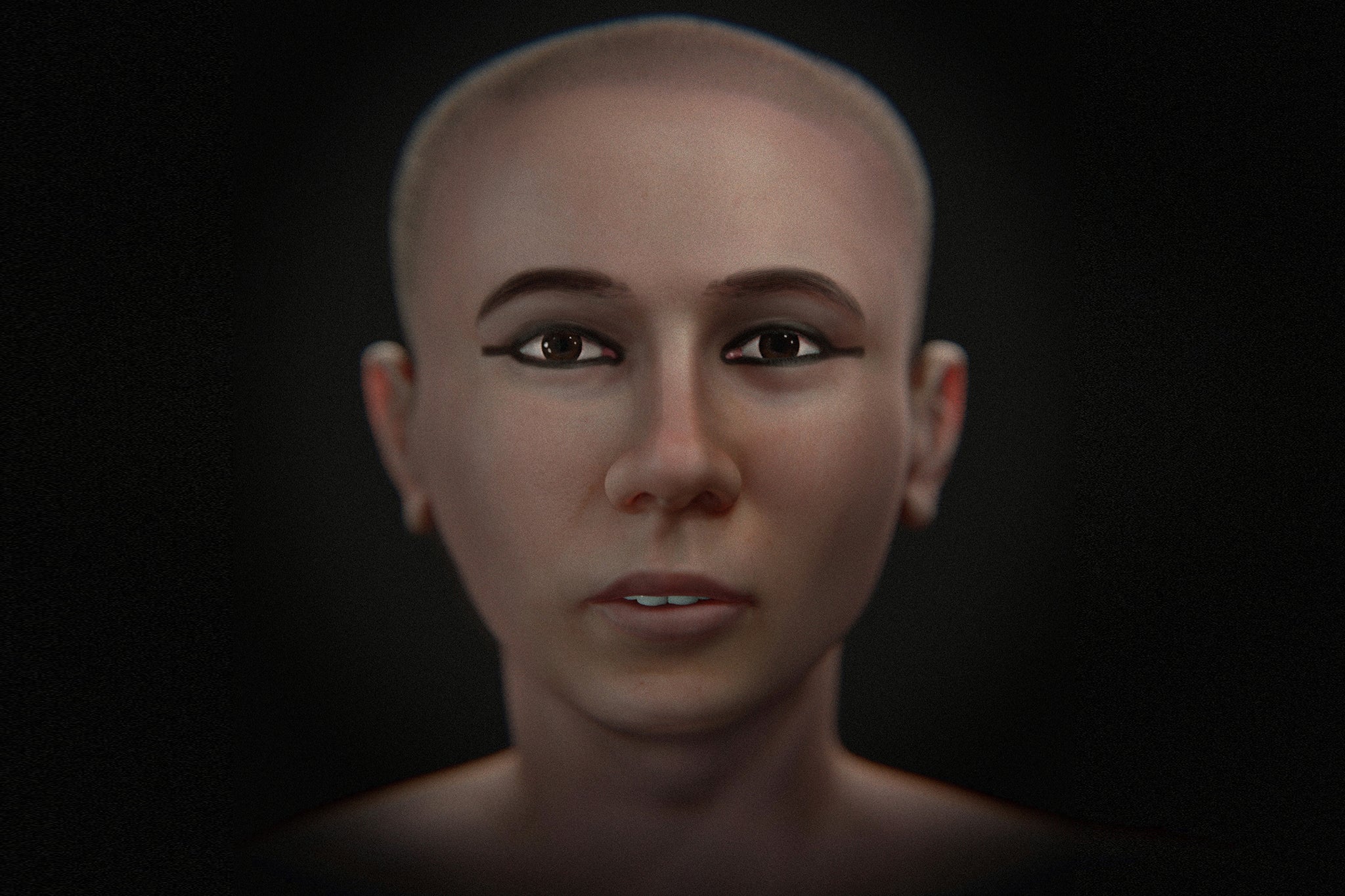
CT scans of his mummy provided detailed data about his skull structure. Forensic artists used these scans to build digital reconstructions. The skull revealed a narrow face, slightly protruding upper teeth, and a delicate jawline. Contrary to idealized royal statues, the reconstruction suggested a slender adolescent with soft features rather than a towering, imposing ruler.
Genetic analysis indicated that Tutankhamun suffered from certain health conditions, possibly including a clubfoot and malaria infections. These findings influenced interpretations of his posture and physique. The face that emerged was not the divine golden mask displayed in museums but a human teenager shaped by royal lineage and fragile health.
Seeing his reconstructed face challenges romanticized visions of pharaohs as larger-than-life figures. It reminds us that behind the gold and myth stood a real young man who lived and died more than three thousand years ago.
2. Richard III
Few historical figures have been as debated as Richard III. The last Plantagenet king of England, he was killed at the Battle of Bosworth Field in 1485. For centuries, his legacy was shaped by political narratives and by literature, most notably the portrayal by William Shakespeare, who depicted him as a physically deformed villain.
In 2012, archaeologists uncovered a skeleton beneath a parking lot in Leicester that was identified through DNA analysis as Richard III. The skeleton revealed severe scoliosis—a sideways curvature of the spine—but not the exaggerated hunchback described in dramatic accounts.
Using 3D scans of the skull, forensic experts reconstructed his face. The result showed a slender man with refined features, high cheekbones, and an intense gaze. The reconstruction did not present a monstrous figure but a human being shaped by his era and circumstances.
This face did not resolve historical debates about his character or actions. But it reframed the conversation. The reconstruction separated propaganda from anatomy and allowed viewers to look at Richard III not as a caricature, but as a real medieval king.
3. Ötzi the Iceman
In 1991, hikers in the Alps discovered a remarkably preserved body emerging from melting ice. The man, later nicknamed Ötzi, had died around 3300 BCE. Known scientifically as Ötzi, he became one of the most important archaeological discoveries of the 20th century.
Because his body was naturally mummified by cold temperatures, researchers had access not only to his skeleton but also to preserved soft tissue. CT scans and DNA analysis revealed details about his ancestry, health, and even eye color. He had brown eyes, likely dark hair, and evidence of cardiovascular disease. An arrowhead lodged in his shoulder indicated that he died violently.
Facial reconstruction, supported by both skeletal data and preserved skin contours, produced an image of a weathered man in his mid-forties with a strong nose, sunken cheeks, and a determined expression. Unlike idealized ancient figures, Ötzi’s face carried signs of hardship. He appeared as someone shaped by mountain life, exposed to the elements.
Looking at Ötzi’s reconstructed face is deeply intimate. It feels less like viewing history and more like meeting a traveler paused mid-journey for five thousand years.
4. Nefertiti’s Sister (The Younger Lady)
In the Valley of the Kings, a mummy designated KV35YL, often referred to as the “Younger Lady,” was discovered and later identified through DNA analysis as a daughter of Amenhotep III and likely the mother of Tutankhamun. While her exact identity remains debated, some scholars suggest she may have been a sister of Nefertiti.
CT imaging allowed researchers to study her skull despite damage to the face caused by ancient trauma. Forensic reconstruction produced a face with delicate features and symmetrical proportions consistent with royal lineage.
The reconstruction carries emotional weight because it reintroduces individuality into a figure once known only as a catalog number. She is no longer merely KV35YL. She is a woman who lived in the royal court of ancient Egypt, who bore a child who would become a famous pharaoh, and whose face now gazes back across millennia.
5. King Philip II of Macedon
The father of Alexander the Great, Philip II of Macedon, ruled during the 4th century BCE and transformed Macedonia into a dominant military power. Archaeological evidence suggests that his remains may have been found in a royal tomb at Vergina in Greece.
Analysis of the skull showed signs of trauma, including damage consistent with historical accounts that Philip lost an eye in battle. Facial reconstruction incorporated this asymmetry. The resulting image portrays a rugged, battle-hardened leader with a scarred eye and strong jaw.
Unlike smooth marble busts, the reconstruction emphasizes realism. It acknowledges injury, age, and lived experience. The face of Philip II becomes not just a political figure in textbooks but a warrior who bore the physical marks of his campaigns.
6. Dante Alighieri
The Italian poet Dante Alighieri, author of the Divine Comedy, lived in the 13th and 14th centuries. While portraits exist, many were created after his death and may not be fully accurate.
In the 21st century, researchers used measurements of his skull, taken during earlier exhumations, to digitally reconstruct his face. The reconstruction suggested a long face, prominent nose, and defined chin—features consistent with some early depictions.
Seeing Dante’s reconstructed face adds emotional resonance to his writing. The author who imagined journeys through Hell, Purgatory, and Paradise becomes less abstract. His facial features ground his towering literary vision in human reality.
7. The Girl from Yde
In the Netherlands, the preserved remains of a teenage girl were discovered in a peat bog in 1897. Known as Yde Girl, she lived during the Roman Iron Age, around the first century CE.
Her body was remarkably preserved by the acidic, low-oxygen environment of the bog. Examination revealed that she had been strangled, possibly as part of a ritual sacrifice. CT scans and forensic modeling allowed scientists to reconstruct her face.
The reconstruction depicts a young girl with soft features and an almost shy expression. It is haunting to realize that she was only around sixteen years old at the time of her death. The face transforms her from an archaeological specimen into a teenager whose life ended abruptly in a distant past.
8. Johann Sebastian Bach
The composer Johann Sebastian Bach died in 1750 and was buried in Leipzig. In the 19th century, his remains were exhumed, and a plaster cast of his skull was made.
Using this cast, forensic experts reconstructed his face. The resulting image showed a broad face, heavy eyelids, and strong features. Although portraits of Bach exist, the reconstruction offered a three-dimensional interpretation grounded in bone structure rather than artistic convention.
Looking at Bach’s reconstructed face while listening to his music creates a striking experience. The intricate fugues and chorales feel newly connected to the human mind that composed them.
9. Saint Nicholas of Myra
The historical figure who inspired the legend of Santa Claus was Saint Nicholas, a 4th-century Christian bishop. Relics believed to be his are preserved in Italy.
In the 20th century, measurements of his skull were used to produce a facial reconstruction. The result showed a man with a broken nose that had healed crookedly and a strong Mediterranean appearance.
This reconstruction strips away red robes and holiday myth. It presents Nicholas as a real individual from Late Antiquity—a bishop living in the Roman world, far removed from modern commercial imagery.
10. The Lady of Cao
In Peru, archaeologists uncovered the remains of a powerful Moche ruler known as the Lady of Cao. Using CT scans and forensic modeling, researchers reconstructed her face. The result showed a dignified woman with strong features and intricate facial tattoos consistent with Moche iconography.
Her reconstruction challenged assumptions that ancient Andean societies were exclusively male-dominated in leadership. The face of the Lady of Cao communicates authority and presence, reinforcing archaeological evidence of her high status.
The Science Behind the Faces
Facial reconstruction relies on anatomical science. The skull provides the foundation. Tissue depth data derived from modern populations guide the placement of markers. Muscles are built according to origin and insertion points. The nose is reconstructed from the nasal spine and aperture. Lips are shaped based on tooth alignment. Eyes are positioned within orbital cavities at standard depths.
Modern techniques increasingly use CT scanning and 3D printing. Digital modeling allows for non-invasive reconstruction and revision as new data emerges. In some cases, ancient DNA analysis provides insight into pigmentation traits such as eye and hair color.
Despite these advances, reconstructions remain approximations. They represent informed interpretations rather than photographic certainties. Their value lies not in exact replication but in humanization.
Why These Faces Matter
To reconstruct a face is to restore individuality. Archaeology often deals in fragments: bones, tools, ruins. Reconstruction weaves these fragments into a more complete narrative. When we see the face of Tutankhamun, Richard III, or Ötzi, we feel proximity. Time compresses.
These faces remind us that history is not abstract. It is lived by people who laughed, feared, hoped, and suffered. They carried ambitions and vulnerabilities. They were shaped by culture, politics, climate, and chance.
Scientific reconstruction does more than satisfy curiosity. It deepens empathy. It encourages us to see ancient people not as distant myths but as fellow humans.
In the hollow sockets of ancient skulls, science finds structure. In the careful layering of muscle and skin, it finds possibility. And in the finished face—quiet, watchful, impossibly old yet strikingly familiar—it finds connection.
The past does not speak in words. It speaks in bone. And through the art and science of facial reconstruction, those bones regain a face, and the face regains a story.