There is a particular kind of silence that exists around three o’clock in the morning. The world feels paused, as if time itself has stepped away. Streets are empty, phones are quiet, and the usual distractions of life have dissolved. And yet, for many people, this is the hour when the mind suddenly wakes up—alert, restless, anxious. You may open your eyes without knowing why, your heart slightly faster, your thoughts already beginning to spiral. Problems that felt manageable during the day now appear enormous. Memories resurface. Fears feel sharper. The darkness feels heavier.
Waking up at 3 AM with anxiety is so common that people across cultures recognize it instantly, even if they describe it differently. Some call it “the witching hour,” others blame stress, aging, or insomnia. But beneath the folklore and frustration lies a complex and fascinating interaction between your brain, your hormones, your nervous system, and your emotional life. This experience is not a personal failure or a sign that something is wrong with you. It is, in many ways, a predictable response of a human nervous system shaped by biology, evolution, and modern life.
Sleep Is Not One Long, Continuous State
To understand why you wake up in the middle of the night, it helps to understand what sleep actually is. Sleep is not a single, uniform condition where the brain simply shuts off. Instead, it is a dynamic process that unfolds in cycles, each lasting roughly ninety minutes. Throughout the night, your brain moves repeatedly through lighter sleep, deeper sleep, and periods of rapid eye movement sleep, where dreaming is most vivid.
In the early part of the night, deep sleep dominates. This is when physical restoration happens, tissues repair themselves, and energy stores are replenished. As the night progresses, deep sleep gradually decreases, and lighter sleep and dreaming become more prominent. By the early morning hours, around three or four AM, your sleep is naturally lighter and more fragile. This means you are more likely to wake up, even without a clear external cause.
This biological shift is normal and universal. Humans did not evolve to sleep like stones for eight uninterrupted hours. Our ancestors slept in environments where vigilance mattered. The brain retained the ability to partially awaken and scan for danger, especially in the second half of the night. Modern life may be safer, but your brain still carries this ancient wiring.
The Role of Circadian Rhythm
Your body runs on an internal clock known as the circadian rhythm. This roughly 24-hour cycle influences sleep, body temperature, hormone release, digestion, and mood. At night, your circadian rhythm promotes sleep by lowering body temperature and increasing the production of melatonin, a hormone that signals darkness and rest.
However, melatonin does not stay constant throughout the night. Its levels peak earlier and begin to decline in the early morning hours. At the same time, another hormone—cortisol—starts to rise. Cortisol is often called the stress hormone, but that description is incomplete. Cortisol is also essential for alertness, energy, and waking up. It follows a daily rhythm, reaching its lowest point near midnight and gradually increasing toward morning.
Around 3 AM, melatonin is slowly decreasing while cortisol is beginning its upward climb. This hormonal crossover creates a vulnerable window where sleep becomes lighter and the brain becomes more responsive. If stress, anxiety, or emotional tension is present, this is the moment when it can break through into consciousness.
Cortisol and the Quiet Alarm System
Cortisol exists to protect you. It mobilizes energy, sharpens attention, and prepares the body to respond to challenges. During the day, this is useful. At night, however, elevated cortisol can feel like an alarm going off when there is no immediate danger.
Chronic stress can disrupt the normal cortisol rhythm. Instead of staying low at night, cortisol may remain elevated or spike unexpectedly. When this happens, the body behaves as if it needs to be alert, even though the environment is calm. You wake up suddenly, your heart rate may increase slightly, and your mind may jump straight into problem-solving mode.
At 3 AM, there are no distractions to soften this response. No sunlight, no social interaction, no movement. The brain, deprived of external input, turns inward. Thoughts become louder. Concerns that were pushed aside during the day demand attention. This is not because they are suddenly more important, but because the brain’s filtering systems are less active during sleep transitions.
Why Anxiety Feels Worse at Night
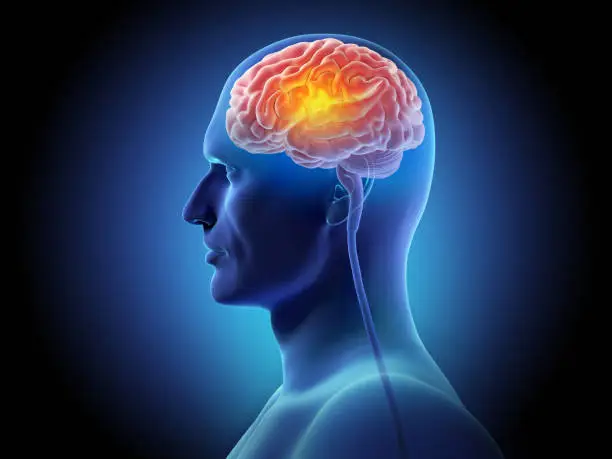
Anxiety at 3 AM often feels more intense than anxiety during the day, even when the subject of worry is the same. There are several reasons for this amplification. One of the most important is the reduced activity of the prefrontal cortex, the part of the brain responsible for rational thinking, perspective, and emotional regulation.
During sleep and partial awakenings, the prefrontal cortex is not fully online. Meanwhile, the amygdala, a region involved in threat detection and emotional reactivity, remains relatively active. This imbalance means that emotional signals are strong while rational reassurances are weak. The brain senses danger but struggles to contextualize it.
As a result, worries feel absolute and unsolvable. The future appears threatening, the past feels full of mistakes, and the present feels lonely. Even minor concerns can trigger intense physical sensations, such as tightness in the chest or a sinking feeling in the stomach. This is not imagination or weakness; it is neurobiology.
The Brain’s Nighttime Memory Machine
Another reason middle-of-the-night anxiety is so vivid lies in how the brain processes memories during sleep. Sleep is essential for consolidating emotional experiences. During certain stages, the brain replays fragments of the day, strengthening some memories and weakening others.
When sleep is interrupted, especially during dreaming phases, emotional content can spill into waking consciousness. This is why you may wake up feeling anxious without immediately knowing why. The emotion arrives before the story. Your mind then searches for an explanation and often finds one in existing worries.
This process can create a feedback loop. The brain wakes up with anxiety, the mind generates anxious thoughts to justify the feeling, and the body responds with further stress. In the stillness of 3 AM, this loop can feel inescapable.
Blood Sugar and the Sleeping Body
The body’s metabolism does not stop during sleep. Blood sugar levels fluctuate, and for some people, particularly those sensitive to changes in glucose, a drop in blood sugar during the night can trigger a stress response. The body releases cortisol and adrenaline to stabilize energy levels, and these hormones can cause sudden awakenings accompanied by anxiety.
This mechanism is subtle and often overlooked. You may not feel hungry, but your body is responding to an internal imbalance. The resulting wakefulness feels psychological, but it is rooted in physiology. The mind then reacts to the body’s signals, interpreting them as emotional distress.
Breathing, Oxygen, and Nighttime Arousal
Breathing patterns change during sleep, becoming slower and shallower. Any disruption in breathing, even mild and unnoticed, can activate the nervous system. Brief drops in oxygen levels can trigger micro-awakenings, pulling you into consciousness just long enough to feel alert and uneasy.
Even without a sleep disorder, stress and anxiety can subtly alter breathing patterns, making nighttime arousal more likely. Once awake, the awareness of breathing can itself become a source of anxiety, especially in the quiet darkness where every sensation feels magnified.
The Psychological Meaning of 3 AM
Beyond biology, there is a psychological dimension to waking at 3 AM that cannot be ignored. This hour carries symbolic weight. It represents isolation, vulnerability, and exposure. During the day, identity is reinforced through action and interaction. At night, especially in the early morning hours, those structures fall away.
Without roles to perform or distractions to maintain, the mind confronts itself. Existential questions surface. Regrets and fears step forward. The sense of self feels raw and unprotected. This does not mean the thoughts are more true at night, only that they are less filtered.
For people who carry unresolved emotional stress, grief, or uncertainty, nighttime awakenings can become a stage where these inner experiences demand recognition. The anxiety may not be about what you think it is about. It may be about what has been postponed, avoided, or silenced during waking hours.
Evolutionary Roots of Nighttime Vigilance
From an evolutionary perspective, waking during the night made sense. Our ancestors slept in environments filled with real dangers. Being able to wake easily in the early morning hours increased survival. The brain evolved to treat nighttime awakenings as moments requiring alertness.
Although modern bedrooms are safer than ancient forests, the nervous system does not fully distinguish between symbolic and literal threats. Financial worries, relationship stress, and uncertainty about the future can activate the same survival circuits that once responded to predators.
At 3 AM, when sleep is lighter and cortisol is rising, these ancient systems are especially sensitive. The result is a mind that scans for danger in the only place it can find it: your thoughts.
The Role of Modern Life
Modern life intensifies middle-of-the-night anxiety in subtle but powerful ways. Artificial light disrupts circadian rhythms. Constant connectivity prevents mental closure. Work-related stress follows people into bed through phones and unfinished tasks. The boundary between day and night has blurred.
Additionally, many people are chronically sleep-deprived. When sleep debt accumulates, the nervous system becomes more reactive. Emotional regulation weakens. The brain becomes more likely to wake during vulnerable periods and less able to return to sleep afterward.
In this context, waking at 3 AM is not a personal anomaly. It is a symptom of a world that asks the human nervous system to remain engaged long after it should be resting.
Why Your Thoughts Feel So Convincing at 3 AM
One of the most disturbing aspects of middle-of-the-night anxiety is how believable it feels. Thoughts that would be questioned during the day feel undeniably true at night. This happens because the brain’s reality-checking systems are partially offline.
Sleep deprivation and circadian timing reduce the brain’s ability to evaluate evidence and generate alternative interpretations. Emotional reasoning takes over. If you feel anxious, the brain assumes there must be a good reason. It then constructs narratives to support that feeling.
This is why decisions made at 3 AM often feel different in the morning. The emotional brain speaks loudly at night, but it does not have the final authority.
The Body Remembers What the Mind Avoids
For some people, recurring 3 AM awakenings are linked to unresolved trauma or long-term emotional stress. The body stores experiences in patterns of tension, hormone regulation, and nervous system responses. Sleep, especially lighter sleep, reduces the barriers that keep these patterns out of awareness.
When the body releases stress hormones during the night, it may be expressing what has not been fully processed. The anxiety may not be about current circumstances but about accumulated strain. Nighttime becomes the only space where this expression is possible.
This does not mean that every 3 AM awakening is a sign of deep psychological issues. But for those who experience it regularly, it can be a signal worth listening to rather than fighting.
The Vicious Cycle of Fear and Wakefulness
Once you have experienced anxiety at 3 AM, the fear of it happening again can itself become a trigger. The brain learns patterns quickly. If waking at a certain time becomes associated with distress, the nervous system may anticipate it.
This anticipation can raise cortisol levels before waking, increasing the likelihood of sleep disruption. The mind becomes hypervigilant, scanning for signs of wakefulness. Over time, this can turn occasional awakenings into a habitual pattern.
Breaking this cycle requires understanding that the wake-up itself is not dangerous. It is an event, not a threat. The anxiety arises from interpretation, not from the hour itself.
Why You Feel So Alone When You Wake Up
Loneliness at 3 AM has a biological component. Humans are social creatures whose nervous systems are regulated through connection. During the day, social cues and interactions provide constant reassurance. At night, especially when everyone else appears to be asleep, the sense of isolation intensifies.
The brain interprets isolation as vulnerability. This can heighten anxiety and emotional sensitivity. Even people who are not consciously lonely during the day may feel profound aloneness at night.
This feeling is not a reflection of your actual relationships. It is a temporary state created by darkness, silence, and the absence of social signals.
The Morning Light and the Return of Perspective
As morning approaches, cortisol continues to rise in a controlled way, preparing the body for wakefulness. Light enters the eyes, signaling safety and time. The prefrontal cortex regains strength. Thoughts that felt overwhelming hours earlier often lose their grip.
This shift can feel almost miraculous. Problems that seemed unbearable now appear manageable. This contrast highlights how deeply mental states are shaped by biological context.
Understanding this can reduce the power of nighttime anxiety. Knowing that the feeling is temporary does not make it pleasant, but it can make it less frightening.
Listening Without Obeying
One of the most important insights about waking up at 3 AM is that not every thought deserves action. The brain produces thoughts constantly, especially when emotional systems are active. At night, these thoughts are not optimized for accuracy or wisdom.
You can acknowledge what arises without believing it completely. The anxiety is real, but its conclusions may not be. Learning to observe rather than engage can gradually weaken the cycle of nighttime distress.
This approach is not about suppression. It is about recognizing the state you are in and adjusting your expectations accordingly.
A Human Experience, Not a Personal Failure
Waking up at 3 AM with anxiety is not a sign that you are broken. It is a reflection of being human in a nervous system designed for survival rather than comfort. It is the meeting point of biology, emotion, memory, and modern stress.
When you wake in the dark with your mind racing, you are not alone, even if it feels that way. Millions of brains are doing the same thing at the same hour, responding to the same ancient rhythms.
Understanding the science behind this experience does not eliminate it, but it can soften its edges. It replaces fear with curiosity and self-blame with compassion.
The Quiet Meaning of the Night
The night has always been a mirror. In its silence, the mind sees itself more clearly, sometimes too clearly. Waking at 3 AM can feel like a curse, but it can also be understood as a message from a system under strain, asking for care, balance, and rest.
The anxiety you feel in those hours is not your enemy. It is a signal, amplified by darkness and biology, asking to be met with understanding rather than resistance.
And when morning comes, as it always does, the world returns to you. Light reclaims the edges of fear. Perspective returns. The thoughts loosen their grip. The night releases you, and the cycle begins again—until, one day, the silence at 3 AM no longer feels quite so threatening, and the waking mind learns that it does not have to fight the dark.