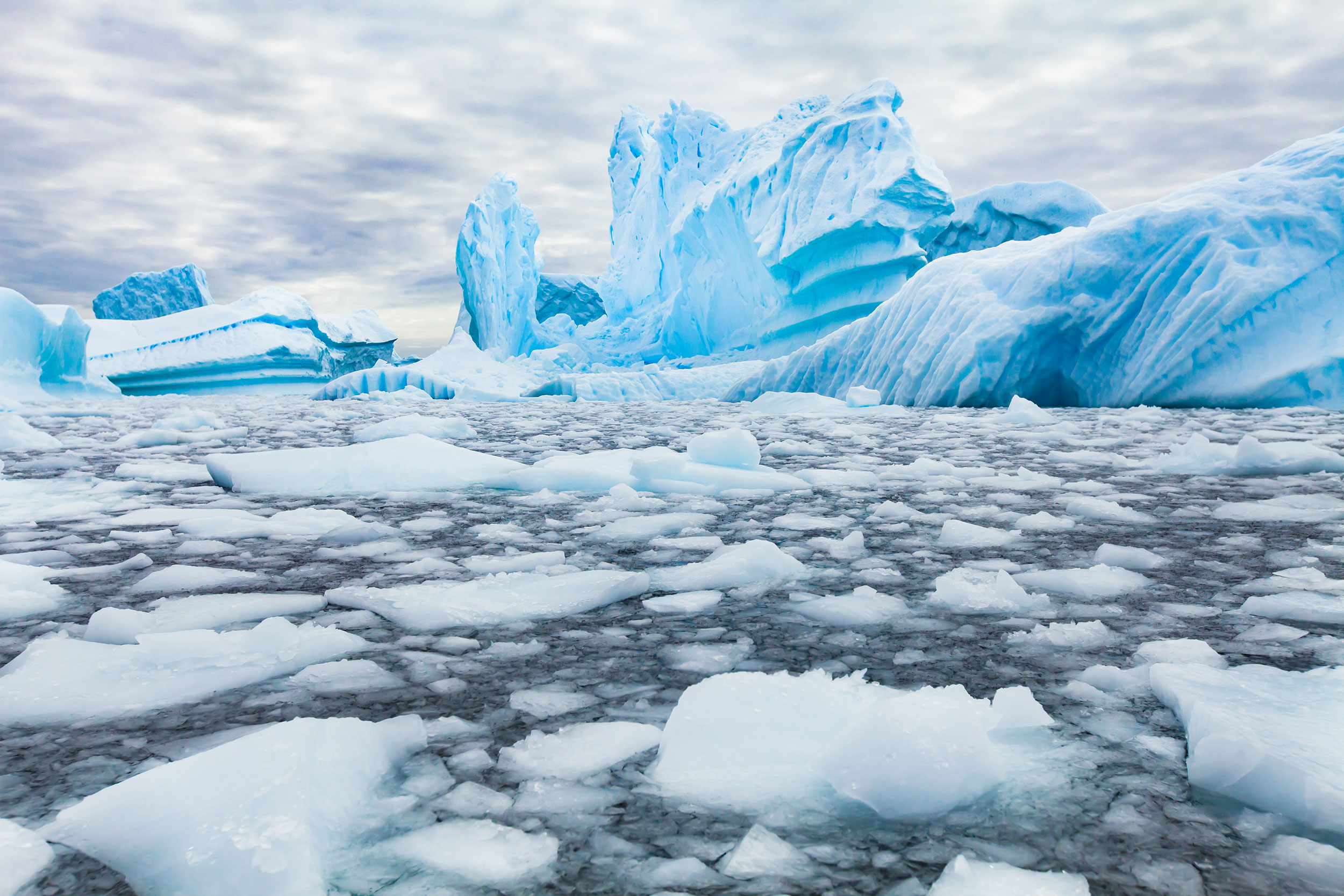
The rapid transformation of the Arctic, particularly around the North Pole, has become one of the most urgent and unsettling signals of global environmental change. For decades, scientists have warned that polar ice would decline as global temperatures rise, but the speed and scale of the melting observed in recent years have exceeded many early predictions. What was once considered a slow, gradual process has revealed itself to be a complex, accelerating phenomenon shaped by multiple interacting forces.
At the center of this transformation lies the fragile and dynamic system of Arctic sea ice. Unlike the thick, stable ice sheets of Antarctica, the North Pole is covered primarily by floating sea ice that forms and melts seasonally. This distinction makes it inherently more vulnerable to warming temperatures. However, the surprising rate of decline cannot be explained by temperature increase alone. Instead, it is the result of feedback loops, atmospheric changes, ocean dynamics, and human influence working together in ways that amplify one another.
Understanding why the North Pole is melting faster than predicted requires a deep exploration of Earth’s climate system. It is a story not just of warming, but of amplification, instability, and interconnected processes that stretch far beyond the Arctic itself.
The Arctic System and Its Unique Vulnerability
The Arctic is not simply a frozen wasteland; it is a highly sensitive and interconnected system. The region plays a crucial role in regulating global climate by reflecting sunlight, controlling ocean circulation, and influencing atmospheric patterns. The sea ice that covers the Arctic Ocean acts as a protective shield, insulating the relatively warm ocean water from the cold atmosphere above.
This system, however, is delicately balanced. Even small increases in temperature can disrupt it. The Arctic is experiencing what scientists call “Arctic amplification,” a phenomenon in which the region warms significantly faster than the global average. This amplification is one of the primary reasons the North Pole is melting more rapidly than expected.
The structure of Arctic ice also contributes to its vulnerability. Much of the older, thicker multi-year ice has been replaced by thinner, seasonal ice. This younger ice forms during winter but melts more easily during summer. As the proportion of thin ice increases, the entire system becomes more prone to rapid loss.
The Role of Climate Change
At the most fundamental level, the accelerated melting of the North Pole is driven by Climate Change. The increase in greenhouse gases such as carbon dioxide and methane traps heat in Earth’s atmosphere, raising global temperatures. This warming effect is not evenly distributed; it is particularly intense in the Arctic.
Warmer air temperatures directly contribute to the melting of sea ice, but the process is far more complex than simple heating. The Arctic atmosphere interacts with ocean currents, cloud cover, and wind patterns, all of which influence how heat is distributed and retained.
One of the key factors is the increase in heat transported from lower latitudes. Warmer air masses are moving into the Arctic more frequently, bringing additional energy into the system. At the same time, changes in atmospheric circulation patterns are allowing this heat to linger longer than it once did.
Albedo Effect and Positive Feedback Loops
One of the most powerful drivers of accelerated melting is the albedo effect. Albedo refers to the reflectivity of a surface. Ice and snow have a high albedo, meaning they reflect most of the Sun’s energy back into space. In contrast, dark ocean water absorbs much more heat.
As ice melts, it exposes darker surfaces beneath. These surfaces absorb more solar radiation, leading to further warming and more melting. This creates a positive feedback loop, where the effects reinforce themselves.
This feedback mechanism is particularly strong in the Arctic because of the seasonal cycle of sunlight. During summer, the region experiences continuous daylight, allowing the ocean to absorb large amounts of energy. When winter returns, the ocean releases this stored heat, making it harder for ice to reform.
The result is a system that not only responds to warming but actively amplifies it. This amplification was known to scientists, but its intensity and speed have proven greater than many early models predicted.
Ocean Heat and Changing Currents
The ocean plays a critical role in the melting of Arctic ice. Beneath the surface, warmer water is increasingly reaching the ice from lower latitudes. This process, known as ocean heat transport, has intensified in recent decades.
The Arctic Ocean is not isolated; it is connected to the Atlantic and Pacific Oceans through currents that carry heat northward. Changes in these currents, influenced by global warming, are delivering more heat into the Arctic than before.
In particular, warmer Atlantic water entering the Arctic has been observed at greater depths and higher temperatures. This water can erode the ice from below, thinning it even when surface temperatures remain relatively low.
At the same time, the loss of ice allows the ocean to mix more freely. Wind-driven mixing brings deeper, warmer water closer to the surface, further accelerating melting. This interaction between ocean and atmosphere creates another feedback loop that contributes to the rapid decline of ice.
Atmospheric Changes and Jet Stream Behavior
The atmosphere above the Arctic is undergoing significant changes that are influencing the rate of ice melt. One of the most important factors is the behavior of the jet stream, a fast-flowing current of air that circles the Northern Hemisphere.
As the Arctic warms, the temperature difference between the polar region and the equator decreases. This difference is what drives the jet stream. When it weakens, the jet stream becomes more wavy and less stable.
These changes can lead to prolonged periods of unusual weather. Warm air can become trapped over the Arctic, accelerating ice melt, while cold air can spill into lower latitudes. This altered circulation pattern contributes to the persistence of warming events in the Arctic.
Cloud cover also plays a role. Changes in cloud formation can either trap heat or reflect sunlight, depending on their type and altitude. In recent years, shifts in cloud patterns have tended to enhance warming in the Arctic, further contributing to ice loss.
The Loss of Multi-Year Ice
One of the most significant changes in the Arctic is the decline of multi-year ice. This older ice, which survives multiple summers, is thicker and more resilient than newly formed ice.
Over the past several decades, much of this multi-year ice has disappeared. What remains is predominantly first-year ice, which is thinner and more susceptible to melting.
The loss of multi-year ice represents a fundamental shift in the Arctic system. It reduces the overall stability of the ice cover and makes it more responsive to short-term weather variations. A single warm summer can now result in dramatic ice loss, something that was less likely when thicker ice dominated.
This transition was anticipated by scientists, but the speed at which it has occurred has been surprising. The rapid decline of multi-year ice has played a major role in the faster-than-expected melting of the North Pole.
The Influence of Soot and Pollution
Human activities contribute to Arctic warming not only through greenhouse gases but also through the deposition of soot and other pollutants. Tiny particles of black carbon, produced by burning fossil fuels and biomass, can travel long distances and settle on ice and snow.
When these dark particles accumulate on the surface, they reduce the albedo, causing the ice to absorb more heat. This effect accelerates melting, particularly during the summer months.
Pollution can also influence cloud formation and atmospheric chemistry, further altering the energy balance of the region. Although these effects are smaller than those of greenhouse gases, they contribute to the overall acceleration of ice loss.
The Role of Natural Variability
While human-driven climate change is the dominant factor, natural variability also plays a role in the rate of Arctic melting. Climate systems are inherently variable, with fluctuations occurring over years, decades, and longer timescales.
Phenomena such as ocean cycles and atmospheric oscillations can temporarily enhance or suppress warming in the Arctic. For example, certain patterns of wind and pressure can push ice out of the Arctic Ocean, reducing its extent.
In recent years, some of these natural variations have aligned with long-term warming trends, amplifying their effects. This combination has contributed to the rapid decline of ice observed in the early twenty-first century.
Limitations of Early Climate Models
One reason the melting of the North Pole has exceeded predictions lies in the limitations of earlier climate models. While these models were based on sound scientific principles, they could not fully capture the complexity of the Arctic system.
Many models underestimated the strength of feedback mechanisms, particularly the albedo effect and interactions between ocean and atmosphere. They also struggled to represent small-scale processes, such as the formation of melt ponds on the surface of ice, which can significantly enhance absorption of sunlight.
As computational power and scientific understanding have improved, newer models have become more accurate. However, the rapid changes already observed highlight the challenges of predicting complex, nonlinear systems.
Global Implications of Arctic Melting
The accelerated melting of the North Pole is not an isolated phenomenon; it has far-reaching consequences for the entire planet. Changes in the Arctic can influence weather patterns, sea levels, and ecosystems across the globe.
The loss of sea ice affects ocean circulation, which plays a key role in regulating climate. It can also contribute to rising sea levels indirectly by accelerating the melting of land-based ice in regions such as Greenland.
Weather patterns in mid-latitudes may become more extreme as the jet stream weakens and becomes more erratic. This can lead to prolonged heatwaves, cold spells, and unusual precipitation patterns.
Ecosystems in the Arctic are also under threat. Species that depend on sea ice, such as polar bears and seals, are facing shrinking habitats. Indigenous communities that rely on these ecosystems are experiencing profound changes to their way of life.
The Future of the North Pole
Looking ahead, the future of the North Pole depends largely on the trajectory of global emissions and efforts to mitigate climate change. If current trends continue, the Arctic could experience ice-free summers within this century, a possibility that was once considered distant.
Such a transformation would represent a fundamental shift in Earth’s climate system. The feedback loops that drive Arctic amplification could intensify, leading to further warming and potentially irreversible changes.
However, the future is not predetermined. Reducing greenhouse gas emissions, limiting pollution, and improving our understanding of the climate system can influence the outcome. The Arctic serves as both a warning and an opportunity—a region where the effects of human activity are clearly visible, but where action can still make a difference.