The human brain is often described with language that borders on the mythical. It is called a biological computer, a living network, a universe inside the skull. People speak about it with a mixture of pride and awe, because the brain is not just another organ—it is the thing that allows us to wonder, to dream, to invent, to love, and to ask questions like this one.
And few questions feel more tempting than comparing the brain to our greatest machines.
Supercomputers are the giants of the digital world. They simulate climate systems, calculate the behavior of particles, crack complex equations, train artificial intelligence, and model the evolution of galaxies. They perform quadrillions of calculations per second with cold precision. They are humanity’s closest attempt at building something that rivals the raw processing power of nature.
So when we ask whether the human brain is actually faster than a supercomputer, we are asking something profound. We are not only comparing biology to silicon. We are comparing two different kinds of intelligence and two different kinds of speed.
The answer is not as simple as “yes” or “no.” The truth is far more interesting: in some ways the brain is astonishingly powerful beyond anything we can build, and in other ways it is embarrassingly slow compared to machines.
To understand why, we have to define what “faster” even means.
What Does “Faster” Mean in the First Place?
Speed in computing usually means how many operations a system can perform per second. In traditional computers, this is measured in clock cycles, instructions per second, or floating-point operations per second (FLOPS). Modern supercomputers are rated in petaflops and exaflops. An exaflop machine can perform about one quintillion (10¹⁸) floating-point calculations per second.
That number is hard to imagine. It is so large that it almost stops feeling meaningful.
But the human brain does not work like a digital processor. It does not perform clean, step-by-step arithmetic operations in a predictable sequence. It does not have a central clock. It does not run on binary logic gates switching on and off billions of times per second.
The brain is a massively parallel, event-driven biological network. It works through electrical and chemical signaling. It learns through structural change. It is optimized not for arithmetic speed but for survival, perception, decision-making, and adaptation.
So when we ask whether the brain is faster than a supercomputer, we are really asking two different questions at once.
Is the brain capable of performing more raw “operations” per second than a supercomputer?
Or is the brain capable of solving real-world problems faster than a supercomputer?
Those are not the same thing.
And the difference between them reveals the true genius of biology.
The Brain’s Hardware: Neurons, Synapses, and Biological Computation
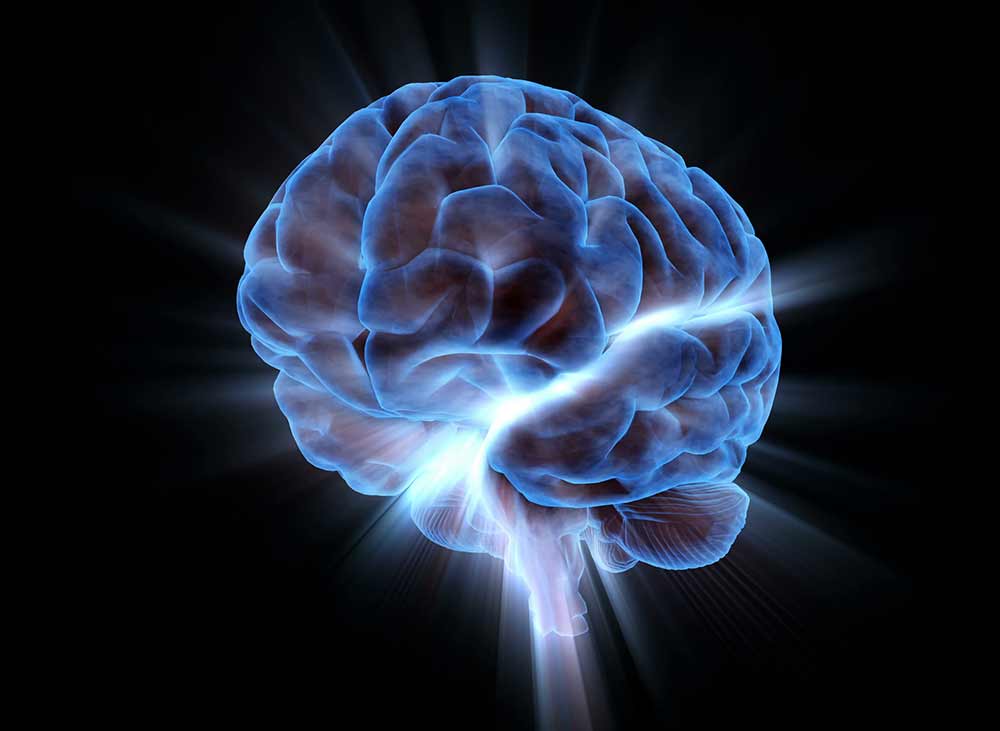
The adult human brain contains roughly 86 billion neurons. Each neuron is a living cell capable of generating electrical impulses called action potentials. Neurons communicate with each other through connections called synapses. A single neuron can form thousands of synapses, meaning the brain contains on the order of 100 trillion synaptic connections, possibly more depending on how they are counted.
This network is not fixed. It rewires itself constantly. Synapses strengthen or weaken depending on experience. New connections form. Others disappear. This ability to reshape itself is called neuroplasticity, and it is one of the key reasons the brain is so adaptable.
Unlike a computer, which stores memory in dedicated hardware separate from its processing unit, the brain stores memory inside the same network that performs computation. In other words, the brain’s memory and processing are fused together.
This gives the brain an enormous advantage in certain tasks. It does not need to fetch data from distant storage the way computers do. Information is embedded into the very structure of the system.
A brain is not a processor that uses memory.
A brain is a memory that processes.
How Fast Is a Neuron Compared to a Computer Chip?
If we measure speed at the level of individual components, the brain seems painfully slow.
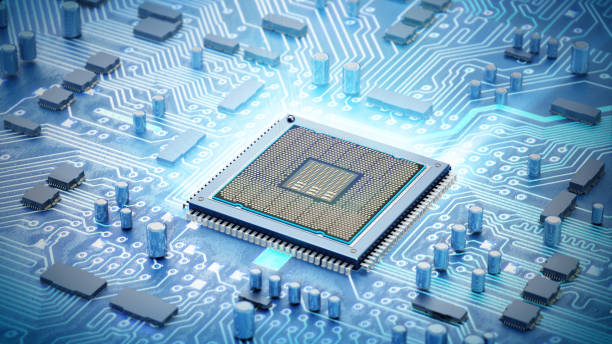
A modern CPU can operate at several gigahertz, meaning billions of clock cycles per second. A transistor can switch on and off billions of times each second. That is why a laptop can multiply huge numbers instantly.
Neurons, by contrast, fire action potentials at much lower rates. Many neurons fire at only a few spikes per second. Even fast-firing neurons rarely exceed a few hundred spikes per second, and the theoretical upper limit is around a thousand spikes per second in exceptional cases.
That means a neuron is millions of times slower than a transistor in raw switching speed.
On the surface, this makes the brain look hopelessly outdated compared to modern electronics. If neurons are so slow, how can the brain possibly compete with supercomputers?
The answer lies in scale and architecture.
The brain is not fast because its components are fast. The brain is fast because it has a massive number of components working at the same time, and because it is organized in a way that makes certain computations extremely efficient.
Parallelism: The Brain’s Secret Weapon
A supercomputer may have millions of CPU cores or GPU units working together, but even the most powerful machines still rely on digital architectures that are fundamentally different from the brain’s distributed system.
The brain processes information in parallel at every level. Vision, hearing, touch, balance, and memory are being processed simultaneously. When you walk through a crowded street, your brain is identifying faces, predicting motion, interpreting sound, adjusting your balance, planning steps, and making social judgments in real time.
No single “central processor” is commanding this. It emerges from billions of neurons operating together, each one performing a small part of the overall computation.
This is why you can catch a falling glass without solving equations consciously. Your brain is performing physics-like predictions instantly—not because it is calculating faster than a machine, but because evolution has shaped neural circuits that can respond to sensory input with incredible efficiency.
In real-world tasks involving messy, incomplete information, the brain often appears faster than machines because it can recognize patterns and act immediately.
This is not the speed of arithmetic.
It is the speed of intelligence.
Estimating the Brain’s Processing Power in Operations Per Second
Scientists and engineers have tried for decades to estimate how many “operations per second” the brain performs. This is difficult because a neuron is not equivalent to a logic gate, and a synapse is not equivalent to a transistor. Biological computation is analog, probabilistic, and deeply complex.
Still, approximate estimates are possible.
One common approach is to estimate synaptic events per second. If the brain has roughly 10¹⁴ synapses, and if a significant fraction of them are active each second, then the brain might be performing something like 10¹⁴ to 10¹⁶ synaptic operations per second.
Some estimates go higher, depending on assumptions about firing rates and how much computation occurs inside dendrites, which are the branching structures of neurons. Dendrites themselves can perform complex local computations, meaning a neuron is not just a simple on-off unit. It is more like a small biological computer.
If we translate brain activity into a rough computational equivalent, some researchers estimate the brain may operate at a scale comparable to petaflops or even exaflops under certain interpretations.
But the key phrase is “under certain interpretations.”
This is not a clean comparison, because FLOPS measures arithmetic operations, while the brain is doing something more like continuous pattern processing.
Still, it suggests something remarkable: the brain might have a raw information-processing capacity in the same broad category as the world’s fastest machines.
Yet the brain achieves this while consuming almost no energy compared to a supercomputer.
Energy Efficiency: The Brain Wins by an Astronomical Margin
A human brain runs on about 20 watts of power. That is roughly the energy consumption of a dim light bulb. You can power it with a sandwich.
By contrast, modern supercomputers consume enormous amounts of electricity. The most powerful systems in the world require megawatts of power—millions of watts. They often need dedicated power infrastructure and massive cooling systems.
This means that even if a supercomputer matches or exceeds the brain’s computational power in raw operations per second, it does so at a staggering energy cost.
The brain is arguably the most energy-efficient general-purpose information processor known in the universe. Evolution has refined it over hundreds of millions of years. Every biological design feature has been pressured by survival. Wasting energy is fatal in nature.
Your brain is not optimized to solve algebra quickly. It is optimized to survive long enough to reproduce. And it turns out that this produces an intelligence engine that can outperform machines in many tasks—especially those involving perception, learning, and creativity.
If speed is measured as “how much useful computation can be achieved per watt,” the brain is not just better than supercomputers.
It is in a completely different league.
Memory: The Brain Doesn’t Store Data Like a Computer
Another important comparison is memory.
A supercomputer stores data in digital memory chips. It can retrieve that data with extraordinary precision. If you store a number in a computer, it remains exactly the same unless it is overwritten or corrupted.
The brain stores memory in patterns of synaptic strength distributed across networks. Human memory is not precise in the way computer memory is. It is reconstructive. It changes over time. It can be influenced by emotion and context. It can even create false memories.
This might seem like a weakness, but it is actually part of what makes the brain powerful. The brain does not store information as fixed files. It stores meaning. It stores relationships. It stores patterns.
When you remember your childhood home, you are not retrieving a perfect photograph. You are rebuilding a mental simulation. Your brain fills in details, connects emotions, and reconstructs an experience.
This makes memory less accurate, but more adaptable.
Computers remember facts.
Brains remember significance.
Reaction Time: Why Humans Can Feel Faster Than Machines
If you have ever played a video game, driven a car, or caught a ball, you might feel that your brain is extremely fast. And in certain contexts, it is.
Human reaction time to visual stimuli is typically around 200 milliseconds. That might not sound impressive compared to a computer that can respond in microseconds, but the complexity of what the brain is doing in those 200 milliseconds is enormous.
Your brain is not simply detecting light and triggering a motor response. It is interpreting a visual scene, predicting motion, filtering distractions, deciding on an action, and coordinating muscle movement.
For tasks involving complex sensory processing, the brain’s ability to interpret patterns quickly makes it functionally “faster” than many machines.
For example, humans can recognize faces almost instantly. Even with modern AI, face recognition requires enormous computational resources, large datasets, and specialized hardware.
Your brain can do it while walking, talking, and thinking about dinner.
The speed comes not from raw processing frequency, but from highly optimized neural circuits shaped by evolution.
Where Supercomputers Are Unquestionably Faster
There is no point in romanticizing the brain to the point of fantasy. In many areas, supercomputers are not just faster than the brain—they are absurdly faster.
A supercomputer can multiply gigantic numbers instantly. It can simulate millions of particles. It can solve systems of equations that would take a human lifetime to compute by hand. It can search through massive datasets in seconds. It can brute-force possibilities in a way that human thinking simply cannot.
Even your smartphone can perform arithmetic faster than you can. It can store exact data without forgetting. It can repeat a calculation a billion times without getting tired. It can operate nonstop without emotion or distraction.
The human brain is not designed for brute-force computation. When humans solve math problems, they often do so slowly, step by step, using conscious attention—a limited resource.
Machines are built for precision and repetition.
Brains are built for adaptation.
So if “faster” means raw calculation speed, then no, the human brain is not faster than a supercomputer.
Not even close.
Where the Human Brain Still Dominates
Despite the computational dominance of supercomputers, there are still domains where the human brain remains unmatched.
One of the most important is general intelligence. A supercomputer can be trained to play chess, but it cannot automatically learn to drive a car, understand jokes, or navigate social relationships unless it is specifically designed and trained for those tasks. Even then, it struggles with flexibility.
A child can learn a new concept from a few examples. A machine often requires millions.
Humans can reason about incomplete information, interpret emotional cues, infer intentions, and create stories. We can look at a painting and feel meaning. We can hear music and experience emotion. We can imagine things that do not exist.
Creativity is not simply fast computation. It is the ability to form new connections between ideas and to explore possibilities without explicit instruction.
The brain excels at this.
Even the most advanced artificial intelligence systems today, which are trained on enormous datasets using supercomputers, do not truly “understand” in the way humans do. They can generate convincing language, images, and predictions, but they lack human consciousness, subjective experience, and biological drives.
In this sense, the brain is not just a computer.
It is an organism.
It is a mind.
And that makes the comparison with supercomputers deeply complicated.
The Brain Is Not a Single Computer, but a City of Machines
A major mistake in comparing brains and supercomputers is imagining the brain as one central processor. It is not.
The brain is more like a city. Different regions specialize in different tasks. The visual cortex processes sight. The auditory cortex processes sound. The hippocampus is crucial for memory formation. The cerebellum fine-tunes movement. The prefrontal cortex supports planning, reasoning, and decision-making.
These regions communicate constantly, sharing information through networks of neurons. This architecture allows the brain to perform multiple complex tasks at once.
A supercomputer can also run parallel tasks, but it usually requires explicit programming and careful scheduling. The brain does it naturally.
When you speak, you are not consciously coordinating tongue muscles, grammar, meaning, emotion, and breath control. The brain manages all of this automatically.
This is not merely speed. It is orchestration.
It is the ability to run a living symphony of computation without needing a conscious conductor.
How AI Complicates the Question
The rise of artificial intelligence has made the brain-versus-supercomputer question more urgent than ever. AI systems trained on supercomputers can now recognize images, translate languages, generate art, and solve complex problems. In some narrow tasks, they outperform humans dramatically.
But these AI systems often require vast energy, huge datasets, and extensive training. They are not as flexible as humans. They are also not as robust. A human can handle noisy, uncertain environments with ease. AI systems can fail unexpectedly when conditions change slightly.
The brain is resilient because it evolved in chaos. It is designed to handle imperfect information. It can function even when damaged, sometimes rewiring itself around injuries.
A computer is precise, but fragile. A few flipped bits can crash a system. A small error can cause catastrophic failure. A brain, even with imperfections, can still function and adapt.
So while AI has narrowed the gap in many areas, it has not yet matched the brain’s general-purpose adaptability.
Consciousness: The Ultimate Difference
There is another dimension of “speed” that no supercomputer can currently match: consciousness.
The brain does not just process information. It experiences information. It produces awareness. It generates the feeling of being alive. It creates a sense of self, a perspective, a private inner world.
No matter how fast a supercomputer calculates, it does not feel the weight of existence. It does not know what it means to be afraid, to hope, to regret, or to love. It does not dream. It does not wonder.
Some scientists believe consciousness could eventually emerge from sufficiently complex computation. Others argue that something about biology is essential. At the moment, there is no scientific consensus on what consciousness is or how it arises.
But we do know this: the human brain produces something machines have never demonstrated—subjective experience.
This is not a matter of speed, but it changes the comparison completely. Because intelligence is not only about computation. It is about meaning.
And meaning requires a mind that can care.
The Brain’s Bottleneck: Why Humans Sometimes Feel Slow
If the brain is so powerful, why do humans struggle with tasks like multitasking, mental math, or remembering long sequences of numbers?
The answer lies in attention and working memory.
Your brain has massive unconscious processing power, but conscious awareness is limited. Working memory—the mental space where you hold information temporarily—is small. Most people can only hold about a few items in mind at once.
This is why you can instantly recognize a face but struggle to remember a 20-digit number. Face recognition is handled by specialized neural circuits optimized for the task. Long number storage is not something the brain evolved for.
Computers excel at storing and manipulating large quantities of precise information because they were designed for it. Brains excel at navigating real-world complexity because they evolved for it.
When humans are forced into tasks outside our evolutionary strengths, we appear slow.
But when we are in our natural environment—interpreting social signals, learning language, understanding emotion, navigating landscapes—the brain reveals its true speed.
So, Is the Human Brain Faster Than a Supercomputer?
If “faster” means performing raw calculations, then the answer is no. Supercomputers are vastly faster. They can perform mathematical operations at speeds that biological neurons cannot approach.
If “faster” means reacting to complex sensory environments, making decisions under uncertainty, learning from small amounts of data, and recognizing patterns instantly, then the human brain often appears faster and more efficient than machines.
If “faster” means energy efficiency per unit of useful intelligence, the brain is overwhelmingly superior. A brain can do what would require enormous data centers while consuming only about 20 watts.
If “faster” means capable of producing consciousness, creativity, and subjective experience, then the brain is not just faster—it is something supercomputers do not yet truly compete with at all.
So the most accurate answer is that the brain and supercomputers are fast in different ways. They are built for different purposes, based on different architectures, and optimized for different forms of computation.
Comparing them directly is like comparing the speed of a whale to the speed of a submarine. One is a masterpiece of evolution, the other a masterpiece of engineering. Both are powerful, but they move through the world in completely different ways.
The Real Truth: The Brain Is Not Trying to Win a Race
Perhaps the most important point is this: the brain was never designed to be the fastest calculator. It was designed to keep you alive.
It evolved to interpret danger, find food, build social alliances, raise children, and navigate a world full of uncertainty. It is an engine of survival, shaped by natural selection, optimized for flexibility rather than precision.
Supercomputers, on the other hand, are built to solve specific kinds of problems. They are designed to calculate, simulate, and process enormous datasets. They are specialized giants, brilliant in their domain.
The brain is not a supercomputer.
It is a living intelligence system that creates experience.
It turns light into vision, sound into language, chemical signals into emotion, and electrical impulses into thought. It can take a simple moment—rain tapping against a window—and transform it into memory, meaning, and poetry.
A supercomputer can simulate storms.
But only a brain can listen to one and feel something.
The Future: Will Machines Eventually Surpass the Brain Completely?
This is one of the defining questions of the modern age. If computing power continues to increase and artificial intelligence becomes more advanced, will machines surpass the brain not only in calculation, but in general intelligence?
It is possible. Some researchers believe that artificial general intelligence could one day match or exceed human intelligence across all domains. Others argue that the brain’s complexity, efficiency, and biological architecture are so deeply evolved that replicating it in silicon may be far harder than we expect.
Even if machines eventually surpass the brain in problem-solving ability, the brain will still remain extraordinary. It will remain one of the most intricate systems ever produced by nature, a structure that arose from molecules and electricity, yet somehow learned to reflect on its own existence.
The fact that we can even ask this question is proof of how remarkable the human brain is.
We are the only known species in the universe that can build supercomputers—and then wonder whether our own minds are faster.
Final Answer: Speed Depends on the Kind of Intelligence
The human brain is not faster than a supercomputer in raw computation. Machines win easily in tasks involving arithmetic, precision, and brute-force processing.
But the brain is faster in the ways that matter most to being alive: perception, adaptation, learning, and real-world intelligence. It can solve problems instantly that still challenge even advanced AI, not because it calculates more quickly, but because it understands patterns in a deeply efficient way.
And while supercomputers may dominate in numbers, the brain dominates in meaning.
A supercomputer can compute the orbit of a planet.
The human brain can look up at the night sky and feel wonder.
That may not be “speed” in the digital sense, but it is a form of power that no machine has yet truly captured.