On a clear night, far from city lights, the sky can feel endless. Thousands of stars glitter overhead, the pale band of the Milky Way stretches across the darkness, and for a moment it seems as if we are looking directly into infinity.
Yet everything we can see—from the nearest star to the most distant galaxy ever detected—belongs to only a tiny part of a much larger cosmic reality.
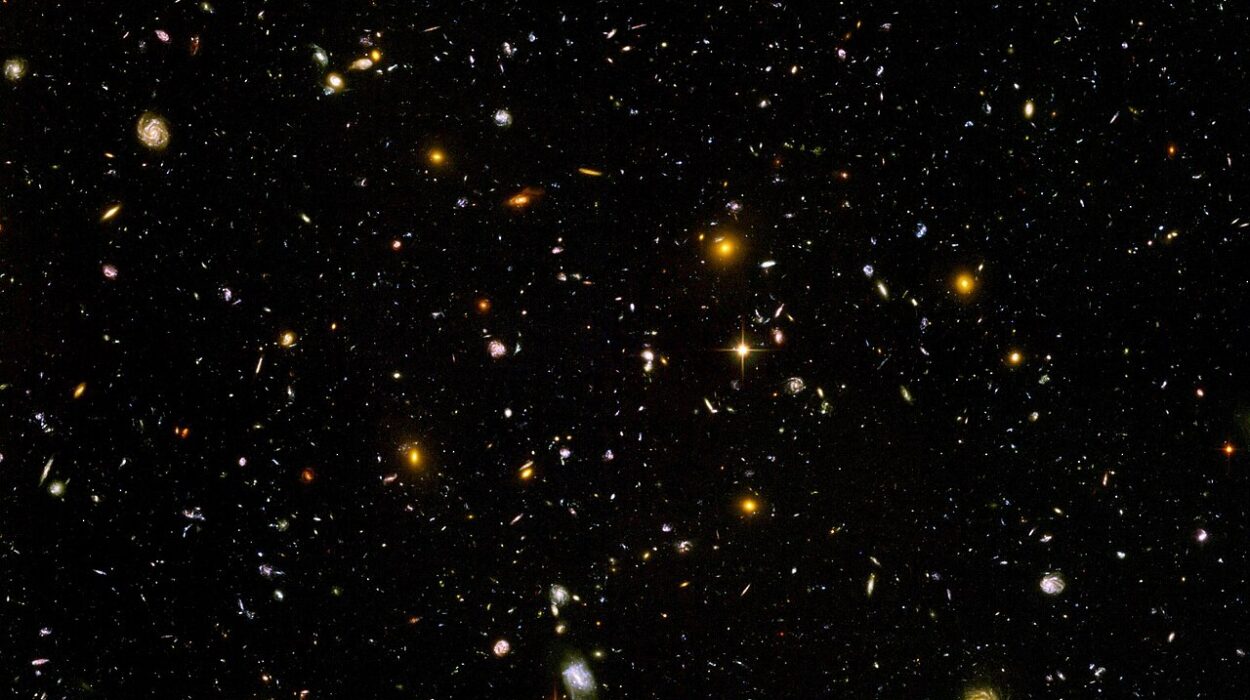
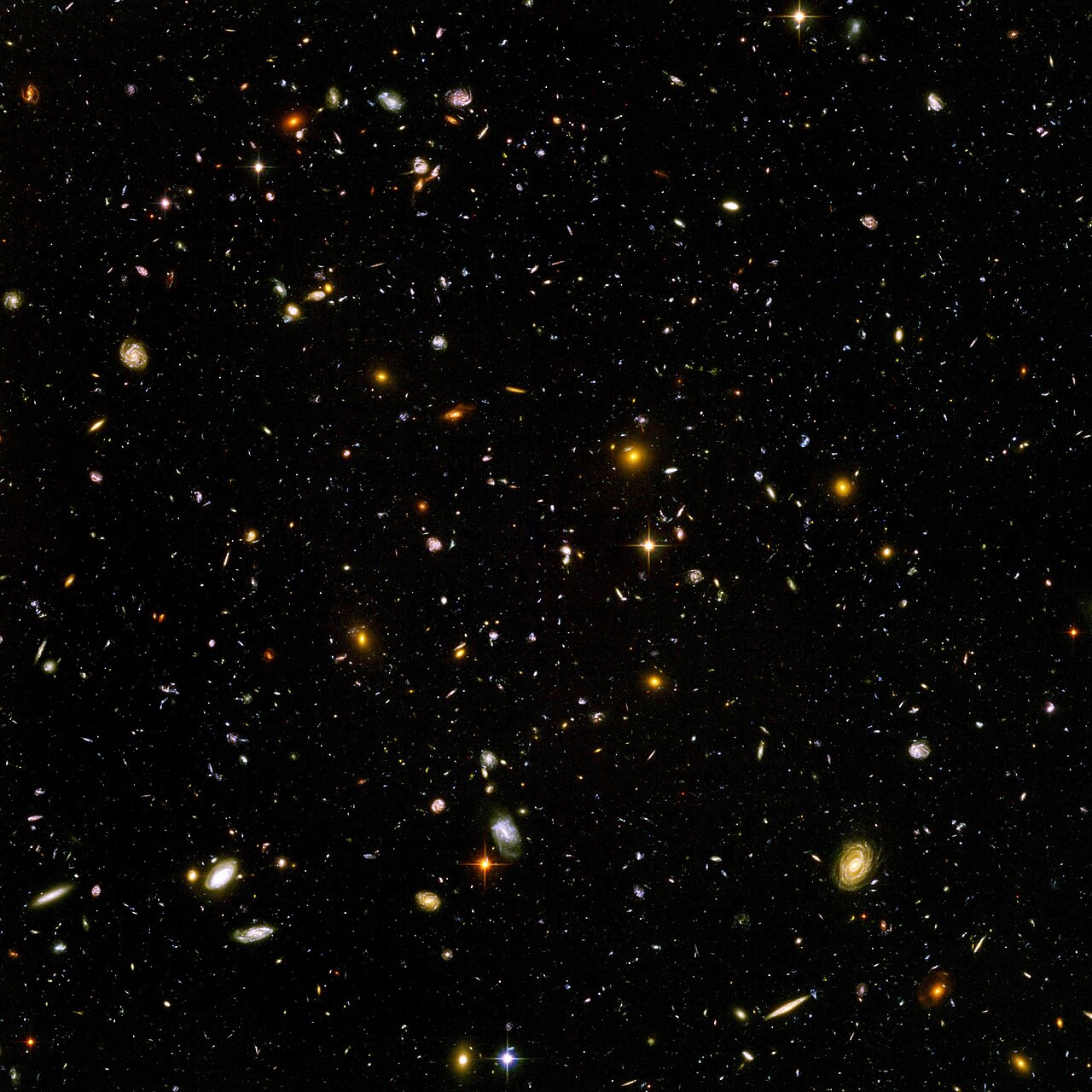
The universe is vast beyond ordinary imagination. It contains billions of galaxies, each holding billions or even trillions of stars. It stretches across distances so enormous that even light, the fastest thing known in nature, requires billions of years to cross them.
But here is one of the most astonishing facts in all of science: no matter how powerful our telescopes become, there is a fundamental limit to how much of the universe we can ever observe.
That visible region is called the observable universe.
It represents everything from which light or other information has had enough time to reach us since the beginning of cosmic history. Beyond that boundary may lie countless galaxies, stars, planets, and perhaps structures unlike anything we know. Yet they remain hidden from us, not because our technology is inadequate, but because the laws of physics impose a cosmic horizon.
The observable universe is humanity’s window into existence. It is the portion of reality we can study, measure, and explore through science. Understanding it means understanding both the incredible reach of our knowledge and the profound limits of what we can ever know.
What Is the Observable Universe?
The observable universe is the region of the cosmos from which light has had enough time to reach Earth since the universe began approximately 13.8 billion years ago.
At first, this definition seems straightforward.
If the universe is 13.8 billion years old, many people assume that we should be able to see objects located 13.8 billion light-years away.
The reality is more complicated.
The universe has not remained static during those 13.8 billion years. Space itself has been expanding the entire time. As a result, many objects whose light is reaching us today are now much farther away than 13.8 billion light-years.
Because of this expansion, astronomers estimate that the observable universe has a present-day radius of roughly 46.5 billion light-years.
This means the observable universe spans about 93 billion light-years across.
That number is almost impossible to visualize.
Even traveling at the speed of light, crossing such a distance would require tens of billions of years.
And yet this enormous sphere may represent only a fraction of the entire universe.
The Difference Between the Universe and the Observable Universe
One of the most common misunderstandings in astronomy involves confusing the observable universe with the entire universe.
They are not the same thing.
The observable universe is simply the portion we can see.
The universe itself may be vastly larger.
In fact, many cosmological models suggest the universe could extend far beyond the observable region. Some theories even allow for the possibility that it is infinite.
Imagine standing on a beach and looking toward the horizon.
You can only see a limited distance before Earth’s curvature hides the rest.
The horizon is not the edge of the planet. It is merely the edge of what you can currently observe.
The observable universe functions in a similar way.
Its boundary does not mark the end of existence. It marks the limit of information that has reached us.
Beyond that cosmic horizon, the universe may continue indefinitely.
Why Light Determines What We Can See
To understand the observable universe, we must first understand the role of light.
Light travels at approximately 299,792 kilometers per second, often rounded to 300,000 kilometers per second.
This speed is extraordinarily fast.
Light can circle Earth more than seven times in a single second.
Yet the universe is so immense that even light requires significant time to travel between objects.
The light from the Moon takes about 1.3 seconds to reach Earth.
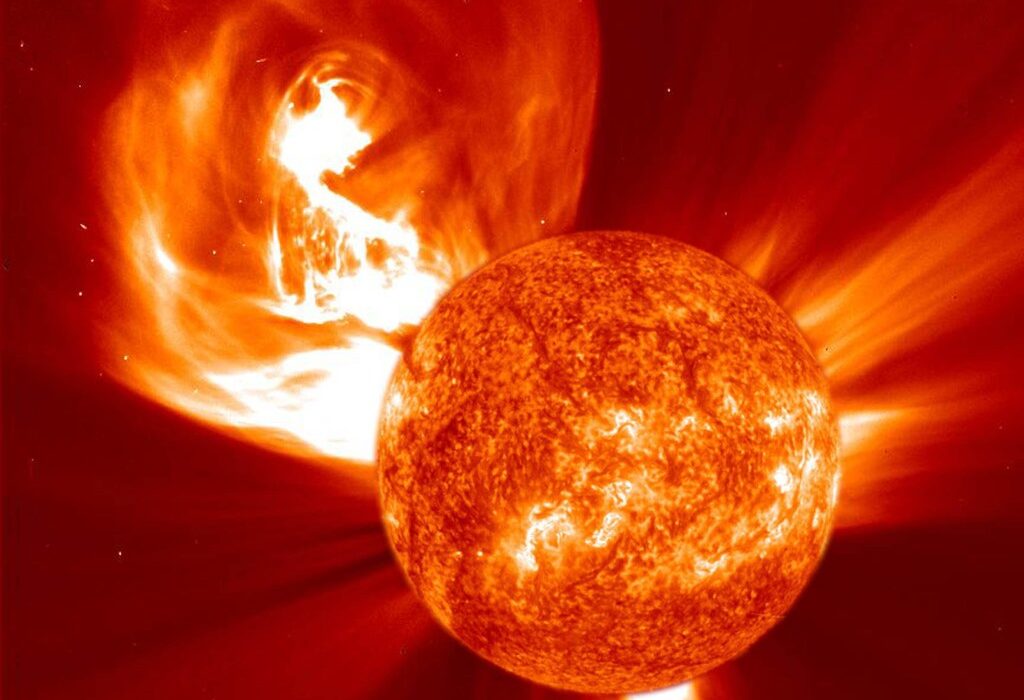
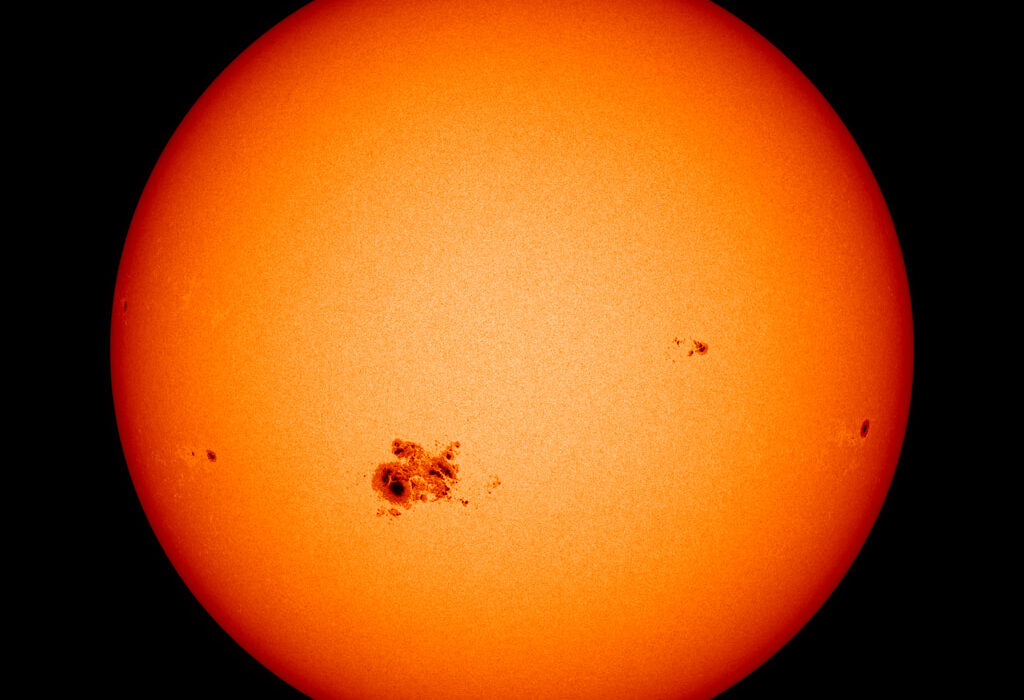
Sunlight takes about eight minutes.
The nearest star beyond the Sun is more than four years away at light speed.
The light from distant galaxies may require billions of years to reach us.
This creates a remarkable situation.
Whenever we observe the cosmos, we are looking into the past.
We never see celestial objects as they exist right now.
We see them as they were when their light began its journey toward us.
The farther away an object is, the farther back in time we are looking.
Looking Back Through Time
Astronomy is often described as a form of time travel.
Not physical time travel, of course, but observational time travel.
When you look at the Sun, you see it as it existed eight minutes ago.
When you observe a star located 100 light-years away, you see it as it appeared a century ago.
A galaxy one billion light-years away appears as it existed one billion years in the past.
The most distant galaxies currently observed reveal conditions that existed shortly after the universe’s birth.
In a sense, telescopes are time machines.
The farther they can see, the deeper into cosmic history they can peer.
This is one reason astronomers are so interested in extremely distant objects.
They provide direct evidence about the universe’s earliest eras.
The Beginning of the Observable Universe
To understand why the observable universe has limits, we must journey back to the beginning of cosmic history.
According to the prevailing cosmological model, the universe began approximately 13.8 billion years ago in an event known as the Big Bang.
The Big Bang was not an explosion occurring in empty space.
Rather, it marked the beginning of the expansion of space itself.
In the earliest moments, the universe was incredibly hot and dense.
Temperatures were so extreme that atoms could not exist.
Matter and radiation formed a glowing plasma where light could not travel freely.
Photons constantly collided with charged particles, scattering in every direction.
The universe was effectively opaque.
No light from this earliest period can reach us directly.
When the Universe Became Transparent
As the universe expanded, it cooled.
About 380,000 years after the Big Bang, temperatures fell enough for electrons and atomic nuclei to combine into neutral atoms.
This event dramatically changed cosmic conditions.
Photons could now travel freely through space without constantly scattering.
The universe became transparent.
The light released during this transition still exists today.
After traveling across billions of years of cosmic expansion, it now fills the universe as faint microwave radiation known as the cosmic microwave background.
This radiation represents the oldest light we can directly observe.
It forms a kind of cosmic baby picture, revealing what the universe looked like when it was only a tiny fraction of its current age.
The Cosmic Microwave Background
The cosmic microwave background is one of the most important discoveries in modern astronomy.
Detected in 1965, it provided powerful evidence supporting the Big Bang model.
This ancient radiation comes from every direction in space.
No matter where astronomers look, they find it.
Its remarkable uniformity suggests that the early universe was incredibly smooth and homogeneous.
Tiny fluctuations within the microwave background reveal the seeds from which galaxies and galaxy clusters eventually formed.
By studying these patterns, scientists have learned an extraordinary amount about the universe’s age, composition, geometry, and evolution.
The cosmic microwave background marks the furthest distance from which electromagnetic light can currently reach us.
In a very real sense, it forms the visible edge of our cosmic past.
Why the Observable Universe Is Larger Than 13.8 Billion Light-Years
One of the most surprising aspects of cosmology is that the observable universe is much larger than its age might suggest.
The reason lies in cosmic expansion.
Imagine a distant galaxy emitting light billions of years ago.
While that light travels toward us, the space between us and the galaxy continues expanding.
The galaxy itself is carried farther away by this expansion.
As a result, the galaxy’s current distance can become much greater than the distance the light originally traveled.
This effect allows objects now located over 46 billion light-years away to remain visible.
The expansion of space dramatically alters our intuitive understanding of distance.
The universe is not a static stage on which galaxies move.
The stage itself is stretching.
The Expansion of Space
One of the greatest discoveries in twentieth-century astronomy was that the universe is expanding.
Galaxies are not generally moving through space away from a central point.
Instead, space itself is growing.
A useful analogy involves raisins embedded in rising bread dough.
As the dough expands, every raisin sees every other raisin moving away.
No raisin occupies the center.
Similarly, galaxies become increasingly separated as space expands.
This expansion affects the observable universe in profound ways.
It determines which objects can send light to us and which remain forever beyond our reach.
It also influences the future evolution of the cosmos.
Redshift and Distant Galaxies
As space expands, light traveling through it stretches as well.
This stretching increases the wavelength of light, shifting it toward the red end of the spectrum.
Astronomers call this effect redshift.
The greater the redshift, the more the universe has expanded since the light was emitted.
Redshift serves as one of astronomy’s most important tools.
It allows scientists to estimate distances to galaxies and determine how rapidly the universe is expanding.
Some of the most distant galaxies observed exhibit enormous redshifts, indicating that their light began its journey when the universe was extremely young.
Through redshift measurements, astronomers map the structure and history of the observable universe.
The Cosmic Horizon
The observable universe possesses a boundary known as the cosmic horizon.
This horizon is not a physical wall.
It is not a barrier made of matter.
Rather, it represents the maximum distance from which information has had time to reach us.
Anything beyond this horizon remains unobservable because its light has not yet arrived.
If the universe is finite, regions beyond the horizon still exist.
If the universe is infinite, there may be infinitely many regions beyond our view.
Either way, the cosmic horizon limits our observations.
It defines the edge of our current knowledge.
Can We Ever See Beyond the Observable Universe?
This question naturally arises when people first learn about the observable universe.
Can future telescopes reveal what lies beyond the horizon?
The answer is surprisingly subtle.
More powerful telescopes can detect fainter and more distant objects.
They can reveal earlier periods of cosmic history.
However, they cannot overcome the fundamental limit imposed by the speed of light and the age of the universe.
Some regions are simply too distant for their light to have reached us.
No technological advance can change that fact.
The boundary of the observable universe may gradually expand as time passes and more light reaches us, but there will always remain regions beyond observation.
Certain parts of reality may forever remain hidden.
The Role of Dark Matter
The observable universe contains much more than stars and galaxies.
In fact, ordinary matter represents only a small fraction of cosmic content.
Astronomers have discovered strong evidence for dark matter, an invisible form of matter that interacts primarily through gravity.
Dark matter does not emit light.
It cannot be directly observed using traditional telescopes.
Yet its gravitational influence shapes galaxies and large-scale cosmic structures.
Without dark matter, many galaxies would not remain stable.
The observable universe contains vast amounts of this mysterious substance.
Despite decades of research, scientists still do not know its exact nature.
Its existence reminds us that much of the universe remains unexplained.
The Mystery of Dark Energy
Even more mysterious than dark matter is dark energy.
In the late 1990s, astronomers discovered that cosmic expansion is accelerating.
Rather than slowing down under gravity’s influence, the universe is expanding faster over time.
Some unknown phenomenon appears to be driving this acceleration.
Scientists call it dark energy.
Dark energy is estimated to make up roughly 68 percent of the universe’s total energy content.
Yet nobody knows what it truly is.
Its presence affects the future of the observable universe.
As expansion accelerates, distant galaxies move away increasingly rapidly.
Over immense timescales, many galaxies may disappear beyond our observable horizon forever.
The Largest Structures We Can See
The observable universe contains structures on astonishing scales.
Galaxies gather into groups and clusters.
Clusters connect into superclusters.
These superclusters form enormous networks called the cosmic web.
Between these structures lie vast cosmic voids where relatively little matter exists.
The cosmic web stretches across hundreds of millions of light-years.
Its filamentary structure resembles a gigantic three-dimensional network.
The observable universe is not randomly distributed.
Matter forms patterns shaped by gravity acting over billions of years.
These patterns help astronomers understand how cosmic structure emerged from the tiny fluctuations present in the early universe.
How Many Galaxies Exist in the Observable Universe?
Estimating the number of galaxies in the observable universe is challenging.
Early calculations suggested around 100 billion galaxies.
More recent analyses indicate the true number may be significantly higher.
Many small and faint galaxies remain difficult to detect.
Current estimates often suggest hundreds of billions, and possibly even trillions, of galaxies within the observable universe.
Each galaxy contains countless stars.
Many stars possess planets.
The sheer scale is staggering.
The observable universe likely contains more stars than there are grains of sand on all Earth’s beaches combined.
Such numbers challenge the limits of human imagination.
Could There Be Other Civilizations?
The enormous size of the observable universe naturally raises questions about extraterrestrial life.
With so many stars and planets, many scientists consider it plausible that life exists elsewhere.
Some may even wonder whether intelligent civilizations inhabit distant galaxies.
At present, no confirmed evidence of extraterrestrial intelligence exists.
Yet the observable universe contains such a vast number of potentially habitable worlds that the possibility remains intriguing.
The distances involved, however, are immense.
Even communication across galactic scales presents enormous challenges.
The observable universe may contain countless stories unfolding far beyond our reach.
The Observable Universe and Human Perspective
One of the most profound effects of studying the observable universe is the shift in perspective it creates.
Human concerns often feel enormous within daily life.
Yet cosmology reveals a reality operating on scales almost beyond comprehension.
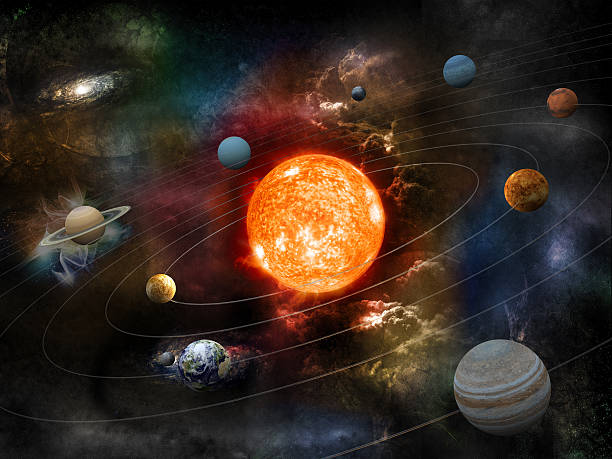
Earth is a small planet orbiting an ordinary star.
The Sun resides within one galaxy among billions.
That galaxy occupies only a tiny region of the observable universe.
And the observable universe itself may be only a small part of a much larger cosmos.
This realization can feel humbling.
But it can also feel inspiring.
The atoms in our bodies originated in ancient stars.
The laws governing distant galaxies are the same laws governing life on Earth.
In a fundamental sense, we are connected to the wider universe.
What Lies Beyond the Observable Universe?
Perhaps no question captures the imagination more powerfully.
What exists beyond the observable universe?
The honest answer is that we do not know.
Cosmological theories provide possibilities.
The universe may continue indefinitely beyond our horizon.
It may contain regions similar to our own.
It may be vastly larger than the observable portion.
Some speculative theories even suggest entirely different cosmic domains.
Yet because these regions remain unobservable, direct evidence is lacking.
Science depends upon observation and testing.
Beyond the observable universe, those tools reach their limits.
The unknown begins.
The Future of Observing the Cosmos
Humanity’s ability to explore the observable universe continues improving.
Advanced telescopes such as the James Webb Space Telescope allow astronomers to detect galaxies formed shortly after the Big Bang.
Future observatories will probe even deeper.
They will map dark matter with greater precision.
They will investigate dark energy.
They will search for the first stars and earliest galaxies.
Each new instrument expands our understanding of the observable universe.
Although we may never see beyond the cosmic horizon, we can continue uncovering the extraordinary details contained within it.
The frontier of knowledge keeps moving outward.
Why the Observable Universe Matters
The observable universe is more than an astronomical concept.
It defines the realm of existence accessible to scientific investigation.
Everything humanity has ever observed—from nearby planets to ancient radiation left over from the Big Bang—exists within this cosmic sphere.
Its study reveals the history of the cosmos, the nature of matter and energy, the formation of galaxies, and the evolution of space itself.
The observable universe is the stage upon which all known cosmic events have unfolded.
Understanding it helps us understand our own origins.
Conclusion
The observable universe is the portion of the cosmos from which light and information have had enough time to reach us since the Big Bang nearly 13.8 billion years ago. Although its radius extends about 46.5 billion light-years in every direction due to the expansion of space, it may represent only a fraction of the entire universe. Beyond its boundary lies a realm that remains hidden from observation, not because of technological limitations, but because of the fundamental laws governing space, time, and light.
Within this vast observable region exist hundreds of billions or perhaps trillions of galaxies, countless stars, mysterious dark matter, enigmatic dark energy, and the ancient glow of the cosmic microwave background. It is a universe rich with wonder, complexity, and unanswered questions.
Perhaps the most remarkable aspect of the observable universe is that a species living on a small planet around an ordinary star has learned to comprehend so much of it. By studying faint light that has traveled across billions of years, humanity has pieced together a story stretching from the birth of the cosmos to the present day. Yet beyond the horizon, mysteries remain.
The observable universe is both a triumph of human understanding and a reminder that some parts of reality still lie beyond our sight. It shows us how far we have come in our quest for knowledge—and how much wonder still awaits in the darkness beyond the edge of what we can see.