When we look at images of galaxies, our attention is naturally drawn to their brightest features. We admire the graceful spiral arms glowing with billions of stars. We marvel at brilliant galactic centers packed with ancient suns. We stare at colorful clouds of gas where new stars are being born.
These luminous regions are spectacular, but they do not tell the whole story.
In fact, much of a galaxy exists far beyond the bright structures visible in photographs. Surrounding many galaxies is an enormous, nearly invisible region that extends far into space. It contains ancient stars, mysterious globular clusters, vast reservoirs of gas, and, perhaps most importantly, enormous quantities of dark matter.
This immense and often overlooked structure is known as the galactic halo.
A galactic halo is one of the largest components of a galaxy, yet it is also one of the most difficult to see. For decades, astronomers barely understood its true size and importance. Today, researchers know that galactic halos hold critical clues about galaxy formation, cosmic evolution, and the mysterious dark matter that appears to dominate much of the universe.
The bright disk of a galaxy may capture our imagination, but the halo tells its deeper story.
Understanding the Structure of a Galaxy
To appreciate what a galactic halo is, it helps to understand the basic structure of a typical galaxy.
Consider our home galaxy, the Milky Way.
Most illustrations of the Milky Way focus on its flattened disk. This disk contains spiral arms filled with stars, gas clouds, and dust. It is where much of the galaxy’s visible activity takes place.
At the center lies a dense bulge containing older stars and the supermassive black hole known as Sagittarius A*.
For a long time, astronomers concentrated primarily on these visible structures because they were easier to observe.
But beyond the disk and central bulge lies something much larger.
Enveloping the entire galaxy is a roughly spherical region extending hundreds of thousands of light-years into space.
This is the galactic halo.
Unlike the bright disk, the halo contains relatively few stars. It is faint and difficult to detect. Yet its enormous size means it contains a substantial fraction of a galaxy’s mass.
What Is a Galactic Halo?
A galactic halo is a vast, roughly spherical region surrounding a galaxy.
It extends far beyond the visible parts of the galaxy and contains several important components, including old stars, globular clusters, hot gas, satellite galaxies, and large amounts of dark matter.
The halo is not a solid shell. It is extremely diffuse, meaning its contents are spread over immense distances.
If you could somehow travel through a galactic halo, you would not see a dense cloud or wall surrounding the galaxy. Instead, you would move through a sparsely populated region where stars and gas are separated by enormous expanses of space.
Despite its low density, the halo plays a vital role in the structure and evolution of galaxies.
It acts as a vast gravitational framework helping hold the galaxy together.
Without it, galaxies as we know them might not exist.
Why Galactic Halos Are Difficult to See
One reason galactic halos remained mysterious for so long is that they are incredibly faint.
The bright disk of a galaxy contains most of its visible stars. These stars produce enormous amounts of light, making the disk easy to observe even across great distances.
The halo, by contrast, contains relatively few luminous stars.
Its stars are spread across a much larger volume of space.
As a result, the halo emits very little light compared with the rest of the galaxy.
Observing a galactic halo is somewhat like trying to see a thin mist surrounding a brightly illuminated city at night. The city lights dominate the view, making the faint outer region difficult to detect.
Modern telescopes and advanced imaging techniques have finally allowed astronomers to study halos in greater detail.
These observations have revealed that galactic halos are far larger and more complex than previously imagined.
The Discovery of Galactic Halos
The existence of galactic halos was not immediately obvious.
Early astronomers studying galaxies focused mainly on their visible structures.
As telescopes improved during the twentieth century, researchers began noticing unusual populations of stars located far above and below galactic disks.
These stars did not belong to the disk itself.
They appeared older and moved differently from most stars within the galaxy.
Astronomers also discovered dense clusters of ancient stars orbiting far from galactic centers.
These observations hinted that galaxies possessed extended outer regions beyond their visible boundaries.
Over time, evidence accumulated showing that these structures formed part of a larger spherical component surrounding galaxies.
The concept of the galactic halo gradually emerged as scientists pieced together the puzzle.
The Shape of a Galactic Halo
Unlike spiral arms, which form a flat rotating disk, galactic halos are generally spherical or slightly elongated.
Imagine placing a glowing dinner plate inside a giant transparent ball.
The plate represents the galactic disk.
The surrounding ball represents the halo.
This spherical shape is significant because it reflects how the halo formed and evolved.
Stars within the galactic disk tend to orbit in orderly paths around the galaxy’s center.
Halo stars follow more random and varied orbits.
Some travel far above the disk before plunging back through it.
Others move along elongated paths that take them across vast regions of space.
These complex motions help create the halo’s roughly spherical structure.
Halo Stars: Ancient Survivors of Cosmic History
Many stars found within galactic halos are extraordinarily old.
Some formed more than 12 billion years ago, making them among the oldest known stars in the universe.
These stars provide a remarkable glimpse into the early history of galaxies.
When astronomers analyze halo stars, they often find low concentrations of heavy elements.
This is important because heavy elements are created inside stars and distributed through supernova explosions.
Early in cosmic history, relatively few generations of stars had existed.
As a result, ancient stars contain fewer heavy elements than younger stars.
Halo stars therefore act as cosmic fossils.
They preserve information about conditions that existed shortly after galaxies first formed.
By studying them, scientists can reconstruct events that occurred billions of years ago.
Globular Clusters: Jewels of the Halo
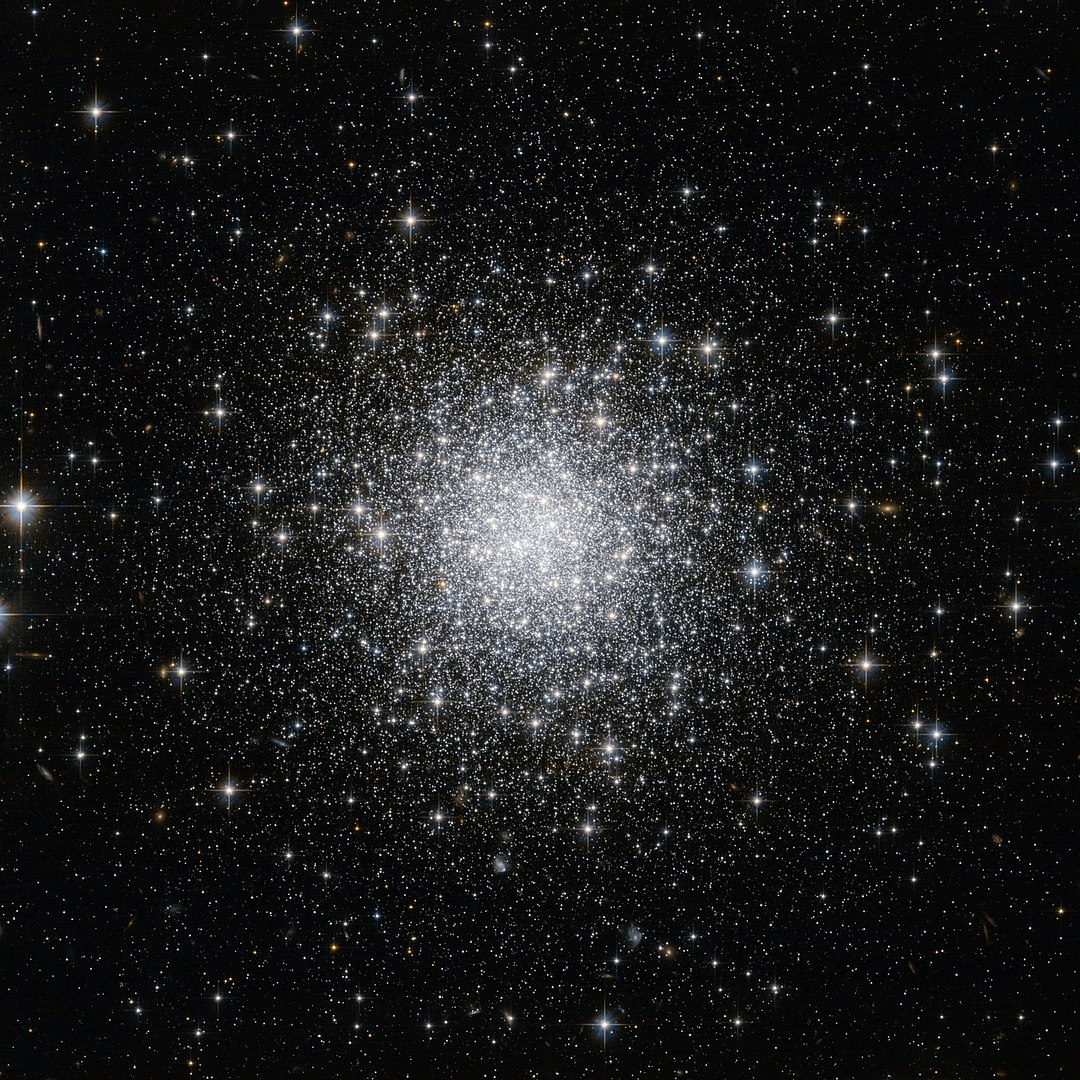
One of the most striking features of galactic halos is the presence of globular clusters.
Globular clusters are dense, spherical collections of stars containing tens of thousands to millions of stars packed closely together.
These clusters orbit within the halo rather than the galactic disk.
The Milky Way contains more than 150 known globular clusters.
Many are incredibly old, dating back nearly to the birth of the galaxy itself.
Viewed through powerful telescopes, globular clusters resemble sparkling swarms of stars suspended in darkness.
Their beauty is matched by their scientific importance.
Because they contain ancient stars, globular clusters help astronomers estimate the ages of galaxies and investigate their early evolution.
They are among the oldest surviving structures in the cosmos.
The Halo and Galaxy Formation
Galactic halos play a central role in theories of galaxy formation.
Modern astronomy suggests that galaxies did not appear fully formed.
Instead, they grew gradually over billions of years.
Small structures formed first.
These structures merged and accumulated additional matter.
Over time, larger galaxies emerged.
The halo preserves evidence of this process.
Many halo stars may have originated in smaller galaxies that were later absorbed by larger ones.
When galaxies merge, stars from the smaller system can become scattered throughout the halo.
As a result, galactic halos often contain remnants of ancient mergers.
In a sense, the halo serves as a historical archive recording a galaxy’s past interactions.
Galactic Cannibalism and Halo Growth
Galaxies frequently grow by consuming smaller companions.
This process is sometimes called galactic cannibalism.
When a dwarf galaxy approaches a larger galaxy, gravitational forces begin pulling it apart.
Its stars become stretched into long streams.
Eventually, many of those stars join the larger galaxy’s halo.
Astronomers have observed numerous examples of these stellar streams surrounding galaxies.
These streams represent the remains of galaxies that were torn apart long ago.
The Milky Way itself is currently absorbing several smaller galaxies.
Their stars are gradually becoming part of our halo.
Every galaxy carries scars from past encounters, and the halo often preserves those scars for billions of years.
The Hot Gas Halo
Not all galactic halo material consists of stars.
Galaxies are also surrounded by enormous reservoirs of gas.
This gas forms an extended halo reaching far beyond the visible galaxy.
Unlike the cold gas found in star-forming regions, halo gas is often extremely hot.
Temperatures can reach millions of degrees.
At such temperatures, the gas emits X-rays rather than visible light.
Detecting this hot gas requires specialized instruments.
For decades, astronomers underestimated the amount of gas present in galactic halos.
Modern observations reveal that these gaseous halos may contain enormous quantities of matter.
In some cases, the mass of halo gas rivals or exceeds the mass of stars within the galaxy.
The Circumgalactic Medium
The gaseous portion of a galactic halo is often called the circumgalactic medium.
This vast region acts as an interface between the galaxy and intergalactic space.
Material constantly flows between the galaxy and its surroundings.
Supernova explosions can eject gas outward into the halo.
At the same time, gas from the halo can fall inward toward the galaxy.
This exchange helps regulate star formation.
Without fresh supplies of gas, galaxies would eventually exhaust the material needed to create new stars.
The circumgalactic medium functions as a giant reservoir helping sustain galactic evolution over billions of years.
Dark Matter: The Hidden Giant of the Halo
Perhaps the most important component of a galactic halo is also the most mysterious.
Dark matter.
Dark matter does not emit light.
It does not reflect light.
It cannot be observed directly with telescopes.
Yet astronomers have overwhelming evidence that it exists.
The first major clues emerged when scientists measured the motions of stars within galaxies.
According to visible matter alone, stars near the outer edges of galaxies should orbit more slowly than those closer to the center.
Instead, they often move much faster than expected.
Something invisible must be providing additional gravity.
Dark matter appears to be the answer.
The Dark Matter Halo
Every major galaxy is thought to reside within an enormous dark matter halo.
This invisible structure extends far beyond the visible galaxy.
In fact, the dark matter halo is usually much larger than the stellar halo.
The Milky Way’s visible disk spans roughly 100,000 light-years.
Its dark matter halo may extend several hundred thousand light-years beyond that.
Some estimates suggest the dark matter halo contains far more mass than all visible stars, gas, and dust combined.
Without this hidden gravitational framework, galaxies would not remain stable.
Stars at the edges would likely escape into space.
Dark matter halos act as cosmic scaffolding upon which galaxies are built.
Evidence for Dark Matter Halos
Astronomers use several methods to study dark matter halos.
One approach involves measuring galaxy rotation speeds.
Stars far from galactic centers move faster than visible matter alone can explain.
Another method examines how galaxies influence nearby objects through gravity.
Dark matter halos affect the motions of satellite galaxies and surrounding gas.
Gravitational lensing provides additional evidence.
According to Einstein’s theory of relativity, gravity bends light.
Massive dark matter halos can distort light from distant galaxies behind them.
By studying these distortions, astronomers can map the distribution of otherwise invisible matter.
These observations consistently indicate that dark matter halos dominate galactic mass.
The Milky Way’s Halo
Our own galaxy possesses a remarkable halo.
The Milky Way’s stellar halo contains ancient stars and globular clusters extending far beyond the galactic disk.
Surrounding this stellar halo is an even larger dark matter halo.
Satellite galaxies orbit within this enormous structure.
Among the most famous are the Large Magellanic Cloud and the Small Magellanic Cloud.
These companion galaxies move through the Milky Way’s halo and are influenced by its gravity.
The halo surrounding our galaxy is so vast that the Solar System occupies only a tiny fraction of it.
Most people imagine the Milky Way as the band of stars visible in the night sky.
Yet that brilliant band represents only a small portion of the galaxy’s true extent.
Haloes Around Other Galaxies
Galactic halos are not unique to the Milky Way.
Astronomers have detected halos around countless galaxies throughout the universe.
Some are relatively small.
Others are enormous.
Massive galaxies often possess especially extensive halos containing vast numbers of globular clusters and satellite galaxies.
Observations show that halos vary considerably depending on a galaxy’s history.
Galaxies that have experienced numerous mergers often possess complex halo structures.
Others appear smoother and more uniform.
Each halo reflects the unique evolutionary journey of its host galaxy.
Stellar Streams in Galactic Halos
One of the most fascinating discoveries of recent decades is the presence of stellar streams within halos.
These streams are long ribbons of stars stretching across enormous distances.
They form when dwarf galaxies or star clusters are gradually torn apart by gravity.
As stars escape, they trace elongated paths through the halo.
These structures provide direct evidence of ongoing galactic growth.
Some stellar streams wrap around galaxies like giant cosmic ribbons.
Others extend for hundreds of thousands of light-years.
By mapping these streams, astronomers can reconstruct past collisions and measure the distribution of dark matter.
The halo becomes a historical record written in stars.
How Galactic Halos Influence Star Formation
Although halos appear remote from galactic disks, they strongly influence star formation.
Gas within the halo serves as a future fuel supply.
As gas cools and falls toward the galaxy, it replenishes star-forming regions.
Without this continuous inflow, star formation would eventually slow and cease.
Conversely, energetic events inside galaxies can push gas outward into the halo.
Supernova explosions and activity from supermassive black holes can eject enormous amounts of material.
This ongoing cycle connects the halo and galaxy in a dynamic relationship.
The halo is not merely a passive outer shell.
It actively participates in galactic life.
The Halo as a Cosmic Memory Bank
Every galaxy has a story.
Its halo preserves much of that story.
The stars in the disk tell us about current conditions.
The halo tells us about the past.
Ancient stars reveal early chemical environments.
Globular clusters preserve clues about primordial galaxy formation.
Stellar streams record past mergers.
Dark matter reflects the galaxy’s underlying structure.
Taken together, these components form a cosmic memory bank.
By reading the halo, astronomers can reconstruct events that occurred billions of years ago.
It is like studying tree rings to understand the history of a forest.
The halo contains the archaeological record of a galaxy.
Observing Galactic Halos with Modern Telescopes
Advances in technology have transformed halo research.
Space observatories, ground-based telescopes, and specialized instruments now allow astronomers to study faint halo structures in unprecedented detail.
The Hubble Space Telescope has revealed halo stars in distant galaxies.
The James Webb Space Telescope is providing even deeper views into galactic evolution.
Large surveys map millions of stars across the Milky Way’s halo.
Computer simulations help scientists understand how halos form and change over time.
Each new observation uncovers additional layers of complexity.
Far from being simple structures, galactic halos are dynamic and multifaceted.
Why Galactic Halos Matter
At first glance, galactic halos might seem like obscure astronomical details.
Yet they are central to understanding how galaxies work.
Without halos, astronomers could not explain galaxy formation.
Without dark matter halos, modern theories of cosmic structure would collapse.
Without halo stars and globular clusters, much of galactic history would remain hidden.
Halos connect the visible universe to the invisible one.
They bridge the gap between stars and dark matter.
They reveal how galaxies grow, interact, and evolve.
In many ways, the halo is the key to understanding the galaxy itself.
The Future of Galactic Halo Research
Many mysteries about galactic halos remain unsolved.
Scientists continue investigating the true nature of dark matter.
Researchers seek to understand how gas flows through the circumgalactic medium.
Astronomers are discovering new stellar streams and satellite galaxies.
Future observatories will map halos with greater precision than ever before.
These studies may answer some of the most profound questions in astrophysics.
What is dark matter made of?
How do galaxies acquire their gas?
How did the first galaxies form?
The answers may lie hidden within the vast reaches of galactic halos.
Conclusion
A galactic halo is a vast spherical region surrounding a galaxy, extending far beyond its visible stars and spiral arms. Though faint and difficult to observe, the halo contains some of the most important components of a galaxy, including ancient stars, globular clusters, hot gas, stellar streams, satellite galaxies, and enormous quantities of dark matter. It acts as both a gravitational framework and a historical archive, preserving evidence of billions of years of cosmic evolution.
The halo reveals that galaxies are far larger and more complex than their bright disks suggest. It records ancient mergers, fuels future star formation, and provides some of the strongest evidence for dark matter. In many ways, the halo is the hidden foundation upon which galaxies are built.
When we admire the glowing beauty of a spiral galaxy, we are seeing only its brightest face. Beyond that visible light stretches an immense and largely invisible realm—a vast cosmic halo that silently shapes the galaxy’s past, present, and future. It is one of the universe’s greatest hidden structures, reminding us that the most important parts of reality are not always the easiest to see.