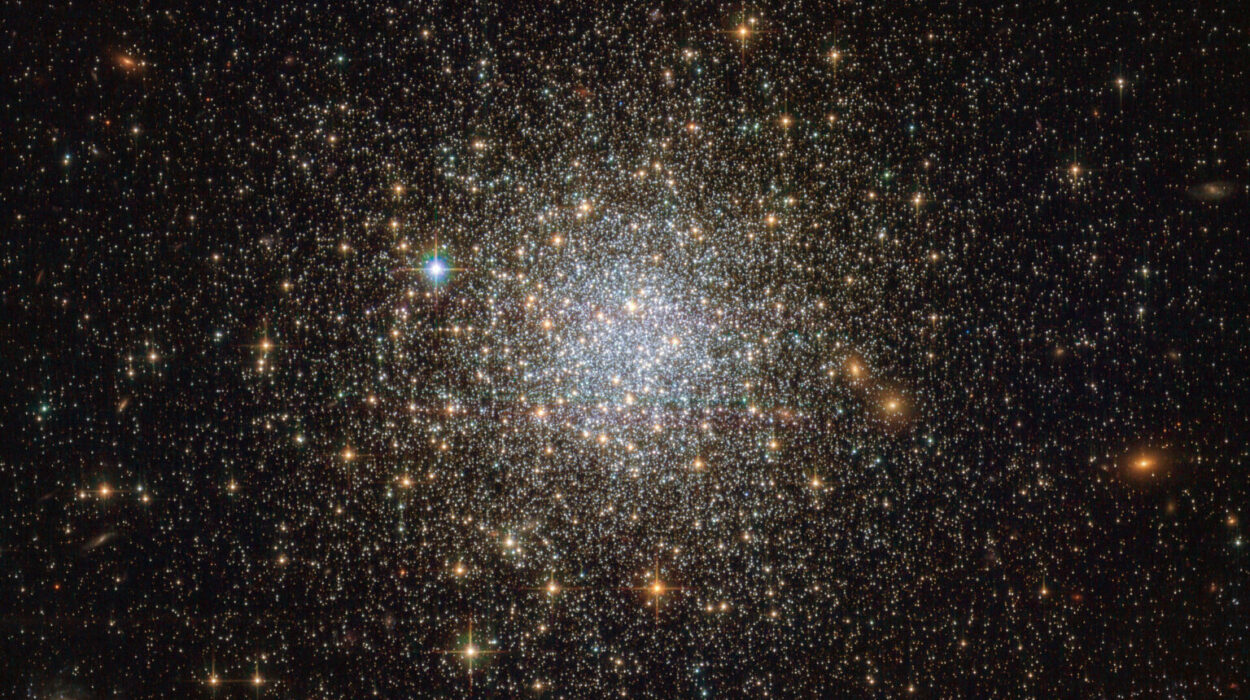
Look up at the night sky, and it is easy to feel overwhelmed by the sheer number of stars. Even from a dark location on Earth, thousands of stars can be seen scattered across the heavens. Through a telescope, that number grows dramatically. Beyond the stars lie galaxies. Beyond galaxies lie groups of galaxies. Beyond those groups are clusters of galaxies. And beyond clusters are structures so vast that they challenge the limits of human imagination.
These immense cosmic regions are known as superclusters.
A supercluster is among the largest structures known in the universe. It is a gigantic collection of galaxy clusters, galaxy groups, and individual galaxies linked together by gravity across hundreds of millions of light-years of space.
To truly appreciate their scale, imagine shrinking the Milky Way Galaxy to the size of a grain of sand. A supercluster would still stretch across an entire continent. The difference in scale is almost impossible to grasp.
Superclusters represent the universe on its grandest levels. They reveal how matter is distributed across the cosmos and help astronomers understand how the universe evolved over billions of years. They are not merely collections of galaxies. They are enormous chapters in the story of cosmic structure itself.
The more scientists study superclusters, the more they discover that the universe is organized in ways far more intricate and beautiful than anyone once imagined.
Understanding the Cosmic Hierarchy
To understand a supercluster, it helps to start with smaller cosmic structures.
The Earth is part of the Solar System.
The Solar System belongs to the Milky Way Galaxy.
The Milky Way is one galaxy among hundreds of billions in the observable universe.
Galaxies themselves rarely exist alone. Gravity causes many of them to gather into groups and clusters.
A galaxy group is a relatively small collection of galaxies bound together by gravity. The Milky Way belongs to a group called the Local Group.
Galaxy clusters are much larger. They can contain hundreds or even thousands of galaxies packed into a relatively small region of space.
For many years, astronomers believed galaxy clusters represented the largest structures in the universe.
Then they discovered something even bigger.
Clusters themselves often gather together into vast networks called superclusters.
These enormous structures can contain tens of thousands of galaxies and stretch across hundreds of millions of light-years.
They are cosmic cities made from entire cities of galaxies.
What Exactly Is a Supercluster?
A supercluster is a gigantic region of space containing multiple galaxy clusters, galaxy groups, and individual galaxies that are located near one another and connected through gravitational influence.
Unlike a galaxy cluster, a supercluster is not always a tightly bound object.
This distinction is important.
Within a galaxy cluster, gravity is usually strong enough to keep the entire cluster bound together.
A supercluster, however, is so enormous that some of its parts may not remain gravitationally bound forever. The expansion of the universe can gradually pull portions of a supercluster apart over cosmic timescales.
In other words, superclusters occupy a fascinating middle ground.
They are real structures.
They contain enormous concentrations of matter.
Yet they are also influenced by the expanding fabric of the universe itself.
Their immense size places them among the largest known arrangements of matter in existence.
The Discovery of Larger and Larger Structures
The history of astronomy often follows a pattern.
Humans think they understand the scale of the universe.
Then they discover something bigger.
For centuries, people believed Earth occupied the center of everything.
Later, astronomers realized Earth orbits the Sun.
Then they discovered the Sun is merely one star among billions in the Milky Way.
Soon afterward, they learned the Milky Way itself is only one galaxy among countless others.
The surprises continued.
Galaxy groups were discovered.
Then galaxy clusters.
Then superclusters.
Each discovery expanded humanity’s sense of place in the cosmos.
By the mid-twentieth century, astronomers had accumulated enough observations to recognize that clusters of galaxies were not randomly scattered throughout space. Instead, they often appeared concentrated into much larger structures.
The universe possessed organization on scales far beyond anything previously imagined.
The Cosmic Web
One of the most astonishing discoveries in modern astronomy is that galaxies are not distributed randomly across space.
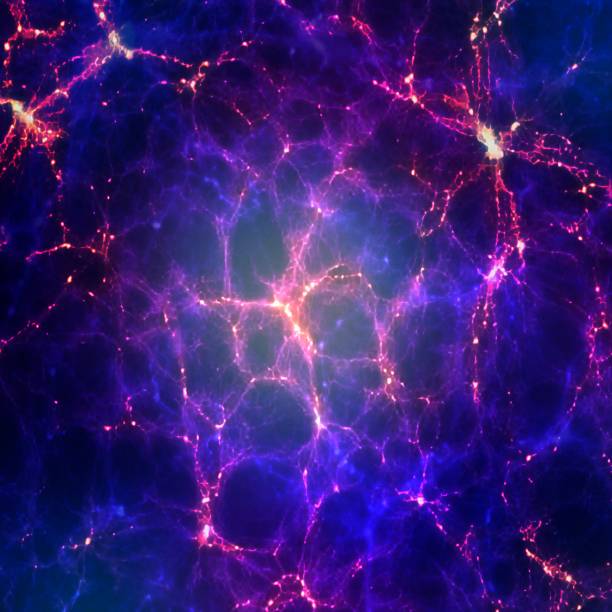
Instead, they form an immense interconnected network known as the cosmic web.
Imagine a gigantic three-dimensional spiderweb stretching across the observable universe.
The strands of this web consist of galaxies, galaxy groups, and galaxy clusters.
The intersections of the web contain the greatest concentrations of matter.
Many superclusters are found at these intersections.
Between the strands lie enormous empty regions called cosmic voids.
These voids can span hundreds of millions of light-years while containing relatively few galaxies.
The result is a universe that resembles a vast network rather than a uniform distribution.
Superclusters are among the most prominent features of this cosmic architecture.
The Ingredients of a Supercluster
Although superclusters are unimaginably large, they are composed of familiar cosmic ingredients.
Galaxies form the most visible component.
Each galaxy contains stars, planets, gas, dust, and black holes.
Galaxy clusters contribute significant mass. These clusters can contain thousands of galaxies and enormous amounts of hot gas.
Dark matter also plays a crucial role.
In fact, most of the mass within a supercluster is thought to consist of dark matter.
This mysterious substance cannot be seen directly because it does not emit, absorb, or reflect light.
Yet its gravitational influence helps shape the structure of the universe.
Without dark matter, superclusters likely could not have formed as they did.
Invisible though it may be, dark matter serves as the cosmic scaffolding upon which the visible universe is built.
Measuring Something So Enormous
How do astronomers measure structures that span hundreds of millions of light-years?
The answer involves careful observation and sophisticated techniques.
Scientists determine the distances to galaxies using several methods, including measurements of redshift.
As the universe expands, distant galaxies move away from us. Their light becomes stretched toward longer wavelengths, creating a phenomenon known as redshift.
By measuring this redshift, astronomers can estimate how far away galaxies are.
When large surveys map the positions of millions of galaxies, patterns begin to emerge.
Clusters appear.
Filaments become visible.
Superclusters reveal themselves.
Over decades, increasingly detailed galaxy surveys have allowed scientists to construct three-dimensional maps of the cosmos.
These maps reveal a universe filled with structures of breathtaking scale.
The Local Supercluster
For many years, astronomers believed the Milky Way belonged to a structure known as the Virgo Supercluster.
Named after the Virgo Cluster at its center, this supercluster contains thousands of galaxies spread across a vast region of space.
The Local Group, which includes the Milky Way and the Andromeda Galaxy, resides within this larger structure.
For decades, the Virgo Supercluster served as humanity’s cosmic address on the grandest known scale.
Yet even this picture turned out to be incomplete.
As observations improved, astronomers realized that the Virgo Supercluster itself was part of something even larger.
Laniakea: Our True Cosmic Home
In 2014, astronomers introduced a remarkable new concept.
Using detailed measurements of galaxy motions, researchers identified an enormous structure called Laniakea Supercluster.
The name “Laniakea” comes from Hawaiian and means “immense heaven.”
It is an appropriate description.
Laniakea spans roughly 520 million light-years and contains around 100,000 galaxies.
The Virgo Supercluster is now considered one region within Laniakea rather than a separate supercluster.
This discovery reshaped humanity’s understanding of its location in the universe.
The Milky Way is part of the Local Group.
The Local Group belongs to Laniakea.
And Laniakea is only one supercluster among many.
The Largest Known Superclusters
As impressive as Laniakea is, even larger structures exist.
Some superclusters stretch across distances approaching a billion light-years.
Examples include the Shapley Supercluster and the Hercules Supercluster.
The Shapley Supercluster is particularly remarkable.
It contains an extraordinary concentration of galaxy clusters and represents one of the most massive structures in the nearby universe.
Its gravitational influence may even affect the motion of our own galaxy across cosmic distances.
These immense structures demonstrate that the universe contains matter organized on scales once thought impossible.
Gravity: The Architect of Superclusters
Gravity is the fundamental force responsible for creating superclusters.
Shortly after the Big Bang, matter was not distributed perfectly evenly throughout space.
Tiny variations in density existed.
Some regions contained slightly more matter than others.
Over billions of years, gravity amplified these differences.
Regions with more matter exerted stronger gravitational attraction.
They accumulated additional material.
Small structures grew larger.
Galaxies formed.
Clusters emerged.
Eventually, superclusters developed.
The process continues even today.
Gravity remains the master architect shaping the large-scale structure of the universe.
The Role of Dark Matter
No discussion of superclusters would be complete without dark matter.
Although invisible, dark matter appears to outweigh ordinary matter by a large margin.
Its gravitational pull helped form the first large structures after the Big Bang.
Computer simulations show that without dark matter, the universe would look very different.
Galaxies would form more slowly.
Clusters might not exist in their current forms.
Superclusters could be dramatically altered or absent altogether.
Dark matter acts like an unseen framework around which visible matter gathers.
In many ways, superclusters reveal the hidden architecture of dark matter itself.
When astronomers map galaxies, they are also tracing the invisible structures underlying the cosmos.
Superclusters and the Early Universe
Every supercluster carries information about the universe’s history.
Because light takes time to travel, observing distant superclusters allows astronomers to see earlier stages of cosmic evolution.
Some observed structures existed when the universe was only a fraction of its current age.
These ancient superclusters provide crucial evidence about how matter accumulated over time.
Comparing young superclusters with nearby ones helps scientists test theories of cosmic evolution.
The results consistently support the idea that structures grew gradually through gravitational attraction over billions of years.
In this sense, superclusters serve as cosmic fossils preserving the history of the universe.
Are Superclusters Truly Bound Together?
An intriguing question concerns whether superclusters are permanently connected.
The answer is complicated.
Galaxy clusters are generally gravitationally bound.
Their galaxies remain connected despite the expansion of the universe.
Superclusters, however, are often too large for gravity to completely overcome cosmic expansion.
Some portions may remain connected.
Others may slowly drift apart.
This means many superclusters are not permanent structures.
They represent temporary configurations in an evolving universe.
Over immense timescales, the expansion of space may separate their components.
The universe is dynamic, and even its largest structures are not immune to change.
The Influence of Dark Energy
While gravity pulls matter together, another force-like phenomenon pushes the universe apart.
This phenomenon is called dark energy.
Dark energy drives the accelerating expansion of the universe.
Its effects become increasingly important over vast distances.
On small scales, gravity dominates.
Within solar systems, galaxies, and clusters, gravity easily overcomes expansion.
But on supercluster scales, dark energy becomes significant.
It influences how these structures evolve and whether their components remain connected.
The interplay between gravity and dark energy shapes the future of the largest structures in existence.
Cosmic Voids and Superclusters
To appreciate superclusters fully, it is important to consider what surrounds them.
Between superclusters lie cosmic voids.
These enormous regions contain far fewer galaxies than average.
Some voids stretch hundreds of millions of light-years across.
If superclusters are the cities of the universe, voids are its vast wildernesses.
Together, superclusters and voids create the large-scale pattern of the cosmic web.
The contrast is extraordinary.
Dense regions filled with thousands of galaxies sit alongside immense expanses that are nearly empty.
This arrangement reveals how matter organized itself after the Big Bang.
Observing Superclusters Across the Electromagnetic Spectrum
Superclusters can be studied using many forms of light.
Visible-light observations reveal galaxies themselves.
Radio observations detect clouds of hydrogen gas.
Infrared instruments penetrate dust and uncover hidden structures.
X-ray telescopes reveal hot gas trapped within galaxy clusters.
Each wavelength provides different information.
Together, they create a comprehensive picture of supercluster environments.
Modern astronomy relies on this multiwavelength approach to understand these enormous structures.
The universe reveals different aspects of itself depending on how we look.
Computer Simulations and Superclusters
Because superclusters evolve over billions of years, astronomers cannot directly watch their formation.
Instead, they use powerful computer simulations.
These simulations begin with conditions shortly after the Big Bang.
Researchers then allow gravity, dark matter, and cosmic expansion to shape the virtual universe.
Remarkably, the resulting structures closely resemble real observations.
Filaments appear.
Clusters form.
Superclusters emerge.
The agreement between simulations and observations provides strong evidence that current cosmological theories capture many essential features of reality.
Superclusters serve as critical tests of our understanding of the universe.
Could There Be Structures Larger Than Superclusters?
This question has fascinated astronomers for decades.
At first glance, some cosmic features appear larger than superclusters.
Certain galaxy walls and filaments extend across extraordinary distances.
Examples include the Sloan Great Wall and the Hercules–Corona Borealis Great Wall.
These immense arrangements challenge scientists to determine where the limits of cosmic structure truly lie.
However, defining such structures can be difficult.
Some may represent connected regions of the cosmic web rather than single gravitationally meaningful objects.
The debate continues.
Regardless of classification, these discoveries reveal that the universe contains structures of astonishing scale.
Humanity’s Perspective Within a Supercluster
There is something profoundly humbling about understanding our place within a supercluster.
Human civilization occupies one planet.
That planet orbits one star.
That star belongs to one galaxy.
That galaxy belongs to a group.
That group exists within a supercluster containing tens of thousands of galaxies.
And that supercluster is only one part of the cosmic web stretching across the observable universe.
Each step expands the scale dramatically.
Yet despite these enormous distances, humans have developed the ability to understand them.
Using mathematics, telescopes, and scientific reasoning, we have mapped structures extending hundreds of millions of light-years into space.
This achievement represents one of humanity’s greatest intellectual triumphs.
Why Superclusters Matter
Superclusters are not merely impressive because they are large.
They matter because they help answer fundamental questions about the universe.
They reveal how matter is distributed.
They provide evidence for dark matter.
They help scientists investigate dark energy.
They preserve clues about conditions shortly after the Big Bang.
They allow astronomers to test theories of cosmic evolution.
Without understanding superclusters, our picture of the universe would remain incomplete.
These giant structures act as laboratories where the largest-scale processes in nature can be studied.
The Future of Supercluster Research
The coming decades promise remarkable advances in our understanding of superclusters.
New observatories are mapping the universe with unprecedented precision.
Massive galaxy surveys will catalog millions of additional galaxies.
Improved measurements of dark matter and dark energy will refine our understanding of cosmic structure.
Artificial intelligence is helping astronomers analyze enormous datasets that would be impossible to study manually.
As observations improve, scientists may discover previously unknown superclusters or uncover entirely new patterns in the cosmic web.
The largest structures in the universe still contain many mysteries waiting to be explored.
The Beauty of the Cosmic Web
When people first imagine the universe, they often picture isolated galaxies floating in darkness.
Reality is far more beautiful.
Galaxies connect to one another through an intricate network spanning billions of light-years.
Superclusters serve as the great intersections of this network.
They are where matter gathers in extraordinary concentrations.
Seen on the largest scales, the universe resembles a living tapestry woven from gravity, dark matter, and time.
This vision transforms our understanding of the cosmos.
The universe is not a random scattering of objects.
It is a structured, evolving system of breathtaking complexity.
Conclusion
A supercluster is one of the largest known structures in the universe, consisting of vast collections of galaxy clusters, galaxy groups, and individual galaxies linked through gravity and embedded within the cosmic web. Stretching across hundreds of millions of light-years, these immense structures represent the grandest levels of cosmic organization currently known.
From the Laniakea Supercluster that contains our own galaxy to colossal concentrations like the Shapley Supercluster, these gigantic formations reveal how gravity, dark matter, and cosmic evolution have shaped the universe over billions of years. They provide critical insights into the nature of matter, the influence of dark energy, and the history of the cosmos itself.
Perhaps most importantly, superclusters remind us of our place in a universe far larger and more interconnected than human intuition can easily grasp. They are the great continents of the cosmos, the largest chapters in the story of structure and evolution on a universal scale. By studying them, we not only learn how the universe is organized—we gain a deeper appreciation for the extraordinary vastness and beauty of the cosmic home we inhabit.