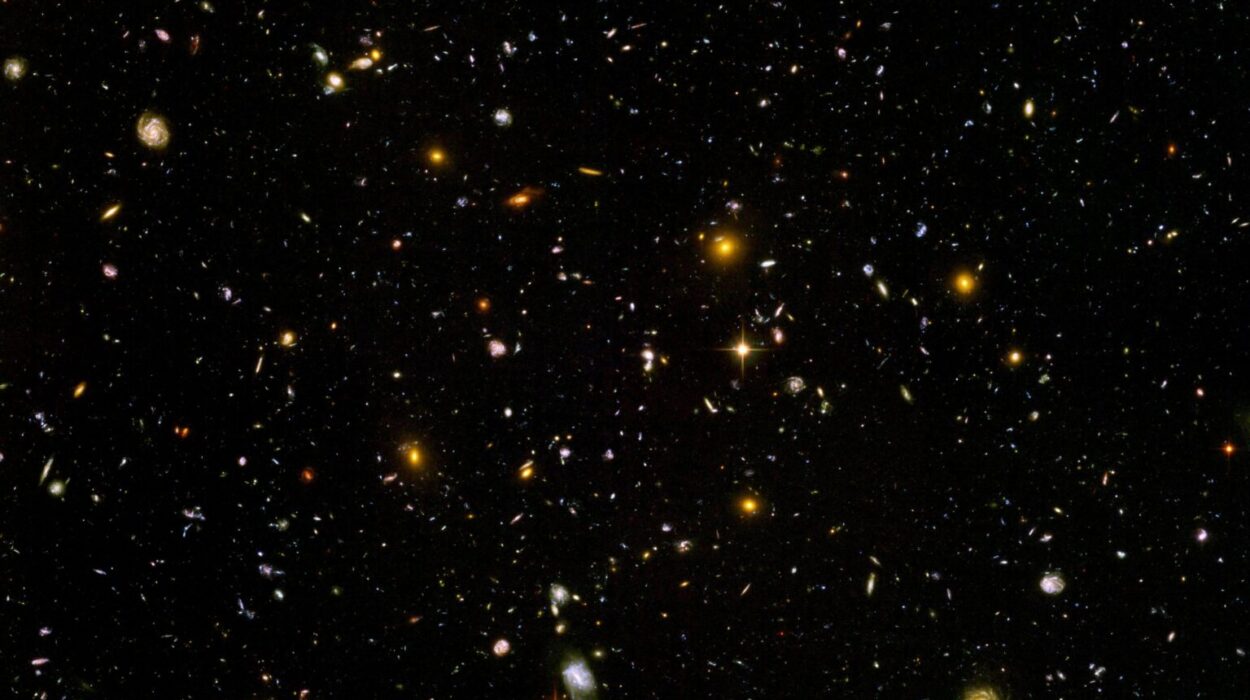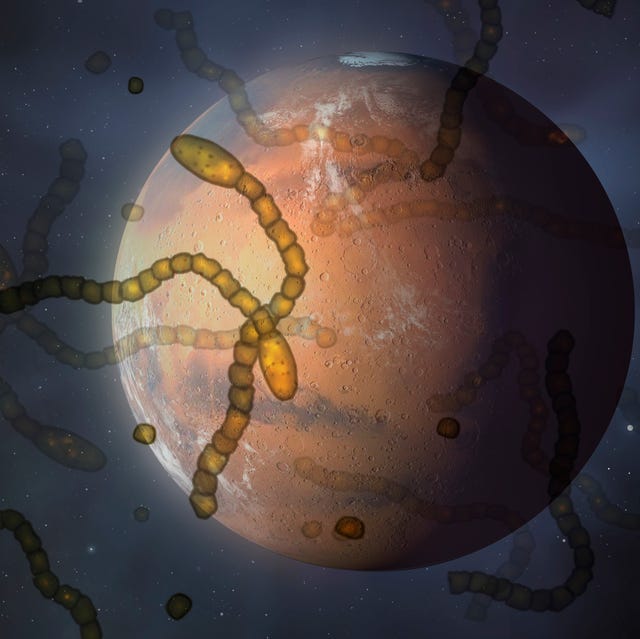
Look up at the night sky on a clear evening and you will see thousands of stars scattered across the darkness. To most people, they appear distant and disconnected from everyday life. Yet one of the most fascinating scientific ideas ever proposed suggests that the story of life on Earth may be deeply connected to those stars.
Imagine for a moment that life did not begin on Earth at all.
Imagine that the earliest ingredients of life—or perhaps even primitive living organisms themselves—traveled through the vast emptiness of space before arriving on our planet billions of years ago. Imagine that every tree, every flower, every whale, every bird, and every human being might ultimately trace their origins to something that once drifted among the stars.
This remarkable idea is known as panspermia.
Panspermia is one of the most intriguing hypotheses in science because it touches upon one of humanity’s oldest and deepest questions: Where did life come from?
Scientists have spent decades studying the origins of life. Despite enormous progress, many mysteries remain unsolved. Exactly how nonliving chemicals transformed into the first living organisms on Earth remains one of the greatest puzzles in biology.
Panspermia offers a different perspective. Rather than asking how life originated on Earth, it suggests that life—or at least the building blocks of life—may have arrived from elsewhere in the cosmos.
The idea sounds like science fiction. Yet it has been seriously discussed by respected scientists for more than a century and continues to inspire research today.
Importantly, panspermia does not necessarily explain how life first began. Instead, it proposes that life may have spread from one place to another across the universe.
Whether panspermia is ultimately proven true or false, exploring it takes us on an extraordinary journey through astronomy, biology, chemistry, and the history of our planet.
Understanding the Meaning of Panspermia
The word “panspermia” comes from Greek words meaning “seeds everywhere.”
The name captures the central idea perfectly.
According to the panspermia hypothesis, the universe may be filled with the seeds of life. These seeds could travel through space and eventually take root wherever conditions become favorable.
In this view, life is not necessarily confined to a single planet. Instead, it may spread naturally across the cosmos through a variety of mechanisms.
Some versions of panspermia suggest that microscopic organisms travel between worlds. Others propose that complex organic molecules are distributed throughout space and contribute to the emergence of life when they reach suitable environments.
The concept is broad and includes several different variations, but all share a common theme: life has a cosmic connection.
The Ancient Origins of the Idea
Although panspermia sounds modern, the roots of the idea stretch back thousands of years.
Ancient Greek philosophers speculated about the origins of life long before modern science existed.
One early thinker, Anaxagoras, suggested that the seeds of life might be present throughout the universe.
At the time, such ideas were philosophical rather than scientific. There were no telescopes capable of studying distant planets and no microscopes revealing the complexity of living cells.
Nevertheless, the notion that life might have a cosmic origin remained part of intellectual history.
Centuries later, as science advanced and humanity gained a deeper understanding of astronomy, the concept of panspermia returned with renewed interest.
The Modern Revival of Panspermia
The modern scientific discussion of panspermia began in earnest during the nineteenth and early twentieth centuries.
Scientists were increasingly aware of the immense age of Earth and the complexity of life.
Some researchers wondered whether life could have originated elsewhere before arriving here.
One of the most influential supporters of panspermia was Svante Arrhenius, who proposed a version known as radiopanspermia.
Arrhenius suggested that microscopic spores might travel through space propelled by radiation pressure from starlight.
Although later research revealed challenges with this idea, his work helped transform panspermia from philosophical speculation into a scientific hypothesis worthy of investigation.
Since then, many scientists have explored different versions of the theory.
The Mystery of Life’s Origin
To understand why panspermia attracts attention, it helps to appreciate how difficult the origin of life problem actually is.
Earth formed approximately 4.5 billion years ago.
Evidence suggests that life appeared relatively early in the planet’s history, perhaps within a few hundred million years after conditions became suitable.
This means that somewhere during Earth’s infancy, nonliving chemistry gave rise to living biology.
Scientists call this process abiogenesis.
Researchers have made significant progress in understanding how organic molecules can form naturally.
Experiments have demonstrated that amino acids, nucleotides, and other important biological compounds can emerge under conditions resembling those of early Earth.
Yet the transition from chemistry to life remains one of science’s greatest unsolved mysteries.
How did molecules organize into self-replicating systems?
How did the first cells emerge?
How did genetic information arise?
Panspermia enters the conversation because some scientists wonder whether part of the answer might lie beyond Earth itself.
What Panspermia Actually Claims
A common misunderstanding is that panspermia explains the ultimate origin of life.
It does not.
If life arrived on Earth from another world, a new question immediately appears: Where did life originate on that world?
The problem is simply moved elsewhere.
For this reason, panspermia is not a complete explanation for life’s beginnings.
Instead, it is a theory about the distribution of life.
It proposes that once life emerges somewhere, it may spread through space and colonize other environments.
In this view, life could be a cosmic traveler rather than a purely local phenomenon.
The distinction is important.
Panspermia addresses how life might move between worlds, not necessarily how it first appeared in the universe.
The Cosmic Ingredients of Life
One reason scientists take panspermia seriously is that space is surprisingly rich in organic chemistry.
For much of human history, people imagined space as empty.
Modern astronomy paints a very different picture.
Interstellar clouds contain water, carbon compounds, alcohols, amino acid precursors, and numerous other organic molecules.
Astronomers have identified hundreds of complex molecules drifting through space.
Many of the chemical ingredients associated with life are not unique to Earth.
They appear to be widespread throughout the cosmos.
This discovery transformed scientific thinking.
If life’s building blocks exist across the universe, perhaps the processes leading toward life are also common.
Meteorites and Organic Molecules
Meteorites have provided some of the strongest evidence supporting the idea that life’s ingredients can travel through space.
Meteorites are fragments of rock that survive their journey through Earth’s atmosphere and reach the ground.
Scientists studying certain meteorites have discovered a remarkable variety of organic compounds.
One famous example is the Murchison meteorite fall.
When this meteorite landed in Australia in 1969, researchers found dozens of amino acids within it.
Amino acids are essential building blocks of proteins, which are critical components of life.
The meteorite demonstrated that biologically important molecules can form naturally in space and survive delivery to planetary surfaces.
This finding gave new credibility to panspermia-related ideas.
Comets as Cosmic Messengers
Comets are often described as dirty snowballs composed of ice, dust, rock, and organic materials.
These icy visitors originate in the distant reaches of the Solar System.
As comets approach the Sun, they develop glowing tails visible across the sky.
Scientists have discovered that comets contain numerous organic compounds.
Some researchers suggest that comets may have played a major role in delivering water and prebiotic chemicals to early Earth.
Billions of years ago, impacts from comets were far more common than they are today.
Each impact may have deposited valuable ingredients for life’s emergence.
While this scenario does not necessarily involve living organisms, it supports the broader idea that space contributes important biological materials to planets.
Can Microorganisms Survive in Space?
One of the biggest challenges facing panspermia is survival.
Space is an extraordinarily hostile environment.
Temperatures can be extreme.
Radiation levels are intense.
Vacuum conditions remove pressure entirely.
For many years, scientists assumed that living organisms could not endure such conditions.
Surprisingly, research has shown that some microorganisms are far tougher than previously imagined.
Certain bacteria, spores, and microscopic organisms called tardigrades can survive environments that would quickly kill most life forms.
Tardigrades, often nicknamed “water bears,” are particularly famous for their resilience.
These tiny creatures have survived exposure to vacuum conditions, extreme temperatures, and intense radiation.
Their survival does not prove panspermia, but it demonstrates that life can be remarkably durable.
The Concept of Lithopanspermia
One of the most scientifically plausible versions of panspermia is known as lithopanspermia.
The term refers to the transfer of life through rocks.
Imagine a large asteroid striking a planet that already hosts microbial life.
The impact ejects debris into space.
Some fragments escape the planet’s gravity and begin traveling through the Solar System.
If microorganisms trapped inside those rocks survive the journey, they could potentially reach another planet.
Upon impact, they might seed a new environment with life.
This process sounds extraordinary, yet scientists know that rocks can move naturally between planets.
Meteorites originating from Mars have been found on Earth.
This proves that planetary material can travel across interplanetary space.
The remaining question is whether life could survive the trip.
Mars and the Possibility of Shared Origins
Mars occupies a special place in panspermia discussions.
Today the planet is cold, dry, and inhospitable on its surface.
However, evidence suggests that ancient Mars once possessed rivers, lakes, and perhaps even oceans.
Billions of years ago, Mars may have been more Earth-like than it is today.
If life emerged there, asteroid impacts could have launched Martian rocks into space.
Some of those rocks eventually reached Earth.
Conversely, Earth material could have reached Mars.
This possibility raises a fascinating question.
Could life on Earth and Mars share a common ancestry?
If future missions discover evidence of Martian life, scientists will carefully compare its biology with Earth’s organisms.
Similarities might suggest a shared origin.
Differences could imply independent origins of life.
Either result would profoundly affect our understanding of biology and the universe.
Directed Panspermia
Among the more speculative versions of the theory is directed panspermia.
This idea proposes that intelligent beings deliberately spread life through space.
Instead of natural processes distributing microorganisms, advanced civilizations intentionally send them to suitable planets.
The concept was discussed by prominent scientists including Francis Crick.
Crick did not claim that directed panspermia was true. Rather, he considered it an intriguing possibility worthy of thought.
At present, there is no evidence supporting directed panspermia.
Nevertheless, the idea raises profound philosophical questions.
If humanity eventually develops interstellar technology, could we one day become agents of panspermia ourselves?
Could future civilizations intentionally seed lifeless worlds with biology?
What seems speculative today may become a real ethical consideration in the distant future.
Evidence Supporting Panspermia
Supporters of panspermia point to several observations that make the hypothesis plausible.
Organic molecules are abundant throughout space.
Meteorites contain biologically relevant compounds.
Microorganisms can survive surprisingly harsh conditions.
Planetary material can travel naturally between worlds.
Early life appears relatively quickly in Earth’s geological record.
Together, these facts suggest that the ingredients necessary for panspermia exist.
Importantly, none of these observations prove panspermia occurred.
However, they demonstrate that the theory is not entirely outside the realm of possibility.
Science often advances by exploring possibilities and testing them against evidence.
The Challenges Facing Panspermia
Despite its appeal, panspermia faces significant obstacles.
Survival remains a major concern.
Although some microorganisms are resilient, surviving millions of years in deep space would be extraordinarily difficult.
Radiation can damage DNA and other biological molecules.
Long journeys expose organisms to continuous hazards.
The process of impact ejection presents another challenge.
The forces involved in launching rocks from a planet are immense.
Microorganisms would need to survive both departure and arrival.
Even if life successfully reaches another world, suitable environmental conditions must exist for it to thrive.
Each step in the process presents difficulties.
Together, these challenges make panspermia far from certain.
Panspermia and Exoplanets
The discovery of exoplanets has transformed discussions about life in the universe.
An exoplanet is a planet orbiting a star other than the Sun.
Since the 1990s, astronomers have discovered thousands of them.
Many reside within regions where liquid water could potentially exist.
The sheer number of planets in the galaxy suggests that habitable environments may be common.
If life can spread between worlds, the universe could be interconnected in ways we have only begun to imagine.
Panspermia becomes especially interesting when considered alongside the enormous scale of the cosmos.
With billions of stars and countless planets available, opportunities for biological exchange may be more numerous than previously thought.
Life as a Cosmic Phenomenon
One of the most exciting implications of panspermia is the possibility that life is not rare.
If life can travel and spread, then a single origin event could potentially influence many worlds.
Instead of isolated biological islands, planets might form part of a larger cosmic ecosystem.
This idea challenges traditional assumptions.
Perhaps life is not something that emerged only once on Earth.
Perhaps it is a natural consequence of cosmic evolution.
Perhaps the universe has been exchanging biological material for billions of years.
Although these ideas remain speculative, they encourage scientists to think broadly about life’s place in the cosmos.
Searching for Life Beyond Earth
Modern space exploration directly relates to panspermia.
Robotic missions investigate Mars, icy moons, asteroids, and comets.
Scientists search for signs of past or present life.
Future missions may return samples from other worlds for detailed analysis.
Particularly promising targets include the moons Europa and Enceladus.
Both contain subsurface oceans beneath icy shells.
These hidden oceans may possess conditions suitable for life.
Finding life elsewhere would revolutionize science.
Whether it supports or challenges panspermia would depend on the details of the discovery.
Either way, the consequences would be profound.
The Philosophical Impact of Panspermia
Beyond science, panspermia carries deep philosophical significance.
For centuries, humanity viewed itself as separate from the stars.
The heavens seemed distant and disconnected from earthly existence.
Panspermia suggests a different perspective.
If life has cosmic origins, then every living thing on Earth is connected to the wider universe in a direct and physical way.
The atoms in our bodies already come from ancient stars.
Panspermia extends that connection further.
It raises the possibility that life itself may be part of a cosmic story unfolding across vast distances and immense spans of time.
Many people find this idea both humbling and inspiring.
What Scientists Think Today
Most scientists do not consider panspermia proven.
The majority view remains that life likely emerged through chemical evolution on Earth.
However, many researchers regard certain forms of panspermia as scientifically plausible.
The idea continues to be investigated because it addresses important questions about biology, planetary science, and astrobiology.
Modern science does not dismiss panspermia outright.
Instead, it treats the hypothesis as a possibility that must be evaluated through evidence.
As new discoveries emerge from astronomy, microbiology, and space exploration, our understanding continues to evolve.
The ultimate answer remains unknown.
The Future of Panspermia Research
Future missions may provide crucial clues.
Advanced spacecraft will study Mars in greater detail.
Sample-return missions may reveal whether complex organic chemistry exists elsewhere in the Solar System.
New telescopes will examine the atmospheres of distant exoplanets for signs of biological activity.
Laboratory experiments will continue testing the limits of microbial survival in space.
Each new discovery brings us closer to understanding whether life can truly travel between worlds.
The coming decades may provide answers to questions that have fascinated humanity for generations.
Conclusion
Panspermia is the hypothesis that life, or the essential ingredients of life, may have traveled through space and reached Earth from elsewhere in the cosmos. Rather than explaining how life first originated, it proposes that life can spread between planets, moons, or even star systems through natural or potentially artificial means.
The theory draws support from the discovery of organic molecules in meteorites and comets, the remarkable resilience of certain microorganisms, and evidence that planetary material can travel through space. At the same time, significant challenges remain, including the difficulties of surviving radiation, vacuum conditions, and immense travel times.
Whether panspermia ultimately proves correct or not, it has transformed the way scientists think about life’s place in the universe. It encourages us to look beyond Earth and consider the possibility that biology may be part of a much larger cosmic story. Every meteorite, every comet, every distant planet becomes a potential clue in one of humanity’s greatest investigations.
If the theory is ever confirmed, it would mean that the roots of life extend far beyond our world. The story of Earth would become part of a much grander narrative—a story written not only on this planet, but across the stars themselves.