When we look up at the night sky, the Solar System can seem peaceful. Planets glide silently around the Sun, moons orbit their giant worlds with graceful precision, and distant asteroids sparkle as tiny points of light. From Earth, everything appears calm and orderly.
But that tranquil view is an illusion.
The Solar System is one of the most hostile environments imaginable. Beyond Earth’s protective atmosphere and magnetic field lies a realm of crushing gravity, blistering heat, bone-chilling cold, toxic chemistry, violent radiation, supersonic winds, colossal storms, explosive volcanism, and impacts powerful enough to erase entire worlds. There is no air to breathe, no liquid water to drink, and almost nowhere a human could survive for more than a few moments without advanced technology.
Earth is remarkable precisely because it is the exception. Our planet’s atmosphere shields us from harmful radiation, regulates temperature, and burns up countless incoming meteoroids. Its magnetic field deflects much of the charged particle radiation streaming from the Sun. These protective features are so familiar that it is easy to forget how rare they are.
Exploring the Solar System has revealed landscapes that are both breathtaking and terrifying. Some places are unimaginably hot. Others are so cold that even gases freeze solid. Some worlds are bombarded by intense radiation every second. Others hide oceans beneath kilometers of ice while orbiting giant planets with immense gravitational forces.
Modern spacecraft have transformed these distant worlds from tiny points of light into places we can study in astonishing detail. Yet every new mission has also reminded scientists just how dangerous our cosmic neighborhood truly is.
These are twelve of the most dangerous places in the Solar System—and the science that makes each one so deadly.
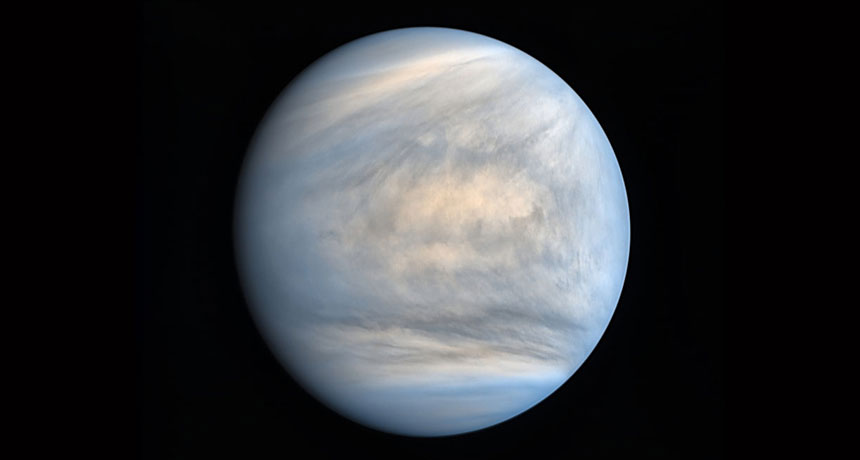
1. The Surface of Venus
If there were a competition for the most hostile planetary surface in the Solar System, Venus would be among the strongest contenders.
Although Venus is often called Earth’s twin because of its similar size and mass, its environment is almost unimaginably different.
The surface temperature averages around 465°C (869°F)—hot enough to melt lead. Unlike Mercury, which experiences large temperature swings between day and night, Venus remains extremely hot everywhere because of its incredibly dense atmosphere.
That atmosphere is composed mainly of carbon dioxide and creates a runaway greenhouse effect unlike anything seen on Earth. Sunlight easily enters the atmosphere, but the heat struggles to escape, causing temperatures to remain permanently extreme.
Pressure at the surface is another lethal hazard.
Standing on Venus would expose you to atmospheric pressure about 92 times greater than Earth’s at sea level. This is comparable to the pressure nearly one kilometer beneath Earth’s oceans.
Even if the heat somehow could be survived, the pressure alone would crush most spacecraft not specifically designed to withstand it.
Adding to the danger are clouds containing droplets of sulfuric acid. Fortunately, most of this acid evaporates before reaching the surface because of the extreme temperatures, but the upper atmosphere remains highly corrosive.
Several Soviet Venera spacecraft successfully landed on Venus during the 1970s and 1980s. Even these extraordinarily rugged machines survived only between about 20 minutes and just over two hours before failing under the combined assault of heat and pressure.
Venus demonstrates how dramatically a planet’s climate can evolve under different atmospheric conditions.
2. The Sun’s Corona
The Sun is the engine that powers the entire Solar System. Without it, life on Earth would not exist.
Getting close to it, however, would be catastrophic.
The Sun’s visible surface, called the photosphere, has a temperature of about 5,500°C (9,900°F).
Above it lies the corona, the Sun’s outer atmosphere, where temperatures mysteriously climb into the millions of degrees Celsius.
Scientists are still investigating exactly why the corona is so much hotter than the visible surface below it. Magnetic reconnection and wave heating are among the leading explanations.
The corona is also the birthplace of powerful solar phenomena.
Solar flares release enormous bursts of electromagnetic radiation.
Coronal mass ejections hurl billions of tons of plasma into space.
These eruptions can travel across the Solar System and influence planetary magnetic fields.
The NASA Parker Solar Probe has ventured closer to the Sun than any previous spacecraft, flying through the outer corona while protected by an advanced carbon-composite heat shield.
Even with this technology, the spacecraft survives only because its shield continually faces the Sun with extraordinary precision.
Any unprotected object would be rapidly destroyed.
3. Jupiter’s Radiation Belts
Jupiter possesses the largest magnetic field of any planet in the Solar System.
While magnetic fields often provide protection—as Earth’s does—they can also create dangerous radiation environments.
Jupiter’s magnetosphere traps enormous numbers of high-energy charged particles.
These particles form radiation belts far more intense than Earth’s Van Allen belts.
The radiation near Jupiter is so extreme that it can severely damage spacecraft electronics within a relatively short time.
The Juno mission was specifically engineered with a titanium radiation vault protecting its most sensitive electronics.
Without this shielding, the spacecraft likely would not survive long.
Human exposure would be even more dangerous.
Near the strongest regions, radiation doses could become fatal in a matter of hours or even much sooner depending on location.
This immense radiation environment also affects several of Jupiter’s moons, making exploration significantly more difficult.
4. Io: The Most Volcanically Active World
Orbiting within Jupiter’s powerful gravitational influence is Io.
This remarkable moon is the most volcanically active body known in the Solar System.
Unlike Earth’s volcanoes, which are powered largely by internal heat from radioactive decay and residual planetary formation, Io’s volcanism is driven primarily by tidal heating.
Jupiter’s gravity continuously stretches and squeezes the moon.
Additional gravitational interactions with neighboring moons Europa and Ganymede further enhance this process.
The result is intense internal friction that melts vast amounts of rock.
Hundreds of active volcanoes cover the surface.
Some eruptions launch material hundreds of kilometers above the moon.
Massive lava lakes, sulfur deposits, and continuously changing landscapes make Io one of the most dynamic worlds ever observed.
Combined with Jupiter’s powerful radiation environment, Io becomes an extraordinarily dangerous destination.
5. Mercury’s Dayside
Being closest to the Sun, Mercury experiences some of the Solar System’s most extreme temperature variations.
Its slow rotation and lack of a substantial atmosphere create remarkable contrasts.
During the day, surface temperatures can exceed 430°C (800°F).
At night, they can plunge below −180°C (−290°F).
Without an atmosphere, there is almost no insulation to moderate these changes.
Mercury is also exposed directly to intense solar radiation and the constant bombardment of micrometeoroids.
Its surface resembles an ancient battlefield, covered in impact craters accumulated over billions of years.
Standing on Mercury would mean enduring intense sunlight, extreme heat, and a sky completely black despite the brilliant Sun overhead.
6. Europa’s Radiation Environment
Europa is one of the most exciting places in the search for extraterrestrial life because evidence strongly suggests a global ocean exists beneath its icy crust.
Yet reaching that ocean is extraordinarily difficult.
Europa orbits deep within Jupiter’s radiation belts.
Its surface receives intense bombardment from energetic particles trapped within Jupiter’s magnetic field.
These particles continually modify surface ice through radiation chemistry, producing compounds such as hydrogen peroxide and molecular oxygen.
For spacecraft, prolonged exposure presents major engineering challenges.
For humans, the radiation would be rapidly dangerous without substantial shielding.
Ironically, the same environment that complicates exploration may also help deliver chemically useful materials into Europa’s hidden ocean.
7. Saturn’s Moon Enceladus During Ice Eruptions
Enceladus appears peaceful from afar.
Its bright icy surface reflects much of the sunlight that reaches it.
Yet beneath this frozen shell lies a global ocean.
Near the moon’s south pole, giant fractures known as tiger stripes vent enormous plumes of water vapor, ice particles, salts, and organic compounds into space.
These cryovolcanic eruptions can extend hundreds of kilometers above the surface.
Although less violent than molten lava volcanoes, these jets eject material at tremendous speeds into the surrounding environment.
Spacecraft flying through the plumes must carefully manage navigation and particle impacts.
The eruptions have also supplied material that forms one of Saturn’s rings.
Enceladus combines breathtaking beauty with a surprisingly active and dynamic interior.
8. Neptune’s Supersonic Winds
Despite receiving only a small fraction of the sunlight that reaches Earth, Neptune possesses the fastest winds observed anywhere in the Solar System.
Wind speeds can exceed 2,000 kilometers per hour (about 1,200 miles per hour).
These speeds surpass the speed of sound under many terrestrial conditions.
Scientists remain uncertain why Neptune’s atmosphere generates such powerful circulation despite its limited solar energy.
Internal heat likely plays an important role.
Neptune’s atmosphere also hosts massive storms, changing cloud systems, and dynamic weather unlike anything experienced on Earth.
There is no solid surface on which to stand.
Descending into Neptune would eventually expose a probe to crushing pressures, increasing temperatures, and atmospheric conditions that no current technology could survive indefinitely.
9. Comets Near the Sun
Comets are often described as dirty snowballs, but this simple phrase hides remarkable complexity.
Far from the Sun, they remain relatively quiet.
As they approach the inner Solar System, however, sunlight transforms them dramatically.
Ice begins to sublimate directly into gas.
Jets erupt from the nucleus.
Dust is blasted into space.
Fragments may break away.
Entire sections can collapse.
The nucleus of a comet is therefore an unstable environment with unpredictable outbursts.
Spacecraft visiting comets, such as Rosetta, have revealed rugged cliffs, sinkholes, dust avalanches, and constantly changing activity.
Near the Sun, a comet becomes a violent object shedding material into space while experiencing rapid structural changes.
10. The Asteroid Belt During High-Speed Collisions
Popular movies often portray the asteroid belt as a densely packed obstacle course.
In reality, the average distances between large asteroids are enormous.
Nevertheless, collisions do occur.
When they happen, the speeds involved can reach several kilometers per second.
Even a relatively small impact at such velocities releases enormous energy.
Asteroids themselves present additional hazards.
Many possess irregular gravity fields.
Some rotate rapidly.
Others consist of loosely bound rubble piles that respond unpredictably to disturbance.
Landing on or operating near these objects requires extremely precise navigation.
11. Triton’s Frozen Nitrogen Geysers
Triton is among the coldest known large bodies in the Solar System.
Surface temperatures average around −235°C (−391°F).
Yet despite this extreme cold, the moon is geologically active.
Spacecraft observations revealed dark plumes rising from the surface, probably driven by sunlight warming translucent nitrogen ice.
These geysers eject material into the thin atmosphere and deposit dark streaks across the landscape.
Combined with the extreme cold, low gravity, and unusual surface chemistry, Triton presents one of the most alien environments known.
12. The Event Horizon Vicinity of a Stellar-Mass Black Hole (If One Entered the Solar System’s Neighborhood)
Strictly speaking, there are no known black holes within the Solar System itself. However, if a stellar-mass black hole were ever to pass through or near the Solar System, it would instantly become the most dangerous location imaginable.
Near a black hole, gravity becomes extraordinarily intense.
Close to the event horizon, tidal forces can stretch objects dramatically—a process popularly called spaghettification, though its severity depends on the black hole’s mass.
Radiation generated by infalling matter can become extremely energetic.
Fortunately, astronomers know of no such object threatening our Solar System.
This final example illustrates just how relatively safe our planetary neighborhood actually is compared with some regions of the wider universe.
Why Earth Is Exceptionally Safe
After exploring these dangerous destinations, Earth seems even more extraordinary.
Our atmosphere moderates temperature.
Our magnetic field shields us from much harmful solar radiation.
Liquid water covers much of the surface.
Plate tectonics recycle nutrients.
The ozone layer absorbs most harmful ultraviolet radiation.
Gravity is strong enough to retain an atmosphere but not so strong that movement becomes impossible.
These characteristics make Earth remarkably hospitable compared with nearly every other known world in the Solar System.
The Role of Spacecraft in Exploring Dangerous Worlds
Much of what scientists know about these hazardous environments comes from robotic explorers.
Spacecraft have landed on Venus, orbited Mercury, flown through Jupiter’s intense radiation, sampled Enceladus’s icy plumes, descended into Titan’s atmosphere, orbited Jupiter and Saturn for years, and ventured closer to the Sun than ever before.
Each mission represents an extraordinary engineering achievement.
Heat shields, radiation protection, autonomous navigation, cryogenic systems, and advanced communication technologies allow humanity to investigate places where humans cannot yet safely travel.
These robotic explorers extend our senses into environments that would otherwise remain forever beyond direct observation.
Danger Drives Discovery
The most dangerous places in the Solar System are also among the most scientifically valuable.
Venus teaches us about climate evolution.
Jupiter’s radiation reveals the behavior of giant planetary magnetic fields.
Io demonstrates tidal heating on a spectacular scale.
Europa and Enceladus offer some of the best opportunities to search for life beyond Earth.
Mercury preserves clues about the early Solar System.
The Sun governs space weather affecting every planet.
Even violent environments contribute essential pieces to humanity’s understanding of how planets, moons, stars, and entire planetary systems evolve.
The Solar System is not a peaceful collection of distant worlds. It is a dynamic laboratory shaped by gravity, radiation, heat, chemistry, and time. Every dangerous place tells a story about the forces that built our cosmic neighborhood—and every mission that survives these extremes brings us one step closer to understanding our place within it.