Far beyond the stars of the Milky Way, beyond nearby galaxies and immense clusters of galaxies, something strange is happening in the cosmos.
Our galaxy is moving.
Not just orbiting within itself. Not merely drifting through space as the universe expands. The entire Milky Way, along with our neighboring galaxies, is traveling through the universe at astonishing speed—hundreds of kilometers every second.
For decades, astronomers have asked a simple but profound question: What is pulling us?
The answer appears to involve one of the most mysterious structures ever discovered in astronomy—a vast region of space exerting a tremendous gravitational influence on millions of galaxies. This mysterious destination has become known as the Great Attractor.
Unlike a star, planet, or galaxy, the Great Attractor is not a single object. It is a gigantic concentration of mass hidden deep within the cosmic landscape. Its gravity influences galaxies across hundreds of millions of light-years, including our own.
Yet despite its enormous importance, scientists cannot observe it directly with ordinary telescopes. Much of it lies concealed behind the dense plane of the Milky Way, hidden from view by clouds of dust, gas, and stars.
The Great Attractor is one of the most fascinating mysteries in modern astronomy. It reminds us that even on the largest scales imaginable, the universe still contains hidden structures capable of reshaping our understanding of reality.
A Universe in Motion
When people imagine the universe, they often picture a vast and silent expanse where galaxies sit motionless in space.
The truth is far more dynamic.
Nothing in the universe is truly standing still.
Earth rotates on its axis while orbiting the Sun.
The Sun moves around the center of the Milky Way.
The Milky Way itself travels through space.
Meanwhile, galaxies throughout the universe are moving away from one another as space expands.
The universe resembles an enormous cosmic dance in which everything is constantly in motion.
For much of the twentieth century, astronomers believed they understood most of these movements. Then they discovered something unexpected.
Our galaxy appeared to be moving toward a particular region of space faster than predicted.
Something immense seemed to be exerting a gravitational pull on us.
The challenge was figuring out what.
Discovering the Peculiar Motion of Galaxies
The story begins with measurements of galaxy motion.
In the 1920s, astronomers discovered that the universe is expanding. Distant galaxies generally move away from one another because space itself is stretching.
This expansion follows a predictable pattern known as the Hubble flow.
According to this pattern, galaxies farther away should recede faster than nearby galaxies.
However, careful observations revealed that galaxies do not follow this expansion perfectly.
They possess additional motions called peculiar velocities.
Imagine leaves floating down a river. The river’s current carries everything downstream, but individual leaves may also swirl, drift sideways, or move around obstacles.
Similarly, galaxies participate in cosmic expansion while also responding to local gravitational forces.
When astronomers measured these peculiar motions, they discovered something remarkable.
Large numbers of galaxies appeared to be moving in roughly the same direction.
This suggested the presence of an enormous gravitational source pulling them toward a common destination.
The First Clues
During the 1970s and 1980s, astronomers began gathering increasingly detailed data about galaxy velocities.
Researchers noticed that the Milky Way and many neighboring galaxies were moving toward a region in the constellations of Norma and Triangulum Australe.
This motion was substantial.
Our galaxy appears to be traveling through space at roughly 600 kilometers per second relative to the cosmic microwave background, the faint afterglow left behind by the Big Bang.
That is more than two million kilometers per hour.
At such speeds, one naturally expects a powerful cause.
Gravity was the obvious explanation.
Something massive had to be exerting a pull strong enough to influence entire galaxy groups across enormous distances.
This mysterious source became known as the Great Attractor.
What Exactly Is the Great Attractor?
One of the biggest misconceptions about the Great Attractor is that it is a single object.
It is not.
The name can be misleading.
The Great Attractor is better understood as a vast gravitational anomaly—a region of space containing an extraordinary concentration of mass.
This mass includes galaxies, galaxy clusters, dark matter, hot gas, and other cosmic structures.
Together, these components generate a powerful gravitational field.
Gravity does not care whether mass is organized into a star, galaxy, or cluster of galaxies. It responds only to the total amount of matter present.
The Great Attractor represents a region where an immense amount of mass is concentrated, creating a gravitational pull strong enough to affect galaxies over hundreds of millions of light-years.
Rather than being a single destination, it is part of a much larger cosmic structure.
The Problem of Seeing It
If the Great Attractor is so massive, why did astronomers not discover it sooner?
The answer lies in our position inside the Milky Way.
When we look out into space, we do not enjoy an unobstructed view in every direction.
The plane of our galaxy contains vast quantities of stars, dust, and gas.
These materials block visible light coming from beyond.
Astronomers refer to this hidden region as the Zone of Avoidance.
For decades, the Great Attractor lay behind this obscuring curtain.
Trying to observe it was like attempting to study a distant city while standing inside a dense forest.
The forest blocks the view, making it difficult to determine what lies beyond.
As technology improved, astronomers developed ways to see through the cosmic obstruction using radio waves, infrared observations, and X-ray telescopes.
Gradually, the hidden structures behind the Milky Way began to emerge.
Understanding Gravity on Cosmic Scales
To appreciate the Great Attractor, it helps to understand how gravity works across the universe.
Gravity is the weakest of the fundamental forces at the level of individual particles, yet it dominates the large-scale structure of the cosmos.
This happens because gravity only attracts. It never repels.
Over billions of years, gravitational attraction causes matter to accumulate into larger and larger structures.
Stars gather into galaxies.
Galaxies gather into groups.
Groups gather into clusters.
Clusters form enormous superclusters.
The Great Attractor exists within this hierarchy.
Its influence arises because it represents a region where vast amounts of matter have accumulated over cosmic time.
The larger the concentration of mass, the stronger its gravitational pull.
On scales involving millions of galaxies, these effects become truly extraordinary.
Galaxy Clusters and Superclusters
Galaxies rarely exist alone.
Most belong to larger structures.
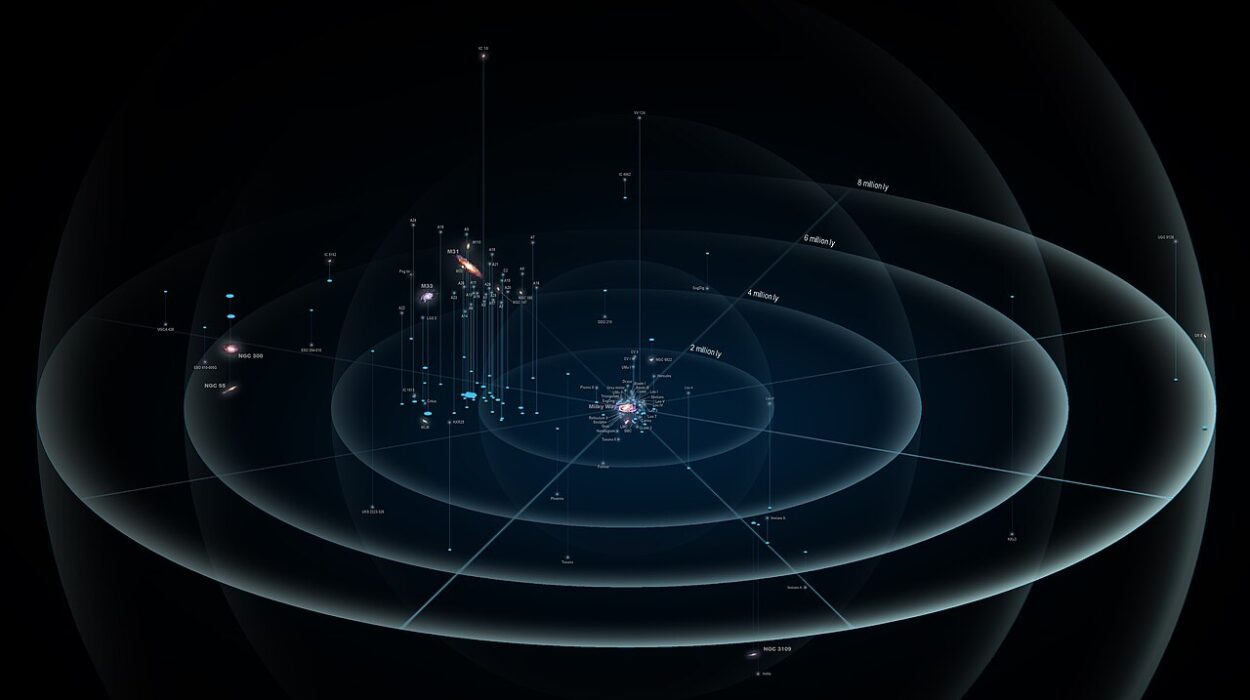
The Milky Way is part of the Local Group, a collection of more than fifty galaxies including the famous Andromeda Galaxy.
The Local Group itself belongs to an even larger structure known as the Virgo Supercluster.
For many years, astronomers believed the Virgo Supercluster represented one of the largest structures influencing our galaxy’s motion.
However, observations suggested something even larger was involved.
The gravitational pull could not be explained solely by nearby galaxy concentrations.
There had to be additional mass farther away.
The search for this hidden influence eventually led scientists toward the Great Attractor.
The Discovery of Massive Hidden Structures
As observational techniques improved, astronomers began detecting enormous galaxy concentrations hidden behind the Milky Way.
What they found was astonishing.
The region near the Great Attractor contained numerous galaxy clusters packed together in ways suggesting a truly colossal structure.
One particularly important discovery was the Norma Cluster.
This cluster contains hundreds of galaxies and ranks among the most massive structures in our cosmic neighborhood.
The Norma Cluster appeared close to the direction toward which many galaxies were moving.
For a time, astronomers suspected it might be the Great Attractor itself.
However, further studies revealed an even more complicated picture.
The gravitational source appeared larger and more extensive than any single cluster.
The Role of Dark Matter
No discussion of the Great Attractor would be complete without dark matter.
Dark matter is one of the greatest mysteries in modern science.
It cannot be seen directly because it neither emits nor reflects light.
Yet astronomers know it exists because its gravitational effects are everywhere.
Galaxies rotate too rapidly to remain intact if only visible matter were present.
Galaxy clusters contain far more mass than telescopes can detect directly.
Large-scale cosmic structures appear shaped by unseen matter.
The Great Attractor likely contains enormous quantities of dark matter.
In fact, much of its gravitational influence may originate from dark matter rather than ordinary matter.
This means the most powerful component of the Great Attractor could be completely invisible.
The idea is both frustrating and fascinating.
We may be drawn toward a structure whose most important ingredient cannot be observed directly.
Measuring Our Motion Through Space
One of the strongest pieces of evidence for the Great Attractor comes from the cosmic microwave background.
The cosmic microwave background is the oldest light in the universe, produced approximately 380,000 years after the Big Bang.
It fills all of space.
If we were perfectly stationary relative to this ancient radiation, it would appear nearly identical in every direction.
Instead, astronomers observe a slight temperature difference.
One side appears slightly warmer while the opposite side appears slightly cooler.
This pattern indicates motion.
The Milky Way is moving relative to the cosmic microwave background.
By measuring this effect, scientists can estimate the speed and direction of our galaxy’s motion.
The results point toward the same region associated with the Great Attractor.
The Great Attractor Is Not Pulling Everything
A common misunderstanding is that the Great Attractor is drawing the entire universe toward itself.
This is not true.
The universe continues expanding overall.
Galaxies far enough away recede from one another because of cosmic expansion.
The Great Attractor’s influence is significant but limited.
Its gravity affects galaxies within a particular region of space.
Beyond certain distances, cosmic expansion becomes more important than the Great Attractor’s pull.
Gravity and expansion are constantly competing.
On local scales, gravity dominates.
On the largest scales, cosmic expansion wins.
The Great Attractor represents one of the places where gravity exerts especially strong influence.
Enter Laniakea
In 2014, astronomers introduced a new concept that dramatically changed how we view our cosmic neighborhood.
Researchers identified a gigantic structure called Laniakea Supercluster.
The name Laniakea means “immeasurable heaven” in Hawaiian.
This enormous supercluster contains roughly 100,000 galaxies spread across more than 500 million light-years.
Our Milky Way resides within this immense structure.
The discovery revealed that many galaxies share common gravitational flows toward the same general region.
The Great Attractor appears near the center of these motions.
Rather than existing as an isolated object, it is part of the larger framework of Laniakea.
This realization transformed the Great Attractor from a mysterious anomaly into a key component of a vast cosmic network.
Beyond the Great Attractor
Just when astronomers thought they were beginning to understand the Great Attractor, another surprise emerged.
Evidence suggested that an even larger structure might be influencing galaxy motions.
This structure became known as the Shapley Supercluster.
The Shapley Supercluster contains an enormous concentration of galaxy clusters and mass.
Some studies indicate that part of the motion attributed to the Great Attractor may actually result from the gravitational influence of Shapley.
In other words, galaxies may not simply be falling toward the Great Attractor.
They may be responding to multiple massive structures simultaneously.
The universe often turns out to be more complicated than expected.
Every answer seems to uncover new questions.
Mapping the Cosmic Web
Today, astronomers understand that galaxies are arranged in a vast cosmic web.
This web consists of filaments, clusters, superclusters, and enormous voids.
Matter is not distributed evenly throughout space.
Instead, it forms interconnected structures stretching across billions of light-years.
The Great Attractor exists within this larger framework.
Its gravitational influence reflects the distribution of matter across the cosmic web.
Imagine rivers flowing toward a basin.
Individual streams merge into larger rivers before eventually reaching the same destination.
Galaxy motions behave similarly.
Gravity guides matter along enormous cosmic pathways.
The Great Attractor represents one of the major intersections within this grand structure.
Why the Great Attractor Fascinates Scientists
The Great Attractor captures scientific imagination because it sits at the intersection of several profound mysteries.
It involves galaxy motion.
It involves dark matter.
It involves hidden cosmic structures.
It involves the large-scale architecture of the universe.
Most importantly, it demonstrates how much remains unknown.
For centuries, humans believed Earth occupied the center of creation.
Later, we learned Earth orbits the Sun.
Then we discovered the Sun is merely one star among billions in the Milky Way.
Later still, we learned our galaxy belongs to larger structures extending across unimaginable distances.
The Great Attractor continues this journey of perspective.
It reminds us that our place in the cosmos is connected to structures far larger than we once imagined.
Could the Great Attractor Be Dangerous?
The name “Great Attractor” sometimes creates the impression of a cosmic threat.
People occasionally imagine a giant object pulling galaxies toward destruction.
In reality, there is no reason for concern.
The Great Attractor is not a cosmic vacuum cleaner swallowing galaxies.
It is simply a region containing large amounts of mass.
Its gravitational effects operate over hundreds of millions of years.
The Milky Way is not plunging toward imminent disaster.
Galaxy motions unfold on timescales so vast that they are difficult for the human mind to comprehend.
The Great Attractor influences our path through space, but it poses no danger to Earth or humanity.
The Future of Research
Astronomers continue studying the Great Attractor using increasingly advanced instruments.
New surveys map galaxies hidden behind the Milky Way.
Radio telescopes penetrate dust clouds that block visible light.
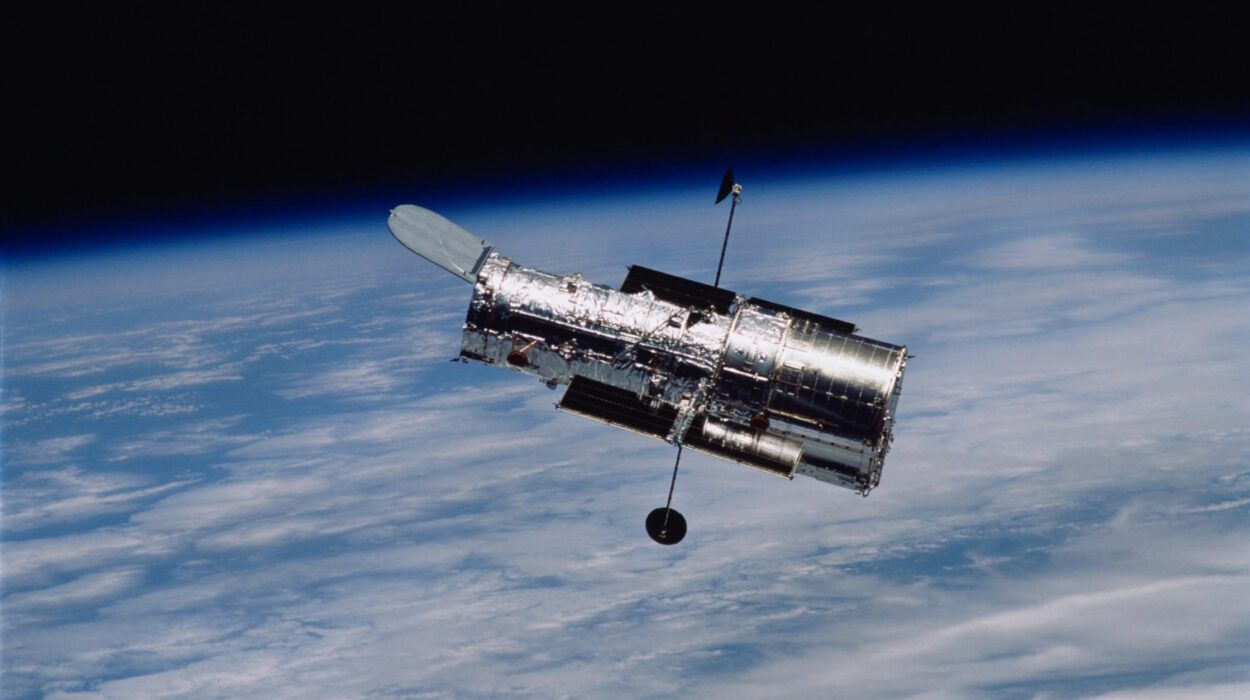
Space observatories provide detailed views of distant structures.
Computer simulations help scientists reconstruct the evolution of large-scale cosmic flows.
Future observatories may reveal hidden concentrations of dark matter and clarify the relationships between the Great Attractor, Laniakea, and the Shapley Supercluster.
Each new discovery brings us closer to understanding the true architecture of our cosmic environment.
Yet complete answers remain elusive.
The universe still guards many of its secrets.
A Humbling Cosmic Perspective
Perhaps the most remarkable aspect of the Great Attractor is the perspective it offers.
Every human who has ever lived shares a common journey through space.
Earth moves around the Sun.
The Sun moves through the Milky Way.
The Milky Way moves through the Local Group.
The Local Group drifts within Laniakea.
And all of us are being carried through the cosmos toward a region influenced by the Great Attractor.
This motion occurs whether we notice it or not.
As we go about our daily lives, our entire galaxy is participating in a gravitational story unfolding across hundreds of millions of light-years.
The scale is almost impossible to grasp.
Yet it is real.
Conclusion
The Great Attractor is one of the most intriguing structures in the known universe. Rather than being a single object, it is a vast gravitational region containing enormous concentrations of galaxies, dark matter, and cosmic mass. Its gravity influences the motions of countless galaxies, including our own Milky Way, drawing them toward a common direction in space.
Discovered through observations of galaxy velocities and hidden behind the dense plane of the Milky Way, the Great Attractor challenged astronomers to rethink the large-scale structure of the cosmos. Subsequent discoveries, including the Norma Cluster, the Laniakea Supercluster, and the Shapley Supercluster, revealed that this mysterious phenomenon is part of an even larger cosmic web stretching across hundreds of millions of light-years.
Far from being a cosmic monster, the Great Attractor is a reminder of the immense gravitational architecture that shapes the universe. It reveals that galaxies are not randomly scattered through space but are connected by invisible patterns of mass and motion. Most importantly, it reminds us that humanity’s home galaxy is part of a much larger journey—one guided by forces operating on scales so vast that they redefine our understanding of the cosmos itself.