Every human being eventually asks the same profound questions.
Where did everything come from?
Why does the universe exist at all?
How did stars, planets, galaxies, oceans, mountains, and living creatures emerge from what appears to have once been nothing but empty darkness?
For thousands of years, these questions belonged primarily to philosophers, storytellers, and religious traditions. Ancient civilizations created myths about cosmic eggs, divine creators, celestial battles, and supernatural beginnings. These stories reflected humanity’s deep desire to understand its origins.
Then science entered the conversation.
As telescopes improved and our understanding of physics deepened, scientists began uncovering clues hidden within the universe itself. Those clues pointed toward a remarkable possibility: the cosmos had not existed forever in its current form. Instead, it appeared to have a beginning.
That idea eventually evolved into what is now known as the Big Bang theory.
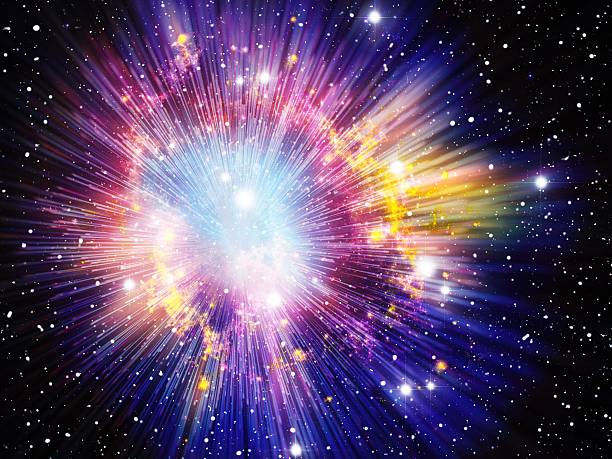
The Big Bang is not merely a theory about an explosion in space. It is the leading scientific explanation for the origin and evolution of the observable universe. It describes how space, time, matter, energy, galaxies, stars, and ultimately life emerged from an unimaginably hot and dense early state roughly 13.8 billion years ago.
Yet despite its fame, the Big Bang is often misunderstood.
Many people imagine a giant explosion occurring inside an empty universe. Others think scientists know exactly what happened at the beginning. The reality is far more fascinating and far more mysterious.
The Big Bang is both one of humanity’s greatest scientific achievements and one of its greatest unanswered questions. It offers an extraordinary glimpse into the origins of reality while simultaneously confronting us with mysteries that remain unsolved.
Understanding What the Big Bang Actually Means
The term “Big Bang” can be misleading.
When people hear the phrase, they often imagine a bomb exploding into empty space.
That image is not what modern cosmology describes.
The Big Bang was not an explosion that happened somewhere in the universe.
Instead, it was the rapid expansion of space itself.
This distinction is crucial.
Imagine drawing dots on the surface of a balloon. As the balloon inflates, every dot moves farther away from every other dot. The dots are not flying through the rubber. Rather, the surface itself is expanding.
The universe behaves in a somewhat similar way.
According to the Big Bang theory, space itself has been expanding for billions of years.
Galaxies are moving apart not because they were blasted through preexisting emptiness, but because the fabric of space between them is stretching.
The Big Bang therefore marks the beginning of this cosmic expansion from an extremely hot, dense state.
It is not merely the beginning of matter.
It is the beginning of the universe as we know it.
Before the Big Bang Idea
For much of human history, many thinkers assumed the universe was eternal.
The stars appeared permanent.
The sky seemed unchanging.
Without powerful telescopes, there was little reason to suspect otherwise.
Even many scientists during the nineteenth and early twentieth centuries believed the universe had always existed in roughly the same form.
When Albert Einstein developed his theory of general relativity in 1915, he initially assumed the cosmos was static.
However, his equations contained an unexpected surprise.
The mathematics suggested that the universe should either expand or contract.
It should not remain perfectly still.
This conclusion troubled Einstein because it conflicted with prevailing assumptions.
To preserve a static universe, he introduced a mathematical adjustment known as the cosmological constant.
Years later, he reportedly described this decision as one of his greatest mistakes.
The universe was not static after all.
It was expanding.
Edwin Hubble Changes Everything
One of the most important breakthroughs came from the work of Edwin Hubble.
During the 1920s, Hubble studied distant galaxies using powerful telescopes.
What he discovered transformed cosmology forever.
The farther away a galaxy was, the faster it appeared to be moving away from Earth.
This observation revealed that the universe itself was expanding.
Imagine watching raisins embedded in rising bread dough.
As the dough expands, each raisin moves farther from the others.
No matter which raisin you observe, it appears as though all the others are moving away.
Galaxies behave similarly within an expanding universe.
Hubble’s discovery suggested something extraordinary.
If galaxies are moving apart today, then in the distant past they must have been closer together.
Tracing this expansion backward implies that the universe was once far smaller, denser, and hotter than it is now.
This realization became the foundation of Big Bang cosmology.
The Birth of the Big Bang Theory
The earliest version of the idea emerged from the work of Belgian physicist and priest Georges Lemaître.
In the late 1920s, Lemaître proposed that the universe began from what he called a “primeval atom.”
According to his vision, the entire cosmos originated from an incredibly dense initial state that expanded over time.
At first, many scientists were skeptical.
The notion that the universe had a beginning seemed radical.
Some preferred the idea of an eternal cosmos.
Yet observational evidence gradually accumulated in favor of expansion and cosmic evolution.
The Big Bang theory steadily gained support.
Over time it became the dominant explanation for the origin of the observable universe.
The Universe 13.8 Billion Years Ago
According to current scientific understanding, the observable universe began approximately 13.8 billion years ago.
At that earliest moment, conditions were unlike anything we can directly imagine.
Temperatures were extraordinarily high.
Densities were immense.
Matter as we know it did not yet exist.
Atoms had not formed.
Stars had not formed.
Galaxies had not formed.
Even the familiar structure of space and time may have behaved differently than it does today.
Everything that would eventually become every galaxy, planet, ocean, mountain, and living organism existed in an incredibly compressed state.
This does not necessarily mean everything occupied a single point.
Rather, it means the observable universe was far smaller, hotter, and denser than it is now.
The laws of physics themselves approach their limits under such extreme conditions.
As a result, our knowledge of the earliest moments remains incomplete.
The Planck Era: The Ultimate Mystery
The first tiny fraction of a second after the Big Bang is one of the greatest mysteries in science.
The earliest period is known as the Planck Era.
This phase lasted less than a trillionth of a trillionth of a trillionth of a second.
During this unimaginably brief interval, temperatures and energies were so extreme that our current theories break down.
General relativity successfully describes gravity on large scales.
Quantum mechanics successfully describes the microscopic world.
Yet these two frameworks remain difficult to reconcile under the conditions of the very early universe.
Because scientists do not yet possess a complete theory of quantum gravity, the Planck Era remains largely hidden from our understanding.
It represents a frontier where known physics reaches its limits.
Cosmic Inflation: The Universe Grows Enormously
One of the most intriguing ideas in modern cosmology is cosmic inflation.
According to this hypothesis, the universe experienced an incredibly rapid expansion shortly after its birth.
In a tiny fraction of a second, space may have expanded faster than the speed of light.
This does not violate relativity because it was space itself expanding rather than objects moving through space.
Inflation would have dramatically increased the size of the universe.
A region smaller than an atom could have grown to astronomical dimensions almost instantly.
This idea helps explain several puzzling features of the cosmos.
It accounts for why distant regions of space appear remarkably similar despite being separated by enormous distances.
It also helps explain the large-scale structure of the universe observed today.
Although inflation remains a theoretical concept, many observations strongly support it.
The Creation of Fundamental Particles
As the universe expanded, it cooled.
This cooling allowed new forms of matter to emerge.
Energy transformed into particles.
Particles interacted, collided, and annihilated one another.
The early universe was an extraordinarily energetic environment filled with a dense sea of particles and radiation.
Quarks, electrons, neutrinos, and other fundamental particles appeared.
Tiny fluctuations in density also emerged.
These fluctuations may seem insignificant, but they ultimately shaped the cosmic landscape.
Without them, galaxies would never have formed.
Every star and planet owes its existence to these minute variations present in the infant universe.
The Formation of Protons and Neutrons
As temperatures continued falling, quarks began combining into larger structures.
Groups of quarks formed protons and neutrons.
These particles became the building blocks of atomic nuclei.
This transition marked a crucial stage in cosmic history.
The universe was still incredibly hot compared to present-day conditions, but it had cooled enough for stable particles to emerge.
Matter was beginning to take shape.
The foundations of everything we see around us today were being established.
The First Atomic Nuclei
Within the first few minutes after the Big Bang, protons and neutrons combined to form simple atomic nuclei.
This process is known as Big Bang nucleosynthesis.
Most of the resulting nuclei were hydrogen.
A smaller amount became helium.
Tiny traces of lithium also formed.
Remarkably, modern observations confirm these predicted proportions with impressive accuracy.
This agreement represents one of the strongest pieces of evidence supporting the Big Bang theory.
The universe’s chemical composition preserves a record of its earliest moments.
Even today, hydrogen and helium remain the most abundant elements in the cosmos.
The Universe Becomes Opaque
For hundreds of thousands of years, the universe remained a hot plasma.
Electrons moved freely through space.
Light constantly scattered off charged particles.
As a result, the cosmos was opaque.
Photons could not travel far before colliding with matter.
Imagine trying to see through dense fog.
Light becomes trapped and scattered.
The early universe behaved similarly.
Although radiation filled space, it could not move freely.
The universe had not yet become transparent.
Let There Be Light
Approximately 380,000 years after the Big Bang, temperatures finally cooled enough for electrons to combine with nuclei.
Atoms formed.
This event transformed the cosmos.
Without free electrons scattering photons, light could suddenly travel vast distances.
The universe became transparent.
The first freely traveling light spread across space.
Astronomers can still detect this ancient radiation today.
It is known as the Cosmic Microwave Background.
In many ways, it serves as a baby picture of the universe.
The Cosmic Microwave Background
The Cosmic Microwave Background is among the most important discoveries in modern astronomy.
It was accidentally discovered in 1965 by Arno Penzias and Robert Wilson.
They detected a faint microwave signal coming from every direction in space.
At first, they did not know its significance.
Scientists soon realized they had found relic radiation left over from the early universe.
This glow fills the cosmos even today.
Although it has cooled dramatically over billions of years, it remains detectable with sensitive instruments.
The Cosmic Microwave Background provides powerful evidence that the universe was once far hotter and denser.
Its existence strongly supports the Big Bang model.
The Cosmic Dark Ages
After the formation of atoms, the universe entered a long period often called the Cosmic Dark Ages.
There were no stars yet.
No galaxies illuminated space.
The universe contained mostly hydrogen and helium gas.
Gravity slowly began gathering matter into denser regions.
Over millions of years, these regions grew larger.
The stage was being prepared for the first stars.
Although the universe was dark, it was not inactive.
Invisible processes were shaping the future cosmos.
The First Stars Ignite
Eventually gravity compressed enormous clouds of gas.
Temperatures rose.
Pressures increased.
Nuclear fusion ignited.
The first stars were born.
These ancient stars differed from most stars today.
They were likely larger, hotter, and shorter-lived.
Their appearance transformed the universe.
For the first time, starlight illuminated the cosmic darkness.
These pioneering stars also created heavier elements through nuclear fusion.
When they died, they enriched space with the ingredients necessary for future generations of stars and planets.
In a very real sense, the atoms within our bodies owe their existence to these early stellar furnaces.
The Birth of Galaxies
As cosmic time progressed, gravity continued shaping matter into larger structures.
Stars gathered into clusters.
Clusters merged into galaxies.
Galaxies assembled into groups and larger cosmic networks.
Over billions of years, the vast cosmic web emerged.
The magnificent spiral and elliptical galaxies visible today gradually developed through this process.
The universe was evolving from simplicity toward complexity.
What began as a hot, nearly uniform state became a richly structured cosmos filled with extraordinary diversity.
How We Know the Big Bang Happened
Scientists rarely claim absolute certainty.
Instead, they evaluate evidence.
The Big Bang theory became widely accepted because multiple independent observations support it.
The expansion of the universe is one major line of evidence.
Galaxies are moving apart in precisely the way expected if the universe originated from a denser state.
The Cosmic Microwave Background provides another powerful confirmation.
Its existence was predicted before its discovery.
The observed abundance of hydrogen and helium also matches theoretical predictions.
Together these observations create an extraordinarily strong case.
The Big Bang is not accepted because scientists prefer it.
It is accepted because evidence consistently supports it.
Common Misconceptions About the Big Bang
Many misconceptions surround the Big Bang.
One of the most common is the belief that it describes an explosion in empty space.
In reality, space itself expanded.
Another misconception is that the Big Bang explains everything.
It does not.
The theory describes the evolution of the observable universe from an early hot, dense state.
It does not necessarily explain why the universe exists.
Nor does it fully explain what occurred at the very beginning.
Some people assume the Big Bang is merely speculation.
In truth, it is supported by extensive observational evidence.
While many details remain uncertain, the overall framework is one of the most successful scientific theories ever developed.
What Came Before the Big Bang?
This question captivates nearly everyone who encounters Big Bang cosmology.
What existed before the beginning?
The honest scientific answer is that we do not know.
Some physicists argue that time itself began with the Big Bang.
If true, asking what happened before it may be similar to asking what lies north of the North Pole.
The question may not have a meaningful answer.
Other theories suggest earlier universes may have existed.
Some models propose cyclic universes that repeatedly expand and contract.
Others suggest our universe emerged from a larger multiverse.
These ideas remain speculative.
At present, evidence does not allow definitive conclusions.
The mystery remains open.
Dark Matter and Dark Energy
One surprising discovery is that ordinary matter represents only a small fraction of the universe.
Most of the cosmos appears to consist of dark matter and dark energy.
Dark matter provides additional gravitational influence but remains invisible.
Dark energy appears responsible for accelerating cosmic expansion.
Together they dominate the universe’s contents.
Yet scientists still do not fully understand either one.
This means that despite tremendous progress, much of reality remains mysterious.
The Big Bang theory explains many aspects of cosmic history, but important pieces of the puzzle are still missing.
The Fate of the Universe
If the Big Bang describes the beginning, what about the ending?
The answer depends largely on the behavior of cosmic expansion.
Current observations suggest the universe’s expansion is accelerating.
If this trend continues indefinitely, galaxies will drift farther apart.
Star formation will gradually decline.
The cosmos may eventually become cold and dark.
This scenario is often called the Heat Death of the universe.
Other possibilities have been proposed, but current evidence favors endless expansion.
The ultimate fate of reality remains an active area of research.
Why the Big Bang Matters
The Big Bang is more than a scientific theory.
It represents humanity’s attempt to understand its deepest origins.
Every atom in your body has a history stretching back billions of years.
The hydrogen in your cells formed shortly after the universe began.
The carbon in your muscles was forged inside stars.
The oxygen you breathe emerged through cosmic processes spanning immense stretches of time.
The story of the universe is also the story of us.
When we study the Big Bang, we are not merely investigating distant galaxies.
We are exploring our own origins.
The cosmos and humanity are connected through an unbroken chain of events extending back nearly 13.8 billion years.
The Emotional Power of Cosmic Origins
There is something profoundly moving about the Big Bang.
It reveals that the universe has a history.
The stars overhead are not eternal fixtures but participants in an evolving cosmic drama.
Galaxies were born.
Stars were born.
Planets were born.
Life emerged.
Conscious beings eventually appeared who could ask questions about their origins.
For billions of years, the universe evolved without observers capable of understanding it.
Then, on a small rocky planet orbiting an ordinary star, matter organized itself into living creatures.
Those creatures learned to think.
They built telescopes.
They developed mathematics.
They discovered clues hidden in ancient light.
And they began reconstructing the story of reality itself.
In that sense, the study of the Big Bang is one of humanity’s greatest achievements.
It is a testament to curiosity, imagination, and the remarkable power of scientific inquiry.
Conclusion
The Big Bang is the leading scientific explanation for the origin and evolution of the observable universe. Rather than describing an explosion in space, it describes the expansion of space itself from an extremely hot and dense early state approximately 13.8 billion years ago. Through processes involving particle formation, nucleosynthesis, cosmic inflation, star birth, and galaxy formation, the universe gradually evolved into the rich cosmic landscape we observe today.
Evidence from the expansion of galaxies, the Cosmic Microwave Background, and the abundance of light elements strongly supports this model. Yet the Big Bang is not the end of the story. Profound mysteries remain concerning the earliest moments of existence, the nature of dark matter and dark energy, and whether anything preceded the beginning itself.
The Big Bang stands at the intersection of knowledge and mystery. It offers humanity a remarkable narrative of cosmic origins while reminding us that some of reality’s deepest secrets remain hidden beyond the horizon of current understanding. Through its study, we glimpse not only the birth of the universe but also our own place within its extraordinary story.